Best overall: Mountain Pose. Best for learning a standing stance: Warrior II. Best for lying-down rest: Corpse Pose. This 2026 guide ranks the best hot yoga poses for beginners by how easily you can learn, adjust, and leave them; Unified Hot Yoga offers all-skill-levels classes in American Fork for newcomers who want instructor guidance.
- The best hot yoga poses for beginners start with Mountain Pose: simple standing alignment without a balance challenge.
- Choose Warrior II for standing practice, Tabletop for floor setup, and Corpse Pose for lying-down rest.
- Heat is not a reason to stretch farther; keep breathing comfortably and stop when you feel unwell.
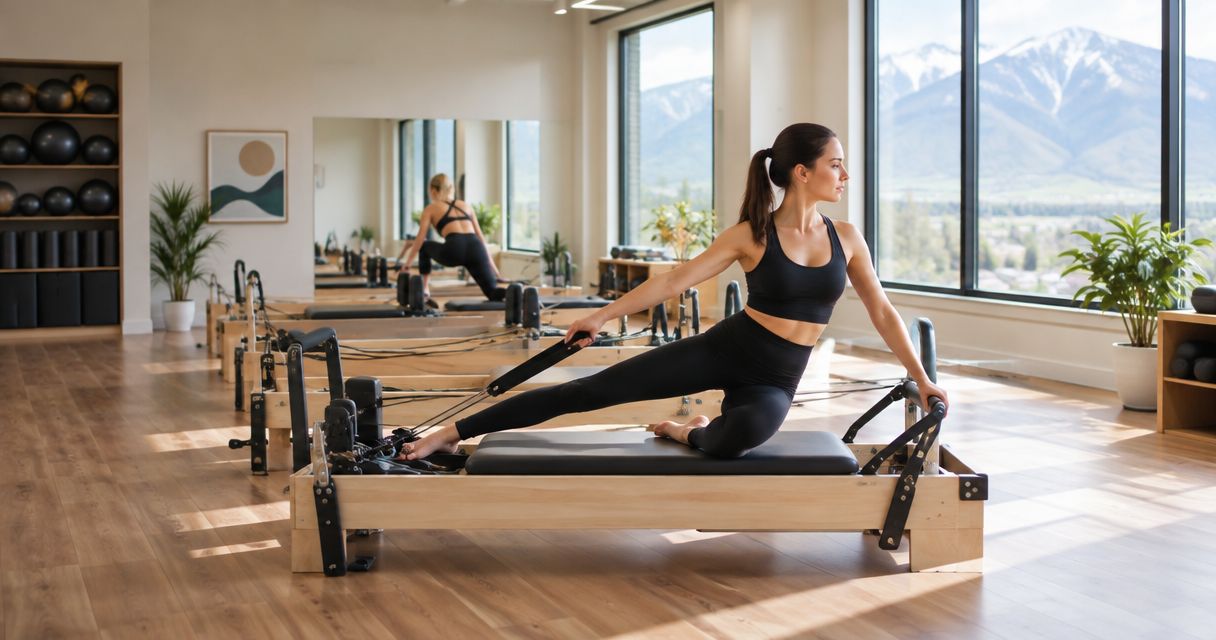
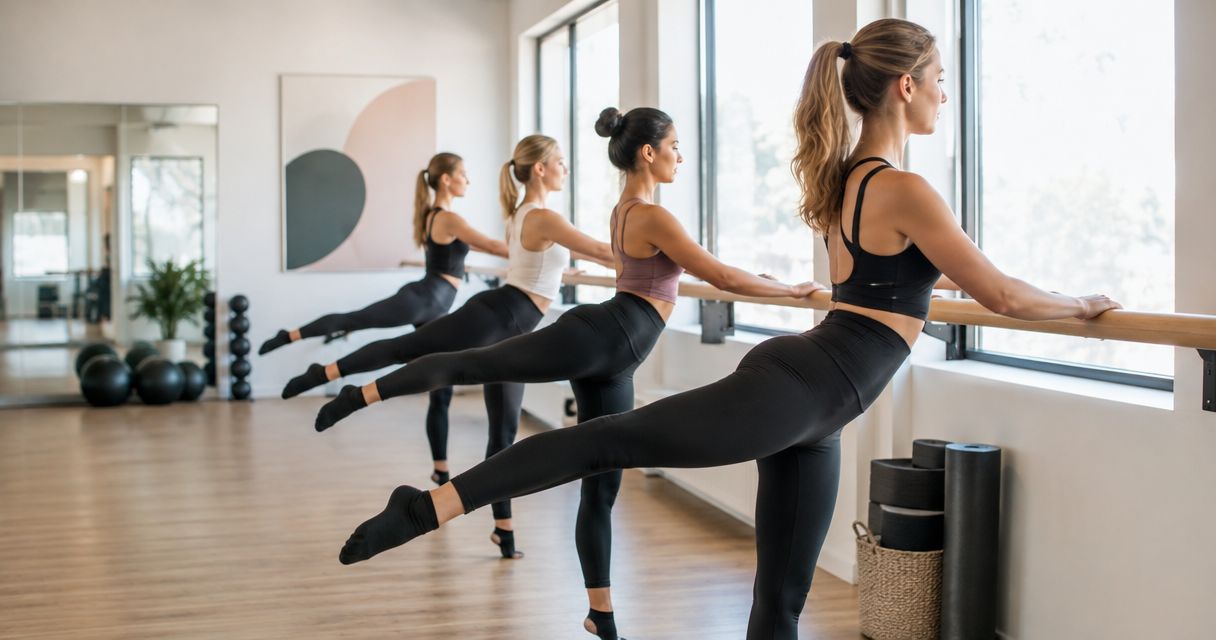
- Unified Hot Yoga offers Vinyasa, Yin, and 26&2 yoga alongside Hot Pilates, Barre, and Reformer Pilates.
Why this matters before your first heated class
A beginner-friendly pose needs more than a familiar name. You need a clear starting position, a manageable demand on your balance or joints, and a straightforward way to stop.
Heat adds another consideration. Sweating does not tell you whether your alignment is sound, and feeling warmer is not permission to force a deeper stretch. For your first hot yoga class in 2026, prioritize comfortable breathing over matching the person beside you.
This ranking is a preparation guide, not a class sequence. Your instructor determines the sequence, and different yoga formats use different postures. Ask for an alternative rather than inserting a pose that interrupts the class.
What makes the best beginner hot yoga pose?
Use these criteria to choose where to put your attention:
- Simple setup: You can understand where your feet, hands, and torso belong without complicated transitions.
- Adjustable effort: You can shorten a stance, reduce a bend, or use support without abandoning the basic position.
- Steady breathing: The position leaves you able to breathe without straining or holding your breath.
- Clear exit: You know how to come out without rushing or depending on someone else.
- Relevant limitations: Wrist pressure, knee bending, balance, and getting onto the floor matter more than how a pose looks.
No pose wins every category. A standing posture avoids pressure on your wrists but still demands balance; a floor posture removes standing balance but requires getting down and back up.
Best hot yoga poses for beginners at a glance
The order below favors simple setup before more demanding positions. Each pose has a distinct role, so use the table as a decision guide rather than a challenge to complete everything.
| Rank | Pose | Best for | Standout feature | Key limitation |
|---|---|---|---|---|
| 1 | Mountain Pose | Learning neutral standing alignment | Upright setup with arms relaxed | Still requires standing balance |
| 2 | Tabletop | Learning hand-and-knee placement | Stable floor-based starting position | Loads wrists and knees |
| 3 | Warrior II | Learning a wide standing stance | Clear relationship between feet, knees, and arms | Sustained leg effort |
| 4 | Supported Tree Pose | Practicing standing balance | Support makes the balance task adjustable | Requires single-leg weight bearing |
| 5 | Child’s Pose | Exploring a folded floor position | Arms and torso can be supported | Deep knee bending does not suit everyone |
| 6 | Low Lunge | Learning a staggered stance | Rear knee can rest on padding | Pressure on the rear knee |
| 7 | Corpse Pose | Resting while lying down | No standing balance or hand support | Flat lying is not comfortable for everyone |
1. Mountain Pose: best for learning standing alignment
Mountain Pose gives you a straightforward place to begin. Stand with your feet in a comfortable position, let your arms rest, and look ahead without lifting your chin.
Keep your knees responsive rather than forcing them backward. Notice whether your weight feels distributed across your feet, then take 1 comfortable breath before changing anything.
Mountain Pose pros:
- Simple upright starting position.
- No pressure through your hands.
- Easy to leave by sitting or changing stance.
Mountain Pose cons:
- Standing still still requires balance.
- It is not a substitute for leaving the heat when you feel unwell.
Best for: Learning how a manageable standing posture feels before adding movement.
Verdict: Start with Mountain Pose. Its simplicity makes it the default beginner recommendation, not a test of how long you can remain standing.
2. Tabletop: best for learning floor setup
Tabletop places you on your hands and knees. Start with 2 hands on the mat and arrange your shoulders over your hands and hips over your knees, adjusting with your instructor if that position feels uncomfortable.
Spread your fingers and avoid collapsing into your shoulders. Use padding beneath your knees if appropriate, and ask for another position if bearing weight through your wrists hurts.
Tabletop pros:
- Removes the need for standing balance.
- Gives you visible reference points for hand placement.
- Provides a clear starting position for floor-based instruction.
Tabletop cons:
- Places weight through your wrists.
- Kneeling can be uncomfortable despite padding.
Best for: Understanding floor alignment before adding movement.
Verdict: Choose Tabletop when your wrists and knees tolerate it. Skip it when the contact points hurt; a stable-looking pose is not automatically suitable for your body.
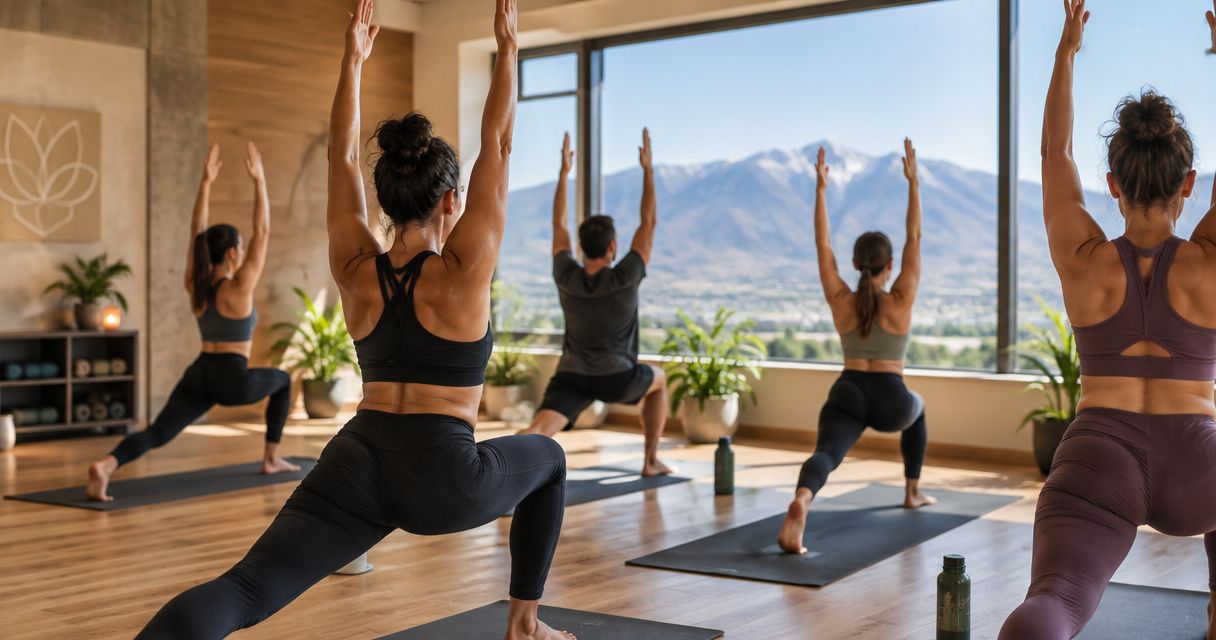
3. Warrior II: best for learning a wide standing stance
Warrior II uses a wide stance with the front knee bent, the back leg extended, and the arms reaching in opposite directions. Follow your instructor’s foot placement rather than copying another student’s stance width.
Keep the front knee pointing in the same direction as the front toes. Shorten the stance or reduce the bend when the position becomes difficult to control; your arms can rest when holding them out adds unnecessary effort.
Warrior II pros:
- Makes foot and knee direction easy to observe.
- Allows a shallower front-knee bend.
- Does not require supporting weight through your hands.
Warrior II cons:
- Sustained standing demands leg effort.
- A wide stance can become awkward to exit when you rush.
Best for: Learning standing alignment with a bent front knee.
Verdict: Try Warrior II with a manageable stance. A shorter, controlled version is a better first attempt than a deep position you cannot maintain comfortably.
4. Supported Tree Pose: best for practicing standing balance
Supported Tree Pose lets you explore balance with a wall or other instructor-approved support nearby. Shift weight onto one leg and place the other foot at the ankle or lower leg, avoiding direct pressure against the standing knee.
You can keep the lifted foot’s toes on the floor instead of raising the foot higher. Look at a fixed point and lower the foot as soon as you need to reset.
Supported Tree Pose pros:
- Lets you keep a hand on support.
- Offers a toe-down starting variation.
- Has a clear exit: return the foot to the floor.
Supported Tree Pose cons:
- Requires bearing weight mainly through one leg.
- Support must be available and appropriate for the class space.
Best for: Learning balance without treating wobbling as failure.
Verdict: Use support for Tree Pose. Standing independently is an optional progression, not the entry requirement.
5. Child’s Pose: best for exploring a folded floor position
Child’s Pose folds your torso toward your thighs from a kneeling position. Your arms can reach forward or rest beside you, and an instructor can help you choose an appropriate support arrangement.
Do not force your hips toward your heels. If the position compresses your knees or makes breathing uncomfortable, choose another resting posture instead.
Child’s Pose pros:
- Removes standing balance demands.
- Offers different arm positions.
- Allows supported variations when appropriate props are available.
Child’s Pose cons:
- Requires substantial knee bending.
- The folded position is not comfortable for every body.
Best for: A floor-based pause when kneeling and folding feel comfortable.
Verdict: Choose Child’s Pose only when it feels restful. Its reputation as a beginner pose does not make knee discomfort something to tolerate.
6. Low Lunge: best for learning a staggered stance
Low Lunge places one foot forward with the opposite knee on the floor. Keep the front foot planted and use your instructor’s guidance to arrange the stance without forcing your hips downward.
Pad the rear knee when suitable. Keep your hands supported rather than adding an overhead reach before you feel steady, and ask for help with the transition if stepping forward is awkward.
Low Lunge pros:
- Introduces a staggered stance close to the floor.
- Allows a smaller range of movement.
- Can use hand support when suitable props are available.
Low Lunge cons:
- Places pressure on the rear knee.
- Getting into and out of the position requires coordination.
Best for: Learning how to arrange your legs in a staggered floor position.
Verdict: Learn Low Lunge slowly with instruction. Skip the deeper version until your setup and exit feel controlled.
7. Corpse Pose: best for lying-down rest
Corpse Pose is a resting position on your back with your limbs arranged comfortably. Let your arms rest and avoid forcing your lower back or shoulders against the mat.
If lying flat is uncomfortable, ask for an alternative or support. Resting in a heated room still exposes you to heat, so lying down is not the answer to feeling overheated or ill.
Corpse Pose pros:
- Requires no standing balance.
- Removes weight bearing through your hands.
- Keeps the setup uncomplicated.
Corpse Pose cons:
- Flat lying does not suit everyone.
- Getting up from the floor requires a transition.
Best for: Rest at an appropriate point in the class.
Verdict: Choose Corpse Pose for comfortable rest, not heat symptoms. Tell the instructor when you feel unwell rather than trying to finish quietly.
How this ranking works
Mountain Pose leads because it has a simple setup and clear exit. Tabletop follows for floor orientation; Warrior II, Supported Tree Pose, and Low Lunge add specific standing or coordination demands. Child’s Pose and Corpse Pose serve different resting preferences.
The 2026 ranking reflects those movement characteristics, not clinical results or a claim that every instructor teaches these poses. A suitable modification outranks a higher-ranked pose that hurts.
Prepare for your first class
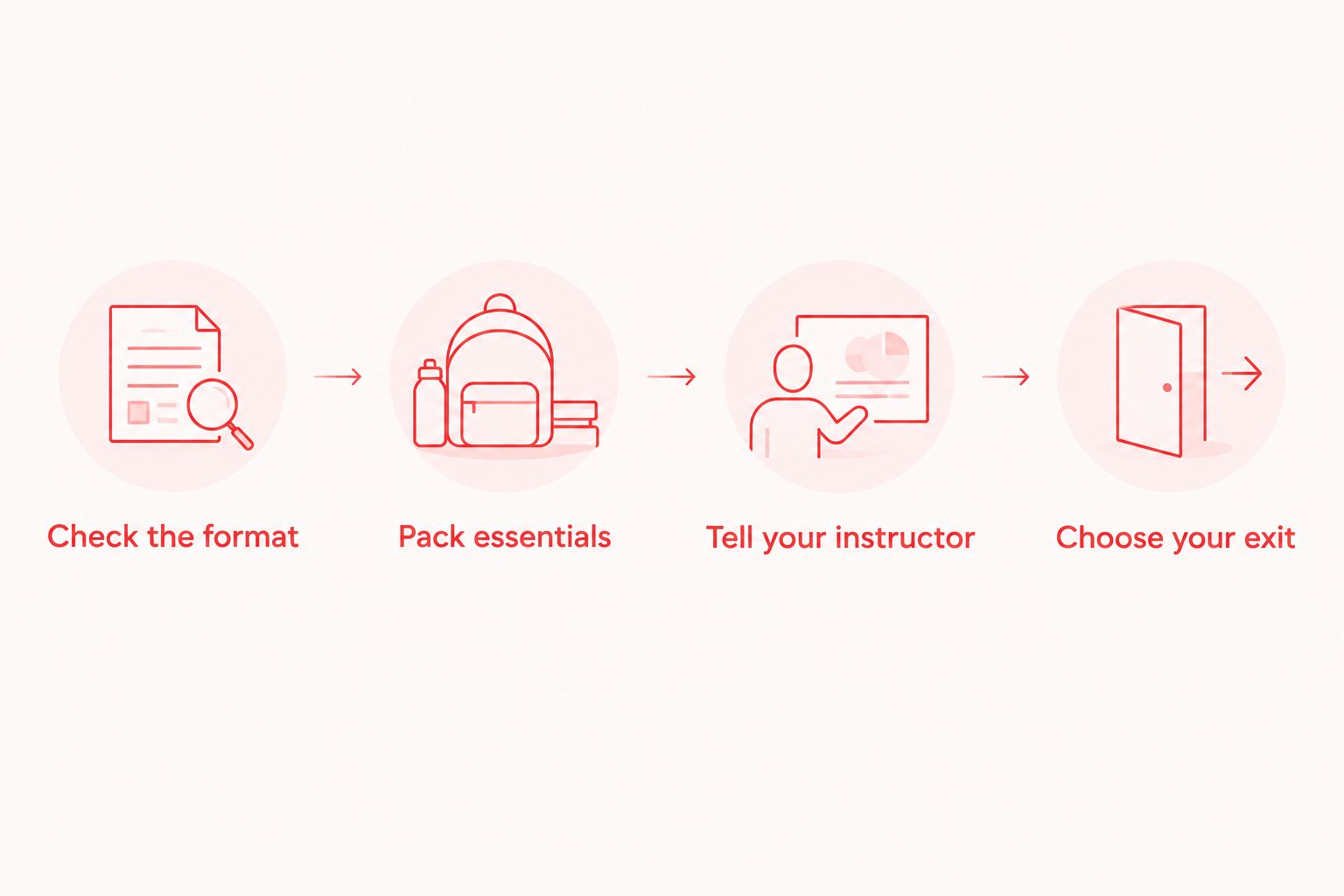
Keep your first visit simple. These steps help you arrive with useful questions rather than a pose checklist you feel obliged to finish.
- Check the format: Ask what the selected class involves and whether heat, standing work, or floor transitions need particular preparation.
- Pack essentials: Bring water and clothing you can move in. Confirm the studio’s mat, towel, and equipment requirements before you leave.
- Tell your instructor: Say that you are new and identify movements or positions that are uncomfortable for you.
- Choose your exit: Ask how to pause or leave the room without disrupting the class.
During practice, learn 1 pose at a time. Stop if you experience pain, dizziness, nausea, or unusual weakness, and tell the instructor. Seek medical help for severe or persistent symptoms; no yoga posture treats heat illness.
Choose a class, then consider a membership
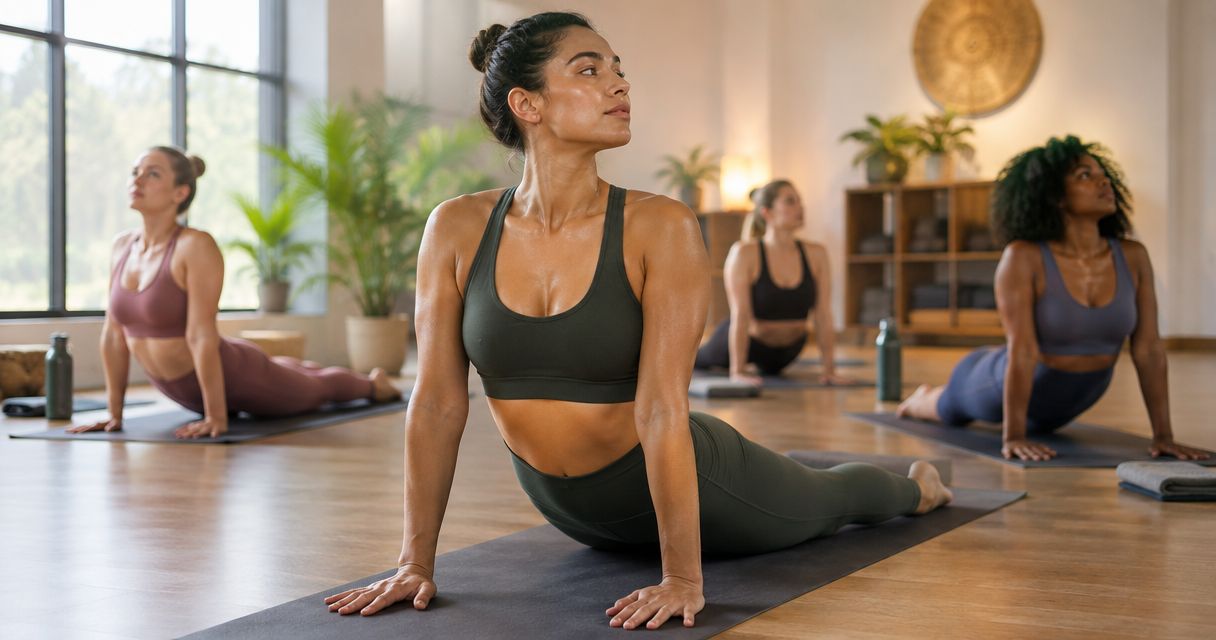
Unified Hot Yoga offers infrared-heated Vinyasa, Yin, and 26&2 yoga, plus Hot Pilates, Reformer Pilates, and Barre. Those names describe different practices, not a beginner-to-advanced ladder.
In general, Vinyasa links movement with breath, Yin uses sustained floor-based positions, and 26&2 follows a set posture format. Hot Pilates focuses on Pilates-based exercise in heat, Reformer Pilates uses an apparatus, and Barre incorporates ballet-barre-inspired exercise. Confirm the actual class structure rather than assuming a label answers every newcomer question.
Unified Hot Yoga is a local option for American Fork beginners seeking all-skill-levels yoga and Pilates classes. Choose according to the movement you want to learn, not which class sounds most demanding.
For a 2026 membership decision, review current terms and class access directly with the studio. Ask how the membership fits the formats you plan to attend before committing; this pose ranking cannot establish which membership suits your schedule.
FAQ
What are the best hot yoga poses for beginners in 2026?
Mountain Pose is the simplest starting recommendation, with Tabletop for floor setup and Corpse Pose for lying-down rest. Warrior II, Supported Tree Pose, Child’s Pose, and Low Lunge add distinct options when their positions feel comfortable.
Is hot yoga suitable if I have never done yoga before?
Being new to yoga does not rule out a beginner-appropriate heated class, but heat tolerance and individual health needs matter. Unified Hot Yoga offers classes for all skill levels; ask about the selected format and consult a healthcare professional when you have relevant medical concerns.
Is Child’s Pose always the best resting pose?
No, Child’s Pose is not comfortable for everyone because it involves deep knee bending and a folded torso. Ask your instructor for a resting position that suits your knees and breathing.
Should I stretch farther because the room is hot?
No, room heat is not a reason to force a deeper stretch. Use a controlled range and stop when a position causes pain.
What should I bring to my first hot yoga class?
Bring water and clothing that lets you move comfortably. Confirm mat, towel, and equipment requirements with the studio before your visit rather than assuming they are supplied.
Can I rest instead of doing every pose?
Yes, ask your instructor how to pause or use an appropriate alternative. If you feel unwell from the heat, tell the instructor and stop instead of treating a resting pose as a remedy.
How do I choose between yoga, Hot Pilates, Barre, and Reformer Pilates?
Choose by the movement format you want to learn and the class requirements you can manage. Ask about heat, equipment, floor transitions, and modifications rather than assuming one format is automatically easier.
One last thing
The most useful beginner skill is recognizing when a pose is not right for you. For your first class in 2026, success means learning your setup, your modification, and your exit—not completing every posture. Ask questions early; that gives your instructor something practical to respond to.