Best for Pleasant Grove residents who want yoga and Pilates at one studio: Unified Hot Yoga in American Fork. This 2026 guide helps you choose among its six class formats—Vinyasa, Yin, 26&2, Hot Pilates, Reformer Pilates, and Barre—based on how you want to move, not a one-size-fits-all ranking.
- Searching for best yoga studios in pleasant grove utah? Consider Unified Hot Yoga in nearby American Fork for class variety.
- Choose Vinyasa for flowing movement, Yin for longer holds, or 26&2 for a defined yoga sequence.
- Hot Pilates, Reformer Pilates, and Barre offer distinct alternatives to yoga; compare the movement style before booking.
- Check the current schedule, class requirements, and membership terms before choosing your first visit.
Why this matters
The best studio choice starts with a class you actually want to attend. A flowing yoga practice, a quiet stretch-focused session, and an equipment-based Pilates class ask different things of you. Treating them as interchangeable makes your first booking harder than it needs to be.
For Pleasant Grove residents, Unified Hot Yoga is an American Fork option offering all six formats for practitioners of all skill levels. Its yoga offering includes infrared-heated Vinyasa, Yin, and 26&2. That variety gives you different ways to practice without making heat tolerance, flexibility, or prior experience your only decision criteria.
Choose the movement first, then check the setting and schedule. A class name tells you the broad format; the current class description tells you what to prepare for. Neither a familiar name nor a heated room guarantees that a particular session suits your needs.
What makes the best yoga studio for your first class?
Use these criteria to compare your 2026 options before committing to a membership:
- Movement style: Decide whether you want flowing yoga, longer holds, a defined sequence, mat exercise, equipment-based Pilates, or barre work.
- Heat expectations: Confirm which session is heated and ask what the studio recommends for newcomers. Do not assume every class uses the same conditions.
- Instruction fit: Ask how the instructor introduces unfamiliar movements and explains alternatives. An all-skill-levels offering still includes different teaching styles.
- Practical attendance: Check the class time against your actual day, including the trip from Pleasant Grove. A schedule you cannot keep is not a useful schedule.
- Preparation requirements: Confirm what to bring, what equipment is provided, and whether a class has prerequisites.
- Membership fit: Read current terms after identifying the classes you want. Start with attendance needs, not the appeal of joining immediately.
Class options at a glance
These are class-format recommendations within one nearby studio, not a ranking of separate Pleasant Grove businesses. Each option has a distinct purpose; the order helps you compare yoga formats first, followed by Pilates and Barre.
| Class format | Best for | Standout characteristic | Key limitation |
|---|---|---|---|
| Vinyasa | Flowing, breath-linked yoga | Transitions connect postures | Following transitions takes attention |
| Yin | A slower, hold-focused practice | Longer, mostly floor-based holds | Stillness does not mean every position feels easy |
| 26&2 | A defined yoga sequence | A traditional sequence of postures and breathing exercises | Less variety in the sequence itself |
| Hot Pilates | Mat-based exercise in a heated setting | Pilates-style movement without a reformer | Heat adds a separate comfort consideration |
| Reformer Pilates | Equipment-based Pilates | A moving carriage and spring resistance | Equipment needs an introduction |
| Barre | Barre-supported fitness | Controlled movements using a barre | It is not a yoga practice |
1. Vinyasa: best yoga format for flowing movement
Vinyasa links yoga postures through movement coordinated with breathing. Rather than treating every pose as a separate stop, you move through transitions that form a sequence. The format suits people who want their yoga practice to feel active and connected.
You do not need to know every pose before your first class. You do need enough attention available to follow instructions while moving. Ask whether the session is appropriate for someone new to both yoga and a heated setting.
Vinyasa pros:
- Connects breathing, posture, and movement in one practice.
- Gives you a flowing alternative to a fixed sequence.
- Offers an opportunity to learn how transitions work, not just individual poses.
Vinyasa cons:
- Unfamiliar pose names and transitions can be difficult to follow initially.
- Pace varies by class, so the format name alone does not establish intensity.
Best for: You want moving yoga rather than extended stillness or equipment-based exercise.
First-class question: How does this session introduce transitions to a beginner?
Verdict: Choose Vinyasa if flowing movement is your priority; skip it as your default if you specifically want a slower, hold-focused practice.
2. Yin: best yoga format for longer holds
Yin yoga generally uses longer-held, mostly floor-based positions. It gives you time to settle into a shape rather than repeatedly move between poses. That makes it a distinct choice, not simply a slower version of Vinyasa.
Longer holds require patience and attention to sensation. Do not force a position because the room is quiet or because other people appear comfortable. A smaller range of motion is still a useful way to participate.
Yin pros:
- Gives you time to understand an individual position.
- Removes the need to follow a continuous moving sequence.
- Suits a preference for quieter, less transition-heavy practice.
Yin cons:
- Remaining still can feel challenging even when movement is limited.
- A stretch-focused format does not replace a strength-focused workout.
Best for: You want a slower practice with space to pay attention to longer holds.
First-class question: What support or position changes are available if a hold feels uncomfortable?
Verdict: Choose Yin for a hold-focused practice; skip it when your main goal is continuous movement.
3. 26&2: best yoga format for a defined sequence
The traditional 26&2 method consists of 26 postures and 2 breathing exercises. Its defining feature is the established sequence, rather than a changing flow. Confirm how the specific class follows that method and what beginners should expect.
A familiar sequence gives you reference points as you return. Familiarity does not mean you must complete every posture to its fullest expression. Learning where to stand, when to move, and how to adjust remains part of the practice.
26&2 pros:
- Provides a defined framework for learning the practice.
- Lets you revisit familiar postures across sessions.
- Suits people who prefer a recognizable structure.
26&2 cons:
- Offers less sequence variety than a changing flow.
- A defined sequence does not remove the challenge of practicing in heat.
Best for: You like knowing the overall structure before the session starts.
First-class question: How should a beginner approach the sequence without trying to match experienced practitioners?
Verdict: Choose 26&2 for structure; skip it if changing sequences are what keep you interested.
4. Hot Pilates: best format for heated mat exercise
Hot Pilates combines a heated setting with Pilates-style exercise. It differs from yoga in its movement focus and differs from Reformer Pilates because it does not center on a reformer machine. Ask about the specific session rather than assuming every Hot Pilates class follows the same plan.
Separate your interest in the exercise from your comfort with heat. You can like mat-based movement and still need an introduction to a heated room. Confirm what the instructor recommends before making this your first booking.
Hot Pilates pros:
- Offers an exercise-focused alternative to yoga.
- Uses a mat-based format rather than a reformer.
- Gives heat-preferring practitioners another class option.
Hot Pilates cons:
- Heat adds another factor to manage while learning movements.
- The class label alone does not establish pace or exercise selection.
Best for: You want Pilates-style mat exercise and specifically prefer a heated setting.
First-class question: What should someone new to both Pilates and heat know before attending?
Verdict: Choose Hot Pilates when both the movement and heated setting appeal to you; wait if you are uncertain about the heat component.
5. Reformer Pilates: best format for equipment-based exercise
Reformer Pilates uses a machine with a moving carriage and spring resistance. Learning the equipment is part of learning the class. It is a different experience from mat Pilates, even when some movement principles overlap.
Do not treat the springs as a simple difficulty dial. Their role depends on the exercise, and equipment settings need instruction. Ask how new participants learn the carriage, straps, and other equipment before booking.
Reformer Pilates pros:
- Offers an equipment-based alternative to mat exercise.
- Uses spring resistance as part of the movement setup.
- Suits people interested in learning a distinct Pilates apparatus.
Reformer Pilates cons:
- Unfamiliar equipment creates an additional learning step.
- You need class-specific guidance rather than copying a neighboring setup.
Best for: You want Pilates with equipment and are willing to learn its use.
First-class question: Does this session include an equipment introduction, or should I attend another class first?
Verdict: Choose Reformer Pilates for equipment-based practice; wait until you understand the entry requirements.
6. Barre: best format for barre-supported fitness
Barre fitness uses controlled exercises associated with barre work, often combining standing movements with other fitness exercises. The barre provides a support point, but the class is not simply a ballet lesson. Confirm the actual session format before attending.
You do not need to choose Barre because you already know dance terminology. Choose it because controlled, barre-supported movement interests you. If you are looking for yoga breathing and posture sequences, pick a yoga format instead.
Barre pros:
- Offers a standing, barre-supported movement option.
- Gives you an alternative to flowing yoga and reformer equipment.
- Suits a preference for controlled, focused exercises.
Barre cons:
- Repeated movements can feel demanding despite their small range.
- It does not provide the same practice structure as yoga.
Best for: You want barre-supported fitness rather than a yoga sequence.
First-class question: What movements and equipment does this session use?
Verdict: Choose Barre for controlled fitness work; skip it if your priority is a specifically yoga-based class.
Prepare for your first visit in 2026
Use a simple sequence: Choose your format, check requirements, pack essentials, tell your instructor. These steps apply whether you start with yoga, Pilates, or Barre, while the exact equipment requirements depend on the class.
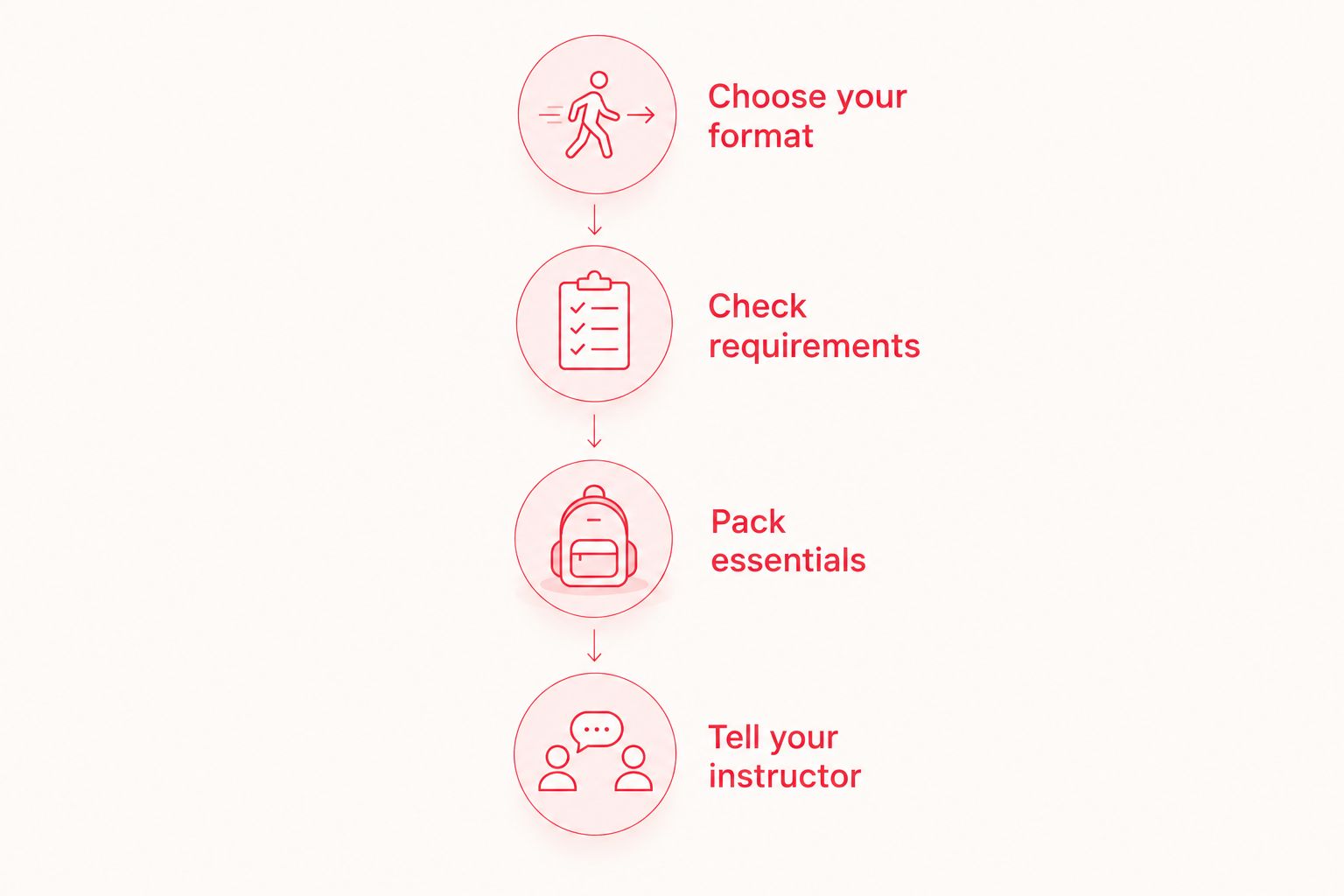
Check requirements before packing
Ask about a mat, towel, water, footwear or grip socks, and any provided equipment. These are questions to confirm, not a statement of studio policy. Reformer Pilates and heated mat classes do not necessarily have the same requirements.
Wear clothing that allows comfortable movement. For a heated class, follow the studio's preparation guidance and arrive hydrated. If a health condition affects your exercise or heat tolerance, discuss participation with an appropriate healthcare professional.
Tell the instructor you are new
Explain whether you are new to the format, the equipment, or heated exercise. Ask how to take a break and how to request an alternative movement. You do not need to prove your readiness by following every instruction without adjustment.
If you become dizzy or feel unwell, stop exercising and tell the instructor. Heat is a class condition, not a reason to push through warning signs. A welcoming community starts with room to communicate your needs.
How these recommendations are ranked
The order compares movement styles, structure, equipment, heat considerations, and beginner preparation—not claimed results or a score for every local studio. Vinyasa, Yin, and 26&2 occupy different yoga use cases; Hot Pilates, Reformer Pilates, and Barre remain equally valid choices when their format matches your preference.
Unified Hot Yoga is best for Pleasant Grove residents seeking several yoga and Pilates formats at an American Fork studio. Its location outside Pleasant Grove is a practical limitation to check against your routine. Class variety is useful only when the sessions you want fit your schedule.
Which class should you choose?
For your first booking in 2026, choose the format whose movement style you can describe and genuinely want to try. Pick Vinyasa for flow, Yin for holds, or 26&2 for a defined sequence. Choose Hot Pilates, Reformer Pilates, or Barre when exercise format—not yoga itself—is your priority.
Before selecting a Unified Hot Yoga membership, check the current schedule, preparation guidance, and membership terms. Build that decision around classes you can realistically attend. You can enjoy belonging to a studio without turning your first visit into a long-term commitment.
FAQ
What's the best yoga studio near Pleasant Grove for different class styles?
Unified Hot Yoga in American Fork is a nearby option for residents seeking Vinyasa, Yin, 26&2, Hot Pilates, Reformer Pilates, and Barre. Choose it for that range of formats, then check whether its current schedule fits your routine.
Which yoga class should a beginner try first?
Choose your first yoga class by movement preference: Vinyasa for flow, Yin for longer holds, or 26&2 for a defined sequence. Ask whether the specific session supports someone new to both yoga and heated exercise.
Is Yin easier than Vinyasa?
Yin is slower and generally uses longer holds, but slower does not automatically mean easier. Vinyasa asks you to follow transitions; Yin asks you to stay attentive during sustained positions.
What does 26&2 yoga mean?
The traditional 26&2 method includes 26 postures and 2 breathing exercises. Ask how the scheduled class follows that sequence and how beginners should approach it.
Is Hot Pilates the same as Reformer Pilates?
Hot Pilates and Reformer Pilates are different formats. Hot Pilates uses heated mat-based exercise, while Reformer Pilates centers on a machine with a moving carriage and spring resistance.
What should I bring to my first heated class?
Confirm the studio's requirements for water, a towel, a mat, and clothing before attending. Ask what is provided rather than assuming equipment rental or borrowing is available.
Do I need dance experience for Barre?
Barre fitness is not simply a ballet lesson, so dance experience is not the main selection criterion. Ask about the session's beginner guidance and choose it if barre-supported fitness appeals to you.
Should I choose a membership before my first class in 2026?
Choose your class format and check the schedule before selecting a membership in 2026. Read current membership terms and decide based on the sessions you expect to attend.
One last thing
A slower class and a beginner class are not the same thing. Yin can demand patience, a defined sequence can still feel unfamiliar, and equipment needs instruction even when a movement looks simple. For your 2026 first visit, ask about beginner guidance rather than choosing solely by the class name.