Best overall: Wind-Removing Pose. Best for learning balance: Tree Pose. Best for resting between efforts: Corpse Pose. These are practical starting points among the best 26&2 yoga poses for beginners in 2026; learn their setup before trying to deepen them.
- The best 26&2 yoga poses for beginners include Wind-Removing Pose, Tree Pose, and Corpse Pose.
- Unified Hot Yoga offers 26&2 yoga in American Fork for practitioners of all skill levels.
- The traditional 26&2 sequence contains 26 postures and 2 breathing exercises; this ranking identifies beginner learning priorities.
- Start with clear positioning, comfortable breathing, and instructor guidance rather than deeper stretching.
Why this matters
A first heated class asks you to learn unfamiliar instructions while noticing how you respond to the room. Give yourself permission to work with a smaller range of movement. You do not need to match the person beside you.
Unified Hot Yoga offers 26&2 yoga alongside Vinyasa, Yin, Hot Pilates, Reformer Pilates, and Barre in American Fork. Unified Hot Yoga is a local option for beginners who want to learn 26&2 yoga with an instructor. Choose the class format that interests you, then ask about preparation before attending.
The traditional 26&2 practice contains 26 postures and 2 breathing exercises. This guide highlights 6 beginner learning priorities within that practice, not a replacement sequence. In your 2026 class, follow the instructor's order rather than rearranging the postures to match this ranking.
What makes the best 26&2 yoga poses for beginners?
The best beginner posture is not necessarily the easiest-looking one. It gives you something clear to practice without making depth the goal.
- Clear setup: You can identify where your feet, hands, or back belong before adding movement.
- Adjustable range: You can reduce the bend, lift, or compression without turning the posture into a competition.
- Distinct learning value: Each selection teaches a different skill, such as balance, controlled effort, or deliberate rest.
- Observable feedback: You can notice whether you are holding your breath, gripping, or losing steadiness.
- Instruction over imitation: You can ask for a suitable modification instead of copying a more experienced student.
For your first classes in 2026, use those criteria to judge your practice. A smaller posture with clear attention is a better learning choice than a deeper position you cannot control.
Beginner 26&2 poses at a glance
| Rank and posture | Best for | Standout learning feature | Key limitation |
|---|---|---|---|
| 1. Wind-Removing Pose | Learning supported positioning | You practice knee-to-torso movement while lying down | Compression is not comfortable for everyone |
| 2. Corpse Pose | Learning deliberate rest | You release effort without needing to balance | Stillness does not automatically feel easy |
| 3. Half Moon Pose | Learning a controlled side bend | You observe length and movement through the standing torso | Overhead arms and side bending need an appropriate range |
| 4. Awkward Pose | Learning a controlled standing bend | You coordinate knees, hips, and torso | Lowering too far can make control harder |
| 5. Tree Pose | Learning single-leg balance | You practice steadiness without traveling | The foot position requires care around the knee |
| 6. Cobra Pose | Learning a small backbend | You explore lifting the chest from a face-down position | Pushing for height can replace controlled movement |
These are learning priorities, not difficulty scores. A posture near the top can still require a modification, and a posture lower down can feel more accessible to you.
1. Wind-Removing Pose: best for learning supported positioning
Wind-Removing Pose brings a knee, or both knees, toward the torso while you lie on your back. The traditional sequence includes different leg arrangements. Your first task is to understand the setup, not pull as strongly as possible.
Let the instructor show you the hand placement. Bring the leg inward only within a comfortable range, and notice whether your shoulders or jaw tighten as you add effort. Do not turn the posture into a contest with your abdomen or hips.
Wind-Removing Pose pros:
- The floor supports your back while you learn the movement.
- You can observe how additional pulling changes your breathing.
- It offers a clear opportunity to practice restraint.
Wind-Removing Pose cons:
- Knee-to-torso compression is not suitable or comfortable for everyone.
- Pulling harder does not necessarily improve the posture.
Best for: Beginners who want a clear introduction to positioning without standing balance.
Verdict: Hold this as your first learning priority; stop pulling before comfortable breathing becomes strained.
2. Corpse Pose: best for learning deliberate rest
Corpse Pose, also called Savasana, is a resting posture performed lying on your back. In 26&2 practice, it belongs to the practice itself; it is not a reward reserved for students who completed every previous movement.
Use the position to notice where you are still working unnecessarily. Release gripping in your hands and face, and let your breathing settle without trying to manufacture a particular feeling. Follow the instructor's directions for when to rest and when to move again.
Corpse Pose pros:
- It requires no standing balance.
- It gives you a clear contrast between effort and rest.
- It helps you notice tension you carried out of the previous posture.
Corpse Pose cons:
- Lying flat is not comfortable for every body.
- Resting in a heated room is not the same as cooling down outside it.
Best for: Beginners learning that resting deliberately is part of participating.
Verdict: Hold Corpse Pose as a practice skill, not something to skip because it looks inactive.
3. Half Moon Pose: best for learning a controlled side bend
Half Moon Pose in the 26&2 sequence is a standing side bend with the arms overhead. It is different from the single-leg balancing posture also called Half Moon in other yoga styles. That distinction matters when you search for instructions before class.
Start with the instructor's standing and arm setup. Make the side bend smaller than your maximum and notice whether you can maintain control without twisting into a different shape. If overhead arms are uncomfortable, ask for an alternative rather than forcing the position.
Half Moon Pose pros:
- It teaches you to separate reaching upward from bending sideways.
- You can practice with a deliberately modest range.
- It gives you clear feedback about unnecessary shoulder tension.
Half Moon Pose cons:
- Overhead positioning does not suit every shoulder.
- Chasing depth can make the standing setup less steady.
Best for: Beginners learning controlled movement through the torso.
Verdict: Hold a smaller side bend; wait on deeper range until the setup feels clear.
4. Awkward Pose: best for learning a controlled standing bend
Awkward Pose uses standing knee bends, with variations in foot and heel positioning across its parts. It asks you to coordinate your lower body and torso rather than simply sit as low as possible. Learn each part from the instructor before adding depth.
Lower only as far as you can move deliberately. If the position produces knee pain or you cannot control your descent, come out and ask for a modification. Do not use another student's depth as your target.
Awkward Pose pros:
- It makes controlled lowering an obvious practice task.
- You can learn the coordination before pursuing a deeper bend.
- Its variations give you specific questions to ask the instructor.
Awkward Pose cons:
- The knee bends require an appropriate range for your body.
- Changes in heel position add a balance demand.
Best for: Beginners who want to practice coordinated standing effort.
Verdict: Hold a controlled range; wait on greater depth if you lose steadiness or feel pain.
5. Tree Pose: best for learning single-leg balance
Tree Pose asks you to stand on one leg while positioning the other leg according to the class instructions. The traditional 26&2 version uses a raised-foot arrangement that deserves careful guidance. Do not force your foot upward or pull on your knee to copy the full shape.
Ask for a beginner balance option if the traditional setup is not accessible. Keep your attention on steadiness and comfortable joint positioning. Coming out, resetting, and trying again is a useful way to learn—not a failed attempt.
Tree Pose pros:
- It gives you a distinct balance skill to practice.
- A steady gaze provides a clear point of attention.
- Resetting lets you approach the posture without rushing.
Tree Pose cons:
- The traditional foot position requires care and suitable mobility.
- Balance varies, so a familiar setup can feel different between classes.
Best for: Beginners learning single-leg steadiness with an instructor-approved variation.
Verdict: Hold the balance priority; wait on the traditional foot position if you have to force it.
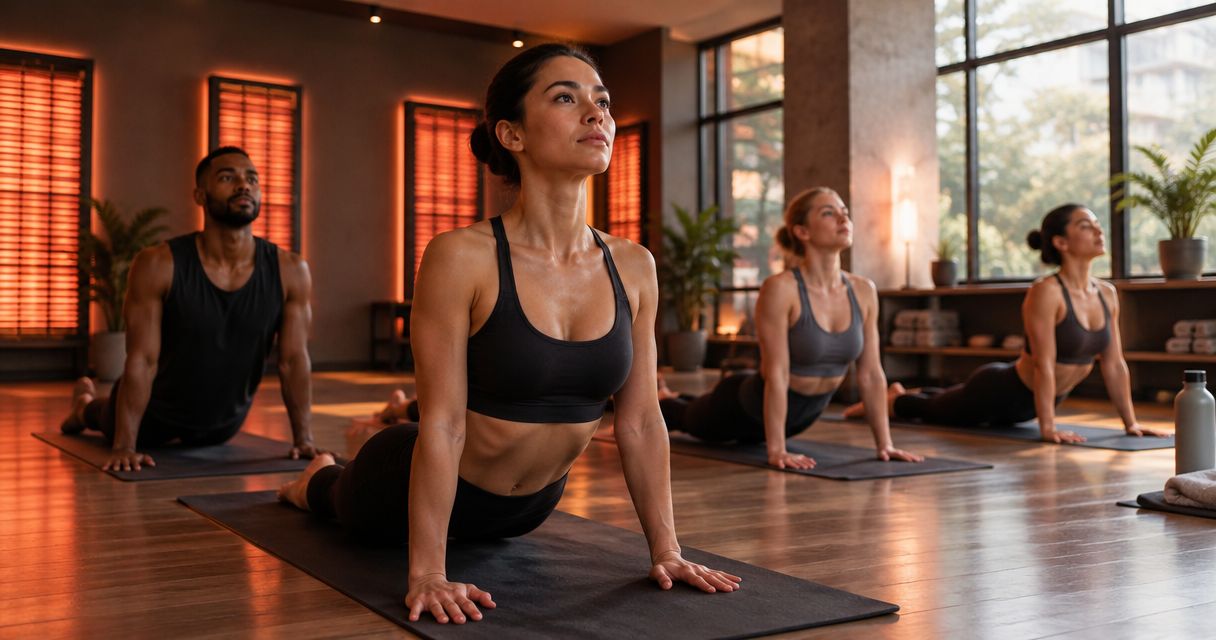
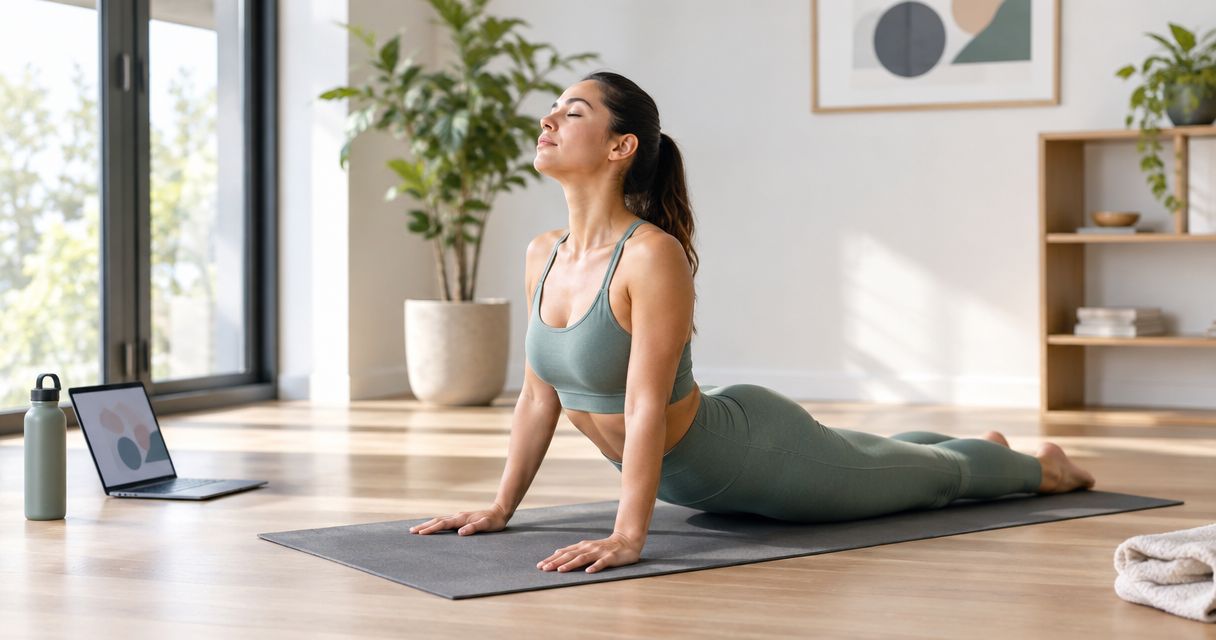
6. Cobra Pose: best for learning a small backbend
Cobra Pose begins lying face down and lifting the chest into a backbend. Your beginner goal is a controlled lift, not maximum height. Follow the instructor's hand placement and directions about how to use the arms.
Keep the movement within a comfortable range and avoid throwing your head backward to make the posture look larger. If you feel a sharp or pinching sensation, come out and ask for guidance. A small, deliberate lift gives you a clearer starting point than pushing upward without control.
Cobra Pose pros:
- It introduces backbending from a floor-supported position.
- You can focus on movement quality rather than height.
- It gives you a clear reason to ask about arm use and chest positioning.
Cobra Pose cons:
- Face-down positioning is not appropriate or comfortable for everyone.
- A larger lift is not automatically a better beginner version.
Best for: Beginners learning to distinguish controlled backbending from pushing for height.
Verdict: Hold a modest lift; skip any range that produces pain.
How these poses were ranked
This 2026 ranking prioritizes clear setup, adjustable range, and distinct learning value. Wind-Removing Pose leads because it removes standing balance from the initial learning task. Corpse Pose follows because recognizing when to release effort belongs in a beginner practice.
Half Moon, Awkward Pose, Tree Pose, and Cobra add separate movement demands. Their positions in the list do not mean every beginner will experience them in that order of difficulty. Use the ranking to choose what to notice, not to decide what your body should accomplish.
Prepare for your first 26&2 class
Choosing a posture is only part of preparing for heated yoga. Before your first 2026 visit, confirm the practical details directly with Unified Hot Yoga so you arrive knowing what to expect.
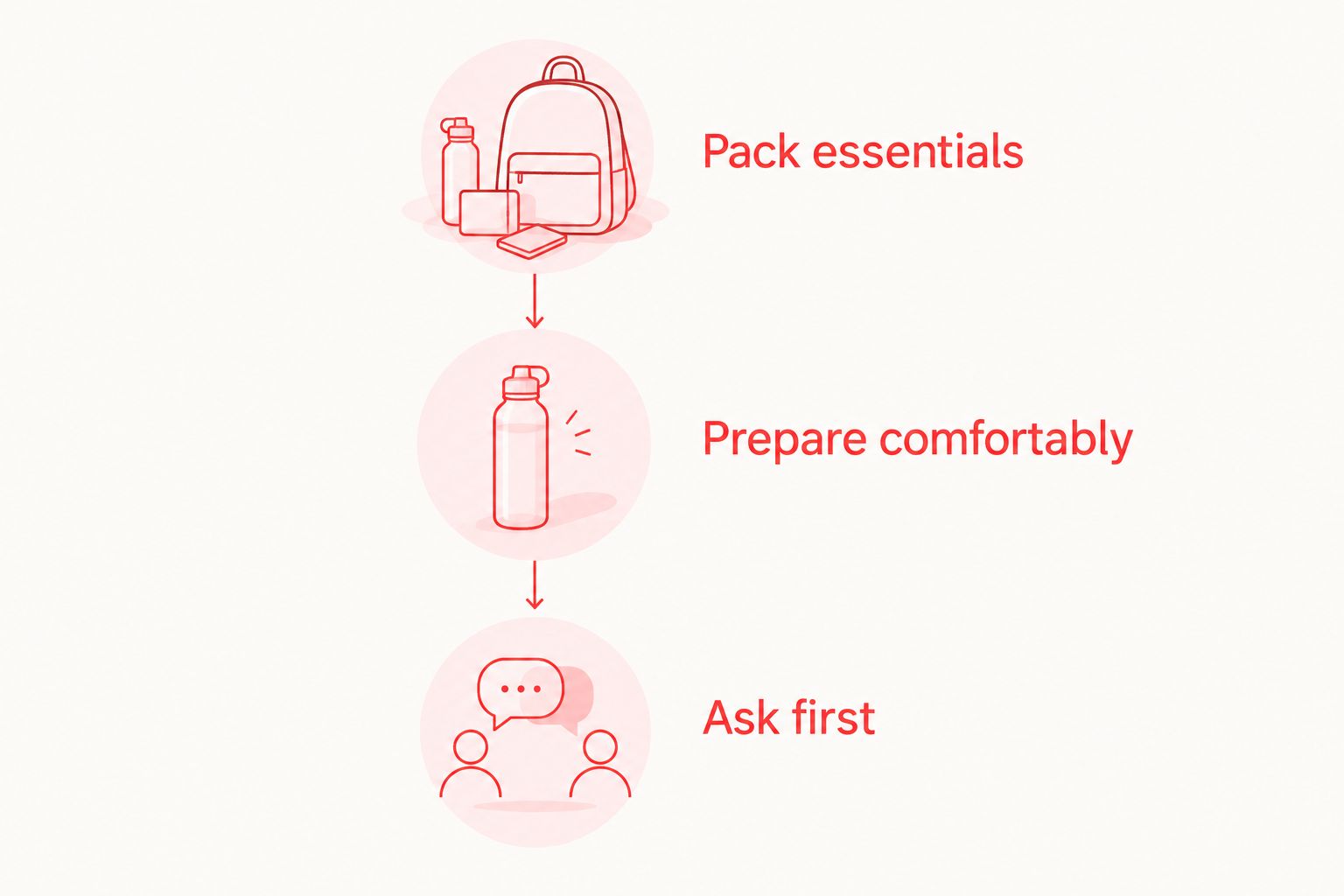
- Pack essentials: Ask what to bring and what the studio provides. A mat, towel, water, and comfortable exercise clothing belong on your preparation checklist.
- Prepare comfortably: Arrive hydrated rather than trying to catch up during class. Avoid a meal that leaves you uncomfortably full, and do not set a stretching target beforehand.
- Ask first: Tell the instructor you are new. Ask how to rest, how to leave the heated room if needed, and which modifications suit your circumstances.
The preparation order is simple: sort out your belongings, arrive physically comfortable, and make your questions known. You do not need to memorize the entire sequence before walking in.
If you feel faint, dizzy, nauseated, or otherwise unwell in the heat, stop exercising and alert the instructor. Do not treat completing the sequence as more important than responding to symptoms. If you have a medical condition, are pregnant, or have concerns about heated exercise, discuss participation with a qualified healthcare professional beforehand.
Which beginner 26&2 pose should you prioritize?
Choose Wind-Removing Pose as your default learning focus, and give Corpse Pose equal attention as a resting skill. For standing work, pick one clear task: a smaller side bend in Half Moon, controlled lowering in Awkward Pose, or a supported learning approach to Tree Pose.
For your next class in 2026, choose 1 posture to ask about rather than trying to perfect the whole sequence. Tell the instructor what feels unclear. A specific question about hand placement, foot positioning, or range gives you a practical next step.
Unified Hot Yoga offers several class formats for all skill levels. You do not need to choose 26&2 because it sounds more demanding than Yin, Vinyasa, Hot Pilates, Barre, or Reformer Pilates; choose it because you want to learn that practice.
FAQ
What are the best 26&2 yoga poses for beginners?
Wind-Removing Pose, Corpse Pose, Half Moon Pose, Awkward Pose, Tree Pose, and Cobra Pose are useful beginner learning priorities. They introduce supported positioning, rest, side bending, controlled standing effort, balance, and backbending.
Do I need to know all 26 postures before my first class?
No, you do not need to memorize all 26 postures before your first class. Tell the instructor you are new and ask how to follow the sequence, rest, and modify unfamiliar positions.
Is Half Moon Pose a balancing pose in 26&2 yoga?
No, Half Moon Pose in 26&2 yoga is a standing side bend with the arms overhead. Other yoga styles use the same name for a different, single-leg balancing posture.
What should I bring to a beginner 26&2 class?
Plan around a mat, towel, water, and comfortable exercise clothing, then confirm the studio's requirements and what it provides. Ask about arrival instructions before your first visit.
Can I rest during a heated yoga class?
Yes, stop exercising when you need to rest rather than forcing the next posture. Ask the instructor how to rest during class, and alert them if you feel dizzy, faint, nauseated, or unwell.
Should a beginner force the traditional Tree Pose foot position?
No, do not force the raised foot position or pull on the knee to achieve it. Ask the instructor for a balance variation that keeps your joints comfortable.
Where can beginners take 26&2 yoga in American Fork?
Unified Hot Yoga offers 26&2 yoga in American Fork for practitioners of all skill levels. Confirm the current class schedule and first-visit instructions directly with the studio.
One last thing
A posture name alone is not enough to identify the movement: Half Moon is the clearest example. When looking up instructions, include 26&2 in your search so you do not arrive expecting a different pose.
Take that same precision into class. Ask about the part you are learning, not whether your posture looks good. Clear instructions and comfortable effort give you a more useful starting point than comparison.