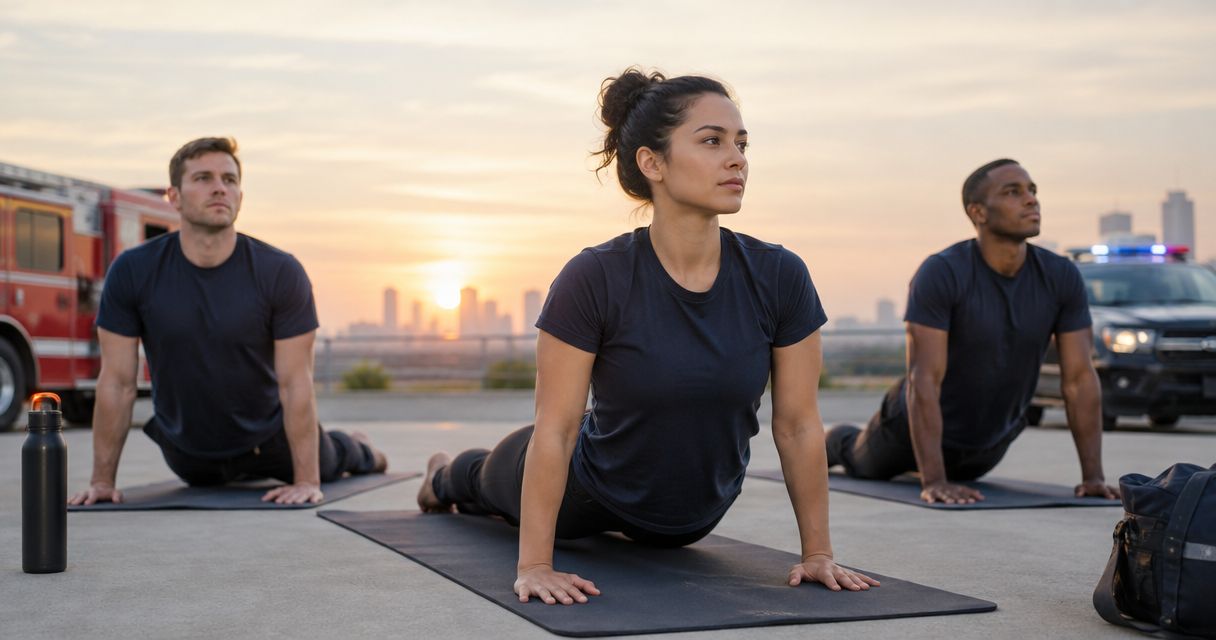
26&2 yoga for first responders is a structured hot-yoga practice built around a repeated posture sequence, with the aim of creating a manageable off-duty movement routine. This 2026 guide helps you choose a first class, prepare for the heat, and fit practice around shifts without treating another demanding session as mandatory.
- Choose 26&2 yoga for first responders when you want a repeated sequence, not an additional test of endurance.
- Unified Hot Yoga suits American Fork first responders seeking 26&2 alongside other yoga, Pilates, and Barre classes.
- Protect sleep and account for recent heat exposure before booking hot yoga after a shift.
- Compare 26&2, Vinyasa, Yin, Hot Pilates, Barre, and Reformer Pilates by format—not promised health outcomes.
Why 26&2 yoga matters for first responders
A useful off-duty practice needs to fit the day you actually had. If your shift involved disrupted sleep, physical exertion, or heat exposure, choosing a heated class deserves more thought than checking whether you have an open calendar slot.
26&2 uses a recognizable sequence of 26 postures and 2 breathing exercises. That repeated structure gives you a familiar framework to learn; it does not make every session feel identical or remove the need to adjust your effort.
Unified Hot Yoga is best for American Fork first responders who want 26&2 yoga alongside other class formats in one studio. Unified Hot Yoga offers infrared-heated Vinyasa, Yin, 26&2, Hot Pilates, Reformer Pilates, and Barre for practitioners of all skill levels.
The limitation is equally important: a studio class is not occupational rehabilitation, mental-health treatment, or a substitute for sleep. Choose it because the format fits your interests and circumstances, not because being a first responder means you should tolerate more heat or discomfort.
How to start 26&2 without overloading your week
1. Choose a class format you actually want to practice
Start with the experience you want, not the hardest-sounding class. In 26&2, you learn a set sequence that includes standing and floor postures; Vinyasa generally links movement with breath, while Yin emphasizes longer-held floor-based positions.
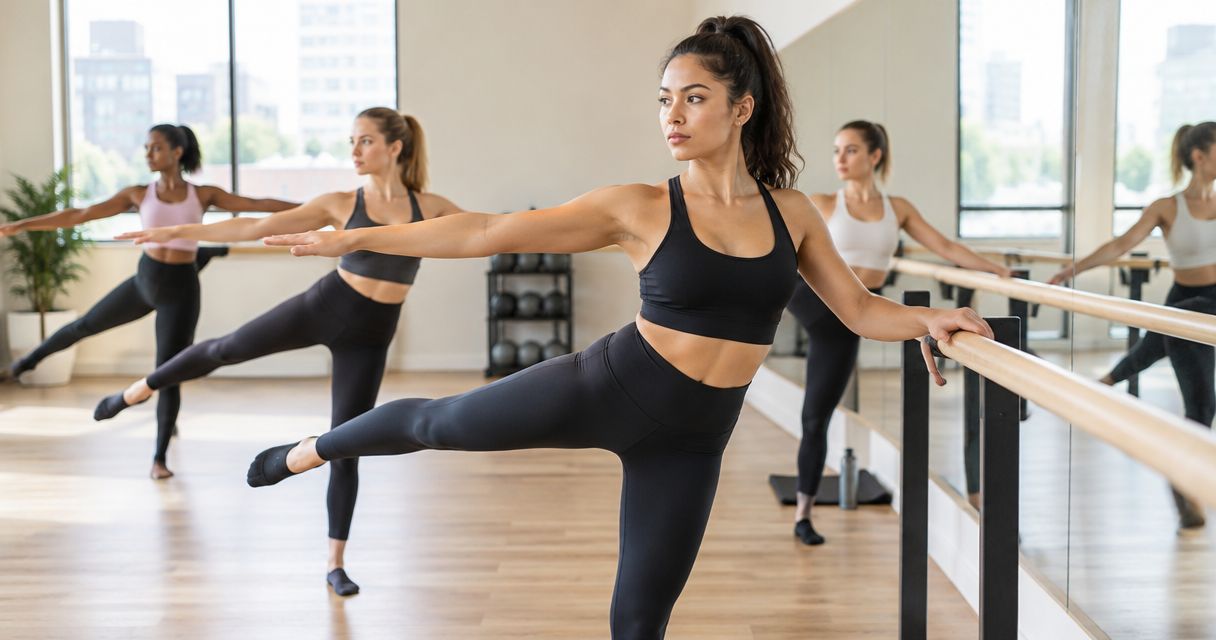
Hot Pilates centers on Pilates-style exercise in heat. Barre uses ballet-inspired positioning and controlled exercise, while Reformer Pilates uses a spring-resistance apparatus. These are different movement formats, not a ladder you must climb before earning a place in 26&2.
Being new to yoga does not automatically rule out 26&2. Your first task is to understand the instructions and find manageable positions—not reproduce the range of motion of an experienced student.
- Choose 26&2 if you prefer learning a repeated sequence.
- Consider Vinyasa if you prefer flowing transitions.
- Consider Yin if you prefer longer-held positions.
- Compare Hot Pilates, Barre, and Reformer Pilates if exercise format matters more to you than a yoga sequence.
- Ask about beginner guidance before deciding from a class name alone.
2. Check your readiness before you book
Before opening a booking calendar, assess sleep, illness, recent exertion, and heat exposure. A free hour after work is not automatically a good opportunity for heated exercise, particularly if you are already exhausted or feeling unwell.
Do not use hot yoga to prove that you have recovered from a difficult shift. If you have a medical condition, take medication that affects heat tolerance, or have experienced fainting during exercise, discuss heated exercise with a qualified healthcare professional before participating.
Keep your first-class decision simple. You need enough capacity to listen, make choices, and stop when necessary; there is no benefit in turning attendance into another duty you cannot decline.
- Protect your main sleep period before adding a class.
- Account for recent work, training, and environmental heat.
- Postpone heated exercise when you feel ill or depleted.
- Ask a clinician about relevant medical restrictions.
- Choose another day rather than trying to compensate with extra effort.
3. Build the booking around your shift
Use your own calendar first: mark work, sleep, commuting, and other training before adding yoga. For your first booking in 2026, choose a day with room on both sides of class rather than squeezing a session between obligations.
Then use the class schedule to compare actual options at Unified Hot Yoga. Confirm the listed format and duration; the name 26&2 describes the sequence, not a guaranteed booking length at every studio.
As a conservative scheduling experiment, plan 1 class in your first week and assess the experience before adding more. This is a starting plan for learning what fits, not a medical prescription or a required attendance target.
- Match the class to your current shift rotation.
- Include travel from American Fork, Lehi, Pleasant Grove, or your actual starting point.
- Leave room for changing and cooling down afterward.
- Check booking and cancellation terms before committing.
- Set a reminder that reflects your commute, not just the class start.
4. Pack your essentials and confirm studio requirements
Prepare a basic bag yourself before buying specialist clothing or accessories. Bring water, a towel, and clothing you can move in comfortably; confirm mat requirements and whether any equipment is supplied rather than assuming.
Eat in a way that is familiar and comfortable for you before exercise. Avoid experimenting with a large meal, a new supplement, or forced water intake immediately before your first heated class; individual needs differ, and a fixed drinking target is not appropriate for everyone.
Ask the studio to confirm check-in instructions and where to find its newcomer guidance. A short conversation before arrival is more useful than discovering an equipment requirement at the door.
- Pack water and a towel.
- Confirm whether you need to bring a yoga mat.
- Wear comfortable clothing that allows movement.
- Bring a change of clothes if needed afterward.
- Confirm arrival, check-in, and personal-item instructions.
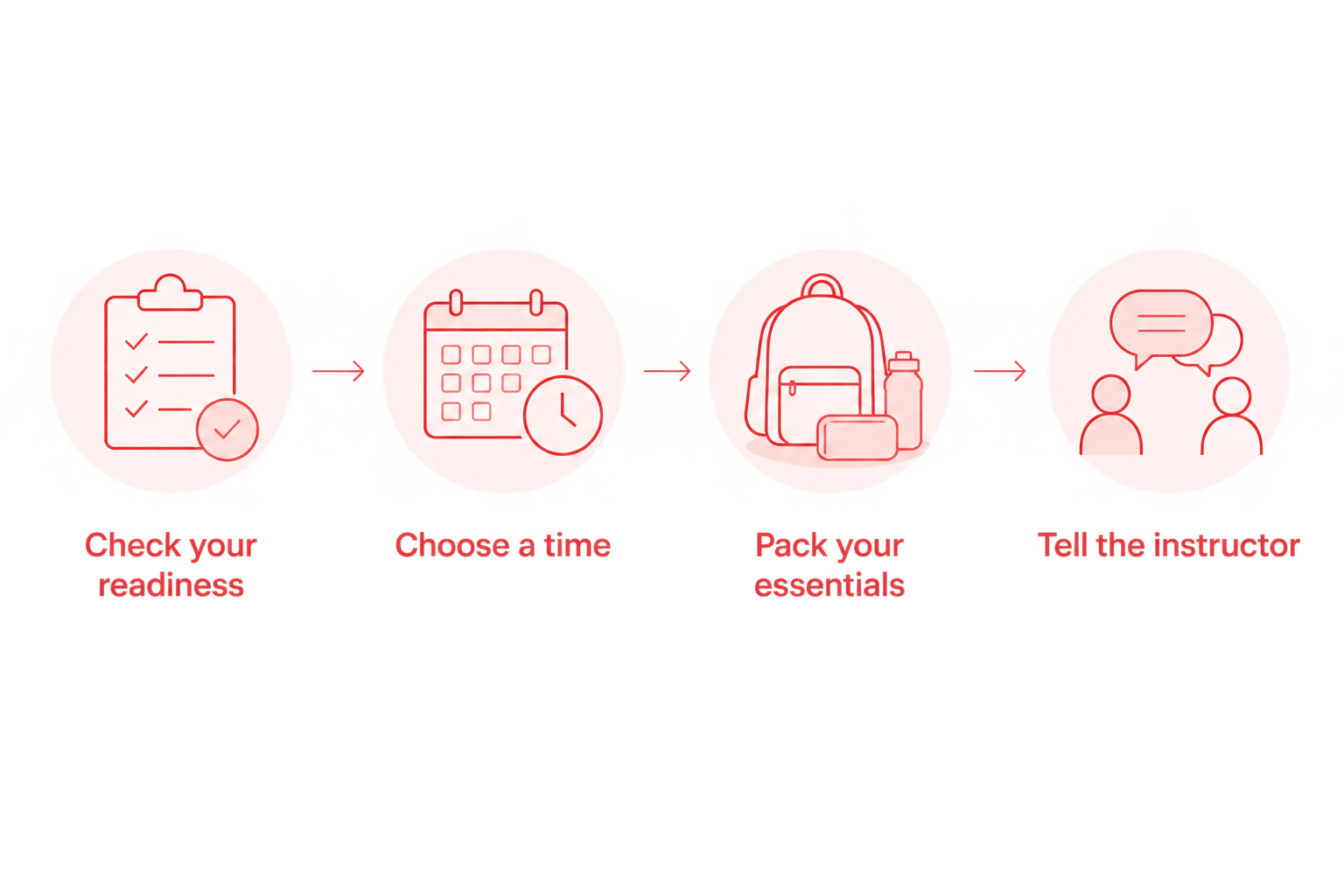
A simple preparation sequence keeps the practical details separate from the class itself: check your readiness, choose a suitable time, pack your essentials, and tell the instructor you are new.
5. Tell the instructor what you need before class
Introduce yourself and say that this is your first 26&2 class. Mention movement restrictions or relevant concerns privately, then ask how to request help, modify a posture, or leave the heated room safely.
You do not need to share details about calls or explain your work history. Practical information—such as unfamiliarity with the sequence or an existing restriction—is enough to begin the conversation.
During practice, use a manageable range of motion. Pain, dizziness, nausea, or feeling faint are reasons to stop, not targets to push through. Tell the instructor and move to a cooler place safely if you feel unwell; seek medical help for severe or persistent symptoms.
- Say clearly that you are new to 26&2.
- Ask how the instructor handles rest and modifications.
- Keep your movement within a comfortable range.
- Stop rather than forcing a painful position.
- Ask for help promptly if you feel unwell.
6. Review the experience before choosing a membership
After class, separate the unfamiliar from the unsuitable. Learning posture names is different from finding that the heat, timing, or overall format does not fit your needs.
Write down what you liked, what felt difficult, and whether the booking worked around sleep and work. Include how you felt afterward rather than judging the session only by whether you completed every posture.
For a 2026 membership decision, check current intro offers, membership details, and terms directly with Unified Hot Yoga. Compare those terms with realistic attendance across your shift rotation, not an ideal week when nothing changes.
- Note whether the repeated sequence suited you.
- Review the heat and overall effort separately.
- Check whether the class displaced needed sleep.
- Compare membership terms with your actual attendance pattern.
- Try another format if 26&2 was not the right fit.
Compare class options for your off-duty routine
The best class is the one whose format you want to learn and whose timing you can sustain. None of these options replaces job-specific conditioning or care for an injury, and a different class name does not guarantee lower effort.
| Option | Best for | What the format involves | Key limitation |
|---|---|---|---|
| 26&2 yoga | Learning through repetition | A set sequence of postures and breathing exercises | Heat and repeated positions still require individual judgment |
| Vinyasa yoga | Connecting movement with breath | Flowing transitions between yoga postures | Transitions add another skill for newcomers to learn |
| Yin yoga | Spending more time in individual positions | Longer-held, generally floor-based postures | Longer holds are not automatically comfortable or suitable |
| Hot Pilates | Choosing Pilates-style exercise in heat | Exercise focused on controlled movement | Heat adds a consideration beyond the exercise itself |
| Barre | Learning controlled, ballet-inspired exercise | Repeated movements using ballet-inspired positions | Small movements still require effort and careful positioning |
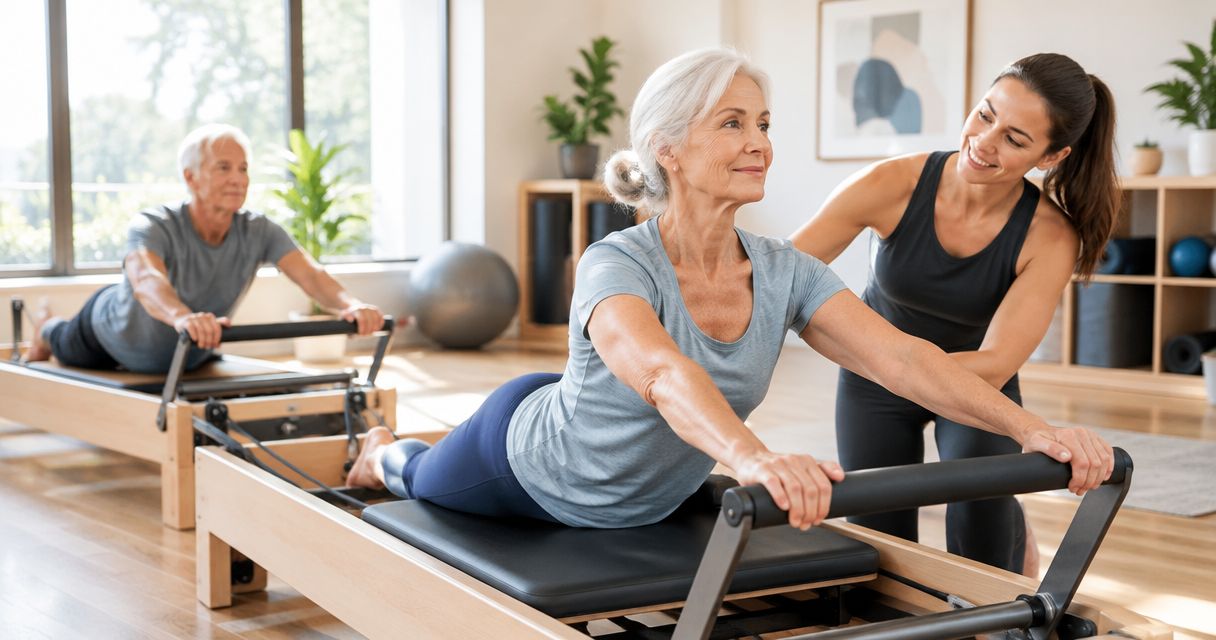
| Reformer Pilates | Learning apparatus-based movement | Exercises using a spring-resistance reformer | Equipment setup and use require instruction |
Unified Hot Yoga offers these formats, but the choice still depends on the particular class and your circumstances. Ask about instruction, equipment, and heat rather than assuming that all classes under one label feel the same.
Common mistakes first responders make
Treating heat tolerance as a professional skill test
Work experience does not turn a heated studio into a competition you need to win. Evaluate the class as recreational exercise, and stop when you feel unwell rather than comparing yourself with a colleague or another student.
Booking after every shift by default
An after-work routine only helps if it fits the shift you actually completed. Reassess after disrupted sleep, demanding work, or heat exposure instead of following an automatic booking rule.
Expecting yoga to resolve occupational stress or injury
A class can be part of your personal wellbeing routine without becoming treatment. Keep clinical care, rehabilitation, and mental-health support separate from claims about what a yoga sequence will do for you.
Choosing a membership from an ideal calendar
A membership decision should account for changing shifts, commuting, and other commitments. In your 2026 attendance plan, use the weeks you can realistically repeat—not the unusually quiet week that makes every class look convenient.
FAQ
Is 26&2 yoga suitable for first responders who have never done yoga?
A first responder who is new to yoga can consider 26&2, but beginner status alone does not establish suitability for heated exercise. Ask about instruction and modifications, and discuss medical concerns with a qualified healthcare professional.
What does 26&2 mean in a yoga class?
26&2 refers to a sequence of 26 postures and 2 breathing exercises. Confirm the studio's specific class duration and instructions rather than assuming the name tells you every detail.
Should I do hot yoga immediately after a night shift?
Do not make hot yoga immediately after a night shift your default. Protect needed sleep and assess fatigue, illness, exertion, and recent heat exposure before deciding whether to attend.
What should I bring to my first 26&2 class?
Bring water, a towel, and comfortable clothing, and confirm whether you need your own yoga mat. Ask the studio about check-in instructions and any additional requirements before arrival.
Is Yin yoga better than 26&2 after a demanding shift?
Neither class is automatically the right choice after a demanding shift. Compare the format and heat, and prioritize rest if you are exhausted or unwell; longer-held Yin positions are not automatically easy.
Does Unified Hot Yoga offer first responder discounts?
Ask Unified Hot Yoga directly about current eligibility-based offers. Do not assume that a first responder discount applies to an intro offer, class booking, or membership.
How often should a first responder start 26&2 yoga?
Begin with a schedule you can assess before adding more classes. One class in your first week is a practical trial plan, not a required frequency; adjust around sleep, work, other exercise, and any clinical advice.
One last thing
Repetition is useful because it gives you something familiar to learn—not because every session must look the same. A smaller range of motion or a decision to rest is not a failed class.
For your first 2026 visit, choose one practical goal: understand the instructions and communicate when you need help. You can participate in a welcoming studio community without turning your off-duty time into another performance review.