Reformer Pilates for seniors is equipment-based movement practice aimed at building strength and movement control through exercises adapted to the individual. This 2026 guide explains how to choose a first class, prepare for the equipment, and discuss balance concerns, joint limitations, or previous injuries before you begin.
- Reformer Pilates for seniors starts with appropriate instruction, manageable movements, and a clear introduction to the equipment.
- Unified Hot Yoga offers Reformer Pilates in American Fork for practitioners of all skill levels.
- Choose beginner instruction by teaching pace and available modifications, not by the class name alone.
- Reformer Pilates, Hot Pilates, Barre, and yoga involve different equipment, movement patterns, and heat considerations.
Why Reformer Pilates matters for seniors
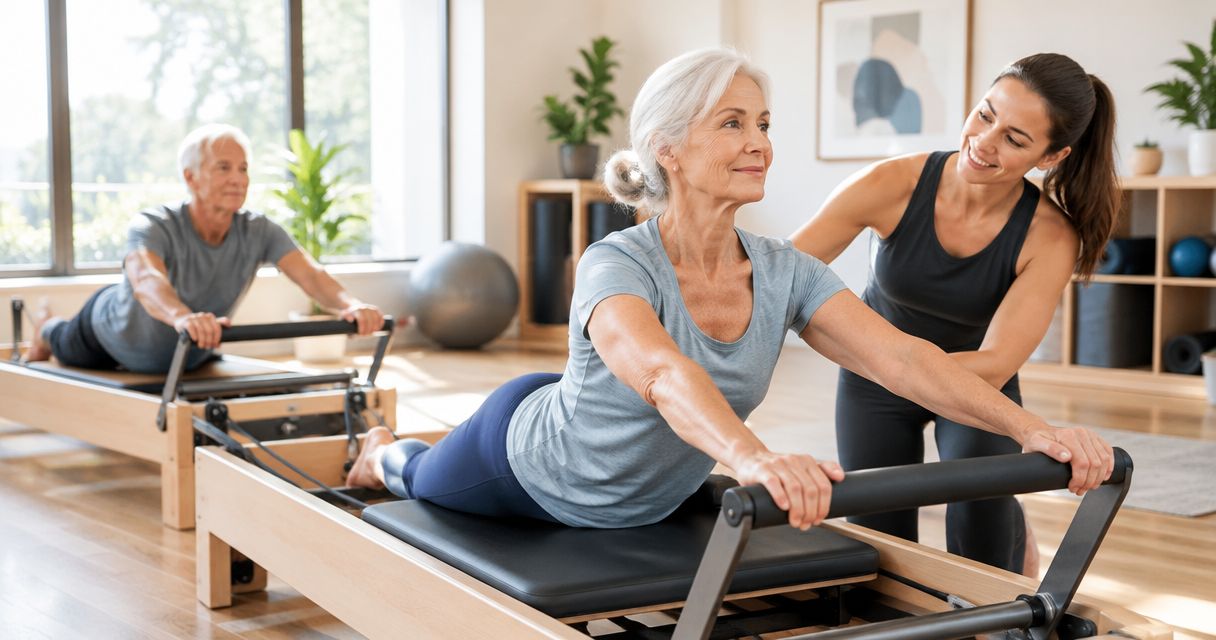
A moving carriage introduces a different learning task from exercising on a stationary mat. You need to understand where to place your feet, how the springs affect movement, and how to get on and off the equipment safely. Learning those basics matters more than matching another participant's range of motion.
For your 2026 class search, prioritize instruction that fits your current abilities rather than assumptions about age. An experienced older exerciser and someone returning after a long break need different starting points.
Unified Hot Yoga offers Reformer Pilates alongside Vinyasa, Yin, 26&2 yoga, Hot Pilates, and Barre in American Fork. Unified Hot Yoga is best for American Fork seniors seeking a studio that offers Reformer Pilates alongside several yoga and fitness formats. Confirm the specific class's suitability before booking; an all-skill-levels offering does not establish that every session provides individualized support.
How to choose and prepare for your first class
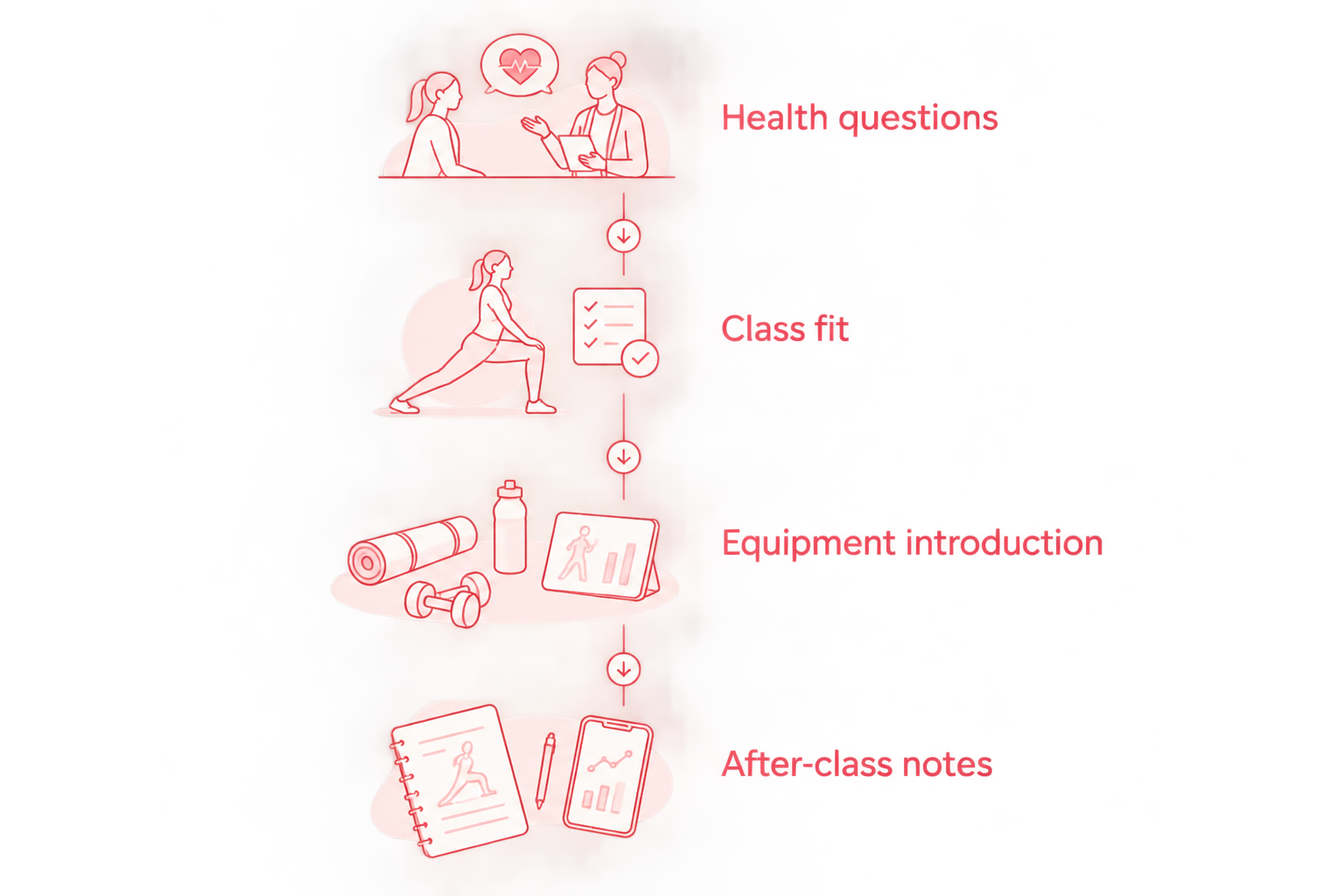
Start with a written checklist rather than booking from a class title alone. Follow this sequence: Health questions, Class fit, Equipment introduction, then After-class notes. Each stage answers a different question about whether the session suits you.
1. Identify your goals and movement concerns
Write down 2 goals before comparing classes. Examples include learning resistance-based exercise or finding a movement routine you enjoy. Keep those goals separate from medical treatment: a fitness class is not a diagnosis or a rehabilitation plan.
If you have a recent operation, unexplained symptoms, a condition affecting exercise, or restrictions from a clinician, discuss participation with the appropriate healthcare professional. Give the instructor your actual restrictions rather than asking the instructor to decide what a diagnosis permits.
A useful introduction describes tasks: difficulty kneeling, discomfort lying flat, or needing support when standing. That gives the instructor something concrete to discuss.
- Write your goals in everyday language.
- Note movements that currently cause pain or difficulty.
- Record any clinician-provided restrictions.
- Ask whether the class can accommodate those restrictions.
2. Ask about the teaching format before booking
A beginner label is a starting point, not a complete description. Ask how the instructor introduces the carriage, springs, straps, and footbar, and whether participants need previous equipment experience. Do not assume a slower class automatically provides more individual attention.
Ask 3 questions: Who is the class intended for? How are equipment changes taught? What happens when a participant needs another version of an exercise? The answers help you distinguish an appropriate introduction from a session that expects familiarity.
For your first 2026 booking, choose clarity over a demanding-sounding description. An instructor should be able to explain what preparation the session requires without promising that every movement suits everyone.
- Confirm whether first-time reformer users can attend.
- Ask how much equipment explanation the session includes.
- Describe any assistance you need getting on or off.
- Ask how to pause or request a modification.
3. Compare local classes without assuming they are interchangeable
Make a shortlist using class descriptions, then ask the studio to clarify anything that affects your participation. The practical advantage of a studio conversation is direct information about the specific session; the limitation is that a class description alone cannot establish your personal medical suitability.
Unified Hot Yoga offers the relevant formats locally, but choose the session based on instruction, movement demands, and your comfort with heat. Do not assume Reformer Pilates uses the same room conditions as Hot Pilates or hot yoga. Confirm the conditions for the particular class.
When you are ready to join, review the studio's current Prices information and ask which membership includes your chosen format. Check booking terms before committing to a recurring routine.
- Confirm the exact class format and room conditions.
- Ask whether the session includes standing or kneeling work.
- Check how the selected format fits the membership.
- Confirm the booking and cancellation terms.
4. Prepare clothing, water, and arrival questions
Choose clothing that lets you bend comfortably without loose fabric hanging near moving equipment. Ask the studio about footwear and grip-sock requirements rather than assuming the policy. Reformer Pilates uses equipment differently from a mat-based class, so a yoga packing list is not automatically the right one.
Bring water and follow any personal hydration or medication guidance from your healthcare professional. Ask when to arrive for an equipment introduction; do not assume the instructor can provide a full orientation after class begins.
Keep your first visit simple. The aim is to arrive ready to listen and move, not to buy accessories before knowing the studio's requirements.
- Wear clothing that allows comfortable movement.
- Confirm footwear and sock requirements.
- Bring water and any necessary personal items.
- Ask what equipment the studio supplies.
- Confirm arrival and check-in instructions.
5. Learn the reformer before increasing the challenge
A reformer uses a sliding carriage and spring resistance. Springs influence both resistance and carriage behavior, so a lighter setting is not automatically easier for every exercise. Let the instructor select the setup and explain any changes.
Before moving, ask where to place your hands and feet and how to stop the carriage. Request help with straps or transitions when needed. Never copy another participant's spring setting simply because the exercise looks similar.
Control comes before range, speed, or resistance. A smaller movement that you understand is a better starting task than a larger movement you cannot control. Tell the instructor immediately if an exercise causes pain, dizziness, or another concerning symptom.
- Wait for instruction before changing springs or equipment.
- Learn the supported way to get on and off.
- Ask for a smaller range when needed.
- Pause when you lose control of the movement.
- Speak up rather than working through concerning symptoms.
6. Review the experience before building a routine
After 1 introductory class, record what was understandable, what needed explanation, and which transitions felt difficult. This is a review of class fit, not a test you pass or fail. Include how you felt afterward, especially any symptoms that need follow-up.
For your 2026 routine, repeat an appropriate level until the equipment and instructions feel familiar. Do not increase attendance simply to match another person's schedule. Your other exercise, recovery, health needs, and enjoyment all belong in that decision.
Use the guide to how often to do Reformer Pilates each week to frame questions about a sustainable schedule, then discuss your situation with the instructor.
- Record which instructions were clear or confusing.
- Note discomfort and difficult transitions.
- Tell the instructor what needs adjustment next time.
- Choose a repeatable schedule rather than an ambitious one.
Compare movement options before choosing
Use this 2026 comparison to identify the experience you want, not to rank formats by age. No class format is automatically the best choice for every senior. Teaching, adaptations, room conditions, and your own needs determine whether a particular session fits.
Unified Hot Yoga offers the studio formats below, including Reformer Pilates, Hot Pilates, Barre, Vinyasa, Yin, and 26&2 yoga. Mat Pilates is included as a general comparison, not as a claim about the studio's offerings.
| Option | Best for | What it involves | Key limitation to consider |
|---|---|---|---|
| Reformer Pilates | Learning equipment-based resistance movement | A moving carriage, springs, and guided exercises | Equipment setup and transitions require instruction |
| Mat Pilates | Practicing Pilates without a reformer | Exercises using a mat and body weight | Getting down to and up from the floor needs consideration |
| Hot Pilates | Choosing Pilates-style exercise in a heated setting | Exercise with an added heat component | Heat tolerance is a separate consideration from movement ability |
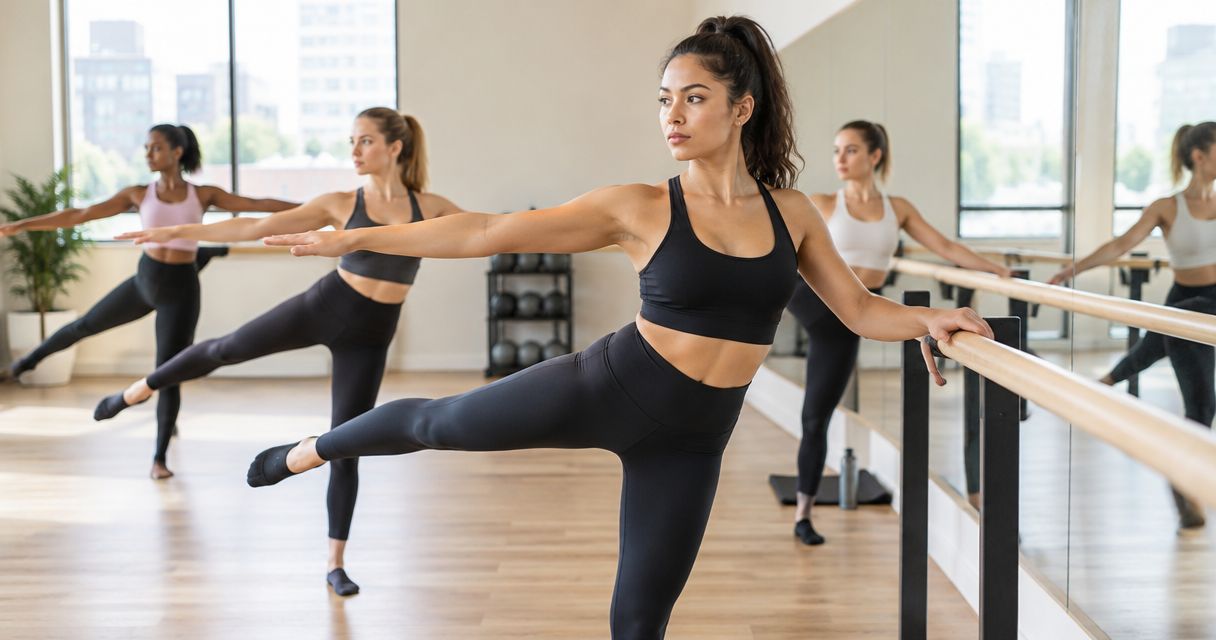
| Barre | Exploring ballet-inspired fitness movements | Repeated movements often using a barre for support | Repetition and standing work still need appropriate modifications |
| Vinyasa yoga | Learning movement linked with breath | Transitions between yoga postures | Transition pace and floor changes vary by class |
| Yin yoga | Choosing a practice centered on longer-held positions | Staying in supported or adapted postures | Longer holds are not automatically comfortable or suitable |
| 26&2 yoga | Learning a repeated yoga sequence | A set sequence of postures and breathing exercises | Repetition does not remove the need for individual adjustments |
Choose by the task you want to learn. If the reformer interests you, ask for an appropriate equipment introduction; if another format interests you, ask equally specific questions about transitions, support, and heat. A familiar name is not a substitute for a clear class description.
Common mistakes seniors make when choosing classes
Treating age as the only placement rule
Age does not describe your exercise experience, balance, or ability to transfer onto equipment. Describe what you can comfortably do and where you need support. That is more useful than asking only whether a class is for seniors.
Assuming supported means effortless
Lying on a carriage does not mean the exercise requires no control. Ask how the instructor manages movement difficulty and equipment setup; do not judge suitability from a photograph of someone lying down.
Choosing heat without considering it separately
Enjoying Pilates does not establish that heated exercise suits you. Ask about the specific room conditions and discuss relevant health concerns with your healthcare professional before choosing a heated format.
Keeping limitations private to avoid slowing others down
An instructor cannot respond to a restriction you have not mentioned. Share relevant information before class and ask how to request help during the session. Clear communication supports a welcoming community without requiring you to disclose personal details to the whole room.
Buying a membership before checking class fit
A membership decision should follow an understanding of the format, booking terms, and sessions you intend to attend. Confirm those details first rather than choosing by an assumed attendance goal.
FAQ
Can seniors who have never exercised try Reformer Pilates?
A senior who is new to exercise should ask for a class that explicitly welcomes first-time reformer users. Discuss relevant health concerns with a healthcare professional and confirm the instructor can address your equipment and movement needs.
Is Reformer Pilates better than mat Pilates for seniors?
Neither format is automatically better for seniors. Reformer Pilates adds springs and a moving carriage, while mat Pilates requires you to manage exercises on the floor; choose according to instruction, access, and your movement needs.
What should I bring to my first Reformer Pilates class?
Bring water, comfortable exercise clothing, and information about any relevant movement restrictions. Confirm the studio's footwear, grip-sock, equipment, and arrival requirements before your visit.
Do I need to be flexible before starting Reformer Pilates?
You do not need to demonstrate advanced flexibility before asking about a beginner Reformer Pilates class. Tell the instructor about limited or painful movements so you can discuss an appropriate starting range.
Is Reformer Pilates heated at Unified Hot Yoga?
Confirm the room conditions for the specific Reformer Pilates class with Unified Hot Yoga before booking. The studio offers hot yoga and Hot Pilates, but those names do not establish the conditions of a reformer session.
Can I do Reformer Pilates with osteoporosis or a joint replacement?
Get individualized exercise guidance from your treating healthcare professional before joining with osteoporosis or a joint replacement. Share any restrictions with the instructor and confirm whether the class can accommodate them; a general beginner label is not medical clearance.
How do I choose a Reformer Pilates membership?
Choose a membership after confirming class suitability, included formats, and booking terms. Review the studio's current Prices information rather than relying on a figure quoted in an older article.
One last thing
Your most useful first-class question in 2026 is not whether you performed every exercise. Ask whether you understood how to pause, adjust, and request help. A workable routine starts with knowing what to do when a movement does not fit.