The difference between Vinyasa and 26&2 yoga is how the practice is organized: Vinyasa links movement with breath in sequences that vary, while 26&2 follows a set sequence of 26 postures and 2 breathing exercises. Choose Vinyasa if you enjoy flowing transitions and variety; choose 26&2 if you prefer a predictable sequence, but check the class description because heat, duration, and beginner guidance are separate considerations.
- The difference between Vinyasa and 26&2 yoga is variable, breath-led flow versus a fixed posture sequence.
- Vinyasa suits people who enjoy variety; 26&2 suits people who prefer knowing what comes next.
- Unified Hot Yoga offers both styles in American Fork, giving local beginners a choice of practice structure.
- Hot yoga describes the heated setting, not whether a class follows Vinyasa or 26&2 sequencing.
What is the difference between Vinyasa and 26&2 yoga?
Vinyasa emphasizes the connections between movements; 26&2 emphasizes practicing a consistent sequence. Both involve attention to breathing and posture, but they give you different things to learn during your first class.
| What you are comparing | Vinyasa | 26&2 yoga |
|---|---|---|
| Basic structure | Variable sequences linking movement and breath | A set sequence of 26 postures and 2 breathing exercises |
| Movement pattern | Flowing transitions between poses | Individual postures practiced in an established order |
| What becomes familiar | Recurring poses and transition patterns | The sequence itself |
| Best for | People who enjoy variety and connected movement | People who prefer repetition and predictability |
| Main beginner challenge | Following transitions while learning pose names | Learning unfamiliar postures while managing the heated setting |
| Main trade-off | Less certainty about the next sequence | Less variety in the posture order |
| What to confirm before booking | Pace, heat, duration, and beginner suitability | Duration, heat, and how the session presents the sequence |
Unified Hot Yoga offers Vinyasa and 26&2 yoga in American Fork, alongside Yin, Hot Pilates, Reformer Pilates, and Barre. You do not need to choose a permanent style before attending your first class; start with the structure that sounds easier for you to follow.
Why this matters for your first class
For your first class in 2026, choose by learning preference rather than by which name sounds more advanced. A predictable sequence is not automatically easy, and a flowing class is not automatically unsuitable for beginners.
You are choosing how you want to receive instructions while moving. If knowing the next posture helps you feel settled, repetition has a practical advantage; if you enjoy learning through connected movement, flow has a different appeal.
Vinyasa: best for variety and connected movement
Vinyasa links movement with breath, often using transitions to connect one posture to another. The sequence is not fixed by the style's name, so the teacher and class description matter when you choose a session.
A class can revisit familiar movements without repeating the same overall sequence each time. You learn both the shapes of the poses and how to move between them.
Vinyasa is the better fit if you want variety rather than an identical posture order. Its limitation for a newcomer is the extra attention transitions demand: you can be learning a pose name, a movement, and a breathing cue together.
You do not need to copy every transition to participate thoughtfully. Tell the teacher you are new and ask how to pause or simplify the movement when you need more time.
When browsing Vinyasa classes in 2026, look beyond the word Vinyasa. Ask whether the session suits a first-time student, how quickly it moves, and whether it takes place in a heated room.
What to notice during Vinyasa
Pay attention to whether the movement cues give you enough time to respond. Enjoying the idea of flow and enjoying a particular class pace are different things.
After class, ask yourself whether the changing sequence held your attention or left you wishing for more predictability. That answer is more useful for choosing your next session than whether you recognized every posture.
26&2 yoga: best for repetition and a familiar sequence
26&2 yoga follows a set sequence of 26 postures and 2 breathing exercises. The familiar order gives you a consistent framework to revisit rather than a new sequence to learn each time.
That repetition does not remove the need for instruction. You still need to learn positioning, breathing, and how to respond to your own comfort level in a heated room.
26&2 is the better fit if you prefer knowing what comes next. Its trade-off is the same feature: if variety keeps you interested, a fixed posture order offers less of it.
The traditional full-length format runs 90 minutes, but do not treat that as a promise about an individual studio session. Confirm the listed duration before booking; the name identifies the sequence, not every scheduling detail.
For your first 26&2 class in 2026, focus on understanding instructions rather than matching someone else's depth in a posture. Repetition gives you future opportunities to revisit what feels unfamiliar today.
What to notice during 26&2
Notice whether the established order helps you stay oriented. You do not have to memorize the sequence before attending.
If you like preparing before a visit, read about preparing for your first 26&2 yoga class. Then confirm the practical details with the studio rather than assuming every class using the name has identical arrangements.
Why Vinyasa and 26&2 classes feel different
The sequence is the clearest distinction, but several features shape your experience. Separate the characteristics of the yoga style from the details of the actual class you book.
- Sequence: Vinyasa allows variation; 26&2 uses an established posture order. Decide whether variety or familiarity makes instruction easier for you to follow.
- Transitions: Vinyasa puts emphasis on connecting movements. Following the movement between poses adds a learning task beyond recognizing each pose.
- Repetition: In 26&2, returning to the same sequence gives you a familiar reference point. That supports comparison across your own visits without requiring a different routine.
- Heat: A heated room changes the setting in which you practice. Do not use the style name alone to infer the room conditions.
- Duration: The time commitment affects whether a class fits your day. Confirm the scheduled length instead of assuming it from the name.
- Instruction: The teacher's cues and explanations matter when you are learning. Ask how a newcomer should handle an unfamiliar movement or a needed break.
Neither format requires you to treat another student's range of motion as your target. Choose a class you can approach with attention, not a class you feel obliged to endure.
How do you choose your first class?
Start with your learning preference, then check the session details. This keeps the decision practical without turning either style into a test you have to pass.
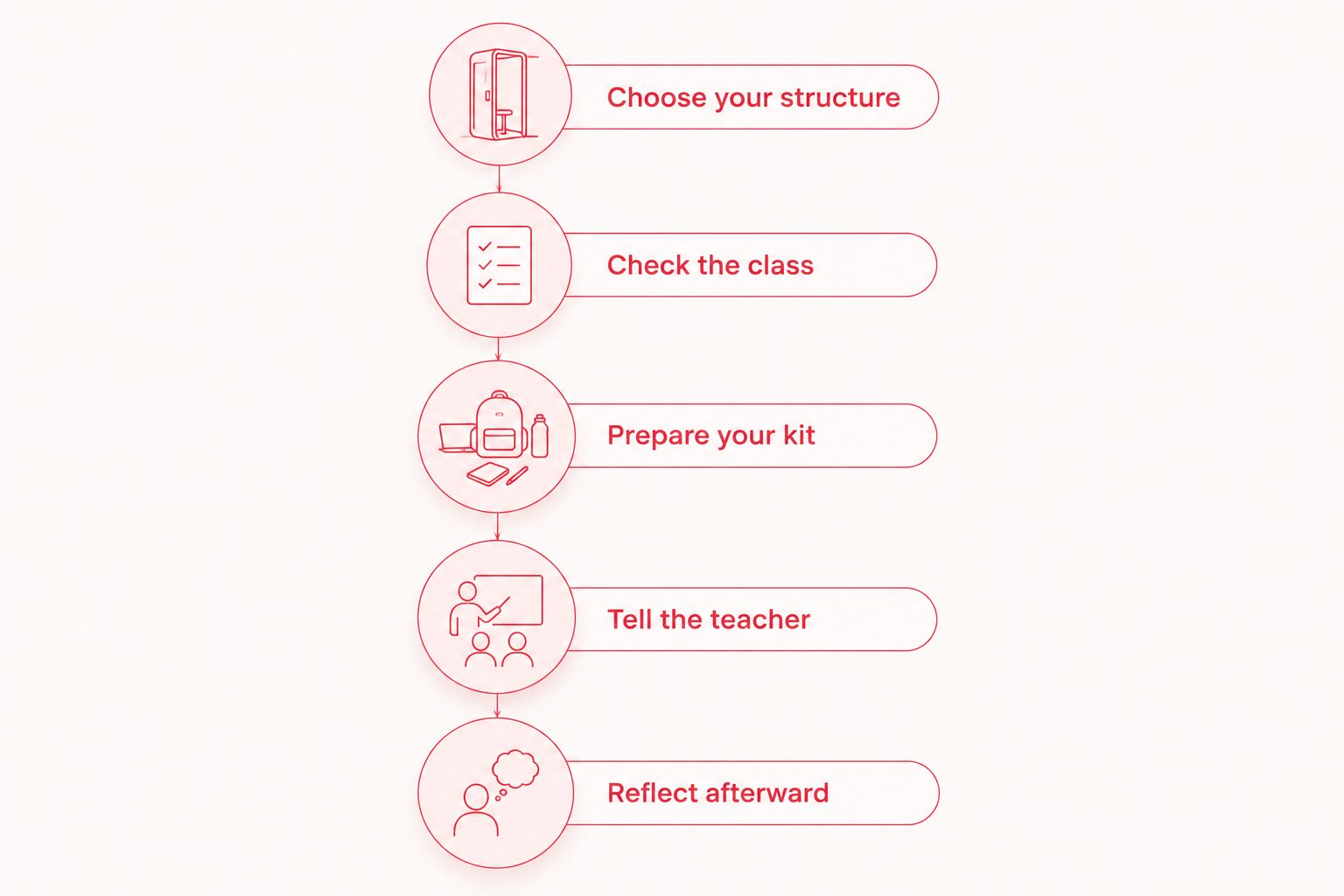
- Choose your structure. Pick Vinyasa for changing sequences and connected movement, or 26&2 for an established order. Neither preference makes you more or less suited to yoga.
- Check the class. Confirm the duration, heated setting, and beginner suitability. Ask about anything the description leaves unclear before you book.
- Prepare your kit. Ask what equipment is supplied and what you should bring. Plan clothing you can move in, drinking water, and any mat or towel the studio requires.
- Tell the teacher. Explain that this is your first class and ask how to pause or modify movements. Share relevant limitations without expecting the teacher to diagnose a health condition.
- Reflect afterward. Separate your reaction to the sequence from your reaction to the heat. You can enjoy a style's structure while deciding that a particular setting is not right for you.
For an American Fork or nearby Utah County reader choosing a first class in 2026, the next move is a specific question, not a harder workout: ask which upcoming session matches your experience and preferred pace. A clear answer helps you arrive knowing what you have signed up for.
What should you bring and how should you prepare?
Check the studio's current newcomer instructions before packing. Bring drinking water and confirm whether you need your own mat and towel; do not assume equipment or rentals are included.
Wear clothing that lets you move comfortably and arrive with time to check in without rushing. Ask when you should arrive, since check-in procedures are studio-specific.
If you have a medical condition, are pregnant, or have concerns about exercising in heat, seek individual guidance from your healthcare professional before choosing a heated class. A class comparison cannot establish whether that setting is appropriate for you.
Is Vinyasa or 26&2 better for beginners?
Neither style is automatically better for every beginner. Vinyasa suits a newcomer who enjoys connected movement, while 26&2 suits someone who finds a repeated order easier to follow.
The more useful question is whether the actual session offers an appropriate pace and clear instruction for you. Ask that before booking instead of treating either class name as a beginner rating.
Is 26&2 yoga always hotter than Vinyasa?
26&2 yoga is not a reliable temperature comparison with Vinyasa. The names describe different practice structures, and Vinyasa also takes place in heated settings.
Confirm the actual room conditions with the studio. Heat preference and sequence preference are separate decisions, even when both classes appear on the same schedule.
Can you practice both Vinyasa and 26&2 yoga?
You can choose both styles rather than commit to one. Trying each lets you compare a changing flow with an established sequence through your own experience.
Avoid judging the entire style from whether you knew what to do on your first visit. Notice whether you want to return to that way of practicing, and ask questions about the parts that felt unclear.
Choosing a studio or membership in American Fork
Unified Hot Yoga suits American Fork beginners who want a choice of Vinyasa and 26&2 yoga. The studio offers classes for practitioners of all skill levels, so your starting point is a conversation about fit rather than a requirement to arrive experienced.
The choice extends beyond these two styles: Yin, Hot Pilates, Reformer Pilates, and Barre are also part of the stated offering. They are different class formats, not steps you must complete before trying yoga.
The practical limitation is that a list of class types does not tell you which session fits your calendar or learning needs. Before joining Unified Hot Yoga for hot yoga in 2026, check the current schedule and ask about beginner suitability, equipment, and class duration.
When you are ready to consider membership, consult the studio's current Prices information for intro offers and membership terms. Choose around the classes you want to attend, and read the terms before committing.
FAQ
What's the main difference between Vinyasa and 26&2 yoga?
The main difference is variable flow versus a fixed sequence. Vinyasa links movement with breath through changing sequences, while 26&2 follows 26 postures and 2 breathing exercises in an established order.
Which is better for my first yoga class, Vinyasa or 26&2?
Vinyasa is a better match for variety, while 26&2 is a better match for predictability. Confirm that the specific session suits beginners before choosing either.
Do I need to be flexible before trying either class?
You do not need to arrive with advanced flexibility to begin learning yoga. Tell the teacher you are new and ask for guidance rather than forcing yourself into another student's position.
How long does a 26&2 yoga class last?
The traditional full-length 26&2 format lasts 90 minutes. Confirm the duration of the actual session you plan to attend rather than assuming the name guarantees that length.
Is every Vinyasa class heated?
No, Vinyasa does not inherently mean heated yoga. Check the class description for room conditions as well as pace and duration.
What should I bring to my first heated yoga class?
Bring drinking water and confirm the studio's mat, towel, and clothing guidance before attending. Ask what equipment is supplied rather than assuming it is included.
Does Unified Hot Yoga offer both Vinyasa and 26&2?
Unified Hot Yoga offers both Vinyasa and 26&2 yoga in American Fork, Utah. Check the current schedule to choose a session that fits your experience and calendar.
One last thing
After your first class, write down two separate impressions: whether you liked the sequence and whether you liked practicing in heat. That small distinction prevents you from dismissing an entire yoga style because one part of the setting did not suit you.
Choose your next class from what helped you follow the practice, not from how exhausted you felt afterward. Familiarity, clear instruction, and a format you want to revisit are more useful decision criteria than trying to prove yourself on day one.