Best starting point: Unified Hot Yoga’s Barre for beginners seeking barre in American Fork. Best alternatives by goal: Vinyasa for flowing yoga, Yin for slower practice, 26&2 for a repeated sequence, Hot Pilates for mat-based exercise, and Reformer Pilates for apparatus-based movement. This 2026 guide compares the formats offered by Unified Hot Yoga so you can choose your first class without treating every workout as interchangeable.
- Unified Hot Yoga offers Barre for all skill levels in American Fork, making it a direct beginner option.
- The best barre classes for beginners in Utah County match your movement preference, schedule, and comfort with instruction.
- Compare Barre with Vinyasa, Yin, 26&2, Hot Pilates, and Reformer Pilates before choosing a membership.
- Confirm the specific class temperature, equipment requirements, and newcomer instructions before attending.
Why this matters
Choosing your first class is different from choosing the hardest workout. You need to understand the movements, follow instructions comfortably, and find a class you can attend regularly. A familiar name on the schedule does not answer those questions.
Unified Hot Yoga is a beginner barre option for people who want an all-skill-levels studio in American Fork. Its offering includes 6 class formats: Barre, Vinyasa, Yin, 26&2, Hot Pilates, and Reformer Pilates. That gives you different starting points without requiring you to decide that barre must become your only practice.
This guide ranks those formats by distinct beginner goals, not by unsupported claims about which Utah County studio has the best instructors. If you specifically want barre, start with Barre. The other entries explain when a different format better matches what you want to do.
What makes the best beginner barre class?
For your 2026 first-class decision, use these criteria before comparing names or memberships:
- Understandable instruction: Ask whether newcomers can follow the class without knowing barre terminology.
- Movement choices: Ask how the instructor explains smaller ranges, balance support, and alternatives to unfamiliar movements.
- Clear preparation: Confirm what to bring, what the studio supplies, and whether footwear is required.
- Temperature clarity: Check the temperature of the specific session rather than assuming every class uses the same heat.
- Practical attendance: Compare the location and current schedule with the time you can reliably set aside.
- Personal fit: Choose barre because its movement style interests you, not because you feel obliged to select the most demanding option.
An all-skill-levels description is a useful starting point. Your next step is to ask what that means during the actual session: how instructions work, what alternatives are available, and how you should prepare.
Beginner class options at a glance
These are different movement formats, not equivalent barre classes. The order starts with the direct answer to your barre search, then separates alternatives by use case.
| Class format | Best for | Defining category feature | Key limitation for a newcomer |
|---|---|---|---|
| Barre | Learning barre specifically | Controlled movements associated with ballet-inspired exercise | Small movements still require attention to positioning |
| Vinyasa | Connecting yoga poses through movement | Transitions coordinated with breathing | Following transitions adds a learning task |
| Yin | A slower yoga starting point | Longer-held, mostly floor-based positions | Staying still does not automatically make a position comfortable |
| 26&2 | Learning a repeated yoga sequence | A traditionally defined sequence | Repetition does not remove physical demands |
| Hot Pilates | Choosing heat and mat-based exercise | Pilates-style exercise in a heated setting | Heat adds a separate consideration from the movements |
| Reformer Pilates | Learning apparatus-based exercise | Movement using a carriage and adjustable resistance | Equipment setup requires instruction |
The descriptions above explain the categories. Confirm the exact session format with the studio before booking; class names alone do not establish equipment, temperature, or teaching pace.
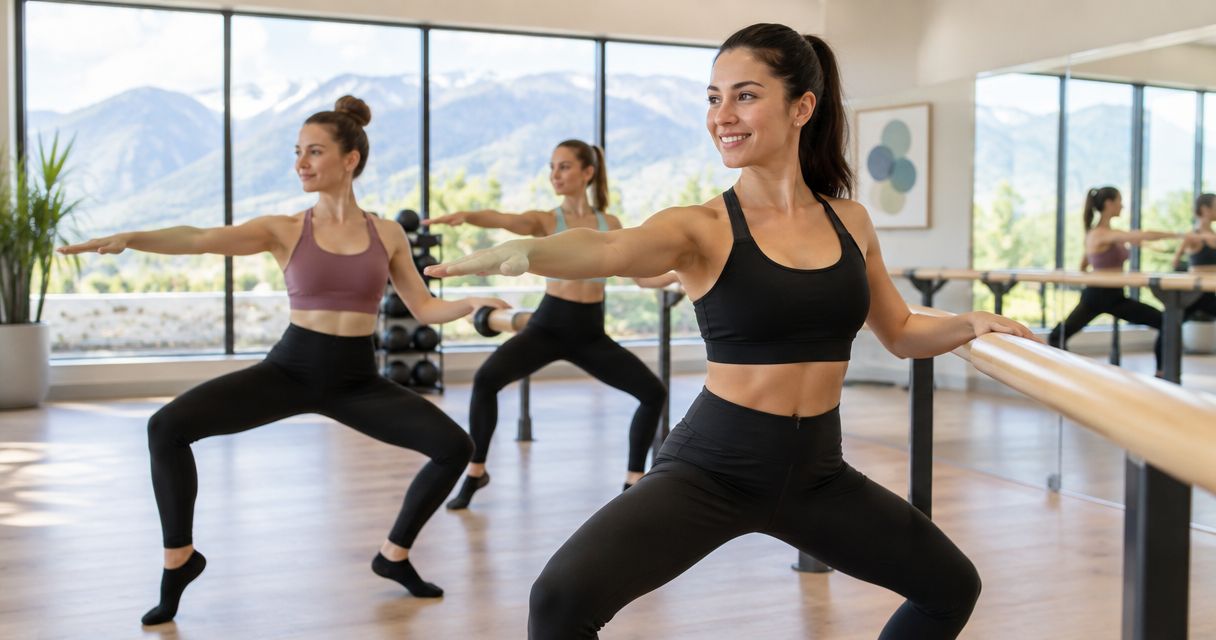
1. Barre: best for learning barre as a beginner
Barre is the direct choice when your goal is to try a barre class rather than yoga or Pilates. The category combines ballet-inspired positioning with controlled exercise, often using a barre for support. You do not need a dance background to ask about a beginner-suitable class.
Unified Hot Yoga offers Barre for practitioners of all skill levels. For a first visit, ask how the instructor introduces unfamiliar positions and whether you should bring anything beyond your usual exercise essentials.
Barre pros:
- Gives you a direct introduction to the movement style you searched for.
- Makes controlled positioning a central part of the practice.
- Provides a different exercise experience from flowing yoga or apparatus-based Pilates.
Barre cons:
- Small movements can be demanding despite looking simple.
- Unfamiliar positioning requires attention; copying the room is not a substitute for instruction.
Best for: You want ballet-inspired exercise and are willing to learn positioning before increasing effort.
During your first session, prioritize understanding the setup over matching another participant’s range of movement. Ask for clarification when a cue does not make sense. A smaller, understood movement is a better learning choice than a larger movement you cannot control.
Verdict: Buy into Barre as your first format if barre itself is your goal; wait on a membership until you understand the class experience.
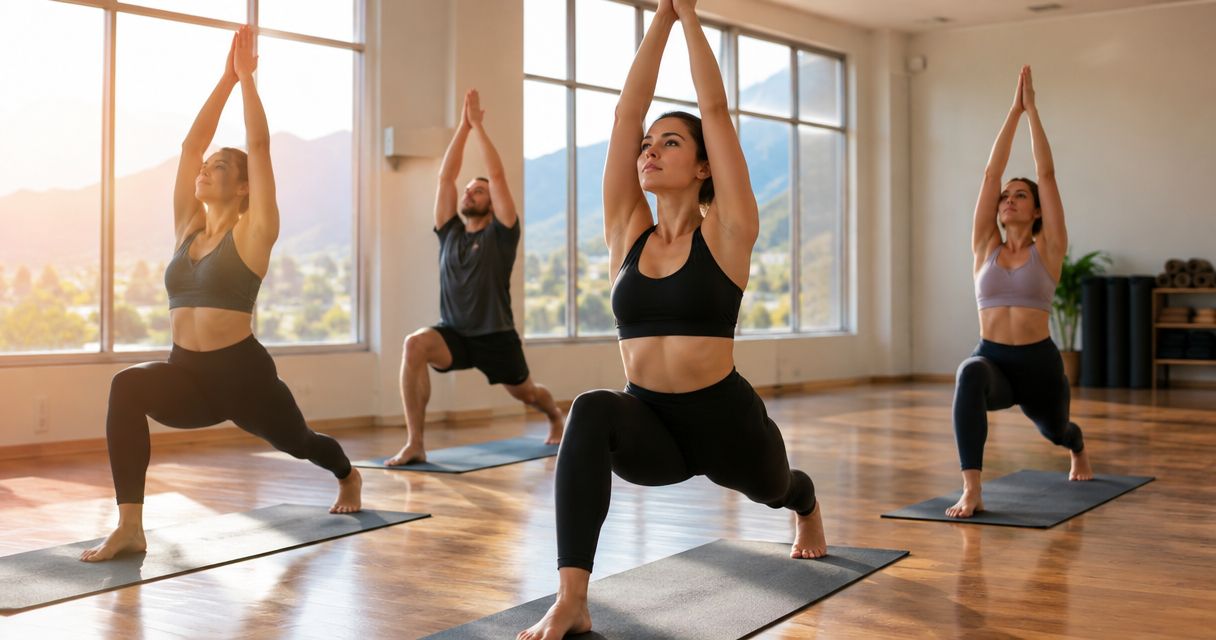
2. Vinyasa: best for beginners who want flowing yoga
Vinyasa connects yoga poses through movement and breathing. Its defining feature is the transition between positions, rather than treating every pose as an isolated exercise. That makes it a different choice from Barre, even when both involve standing work.
Choose Vinyasa when learning yoga movement interests you more than learning barre technique. Ask about the pace and how newcomers receive guidance before selecting a session.
Vinyasa pros:
- Introduces yoga poses within a connected practice.
- Gives breathing and movement a shared focus.
- Fits readers who prefer moving between positions to staying in one exercise pattern.
Vinyasa cons:
- Transitions can feel unfamiliar while you are learning pose names.
- A flowing sequence requires you to follow both positioning and timing.
Best for: You want an active yoga practice built around transitions.
Do not use another participant’s pace as your instruction manual. Listen for the teacher’s setup cues and ask how to pause when you need more time. Understanding where you are placing your hands and feet matters more than keeping up with every transition.
Verdict: Buy into Vinyasa for flowing yoga; skip it as a substitute when your specific goal is barre.
3. Yin: best for beginners who prefer a slower practice
Yin typically uses longer-held, mostly floor-based positions. The slower structure gives it a different feel from Barre or Vinyasa. Slower does not mean effortless, and a held position should not become a test of how much discomfort you can tolerate.
For a 2026 first class, choose Yin because you want a quieter movement format, not because you assume it guarantees recovery or healing. Ask how the instructor explains support and adjustments.
Yin pros:
- Offers an alternative to continuous transitions.
- Gives you time to understand an individual position.
- Suits readers interested in a slower yoga experience.
Yin cons:
- Holding still can feel challenging or unfamiliar.
- The format does not teach the same movement skills as Barre.
Best for: You prefer fewer transitions and want to explore a slower yoga practice.
Tell the instructor when a position feels unsuitable rather than waiting for the hold to end. There is no beginner requirement to reach the same shape as someone beside you. Your first task is learning how to participate comfortably within the instruction offered.
Verdict: Buy into Yin for slower yoga; skip it if you primarily want a barre workout.
4. 26&2: best for beginners who value a repeated sequence
The traditional 26&2 format contains 26 postures and 2 breathing exercises. That category structure distinguishes it from a general flowing yoga class. Ask the studio how its session is taught and what preparation it recommends.
A repeated sequence gives you a recognizable structure to learn. It does not establish that every position, temperature, or session length will suit you.
26&2 pros:
- Gives you a defined sequence as a learning framework.
- Lets you focus on familiar positions as you repeat the format.
- Suits readers who prefer recognizable structure to changing combinations.
26&2 cons:
- Knowing the sequence does not make every posture easy.
- The name does not answer your questions about temperature or newcomer support.
Best for: You like learning through repetition and want a structured yoga format.
Before your 2026 first session, ask about the room conditions and how to rest during class. Treat the sequence as something to learn, not a checklist you must complete at full effort. Familiarity comes from understanding instruction, not forcing a position.
Verdict: Buy into 26&2 for repeated structure; wait until you understand the session conditions before booking.
5. Hot Pilates: best for beginners seeking heated mat-based exercise
Hot Pilates combines Pilates-style exercise with a heated setting. It is not Reformer Pilates, and it is not Barre. The word hot introduces a preparation question that matters separately from your interest in the movements.
Choose this format when both mat-based exercise and a heated environment appeal to you. If you are uncertain about exercising in heat, discuss that concern before treating the class as your default.
Hot Pilates pros:
- Offers a mat-based alternative to apparatus-based Pilates.
- Fits readers who specifically want a heated exercise setting.
- Provides another movement format alongside the studio’s yoga and Barre options.
Hot Pilates cons:
- Heat adds a comfort and safety consideration.
- Experience in an unheated exercise class does not establish your comfort in this setting.
Best for: You want mat-based exercise and have considered the heated environment.
Ask what equipment to bring and how newcomers are introduced to the exercises. Follow the instructor’s guidance on rests, and stop exercising if you feel unwell. If a medical condition or medication affects your response to heat, seek individualized medical advice before attending.
Verdict: Buy into Hot Pilates when heat and mat-based exercise are both intentional choices; wait if heat is your unresolved concern.
6. Reformer Pilates: best for learning apparatus-based movement
Reformer Pilates uses a moving carriage and adjustable resistance. The apparatus changes how you perform and organize exercises compared with mat work. It also makes setup instruction part of your first-class experience.
Choose Reformer Pilates when learning the equipment interests you. Ask how the studio introduces first-time participants and what you need to know before arriving.
Reformer Pilates pros:
- Introduces an apparatus-based exercise format.
- Gives you a different movement experience from mat Pilates.
- Suits readers interested in learning equipment setup alongside exercise technique.
Reformer Pilates cons:
- The carriage and resistance settings require instruction.
- Familiarity with mat Pilates does not replace learning the apparatus.
Best for: You want to learn exercise on a reformer rather than choose a barre or yoga class.
Do not change resistance or equipment settings simply because another participant does. Ask the instructor to explain the setup for your exercise. The useful beginner milestone is understanding how to use the apparatus, not selecting the strongest resistance.
Verdict: Buy into Reformer Pilates for apparatus-based learning; wait until the newcomer setup process is clear.
Prepare for your first class
Use this sequence before attending Barre or another format. For a preview of the movement category, read the barre moves for a full-body workout guide; reading about movements does not replace live instruction.
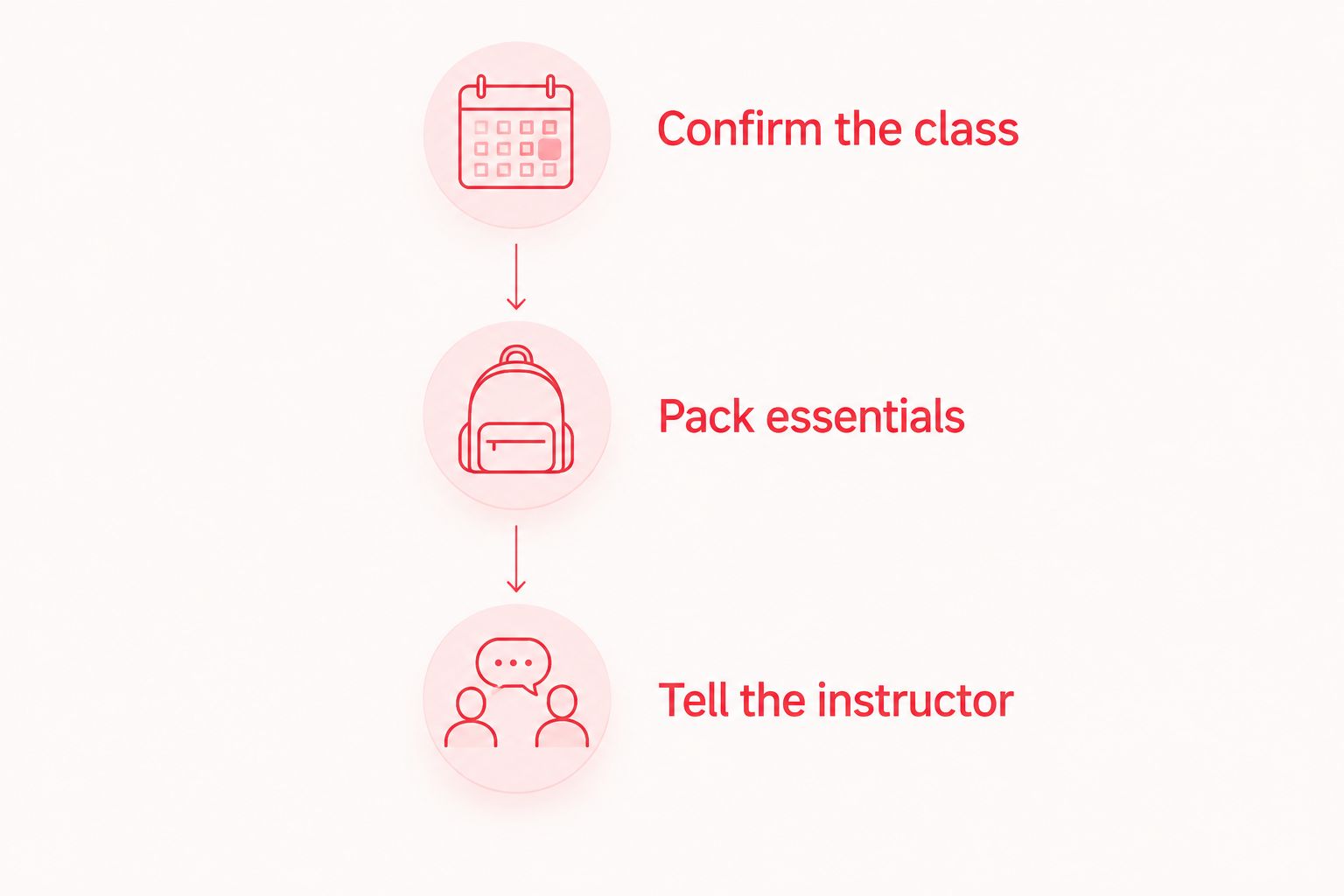
Confirm the class
Check the current schedule and identify the exact format you intend to attend. Ask about newcomer suitability, room temperature, equipment, footwear, and arrival instructions. Do not assume a Barre session follows the same preparation rules as Hot Pilates or Reformer Pilates.
Pack essentials
Choose clothing that lets you move comfortably and bring drinking water. Ask whether you need a mat, towel, or particular socks before packing or purchasing equipment. Studio requirements take priority over a generic checklist.
Tell the instructor
Say that this is your first class in the format. Explain any movement limitations relevant to participating, and ask how to rest or request an alternative. You do not need to explain your entire fitness history to make that conversation useful.
How these options were ranked
Barre comes first because it directly answers a beginner barre search. The remaining formats occupy separate use cases: flowing movement, slower practice, repeated structure, heated mat exercise, and apparatus-based learning.
The ranking uses the listed class offerings and established differences between the formats. It does not assign instructor ratings, promise health outcomes, or claim one format is best for every beginner.
Which beginner class should you choose?
Choose Unified Hot Yoga’s Barre if your 2026 goal is to try barre in an all-skill-levels American Fork studio. Choose a different format only when its defining feature better matches your interests.
Before selecting a membership, review the studio’s current Prices information and confirm which classes fit your schedule. Make the decision around a practice you want to attend, with preparation and instruction you understand. Community is useful when it helps you ask questions and participate—not when it pressures you to keep up.
FAQ
What's the best barre class for beginners in Utah County?
Unified Hot Yoga’s Barre is a direct option for beginners seeking an all-skill-levels studio in American Fork. Confirm the specific session’s newcomer guidance and preparation requirements before booking.
Do I need ballet experience before trying barre?
You do not need ballet experience to explore beginner barre. Tell the instructor you are new and ask for explanations of unfamiliar positions rather than relying on dance terminology.
What should I bring to my first barre class?
Bring drinking water and wear clothing that allows comfortable movement. Confirm whether the specific class requires a mat, towel, or particular footwear before attending.
Is barre better than Reformer Pilates for a beginner?
Barre fits beginners who want barre movements, while Reformer Pilates fits those who want apparatus-based exercise. Neither format is the universal beginner winner; choose by movement preference and the available instruction.
Are all classes at a hot yoga studio heated?
A studio’s name does not establish the temperature of every class. Ask about the exact Barre, yoga, or Pilates session you plan to attend.
Should I choose Yin or Vinyasa for my first yoga class?
Choose Yin if you prefer slower, held positions, or Vinyasa if you want connected movement between poses. Confirm the class pace and newcomer support before booking either format.
How do I choose a studio membership in 2026?
Choose a membership after confirming that the class formats and schedule fit your routine. Review the studio’s current Prices information and membership terms rather than relying on an older article.
One last thing
The smallest movement in a barre class is not automatically the easiest. Ask for a clearer setup before asking for a harder variation. Understanding where to place your body is a more useful first-class goal than matching everyone else’s effort.