Best overall: supported plié squat. Best for upper-body work: incline push-up. Best without a barre: bird dog. The best barre moves for a full body workout in 2026 combine lower-body strength, pushing movements, and controlled core work—not just leg pulses.
- The best barre moves for a full body workout combine supported squats, calf raises, hip work, push-ups, and core control.
- Supported plié squats are the best starting point for learning lower-body control with a stable handhold.
- Incline push-ups add upper-body work; bird dogs add controlled movement without standing support.
- Unified Hot Yoga offers Barre for all skill levels in American Fork, alongside yoga and Pilates classes.
For an instructor-led option, Unified Hot Yoga offers Barre, Hot Pilates, Reformer Pilates, Vinyasa, Yin, and 26&2 yoga in American Fork. Unified Hot Yoga is a barre class option for American Fork beginners who want an all-skill-levels studio.
Why this matters
A full-body barre workout needs more than a strong sensation in your thighs. Your exercise selection should include your legs, hips, upper body, and trunk, with movements you can perform without sacrificing alignment.
Use this 2026 guide to choose movements by purpose. These are general exercise recommendations, not a description of a specific studio class sequence; an instructor can help you adjust the setup to your experience.
What makes the best barre moves for a full body workout?
Choose movements using these criteria before deciding which exercise looks hardest:
- Stable support: A fixed barre or secure surface lets you concentrate on movement rather than catching your balance.
- Adjustable range: You can reduce depth or movement size without changing the exercise's purpose.
- Whole-body coverage: Your choices include lower-body, upper-body, and core work.
- Clear alignment: You can identify where your feet, knees, hips, and shoulders belong.
- Controlled transitions: You can move between positions without rushing or relying on momentum.
The best exercise is the version you can control. A deeper squat, higher leg lift, or lower push-up position is not automatically a better choice.
Best barre moves at a glance
These 2026 picks rank by usefulness within a balanced routine, not by difficulty. Each movement fills a different role; none replaces the entire workout.
| Move | Best for | Standout feature | Key limitation |
|---|---|---|---|
| Supported plié squat | Learning supported lower-body control | Adjustable squat depth with a light handhold | Forced turnout can disrupt knee alignment |
| Supported calf raise | Focused ankle and calf work | Simple movement with balance support | Does not provide full-leg or upper-body coverage |
| Standing side leg lift | Standing hip control | Small movement with a clear pelvis-position check | Leaning can replace the intended hip movement |
| Glute bridge | Floor-based hip extension | Takes standing balance out of the exercise | Excessive back arching changes the movement |
| Incline push-up | Upper-body pushing | Support height changes the challenge | Requires a secure surface that cannot slide |
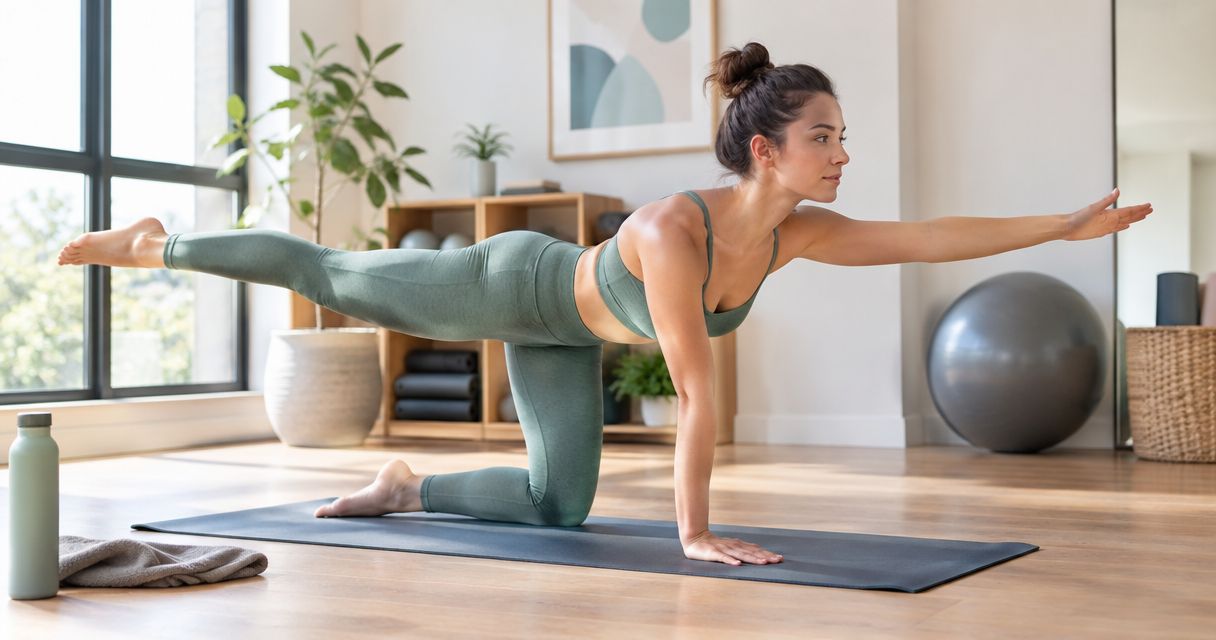
| Bird dog | Cross-body core control | Coordinates opposite limbs without a barre | Rushing or lifting too high encourages trunk movement |
1. Supported plié squat: best for lower-body control
A supported plié squat combines a wide stance, comfortable turnout, and a controlled knee bend. A light handhold helps you practice the movement without making balance the main task.
Start facing a fixed barre or stable support. Place your feet wider than your hips and turn your toes outward only as far as feels comfortable; bend your knees in the same direction as your toes, then stand without pulling on the support.
Keep your feet grounded and your torso comfortably upright. Reduce your depth if your knees drift inward or your pelvis tucks sharply underneath you.
Supported plié squat pros:
- You can adjust stance width and squat depth.
- A light handhold reduces the balance demand.
- The movement provides a clear starting point for lower-body practice.
Supported plié squat cons:
- Copying a dancer's turnout can push you beyond your comfortable range.
- Hanging from the support changes the exercise.
- It does not replace upper-body or core movements.
Best for: Beginners learning to bend and straighten their legs with stable support.
Verdict: Choose the supported plié squat as your lower-body starting point; skip forced turnout.
2. Supported calf raise: best for ankle and calf work
A supported calf raise moves you from grounded heels onto the balls of your feet, then back down. It gives your calves a distinct role in the workout instead of treating every standing exercise as interchangeable.
Stand with your feet comfortably aligned and your hands resting lightly on a secure support. Lift your heels without rolling your ankles outward, then lower with control.
Keep your toes relaxed rather than gripping the floor. If you have to pull hard on the barre or bounce to rise, make the lift smaller.
Supported calf raise pros:
- The movement is easy to understand.
- Support lets you separate calf work from a balance challenge.
- You can reduce the lift height while retaining the movement pattern.
Supported calf raise cons:
- Bouncing makes the lowering phase harder to control.
- Rolling onto the outer edges of your feet changes your alignment.
- Calf raises alone leave major parts of a full-body routine uncovered.
Best for: Adding focused ankle movement and calf work to a standing sequence.
Verdict: Choose supported calf raises for lower-leg work; skip bouncing through the movement.
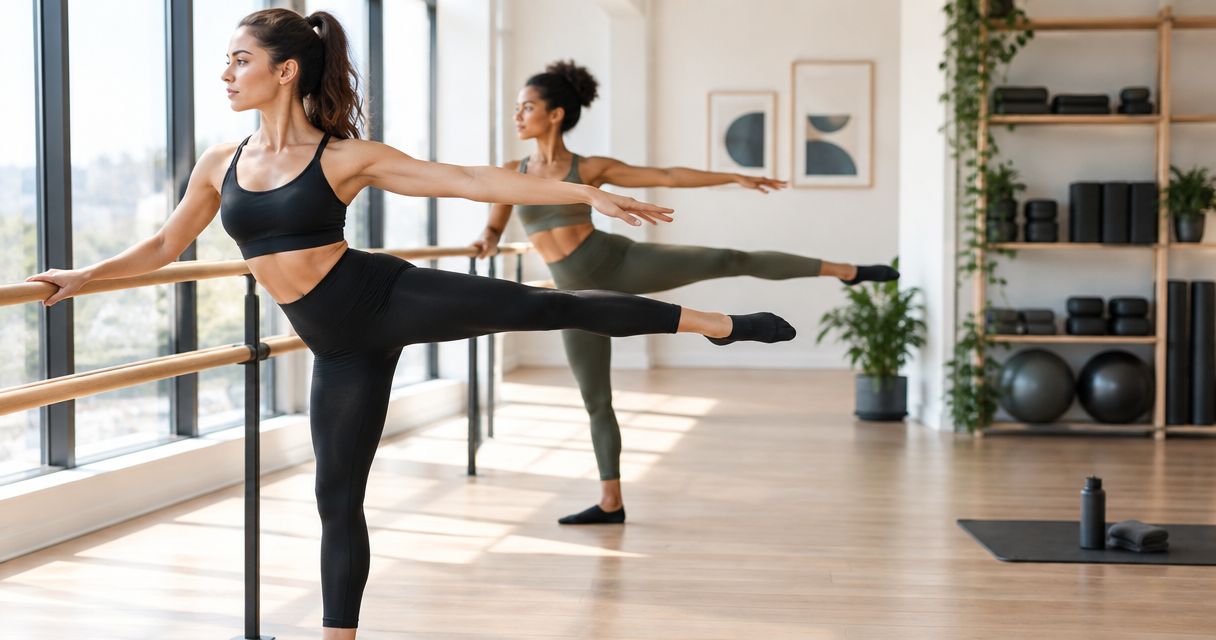
3. Standing side leg lift: best for standing hip control
A standing side leg lift moves your leg away from your body while you keep your pelvis relatively still. The useful challenge is controlling the movement, not lifting your foot as high as possible.
Stand beside a fixed support with a soft bend in your standing knee. Move the other leg sideways within a comfortable range, then return without swinging.
Keep your torso tall and avoid tipping away from the moving leg. Reduce the range if your hip hikes upward or your lower back starts doing the work.
Standing side leg lift pros:
- It adds sideways movement to a squat-heavy routine.
- A handhold makes the standing position easier to manage.
- Small movements make alignment easier to check.
Standing side leg lift cons:
- Leaning can disguise limited movement at the hip.
- The standing leg still has to support your weight.
- A higher lift does not guarantee better control.
Best for: Practicing hip movement while keeping your standing posture steady.
Verdict: Choose standing side leg lifts for hip control; skip the height contest.
4. Glute bridge: best for floor-based hip extension
A glute bridge raises your hips from a lying position while your feet and upper back remain supported. It introduces hip extension without requiring you to balance upright.
Lie on your back with your knees bent and feet flat. Press through your feet to lift your pelvis, stopping before the movement becomes a large arch in your lower back.
Lower smoothly rather than dropping. Adjust your foot position to find a setup that feels controlled, and keep your neck relaxed instead of turning your head while lifted.
Glute bridge pros:
- Floor support removes the standing-balance demand.
- It complements squats with a different hip movement.
- You can practice a small lift before increasing the range.
Glute bridge cons:
- Overarching your back shifts the movement away from controlled hip extension.
- An uncomfortable floor setup makes the exercise harder to sustain.
- It provides little upper-body pushing work.
Best for: Adding hip extension when you want a floor-based alternative to standing work.
Verdict: Choose glute bridges for controlled hip extension; skip lifting past your stable range.
5. Incline push-up: best for upper-body pushing
An incline push-up places your hands on a secure elevated surface while your body moves toward and away from it. It adds chest, shoulder, and arm work to a routine that otherwise concentrates on your legs.
Use a fixed surface that cannot slide or tip under your weight. Step back, keep your body aligned, bend your elbows to lower toward the surface, and press away without letting your hips sag.
A more upright setup reduces the demand compared with a lower incline. Do not assume a portable chair or lightweight barre is safe for supporting a push-up.
Incline push-up pros:
- It fills the upper-body gap in many leg-focused routines.
- Surface height lets you adjust the challenge.
- The movement also asks you to maintain trunk alignment.
Incline push-up cons:
- An unstable support creates a safety problem.
- Wrist or shoulder discomfort calls for a different setup or movement.
- Dropping your hips makes the exercise less controlled.
Best for: Adding an adjustable upper-body pushing movement.
Verdict: Choose incline push-ups on secure support; skip any surface that shifts under pressure.
6. Bird dog: best for cross-body core control
Bird dog starts on your hands and knees and pairs an arm reach with the opposite leg reach. It is a useful barre-inspired accessory rather than a standing barre movement.
Begin with your hands under your shoulders and knees under your hips. Reach forward and backward without rotating your pelvis or lifting your limbs so high that your back arches.
Practice an arm reach or leg reach separately if coordinating both disrupts your position. Return gently before changing sides; speed is not the goal.
Bird dog pros:
- It needs no standing support.
- Separate limb reaches provide a simpler starting version.
- It emphasizes keeping your trunk steady while your limbs move.
Bird dog cons:
- Kneeling or bearing weight through your hands can be uncomfortable.
- Large reaches can turn into back extension or rotation.
- It does not replace the upper-body pushing role of a push-up.
Best for: Practicing opposite-limb coordination with controlled trunk movement.
Verdict: Choose bird dog for core control; wait on combined reaches until separate reaches feel steady.
How these barre moves were ranked
The ranking prioritizes stable support, adjustable range, clear alignment, and a distinct contribution to whole-body coverage. The supported plié squat leads because it is a practical starting movement; the remaining picks fill gaps rather than compete to be the hardest exercise.
This is a movement-selection guide for 2026, not a claim that every barre class uses the same exercises. Your instructor's cues and your comfortable range take priority over the order of this list.
How to put the moves together
Build your routine around movement roles rather than repeating whichever exercise produces the strongest burning sensation.
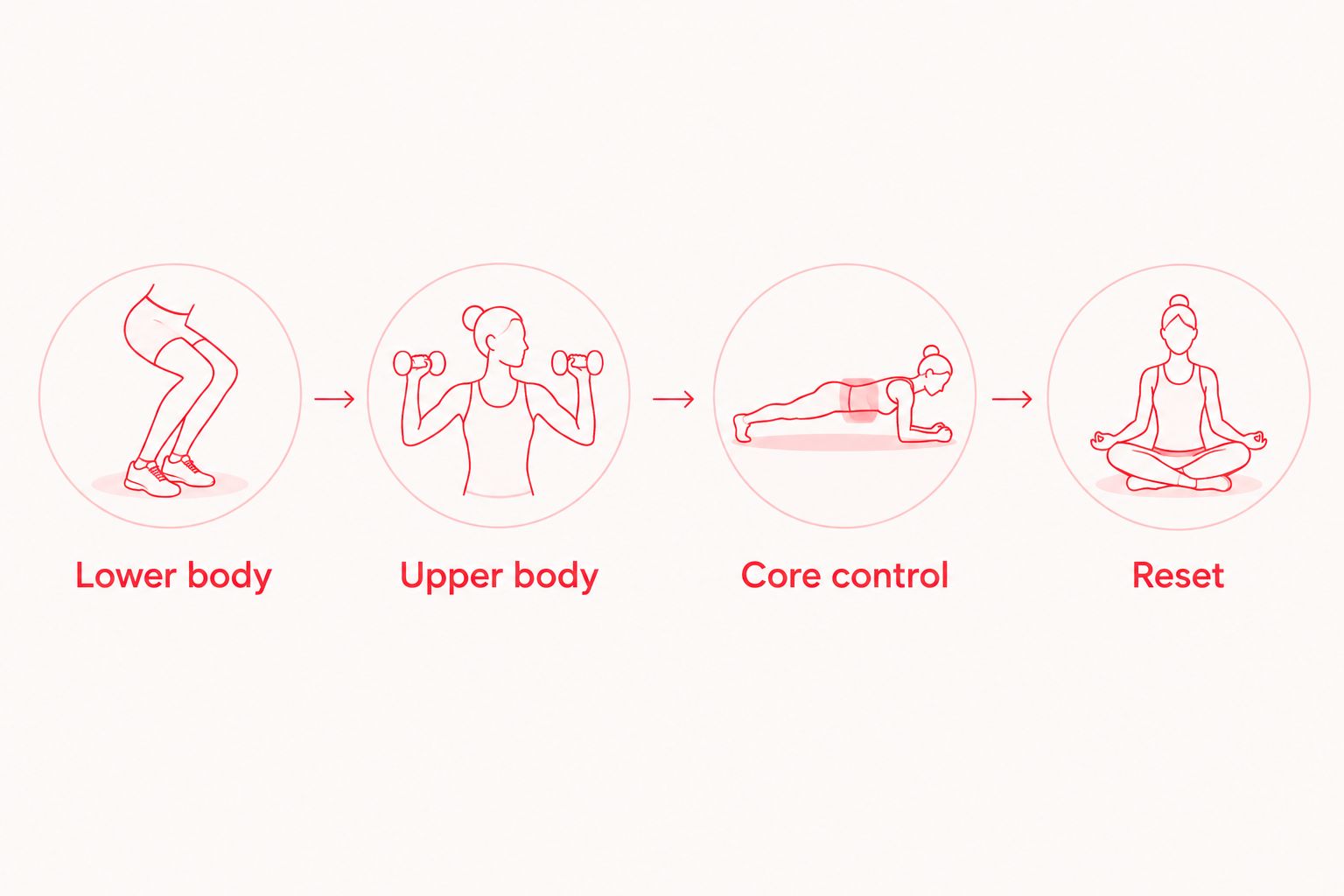
- Lower body: Start with supported plié squats. Add calf raises and side leg lifts for different standing tasks.
- Upper body: Include incline push-ups so your routine does not stop at your hips.
- Core control: Use glute bridges and bird dogs to practice floor-based control.
- Reset: Pause, check your breathing and alignment, and choose the next movement deliberately.
Keep the transitions simple. Secure your standing support before beginning, and clear enough floor space to move down to your mat without stepping over belongings.
Preparing for your first barre class
For your first class in 2026, wear clothing that lets you bend and reach comfortably, bring water, and check the studio's instructions about footwear and equipment. Ask whether you need to bring a mat rather than assuming equipment is provided.
Tell the instructor you are new before class begins. Mention relevant injuries or movement restrictions, and ask for a simpler setup when a position feels unfamiliar.
Stop an exercise that causes pain. If you feel dizzy or unwell, stop moving and seek appropriate help rather than trying to keep pace with the group.
Choosing barre, yoga, or Pilates
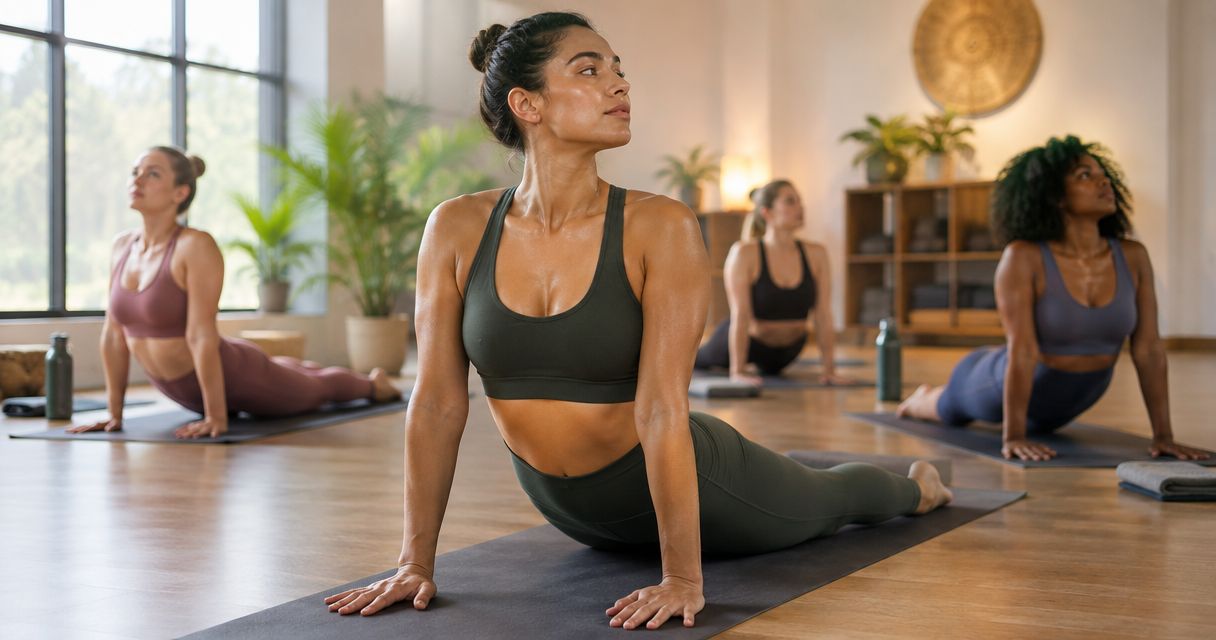
At Unified Hot Yoga, Barre sits alongside Hot Pilates, Reformer Pilates, Vinyasa, Yin, and 26&2 yoga. Choose according to the movement experience you want, not a promise that one format is universally best.
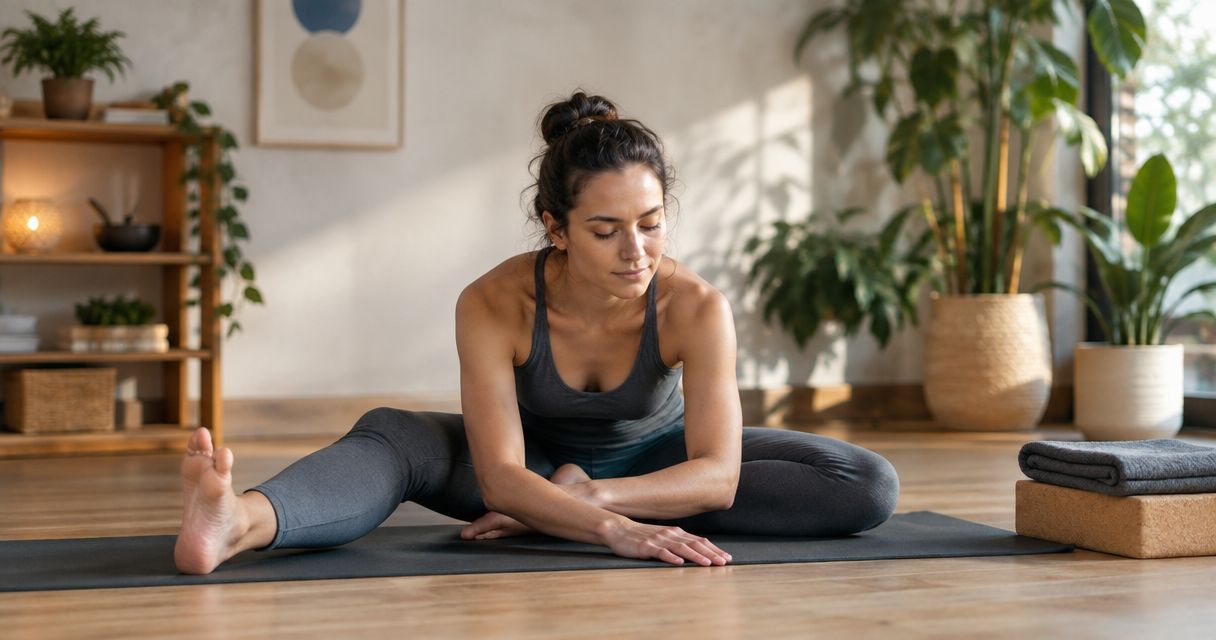
Barre suits an interest in supported fitness movements; Vinyasa emphasizes flowing yoga sequences, while Yin uses longer-held yoga positions. Reformer Pilates uses an apparatus, so its setup differs from a mat-based workout.
Before choosing a membership, review the current class information, participation requirements, and membership terms. A welcoming community matters, but your first practical question is whether the class format fits how you want to move.
Which barre moves should you choose?
Start with the supported plié squat, then add incline push-ups and bird dog for broader coverage. Add calf raises, side leg lifts, and glute bridges when you want their distinct movement roles—not because a longer exercise list is automatically better.
For an American Fork studio option in 2026, Unified Hot Yoga offers Barre for practitioners of all skill levels. Keep your first-class goal simple: learn the setup, ask questions, and leave knowing which adjustments help you move comfortably.
Explore your first class
Review the studio's class options before choosing your next step.
FAQ
What's the best barre move for a beginner?
A supported plié squat is a useful starting move for learning lower-body control. Use comfortable turnout, keep your knees moving in the direction of your toes, and reduce the depth when your alignment changes.
Can barre give me a full-body workout?
Barre can provide a full-body workout when the exercise selection includes lower-body, upper-body, and core movements. A routine made only of standing leg pulses does not offer the same coverage.
Do I need a ballet barre to do these exercises?
You do not need a ballet barre for every exercise in this guide. Standing movements need secure support, incline push-ups need a surface that cannot shift, and glute bridges and bird dogs use floor space.
Should I lift my leg higher during barre exercises?
Lift your leg only as high as you can without leaning, hiking your hip, or arching your back. A smaller controlled movement is a better choice than a larger movement that changes your posture.
What should I bring to my first barre class?
Bring water and wear clothing that allows comfortable movement. Check the studio's instructions about footwear, mats, and other equipment before attending rather than assuming a particular policy.
Is barre better than Reformer Pilates for beginners?
Neither barre nor Reformer Pilates is automatically better for every beginner. Barre and apparatus-based Pilates offer different movement setups; choose according to your preferences and ask about beginner instruction.
Where can I try barre in American Fork?
Unified Hot Yoga offers Barre in American Fork for practitioners of all skill levels. The studio also offers Vinyasa, Yin, 26&2 yoga, Hot Pilates, and Reformer Pilates.
What should I do if a barre movement hurts?
Stop a movement that causes pain rather than pushing through it. Ask the instructor for an alternative, and seek qualified medical guidance for persistent pain or an injury.
One last thing
Your support is part of the exercise setup, not just something to hold. A chair that feels steady while you stand beside it can still slide or tip when you push against it.
Before your next workout, check the support in the direction you intend to load it. If it shifts, choose a different setup; no exercise on this list requires you to accept unstable equipment.