Best overall: heel slides. Best for learning breath control: Pilates breathing. Best for practicing hip rotation: side-lying clamshells. This 2026 guide explains seven beginner movements and how to approach your first Pilates class at Unified Hot Yoga in American Fork.
- The best pilates exercises for beginners start with heel slides: simple movement without lifting your leg.
- Pilates breathing helps you practice coordination before adding more movement.
- Knee folds, pelvic curls, and clamshells introduce different movement patterns; choose by comfort and control.
- Unified Hot Yoga offers Hot Pilates and Reformer Pilates for practitioners of all skill levels.
Why this matters
Your first Pilates exercise should be easy to understand, not impressive to watch. Starting with a manageable movement lets you notice your breathing, position, and effort before adding complexity.
For your first class in 2026, separate two decisions: which movement you can practice comfortably and which class format you want to explore. A floor exercise does not teach you how to operate a reformer, and practicing at home does not reproduce a heated class.
Unified Hot Yoga is a Pilates option for beginners who want an in-person studio in American Fork. The studio offers Hot Pilates and Reformer Pilates, alongside Vinyasa, Yin, 26&2 yoga, and Barre. Choose the format that interests you, then ask how the instructor accommodates a first visit.
What makes the best Pilates exercises for beginners?
These recommendations prioritize a clear starting position and an easy way to reduce difficulty. Use these criteria to choose your first movement:
- Simple setup: You can understand where your body starts without complicated equipment or transitions.
- Adjustable range: You can make the movement smaller rather than forcing a position.
- Steady breathing: You can breathe without holding your breath to finish a repetition.
- Position awareness: You can notice when your pelvis, shoulders, or ribs start moving unintentionally.
- Clear stopping point: You can stop, reset, and return to the starting position without rushing.
A beginner-friendly exercise is not automatically appropriate for every body. If you have an injury, recent surgery, pregnancy-related restrictions, or symptoms that affect movement, get individualized guidance before using a general routine.
Beginner Pilates exercises at a glance: 2026
The order below starts with an accessible moving exercise, then covers breathing and progressively different coordination tasks. It is not a difficulty score or a promise of results.
| Exercise | Best for | Standout feature | Key limitation |
|---|---|---|---|
| Heel slides | First moving exercise | The sliding foot stays supported | Pelvis can shift as the leg extends |
| Pilates breathing | Learning breath coordination | No limb movement required | Does not teach moving-body coordination by itself |
| Knee folds | Practicing a controlled leg lift | One foot lifts while the other stays down | Pelvis can tilt during the lift |
| Pelvic curl | Learning a small bridge | Introduces a gradual lift and return | Lifting too high can turn into back arching |
| Side-lying clamshell | Practicing hip rotation | Bent knees and supported lying position | Rolling backward changes the movement |
| Side leg lift | Controlling a longer leg position | Straight-leg movement makes alignment noticeable | Easier to compensate through the waist |
| Quadruped arm reach | Introducing supported balance | One arm moves from hands and knees | Weight-bearing position can bother wrists |
1. Heel slides: best Pilates exercise for a first moving exercise
A heel slide lets you practice moving a leg while keeping your upper body and pelvis relatively quiet. Because your heel stays on the floor, you do not need to hold the whole leg in the air.
Lie on your back with your knees bent and feet resting on the floor. Slowly slide one heel away from you, stopping before your pelvis shifts or your back position changes noticeably; then bring the foot back.
Heel slides pros:
- The floor supports the moving leg.
- You can shorten the slide immediately.
- Alternating legs makes differences in control easier to notice.
Heel slides cons:
- A sticky surface can interrupt the movement.
- Extending farther can hide a loss of pelvic control.
Best for: Your first moving exercise when you want a simple way to practice control. Keep the slide small enough that you can breathe normally throughout.
Verdict: Start here. Heel slides offer a clear task without adding a suspended-leg position.
2. Pilates breathing: best beginner exercise for breath coordination
Pilates breathing practice brings attention to how your rib cage moves while your body rests. It gives you a starting point for coordinating breath with later exercises, without asking you to manage several moving parts.
Lie comfortably with your knees bent, or sit in a supported position. Rest your hands lightly around the sides of your ribs, inhale without lifting your shoulders, and exhale without forcing the air out.
Pilates breathing pros:
- You can practice without moving your limbs.
- Your hands provide feedback about rib movement.
- A supported position reduces setup demands.
Pilates breathing cons:
- Trying to take an oversized breath can create unnecessary effort.
- Breathing practice alone does not teach control during leg or arm movement.
Best for: Learning to notice your breath before adding choreography. Treat the breathing pattern as practice, not a test of how deeply you can inhale.
Verdict: Start here if movement feels overwhelming. Comfortable breathing is a better starting point than forcing a complicated sequence.
3. Knee folds: best beginner Pilates exercise for a controlled leg lift
A knee fold introduces lifting one foot while the other remains on the floor. Compared with a heel slide, you now manage the weight of a leg without continuous floor support.
Lie on your back with both knees bent. Lift one foot only as far as you can without rocking your pelvis, then lower it quietly; keep the other foot down throughout the movement.
Knee folds pros:
- Each repetition has a clear lift and return.
- You can reduce the height of the lift.
- Keeping one foot down simplifies the setup.
Knee folds cons:
- Pelvic movement can be easy to overlook.
- Holding the breath can disguise excessive effort.
Best for: Moving beyond a supported heel slide while keeping the exercise straightforward. Avoid bringing both legs up just because the single-leg version feels manageable.
Verdict: Add after heel slides feel controlled. Keep one foot grounded and make the lift smaller when your position changes.
4. Pelvic curl: best beginner Pilates exercise for learning a small bridge
A pelvic curl takes you from a resting position into a small bridge and back down. The useful task is controlling that transition, not reaching the highest possible position.
Lie with your knees bent and feet resting on the floor. Gently tip your pelvis and lift into a low bridge, keeping your neck relaxed; lower slowly rather than dropping back to the mat.
Pelvic curl pros:
- Both feet stay supported.
- You can work with a low lift.
- The return gives you another opportunity to practice control.
Pelvic curl cons:
- Chasing height can turn the movement into back arching.
- Neck or back discomfort makes this a poor choice without individual guidance.
Best for: Learning a controlled lift and return with both feet grounded. Leave your head on the mat instead of turning it while your pelvis is raised.
Verdict: Choose a small bridge, not a high one. Skip the movement if you cannot find a comfortable version.
5. Side-lying clamshell: best beginner exercise for hip rotation
A clamshell involves opening the top knee while your feet remain together. The movement is small; keeping your pelvis steady matters more than how far the knee opens.
Lie on your side with your knees bent and your head supported comfortably. Keep your hips stacked, open the top knee without rolling backward, and return it slowly.
Side-lying clamshell pros:
- The bent-leg position keeps the setup compact.
- You can make the opening very small.
- The floor supports the side of your body.
Side-lying clamshell cons:
- Rolling backward creates the appearance of a larger opening.
- Side-lying pressure is uncomfortable for some people.
Best for: Practicing hip rotation while noticing whether your pelvis moves with your leg. Use comfortable head support rather than holding your neck up.
Verdict: Start with a small opening. Stop expanding the range when your pelvis begins to roll.
6. Side leg lift: best beginner exercise for straight-leg control
A side leg lift asks you to move a longer leg position while maintaining a steady side-lying setup. It is a useful next step when you can distinguish leg movement from rolling or bending through your waist.
Lie on your side with your head supported and your top leg long. Lift the top leg a small distance, keeping it aligned with your body, then lower without swinging.
Side leg lift pros:
- A small lift is enough to practice the task.
- The movement has a clear up-and-down path.
- You can pause and reset between repetitions.
Side leg lift cons:
- Hiking the hip can substitute for moving the leg.
- A straight leg adds more coordination demands than a bent-knee setup.
Best for: Practicing control after you feel comfortable lying on your side. Bend the lower knee if that helps you find a steadier position.
Verdict: Add when the clamshell setup feels familiar. Keep the lift low and leave large leg swings for another day.
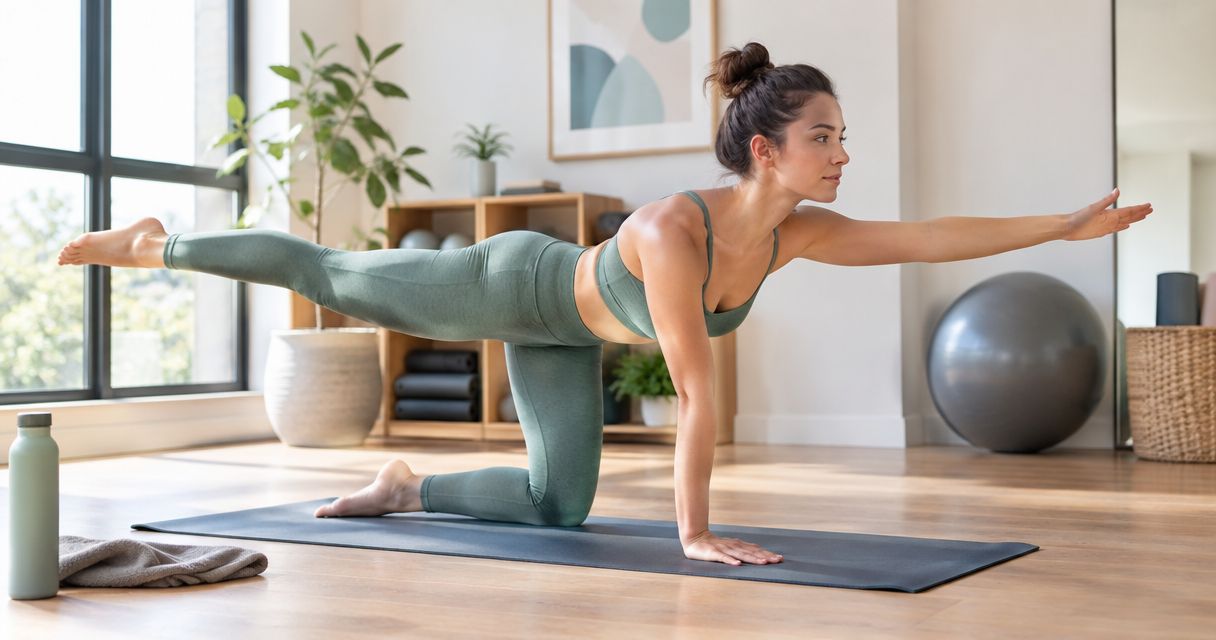
7. Quadruped arm reach: best beginner exercise for supported balance
A quadruped arm reach introduces a hands-and-knees position with one moving arm. Keeping both knees down avoids the extra coordination required by lifting an opposite arm and leg together.
Start with your hands under your shoulders and knees under your hips. Reach one arm forward only as far as you can without shifting or twisting your trunk, then replace the hand gently.
Quadruped arm reach pros:
- Both knees remain supported.
- You can shorten the reach.
- A single moving limb keeps the task focused.
Quadruped arm reach cons:
- Pressure through the supporting wrist can be uncomfortable.
- Reaching higher can encourage trunk rotation or back arching.
Best for: Introducing balance after floor-based lying exercises feel familiar. If the hands-and-knees position hurts, choose a lying exercise rather than pushing through it.
Verdict: Add last. Start with the arm alone before considering a more complicated variation.
How these beginner exercises are ranked
This 2026 ranking uses setup simplicity, adjustable range, breathing, position awareness, and ease of stopping. Heel slides lead because they introduce movement with the leg supported; the remaining exercises each address a distinct beginner task.
These are instructional recommendations, not findings from a comparative trial. Choose the exercise you can perform comfortably and explain clearly, rather than treating the ranking as a required progression.
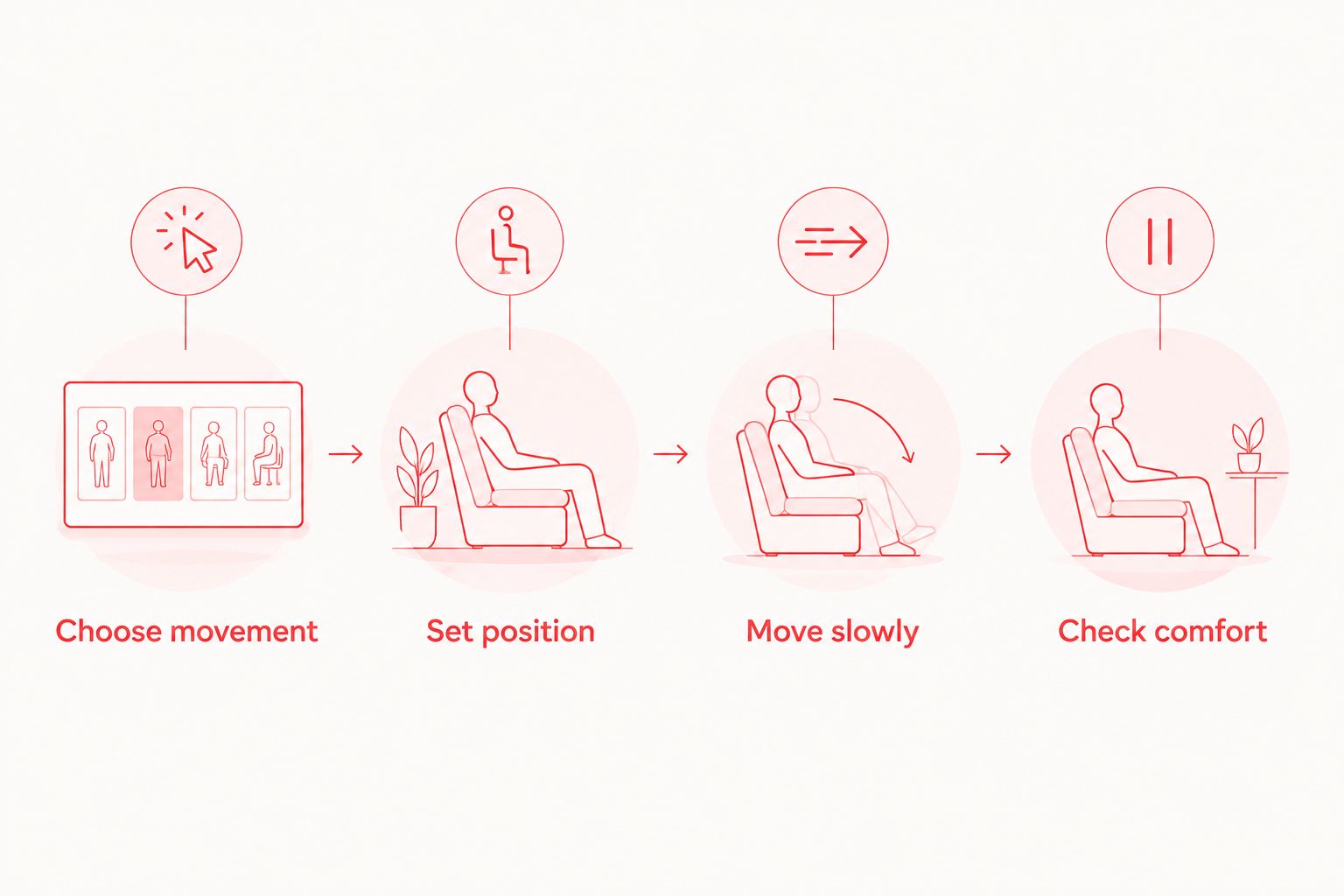
How to prepare for a short beginner practice
Use this sequence to keep your first practice manageable:
- Choose movement: Pick heel slides and breathing rather than attempting the entire list.
- Set position: Use a stable, comfortable surface and check that your starting position feels comfortable.
- Move slowly: Try 3 relaxed breaths, then 4 heel slides per side. Treat this as a sample practice, not a required dose.
- Check comfort: Stop after 1 set and notice whether you maintained steady breathing and control.
Bring comfortable movement clothing and water to a studio class. Ask beforehand whether you need your own mat or other items; do not assume an equipment policy from a general exercise guide.
Tell the instructor that you are new before class begins. Mention relevant restrictions and ask how to modify a movement, take a break, or manage equipment before the room gets busy.
Which beginner Pilates exercises should you choose?
Choose heel slides as your default first moving exercise in 2026. Pair them with comfortable breathing, then add one different movement only when you understand its setup and stopping point.
For an in-person start, Unified Hot Yoga offers both Hot Pilates and Reformer Pilates. Tell the studio whether you want to explore a heated class or an equipment-based class, and ask what a newcomer should expect before choosing a session.
Your first class does not need to settle your long-term preference. A useful first visit leaves you understanding the format, the instructions, and how to ask for a modification.
FAQ
What are the best Pilates exercises for beginners in 2026?
Heel slides, Pilates breathing, knee folds, pelvic curls, clamshells, side leg lifts, and quadruped arm reaches offer distinct beginner movement tasks. Start with heel slides and breathing, then select another exercise based on comfort and control.
Can I start Pilates if I have never exercised before?
You can approach Pilates as a newcomer without already knowing the movements. Tell your instructor about your experience and any relevant restrictions, and get medical guidance when a health condition affects exercise.
Do I need a reformer to practice beginner Pilates exercises?
You do not need a reformer for the floor-based exercises in this guide. Reformer Pilates uses equipment that requires its own setup and instruction.
Is Hot Pilates the same as Reformer Pilates?
Hot Pilates and Reformer Pilates are different class formats. Unified Hot Yoga offers both; ask about the heat, equipment, and beginner modifications before selecting your first class.
How many repetitions should I do on my first attempt?
Start with a small practice rather than chasing a repetition target. The sample here uses 3 relaxed breaths and 4 heel slides per side for 1 set; stop earlier if comfort or control changes.
What should I bring to my first Pilates class?
Bring comfortable movement clothing and water, and confirm the studio's equipment requirements before attending. Ask whether you need a mat and whether the selected class has any footwear requirements.
Should beginner Pilates exercises hurt?
Do not push through pain to complete a Pilates exercise. Stop the movement, ask for an alternative, and seek appropriate medical advice for persistent or concerning symptoms.
One last thing
For your first Pilates practice in 2026, make the return as deliberate as the lift. Lowering a foot quietly or sliding a heel back without shifting your pelvis gives you a concrete task to notice.
At Unified Hot Yoga, tell the instructor which movement felt confusing rather than simply saying the class was difficult. That specific question gives your next conversation a useful starting point.