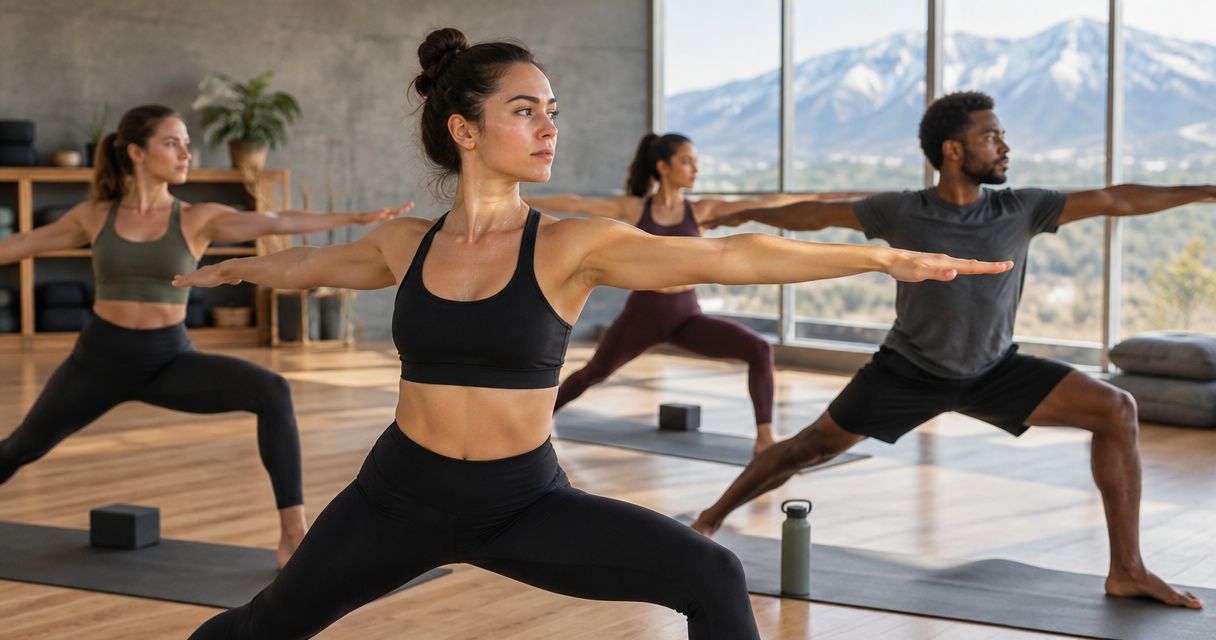
Yes, beginners can do hot yoga: you do not need prior yoga experience or advanced flexibility, but you do need a class suited to your experience and permission to rest. Heat adds physical demand, so your first class should focus on learning the movements and recognizing your limits—not keeping up with everyone else.
- Can beginners do hot yoga? Yes—choose an appropriate class, tell the instructor, and rest when needed.
- Unified Hot Yoga serves all skill levels in American Fork, with Vinyasa, Yin, and 26&2 yoga.
- Hot Pilates, Barre, and Reformer Pilates offer different movement formats; choose by preference, not assumed difficulty.
- Stop exercising if you feel dizzy, nauseated, faint, or unwell in the heat.
Can beginners do hot yoga?
Beginners can start hot yoga without mastering the poses first. The useful starting point is a class description that matches your experience, an instructor who knows you are new, and a willingness to reduce your effort.
Unified Hot Yoga offers infrared-heated yoga and Pilates studio classes in American Fork for practitioners of all skill levels. Its offerings include 3 yoga styles—Vinyasa, Yin, and 26&2—alongside Hot Pilates, Barre, and Reformer Pilates.
Use this sequence to choose your first class in 2026:
- Read the class description. Check the movement style, heat information, equipment, and any experience requirements.
- Explain that you are new. Tell the instructor whether you are new to yoga, heated exercise, or both.
- Ask about resting and modifications. Understand what to do before the class starts moving.
- Start below your maximum effort. Learn the instructions before adding depth, speed, or resistance.
- Respond to symptoms immediately. Stop exercising and tell the instructor if you feel unwell.
The point is not to demonstrate readiness before attending. It is to choose a setting where you can learn without treating discomfort as an instruction to push harder.
Why this matters
A beginner faces two separate learning tasks in hot yoga: understanding the movements and adjusting to exercising in heat. Being comfortable with one does not automatically prepare you for the other.
A regular runner can still find a heated yoga room demanding. A flexible newcomer can still need help with balance, breathing, and transitions. Neither fitness nor flexibility replaces attention to how you feel.
For your first class in 2026, define success as understanding the format, communicating with the instructor, and leaving with a clear sense of whether the experience suits you. Completing every movement is not the test.
Which class should a beginner choose?
Choose by the movement you want to learn, then confirm the demands of the specific class. A familiar-sounding name does not establish the room temperature, teaching pace, or beginner suitability.
The table describes the general formats, not a promise about an individual session. Check the current class description before booking.
| Class format | What the format generally involves | Best for | Beginner consideration |
|---|---|---|---|
| Vinyasa | Yoga poses connected through movement and breathing | Learning flowing yoga sequences | Transitions require attention; ask how to simplify them |
| Yin | Sustained, largely floor-based yoga positions | Exploring a slower movement format | Longer holds still require restraint; avoid forcing depth |
| 26&2 | A structured sequence of 26 postures and 2 breathing exercises | Learning a recurring yoga sequence | Repetition does not remove the demands of heat or balance |
| Hot Pilates | Pilates-based exercise in a heated setting | Trying Pilates movements with heat | Heat adds demand; confirm the class structure and modifications |
| Barre | Barre-supported and floor-based fitness movements | Exploring controlled, repeated movements | Small movements can still feel demanding; ask about adjustments |
| Reformer Pilates | Pilates using a carriage-and-spring apparatus | Learning equipment-based Pilates | Equipment needs explanation; confirm newcomer instruction |
All 6 formats deserve consideration. None needs to become a stepping stone you must complete before trying another.
For example, wanting slower movement is a useful reason to explore Yin, but it is not evidence that every Yin class is easy. Wanting equipment guidance is a reason to ask about Reformer Pilates instruction, not proof that equipment makes a session easier.
Is Vinyasa suitable if you have never done yoga?
Vinyasa is an option for beginners when the specific class supports newcomers. Ask how the instructor explains transitions and whether you can pause rather than follow every movement.
If remembering a sequence feels overwhelming, focus on understanding the setup of each pose. Speed can wait.
Is Yin automatically the easiest choice?
Yin uses a slower format, but slower does not mean effortless. Sustained positions require you to distinguish a manageable stretch from pain or excessive strain.
Choose Yin because its pace interests you, not because you expect to push deeper without consequences. Ask for a less intense position whenever needed.
Does 26&2 require previous experience?
The 26&2 format refers to 26 postures and 2 breathing exercises; the name alone does not establish an experience requirement. Confirm the class's newcomer guidance before you attend.
A recurring sequence gives you something familiar to learn over time. You still need to adjust your effort and respect your response to heat.
Why the beginner experience varies
Two people can attend the same class and find different parts challenging. These factors explain why choosing by a class name alone falls short:
- Movement familiarity. Learning yoga positions is different from learning Pilates movements or reformer equipment.
- Class structure. Flowing sequences, sustained positions, and repeated exercises create different learning demands.
- Heat exposure. Heated exercise adds a demand that an unheated workout does not share.
- Individual health. Pregnancy, medical conditions, and medications can affect whether heated exercise is appropriate.
- Available adjustments. Ask how to reduce a movement's intensity and what to do when you need to stop.
- Practical fit. A class you can attend without rushing gives you more room to prepare and ask questions.
For a 2026 class choice, use these factors as questions rather than assumptions. Ask about the actual session instead of assigning difficulty from the title.
What should you bring to your first hot yoga class?
Bring water, clothing you can move in, and a towel for sweat. Confirm the studio's mat and equipment requirements before leaving home; do not assume that borrowing or renting equipment is available.
A simple preparation checklist keeps your attention on the class:
- Water: Bring a bottle you can access during breaks.
- Clothing: Choose comfortable exercise clothing that stays secure as you move.
- Towel: Bring something suitable for managing sweat; ask whether the class calls for a mat towel.
- Mat: Confirm whether you should bring your own.
- Arrival details: Check the location, check-in instructions, and any required forms.
Use the current Know Before You Go information for studio-specific requirements. For Barre and Reformer Pilates, ask separately about footwear or grip-sock requirements rather than assuming yoga preparation covers every format.
Pack before you need to leave. That small decision removes an avoidable source of first-class stress.
How should you prepare before class?
Prepare to learn, not to prove endurance. Avoid arriving already depleted, and leave yourself enough time to ask questions without feeling rushed.
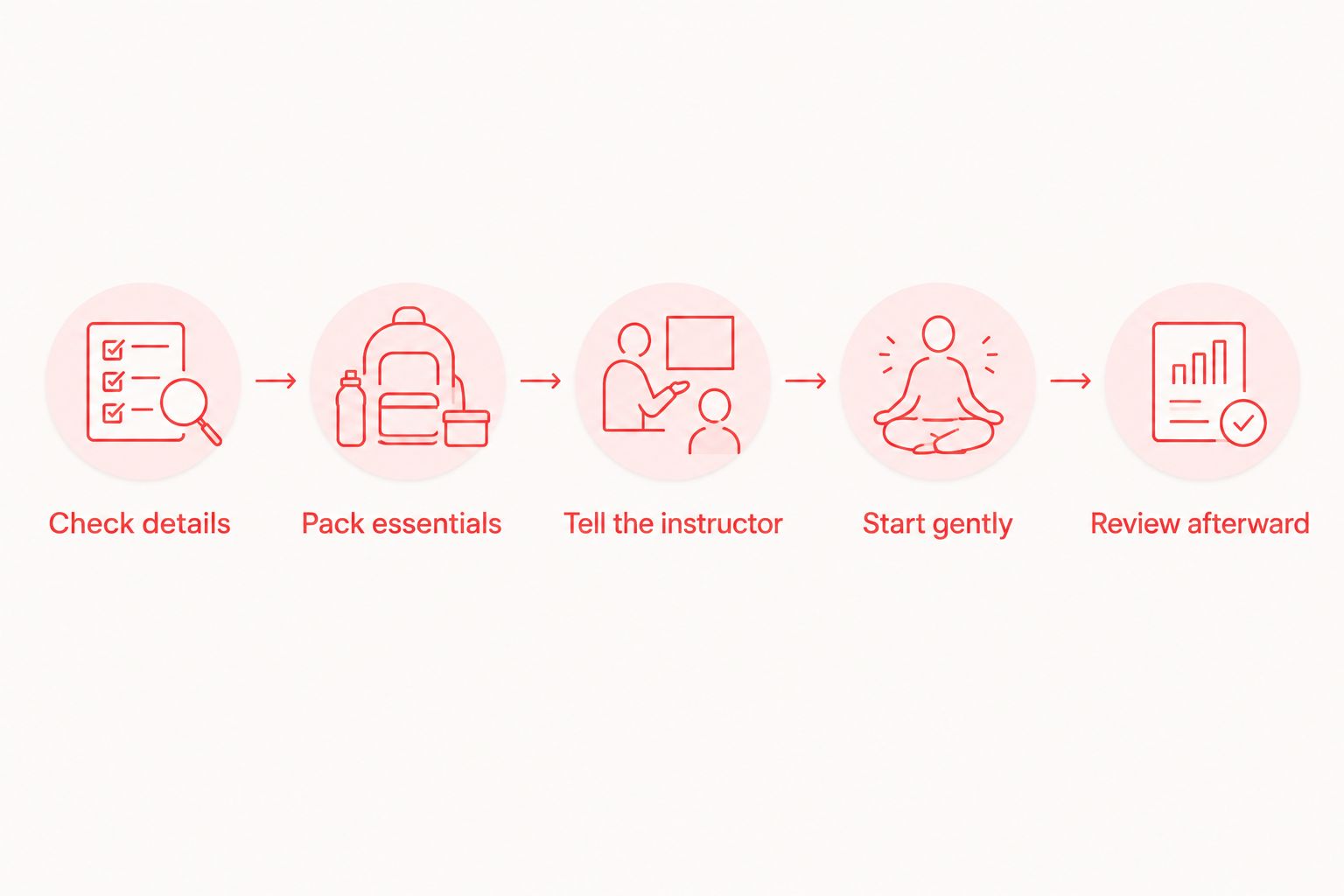
Use this preparation sequence for your first visit in 2026:
- Check details. Read the current class description and newcomer instructions, including what equipment to bring.
- Pack essentials. Set out your water, towel, clothing, and any confirmed equipment.
- Tell the instructor. Explain your experience level and mention relevant movement limitations privately.
- Start gently. Choose a manageable effort while you learn the cues and notice the heat.
- Review afterward. Consider the movements, instruction, and heat separately before choosing your next class.
Drink water normally before class rather than trying to solve hydration at the last moment. Avoid a large meal immediately before exercising, and give yourself time to digest comfortably.
Do not adopt a rigid drinking schedule from another person's routine. Your needs depend on your health, activity, and sweating; ask a qualified healthcare professional if you need individualized guidance.
What should you do if the heat feels overwhelming?
Stop exercising if you feel dizzy, nauseated, faint, weak, or otherwise unwell. Tell the instructor and move to a cooler place rather than trying to finish the sequence.
Heat illness is not a sign that you need more determination. Confusion, collapse, or loss of consciousness requires emergency help; do not leave someone alone with severe symptoms.
Resting before you become unwell is also acceptable. You do not need to wait for a problem before lowering your effort.
Avoid forcing stretches because warmth makes movement feel easier. Stay within a controlled range, and stop a movement that causes pain.
Who should get medical advice before heated exercise?
Ask a qualified healthcare professional before starting if you are pregnant, have a condition that affects heat tolerance, or take medication that affects hydration or temperature regulation. An instructor can explain a class but cannot provide individualized medical clearance.
If you are ill or already dehydrated, postpone heated exercise. A booking is not a reason to ignore how you feel.
How do you know whether the class was a good fit?
Judge the class by what you learned and how you responded—not by sweat, flexibility, or comparison with the person beside you. Those observations do not establish whether you chose the right effort.
After class, ask yourself:
- Could you understand the instructions well enough to participate?
- Did you know how to reduce effort or take a break?
- Was the movement style something you want to learn?
- Did the heat suit you, separate from the exercises?
- What question would make another visit easier?
Unified Hot Yoga is a fit for American Fork beginners seeking yoga and Pilates studio classes that welcome all skill levels. Its range gives you different formats to explore; the practical limitation is that a broad menu still requires you to check the demands of the individual session.
If you are considering a membership in 2026, review the current Prices page for intro offers and membership details. Choose based on the classes you want to attend and the schedule you can realistically maintain, rather than committing to an imagined routine.
FAQ
Can beginners do hot yoga if they are not flexible?
Yes, beginners can do hot yoga without advanced flexibility. Use a comfortable range of motion, ask for modifications, and never force a position to match another person.
What's the best hot yoga class for a complete beginner?
The best first class is one whose description and instructor support your experience level. Compare movement style, heat, and modification guidance instead of assuming one yoga style is always easiest.
Is hot yoga better than Hot Pilates for beginners?
Neither hot yoga nor Hot Pilates is automatically better for beginners. Choose yoga if you want to learn yoga poses and sequences, or Hot Pilates if Pilates-based movement interests you, then confirm the specific class requirements.
What should I bring to my first hot yoga class?
Bring water, comfortable exercise clothing, and a towel, and confirm whether you need your own mat. Check the current newcomer instructions for studio-specific equipment requirements.
Can I take a break during my first hot yoga class?
Yes, take a break whenever you need one and ask the instructor beforehand how to pause safely. If you feel dizzy, nauseated, faint, or unwell, stop exercising and move to a cooler place.
Do I need medical clearance before trying hot yoga?
Seek individualized medical advice if you are pregnant, have a condition affecting heat tolerance, or take medication affecting hydration or temperature regulation. An instructor cannot determine whether heated exercise is medically appropriate for you.
Does Unified Hot Yoga offer options beyond hot yoga?
Unified Hot Yoga offers Hot Pilates, Barre, and Reformer Pilates alongside Vinyasa, Yin, and 26&2 yoga. Confirm the current class description and newcomer requirements before choosing a session.
One last thing
Your first class gives you information, not a permanent verdict about your ability. Disliking heat is different from disliking yoga; disliking flowing transitions is different from disliking every yoga style.
Before choosing another class, identify which part you want to change: the movement format, the heat, or the preparation. That makes your next choice more useful than simply deciding to try harder.