You can consider Hot Pilates with a bad back when your symptoms are stable and a qualified healthcare professional has confirmed that the activity fits your condition. Do not use a heated class to test unexplained, worsening, or radiating pain. Heat adds a separate physical demand, so being comfortable with Pilates does not automatically mean you are ready for Hot Pilates.
- Can you do hot pilates with a bad back? Your symptoms and clinical guidance determine the answer, not flexibility.
- Skip a heated workout when back pain is new, worsening, or accompanied by neurological symptoms.
- Unified Hot Yoga offers all-skill-levels classes in American Fork; a studio class does not replace back-pain assessment.
- Ask about movement modifications and heat before booking Hot Pilates or Reformer Pilates.
Why this matters
A bad back is not a diagnosis. Occasional stiffness, a recent injury, persistent lower-back pain, and pain traveling down a leg need different decisions. A class that suits someone else with back pain is not automatically suitable for you.
For American Fork and Utah County readers choosing a class in 2026, the useful question is not whether you can finish the workout. It is whether you can participate without ignoring symptoms or exceeding your clinician's restrictions. Check the class schedule after you understand those limits, not before.
Can you do hot pilates with a bad back?
Sometimes—but a heated group class is not the place to diagnose back pain or test an injury. Start by separating familiar, stable symptoms from symptoms that are new or changing.
| Your situation | Appropriate next step | Reason |
|---|---|---|
| Familiar, stable discomfort with an established exercise plan | Ask your clinician whether heated group Pilates fits that plan | Exercise clearance needs to cover your condition and the activity |
| New pain or a recent flare-up | Get advice before booking | The cause and movement limits need clarification |
| Pain traveling into a leg, tingling, or weakness | Seek clinical assessment before participating | These symptoms need more than a class modification |
| Back symptoms are stable, but heat makes you feel unwell | Discuss a nonheated exercise setting | Heat tolerance and movement tolerance are separate issues |
General back-pain guidance from the NHS encourages staying active rather than prolonged bed rest. That advice does not specifically clear you for Hot Pilates, repeated spinal movements, or exercise in heat.
Ask your clinician about the actual activity: heated exercise, group instruction, floor transitions, and any bending or twisting that the class includes. “Exercise is okay” is less useful than clear guidance about movements to avoid and symptoms that mean you should stop.
When should you skip class and get medical help?
Seek emergency care for back pain with new loss of bladder or bowel control, numbness around the genitals or anus, or new weakness or numbness in both legs. These are established emergency warning signs in NHS back-pain guidance. Do not wait for a class instructor to assess them.
Back pain following a serious accident also needs emergency assessment. New or worsening leg weakness deserves urgent medical attention, even when you can still walk.
Get prompt medical advice when back pain occurs with fever, feeling generally unwell, unexplained weight loss, or pain that is worse at night. These symptoms do not establish a diagnosis, but they are reasons to seek care rather than experiment with a workout.
During exercise, stop for sharp or increasing back pain, spreading leg symptoms, or loss of normal control. If you become dizzy, faint, nauseated, or unusually weak in the heat, stop exercising and move to a cooler place. Persistent or severe symptoms require medical help.
Which class format should you ask about?
No class name guarantees a back-friendly experience. For your 2026 class search, compare the actual movements, heat, transitions, and available instruction—not just the label.
The descriptions below explain general formats, not a promise about an individual studio session. Confirm the details before booking.
| Format | What it generally involves | Best for discussing when | Limitation to check |
|---|---|---|---|
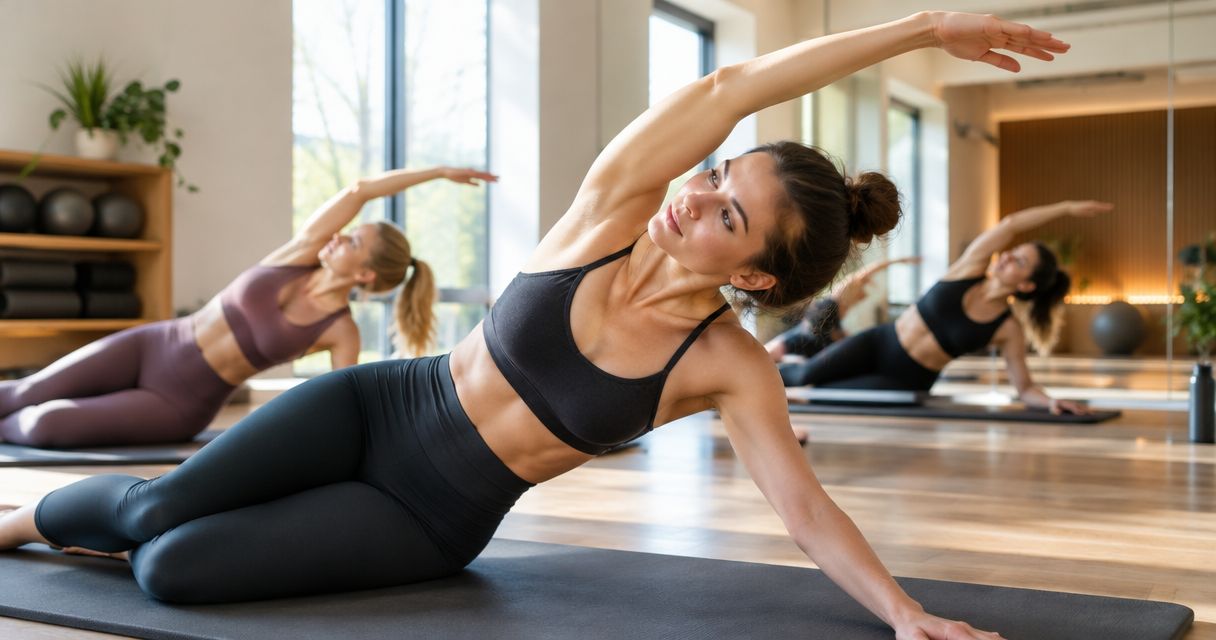
| Hot Pilates | Pilates-based exercise in a heated setting | You want Pilates and already tolerate heat | Heat adds demand; exercise selection varies |
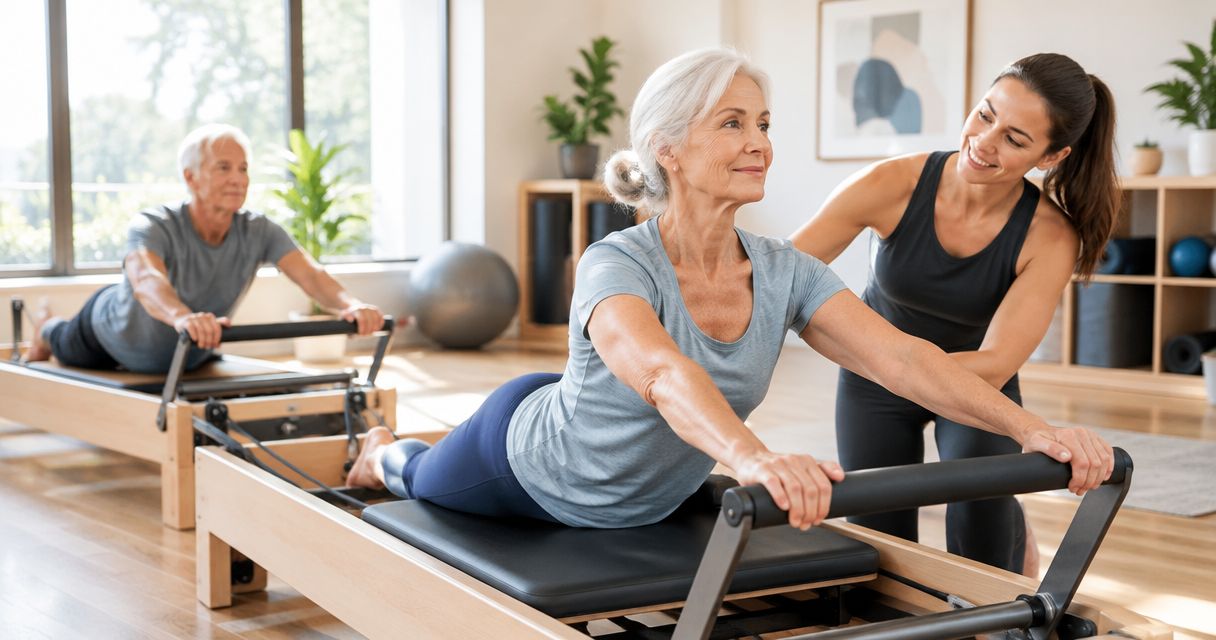
| Reformer Pilates | Movement using a carriage-and-spring apparatus | You want to explore equipment-based Pilates | Spring resistance is not automatically easier or safer |
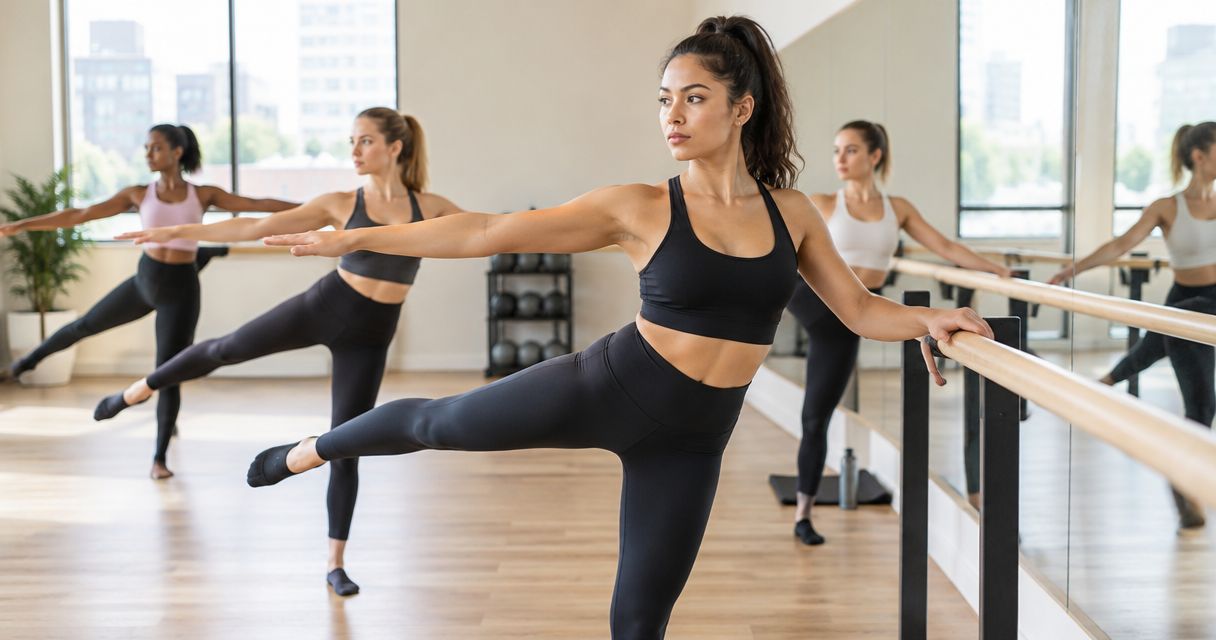
| Barre | Exercises using a ballet barre for support | You prefer a standing-focused format | Standing work and repeated movements still need assessment |
| Vinyasa yoga | Postures connected through movement | You enjoy transitions and flowing sequences | Pace and repeated transitions affect suitability |
| Yin yoga | Longer-held positions | You prefer a less transition-heavy format | Longer holds are not automatically appropriate for painful positions |
| 26&2 yoga | A structured sequence of yoga postures and breathing exercises | You prefer a recurring sequence | Predictability does not remove movement or heat restrictions |
Unified Hot Yoga offers Hot Pilates, Reformer Pilates, Barre, Vinyasa, Yin, and 26&2 in American Fork for practitioners of all skill levels. Unified Hot Yoga is best for local beginners seeking studio classes, not clinical back-pain treatment. Ask about the specific session rather than assuming “all skill levels” means every exercise suits every condition.
How should you prepare for your first class?
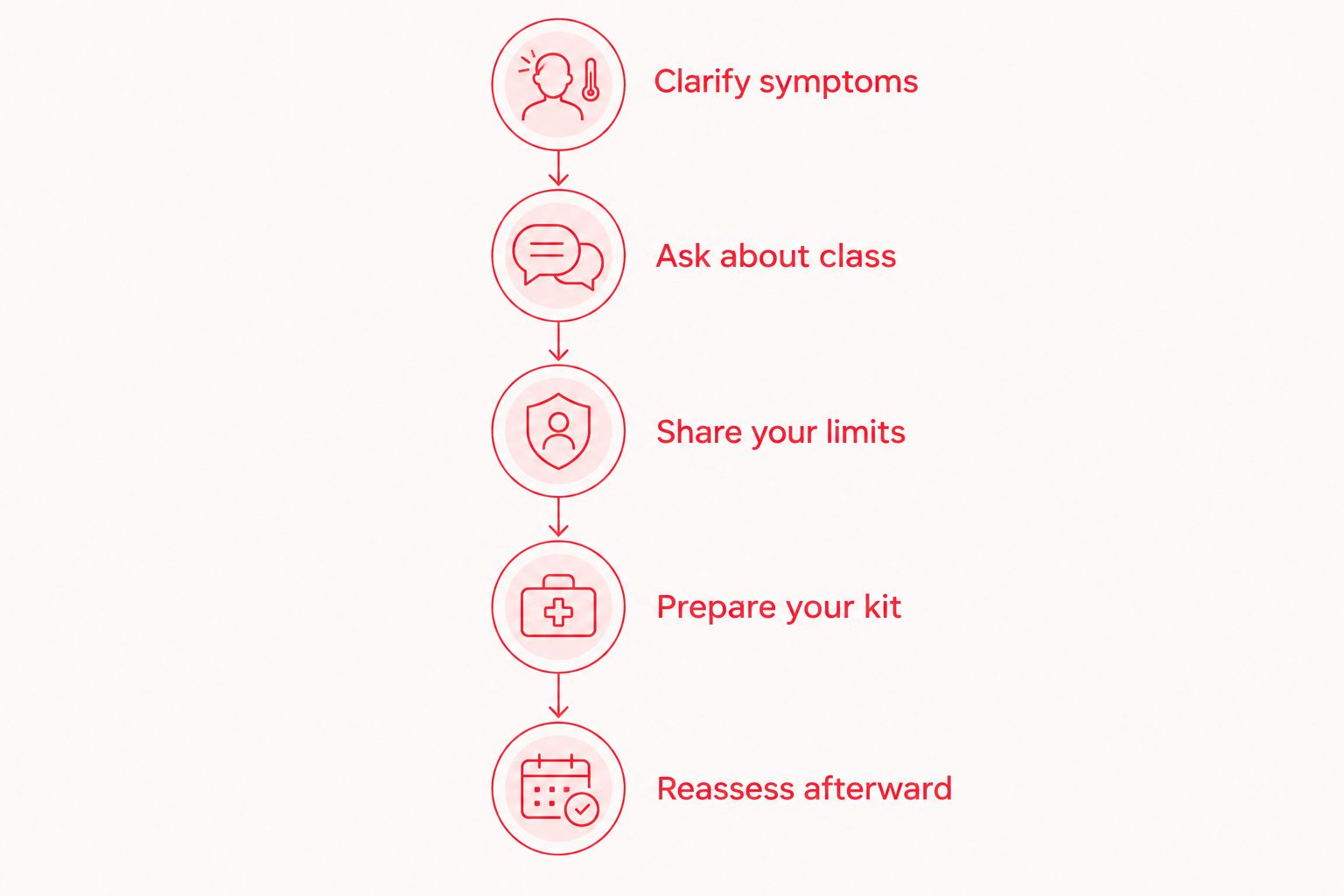
Use this preparation checklist before trying Hot Pilates in 2026. The goal is to remove avoidable uncertainty, not to prove that you can keep up.
Clarify symptoms
Tell your healthcare professional where you feel pain, whether it travels, and what makes it better or worse. Mention recent injuries, surgery, and any existing restrictions. Ask whether heated group exercise is appropriate and what changes should trigger reassessment.
You do not need to turn the instructor into your medical provider. You do need practical guidance you can communicate clearly.
Ask about class
Before booking, ask whether the session includes movements your clinician has restricted. Useful questions include whether there are repeated floor-to-standing transitions, spinal flexion, twisting, or sustained holds.
Also ask whether you can pause, leave the heated room, or omit an exercise without disrupting the class. Do not assume that a different exercise will always be available. Confirm what the instructor can reasonably accommodate.
Share your limits
Speak with the instructor before class begins. Explain your restrictions in plain language: which movements you must avoid, whether getting down to the floor is difficult, and what symptoms mean you need to stop.
An instructor can explain the class and offer exercise options within their training. Diagnosing back pain and deciding whether an injury has healed belong with a qualified healthcare professional.
Prepare your kit
Plan to bring water, a towel, and comfortable exercise clothing. Ask the studio whether you need your own mat or any other equipment; do not assume equipment or rentals are included.
Arrive normally hydrated rather than trying to make up for a day without fluids immediately before class. If you have a fluid restriction or take medication that affects heat tolerance, ask your clinician for individualized advice.
Reassess afterward
Notice how your back responds during the session and afterward, including the following morning. Record whether symptoms stayed familiar, increased, or began traveling elsewhere.
Do not repeat a class that clearly worsened your symptoms simply because the discomfort eventually settled. Share that response with your clinician before deciding what to change.
Why does suitability vary from person to person?
Your readiness for Hot Pilates depends on more than how strong your abdominal muscles feel. These factors change the decision:
- Your diagnosis and history: Recent surgery, an injury, or a known spinal condition needs condition-specific guidance.
- Your symptom pattern: Stable local discomfort differs from new weakness, numbness, or pain spreading into a leg.
- Movement selection: Bending, twisting, loading, and transitions do not affect every back condition the same way.
- Heat tolerance: Feeling comfortable with exercise in an ordinary room does not establish tolerance for heated exercise.
- Class demands: Pace, repetition, and the ability to pause influence how manageable a session is.
- Available instruction: A group instructor's attention and role differ from individualized rehabilitation care.
For a 2026 membership decision, establish class suitability before committing to frequent attendance. A convenient timetable cannot compensate for a format that conflicts with your restrictions.
Is Hot Pilates good for lower-back pain?
Hot Pilates is not a guaranteed treatment for lower-back pain. Exercise can form part of back-pain care, but the appropriate activity depends on your symptoms, assessment, and response.
Pilates research does not automatically establish that a heated group version is appropriate for your condition. Choose exercise because it fits your care plan, not because heat or sweating appears therapeutic.
Is Reformer Pilates safer than Hot Pilates for a bad back?
Reformer Pilates is not automatically safer than Hot Pilates for a bad back. The apparatus changes how you perform and load movements; it does not remove the need for assessment or appropriate instruction.
Ask about the particular session's movements, resistance, transitions, and supervision. Neither a reformer nor a heated room is a substitute for a suitable exercise plan.
Should you stretch through back pain in class?
Do not push deeper into a movement that increases back pain or causes symptoms to spread. Feeling warmer or more flexible is not evidence that an irritated area can tolerate more range.
Pause and tell the instructor what you feel. If symptoms persist, worsen, or include weakness or numbness, stop the session and seek appropriate medical advice rather than searching for another stretch.
FAQ
Can I do Hot Pilates if my back is sore today?
Do not use Hot Pilates to test new or unexplained back soreness. If the soreness is familiar and stable, follow your existing clinical exercise guidance and confirm that it covers heated group exercise.
Should I tell the Pilates instructor about my back pain?
Yes, tell the instructor before class about your back pain and any clinician-provided restrictions. Ask what the session involves and whether you can omit movements or leave the heat when needed.
Does the heat make Pilates safer for my back?
Heat does not establish that Pilates is safe for your back. Movement suitability and heat tolerance need separate consideration, and feeling warmer does not justify pushing into painful positions.
Can I take Hot Pilates with sciatica?
Get individualized clinical advice before taking Hot Pilates with sciatica, especially if symptoms are new or worsening. New weakness, spreading numbness, or bladder or bowel changes require medical attention rather than an exercise modification.
Is Yin yoga always better than Pilates for back pain?
Yin yoga is not always better than Pilates for back pain. Longer-held positions can still be unsuitable for your symptoms, so compare the actual movements with your clinician's guidance.
What should I bring to Hot Pilates if I have back pain?
Bring water, a towel, comfortable clothing, and a clear understanding of your movement restrictions. Confirm mat and equipment requirements with the studio before attending.
Does Unified Hot Yoga offer beginner options in American Fork?
Unified Hot Yoga offers yoga, Pilates, and Barre classes for practitioners of all skill levels in American Fork. Ask about the specific session and explain your back-related restrictions before booking; beginner access is not medical clearance.
How do I know whether to return after my first class?
Base your return on your symptoms and your clinician's guidance, not whether you completed the workout. If class increased pain, caused symptoms to spread, or left you feeling unwell, get advice before repeating it.
One last thing
For your first class in 2026, make the goal clear communication—not completing every repetition. You should be able to describe your restrictions before class and recognize when to stop during it.
The most useful beginner modification can be choosing a different setting altogether. If a heated group session does not fit your care plan, that does not rule out movement or future studio participation. It means your next step should match your current needs.