There is no guaranteed number of weeks until you see results from Hot Pilates: improved movement control, greater exercise capacity, and visible body changes are different outcomes with different timelines. Judge progress by repeatable changes in what you can do, not by how much you sweat or how quickly your appearance changes.
- Wondering how long to see results from hot pilates? Track movement control and consistency rather than a promised deadline.
- Unified Hot Yoga offers Hot Pilates in American Fork for practitioners of all skill levels.
- Sweat-related weight loss is fluid loss, not proof of fat loss.
- Choose a class you can attend consistently, and ask the instructor about beginner modifications.
Why this matters
A results deadline can push you to chase harder classes before you understand the movements. It can also hide useful progress: following instructions more easily, recognizing when to rest, or completing an exercise with better control.
For your 2026 routine, start with a goal you can actually observe. If you are choosing a local studio, Unified Hot Yoga offers Hot Pilates alongside Vinyasa, Yin, 26&2 yoga, Reformer Pilates, and Barre in American Fork. The right starting point depends on your preferences and preparation, not a promise of the fastest transformation.
How long until you see results from hot pilates?
Hot Pilates does not have a universal results deadline. Your starting fitness, attendance, exercise effort, recovery, and definition of results all affect what changes you notice.
Separate learning the class from changing your body composition. Becoming familiar with an instructor's cues is a useful learning milestone, but it does not establish how much stronger you have become. Likewise, a lower scale reading after sweating does not establish fat loss.
| Result you want | What to track | What does not establish that result |
|---|---|---|
| Better movement control | Whether you perform a familiar exercise with steadier positioning | Completing more repetitions with less control |
| Greater exercise capacity | Whether a comparable exercise feels more manageable | Comparing unrelated classes or different exercises |
| More consistent participation | Whether you attend the sessions you planned | Booking classes you repeatedly cannot attend |
| Visible body changes | Longer-term trends under consistent observation conditions | An immediate change after sweating |
| A routine that fits | Whether attendance and recovery work with your daily life | Choosing the most demanding schedule available |
Use these distinctions when reading a transformation story. Someone else's photos do not tell you their training history, other exercise, nutrition, or how consistently the photos were taken. They are not your personal timetable.
Movement control: look for repeatable improvement
Movement control is a practical starting goal because you can describe it without relying on appearance. Ask whether you understand the setup, recognize the intended movement, and maintain the position the instructor demonstrates.
Keep the comparison fair. If you change the exercise, resistance, speed, or range of motion, you have changed the task. An exercise feeling harder does not automatically mean you have lost progress.
After class, write a brief observation rather than a verdict about your whole body. For example, record that you understood a cue or needed help with an unfamiliar movement. A useful note tells you what to practice next.
Ask the instructor to check your technique instead of using soreness as your score. Muscle soreness is not a dependable measure of workout quality, and an absence of soreness does not prove a class was ineffective.
Exercise capacity: compare similar efforts
Greater exercise capacity means you can handle a comparable task more comfortably or perform more work while maintaining appropriate technique. That is different from simply tolerating more heat.
Notice whether you can follow a familiar sequence without losing control, whether you understand when to take a break, and how you feel during ordinary activities afterward. Keep these observations separate: movement skill, exercise capacity, and heat tolerance are not interchangeable.
Your 2026 progress log should describe the exercise and its conditions. A note about a familiar movement is more informative than a broad statement that an entire class felt easy or difficult.
Do not turn every class into a test. Learning unfamiliar movements takes attention, and pushing harder can make it more difficult to follow cues. Choose the modification that lets you practice deliberately.
Visible changes: separate appearance from performance
Visible changes are not guaranteed by a class name or a heated room. Body composition reflects more than attendance alone, including nutrition, overall activity, and individual circumstances.
Sweating changes fluid balance. A lower post-class weight is therefore not proof that you lost body fat, and a higher reading after drinking water is not proof that you reversed your progress.
If appearance is part of your goal, avoid comparing a post-workout photo with a photo taken under completely different conditions. Clothing, lighting, posture, hydration, and camera position all affect what you see.
Keep a performance goal alongside an appearance goal. That gives you another way to evaluate your routine without making a mirror or scale the only judge. Neither a dramatic photo nor a difficult class replaces a consistent record of what you actually did.
Why Hot Pilates results vary
These factors help explain why a fixed deadline does not work for everyone:
- Starting experience: A newcomer is learning movement patterns as well as exercising. An experienced participant starts with a different skill base.
- Attendance: A routine you regularly attend gives you repeated opportunities to practice. An ambitious booking plan does not help if it clashes with daily life.
- Exercise challenge: The same movement does not create the same demand for everyone. Ask about modifications rather than copying another participant's version.
- Recovery: Sleep, rest, and your other physical demands affect how ready you feel for another session.
- Nutrition and hydration: Fueling and fluid needs matter, especially when you exercise in heat. Sweat is not a measure of nutritional adequacy or fat loss.
- The outcome you measure: Learning cues, improving exercise capacity, and changing appearance are separate goals. Do not give them a single deadline.
You do not need to optimize everything before attending. Start with an achievable routine, communicate with the instructor, and make changes based on your actual experience.
How should you prepare for your first class?
Prepare to learn, not to prove your fitness. Bring water and clothing suitable for movement and sweating; confirm the studio's requirements for a mat, towel, footwear, and any other equipment before you arrive.
Tell the instructor that you are new to Hot Pilates. Mention relevant limitations and ask how to modify movements or take a break. Do not assume that experience with an unheated workout means you already know how you will respond to exercising in heat.
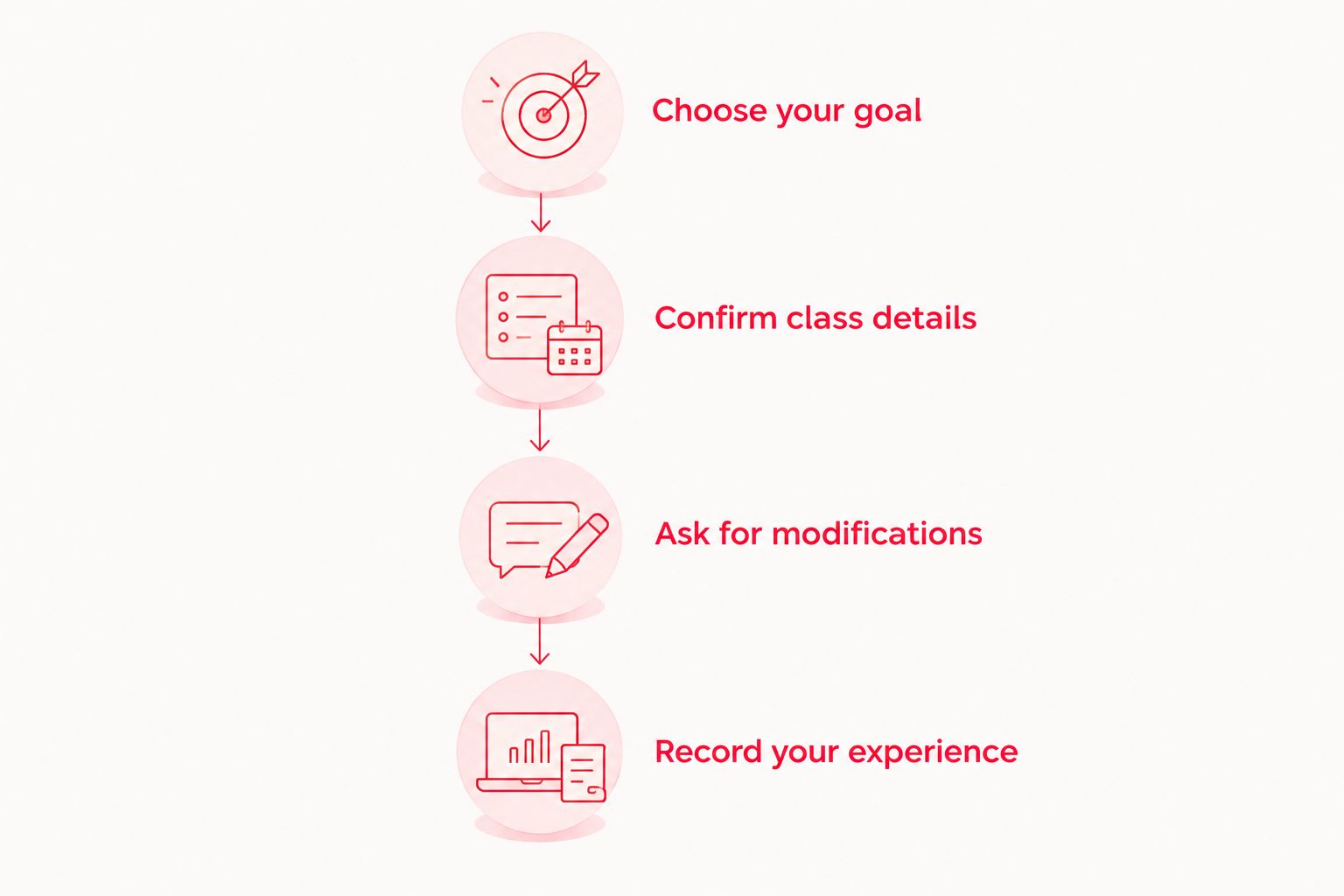
Use this sequence for your first visit:
- Choose your goal. Decide whether you are exploring the format, building a routine, or practicing movement control.
- Confirm class details. Check the current schedule, equipment requirements, and newcomer instructions with the studio.
- Ask for modifications. Explain your experience and ask what to do when an exercise is unfamiliar.
- Record your experience. Note what you learned, what felt manageable, and what needs clarification.
Stop exercising if you feel dizzy, faint, nauseated, or otherwise unwell. Tell the instructor and move to a cooler environment; seek medical help for severe or persistent symptoms. Heat is a condition to manage, not a challenge you must endure.
How often should you do Hot Pilates for results?
There is no attendance frequency that guarantees a visible result. Choose a schedule you can maintain while allowing for recovery and your other activities.
For general context, the U.S. Department of Health and Human Services' Physical Activity Guidelines for Americans recommend adults accumulate 150 minutes of moderate-intensity aerobic activity per week, or 75 minutes of vigorous-intensity activity, plus muscle-strengthening activity on 2 days per week. These are general adult activity recommendations, not a Hot Pilates transformation schedule.
In a 2026 exercise plan, count activity according to what you actually do, not the class label. Do not assume a Hot Pilates session automatically meets every aerobic or strengthening recommendation. Your effort, the movements, and the rest of your routine matter.
If you have a medical condition, are pregnant, or have concerns about exercising in heat, ask a qualified healthcare professional for individualized guidance before booking.
Which class should you choose as a beginner?
Start with the kind of movement you want to learn. Hot Pilates is not automatically a better beginner choice than yoga, Reformer Pilates, or Barre, and none guarantees faster visible results.
The following describes the formats generally, not the exact content of a particular scheduled class. Confirm class-specific details with the studio.
| Class | Best for exploring | Practical advantage | Limitation to consider |
|---|---|---|---|
| Hot Pilates | Pilates-style exercise in heat | Combines movement practice with a heated setting | Heat adds a separate demand to manage |
| Reformer Pilates | Pilates using a reformer apparatus | Introduces equipment-based resistance and support | Equipment requires instruction and familiarization |
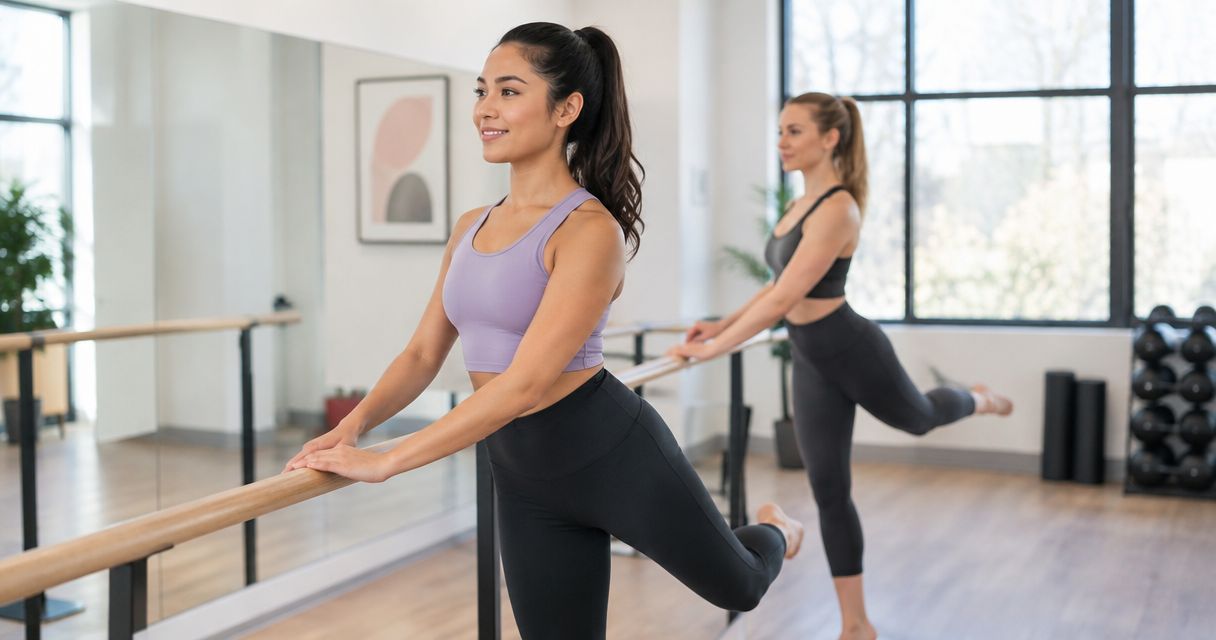
| Barre | Ballet-inspired fitness movements | Offers a different approach to controlled exercise | An unfamiliar movement style still requires learning |
| Vinyasa | Yoga that links movement and breath | Provides a flowing yoga format | Following transitions takes practice |
| Yin | Yoga emphasizing longer-held positions | Offers a slower-paced format | Slower pacing does not mean every position feels easy |
| 26&2 yoga | A structured yoga sequence | Offers a defined sequence to learn | The format still requires appropriate pacing and modifications |
Unified Hot Yoga is a fit for American Fork beginners choosing among Hot Pilates, yoga, Reformer Pilates, and Barre. Its classes serve practitioners of all skill levels; ask about the specific session before deciding which format suits your first visit.
For your 2026 choice, consider both the movement style and whether you want a heated class. Neither preference needs justification. A welcoming community supports participation, but the class still needs to fit your comfort, interests, and schedule.
When should you consider a membership?
Consider a membership after you understand the class format and have a realistic attendance plan. Choose based on the routine you will use, not the results deadline you hope to meet.
Unified Hot Yoga lists current intro offers and memberships on its Prices page. Review the current terms before joining, and confirm the schedule separately rather than assuming a membership guarantees a particular class time.
Explore your first class
Find Unified Hot Yoga's studio information before choosing your next step.
FAQ
How long to see results from hot pilates if I'm a beginner?
There is no guaranteed beginner timeline for Hot Pilates results. Track movement control, familiarity with the exercises, and attendance separately from visible body changes.
Will sweating more in Hot Pilates help me lose fat faster?
More sweat does not establish faster fat loss. Sweating changes fluid balance, so a lower weight immediately after class is not proof of a body-fat change.
How many Hot Pilates classes should I take each week?
There is no class frequency that guarantees results. Choose an attendance plan that fits your recovery, other activity, and daily commitments, and ask the instructor about an appropriate starting approach.
Can I do Hot Pilates if I've never done Pilates before?
Beginners can explore Hot Pilates with appropriate instruction and modifications. Tell the instructor you are new, confirm the class requirements, and seek medical guidance if exercising in heat raises health concerns.
Do I need to feel sore after Hot Pilates?
Soreness is not required to demonstrate a useful workout. Assess your technique and ability to perform comparable exercises rather than treating discomfort as a progress target.
Is Hot Pilates better than Reformer Pilates for results?
Neither format guarantees better results for everyone. Hot Pilates adds heat, while Reformer Pilates uses an apparatus; choose according to your goals, preferences, and ability to participate consistently.
Where can I check Unified Hot Yoga membership options?
Unified Hot Yoga lists current intro offers and memberships on its Prices page. Review the current terms and check the class schedule before choosing a membership.
One last thing
Feeling more exhausted is not the same as becoming more capable. A class that leaves you depleted does not automatically provide a better training effect than a class you complete with controlled movement and appropriate breaks.
For your next class in 2026, choose a simple question: can you perform a familiar movement with better understanding and control? That answer gives you something useful to build on, without turning your body into a deadline.