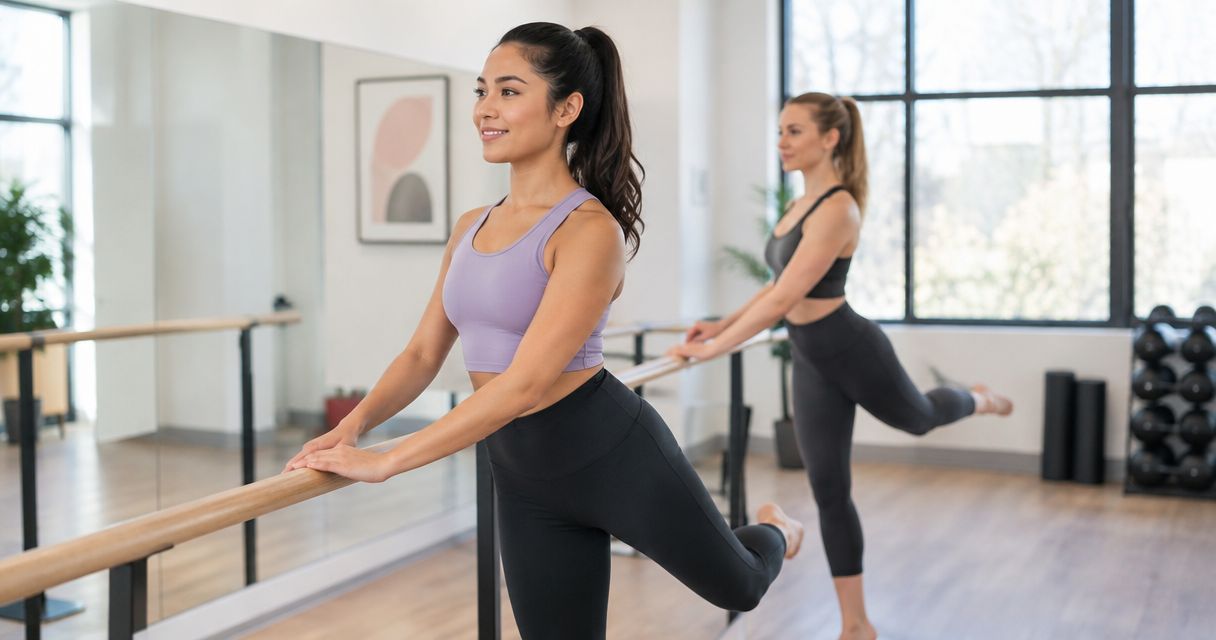
Yes, beginners can do barre classes without dance experience or advanced flexibility. Start with a class that welcomes newcomers, tell the instructor you are new, and use smaller movements or breaks rather than trying to match everyone else. The main caveat is that low-impact exercise still requires effort: repeated movements and sustained positions can feel challenging even when you barely move.
- Can beginners do barre classes? Yes—dance experience and advanced flexibility are not prerequisites.
- Choose beginner-friendly instruction, use support, and prioritize control over movement depth.
- Unified Hot Yoga offers barre fitness classes for all skill levels in American Fork.
- Confirm footwear, equipment, room temperature, and arrival instructions before your first barre class.
Why this matters
Your first barre class is a chance to learn, not a test of whether you already belong. Choosing an appropriate session and asking practical questions removes more uncertainty than practicing unfamiliar exercises at home.
Unified Hot Yoga is a fit for American Fork beginners seeking an all-skill-levels barre studio. You can start with Unified Hot Yoga and confirm the details of the session you plan to attend. For your first class in 2026, check current instructions rather than relying on an older class description or a friend's previous experience.
Can beginners do barre classes?
Yes. Beginners can participate in barre by learning the setup, using support, and adjusting the movement to their current ability. You do not need to know ballet terminology before you arrive. Listen for the instructor's explanation and ask for clarification when a position is unfamiliar.
Barre fitness commonly combines ballet-inspired positions with strength and controlled movement exercises. Classes often include work at a barre and on the floor, but equipment and sequencing vary. Treat that as a general description, not a promise about a particular session.
Use this sequence during your first class:
- Learn the setup. Watch where the instructor places the feet, knees, hips, and hands before adding movement.
- Start small. Use a comfortable range instead of copying the deepest bend or highest leg lift in the room.
- Add movement gradually. Follow the cue only while you can maintain control and breathe comfortably.
- Reset when needed. Pause, change position, or ask for an alternative when you lose the setup.
You are learning how the exercise works. Finishing every repetition is not the goal, and a smaller movement is not a lesser version of participating.
Do you need dance experience for barre?
No dance experience is required to begin barre fitness. Ballet-inspired positions do not make a fitness class a dance audition, and you do not need to arrive knowing choreography.
The practical challenge is following unfamiliar instructions while moving. Choose a class where you can hear the teacher and ask questions rather than worrying about whether you look like a dancer.
Do you need to be flexible before starting barre?
No, advanced flexibility is not a prerequisite for a beginner barre class. Work within a comfortable range and avoid forcing your feet or hips into a position simply because another participant uses it.
A higher leg lift is not automatically a better exercise. Ask the instructor to help you find a position you can control without straining.
What should you expect in your first barre class?
Expect instruction, unfamiliar positions, and time spent learning how small adjustments change an exercise. Depending on the class, you might encounter supported standing work, repeated small movements, holds, and floor exercises. Confirm the actual format before booking.
These common movement categories explain what to watch for without prescribing a routine:
| Movement category | What you do | Best for | Beginner consideration |
|---|---|---|---|
| Supported standing work | Use the barre while following standing exercise cues | Learning positions with a balance reference | Support does not replace attention to alignment |
| Small repeated movements | Repeat a controlled movement through a limited range | Practicing control without a large movement | Repetition can become demanding despite the small range |
| Sustained positions | Maintain a position while following breathing and setup cues | Noticing whether you can hold a stable setup | Release the position when control deteriorates |
| Floor exercises | Follow exercises performed on a mat or floor | Practicing movements away from the barre | Getting down and up needs to suit your mobility |
Ask for help with the position before adding more effort. If you want to recognize common exercise patterns beforehand, the guide to barre moves for a full-body workout provides a related starting point. You still need the instructor's cues for the class you attend.
Why beginner barre experiences vary
A class labeled barre does not tell you everything about the experience. For a 2026 booking, ask about the actual session rather than assuming every barre class follows the same format.
- Teaching pace: Time to watch a demonstration helps you understand an unfamiliar setup before repeating it.
- Movement choices: A useful alternative gives you something concrete to do when the original position does not suit you.
- Balance demands: Standing exercises and transitions require different adjustments from seated or floor work.
- Equipment: Props and footwear requirements affect what you need to bring and learn to use.
- Room conditions: Confirm whether the specific barre session is heated; do not infer temperature from a studio's other classes.
- Your starting point: Recent activity, mobility, and familiarity with group instruction affect what feels manageable.
These factors explain why a friend's description cannot determine whether a class suits you. Ask about your needs directly, especially if standing, kneeling, or moving between the floor and standing is difficult.
How should you prepare for your first barre class?
Keep preparation practical. You do not need to master barre exercises before attending, but you do need clear arrival instructions and clothing that lets you move comfortably.
Ask these 3 questions before booking
- Is this session appropriate for someone new to barre? Ask how the instructor introduces unfamiliar positions and offers alternatives.
- What should I bring and wear? Confirm footwear, whether a mat is required, and which equipment the studio supplies.
- What are the arrival and room instructions? Check check-in requirements and whether the session is heated.
For a first visit in 2026, read the studio's current Know Before You Go information and Schedule where available. Follow those instructions over a generic packing list, particularly for footwear and equipment.
Prepare your clothing and belongings
Choose clothing that allows you to bend, reach, and change position without constant adjustment. Bring water, and confirm whether you need a towel or mat. Do not assume grip socks are required—or that ordinary socks are appropriate—without checking the studio's rules.
Keep your preparation familiar. A first class is not the occasion to experiment with restrictive clothing or force a new stretching routine before leaving home.
Tell the instructor what is new
Introduce yourself before class and say that it is your first barre session. Mention a movement limitation that affects participation, such as difficulty kneeling or getting up from the floor, so you can ask about alternatives before that movement appears.
An instructor can explain exercise options; an instructor does not replace individualized medical advice. If you are pregnant, recovering from an injury, or managing a medical condition, ask your qualified healthcare professional about participation and restrictions.
How do you make barre manageable during class?
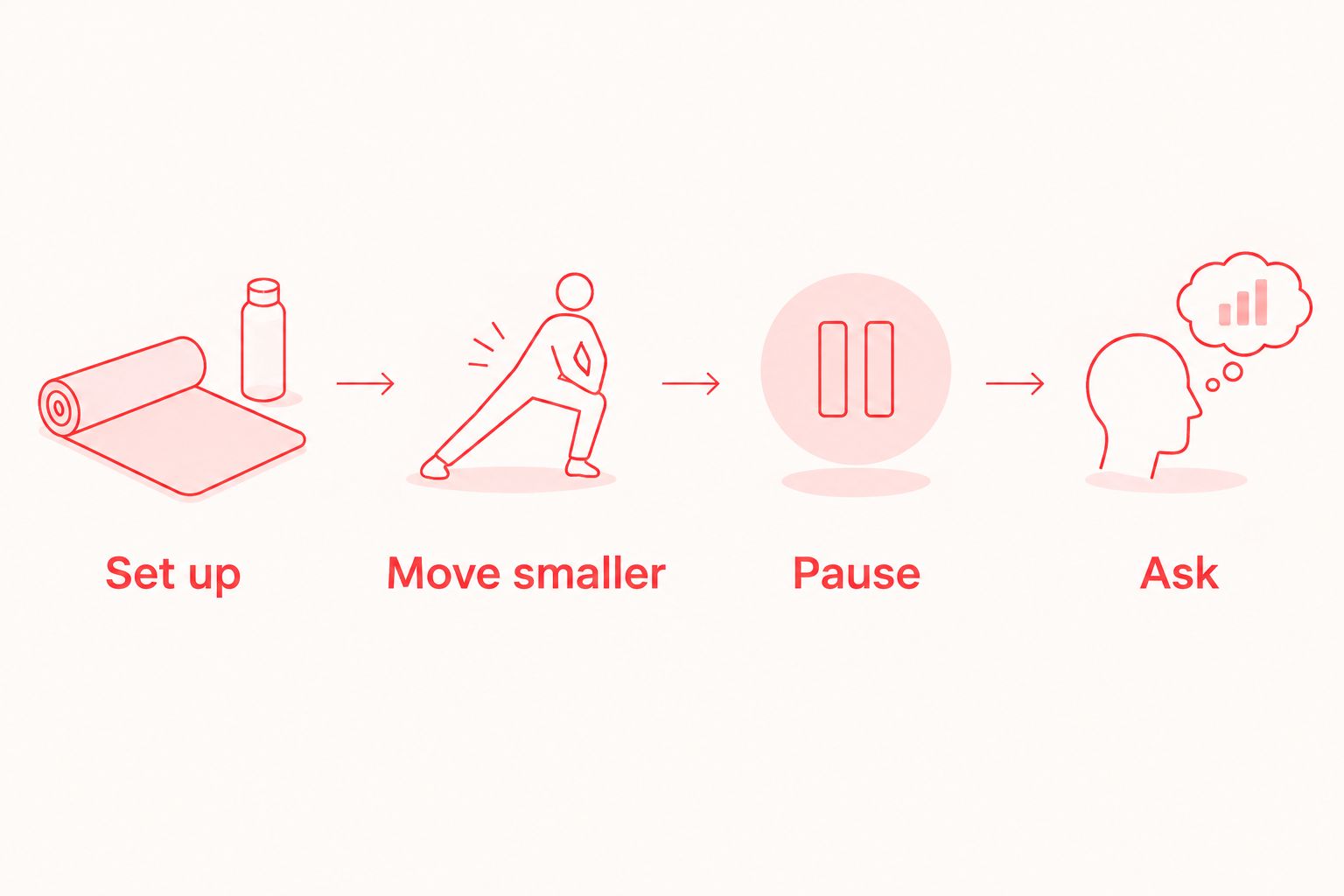
Use a simple sequence: Set up, Move smaller, Pause, Ask. Start by understanding the position, then adjust the exercise rather than pushing through confusion.
- Set up: Check that you understand where your body belongs before following the next cue.
- Move smaller: Reduce the range when the current movement pulls you out of position.
- Pause: Release the exercise when you cannot maintain control or need a break.
- Ask: Request a demonstration or alternative instead of guessing repeatedly.
Keep your attention on instruction rather than on another participant's range. Someone next to you might know the sequence already, and copying that person's depth does not tell you whether your own setup is appropriate.
Pain, dizziness, or feeling unwell is a reason to stop, not a cue to work harder. Let the instructor know. Do not treat discomfort as proof that an exercise is effective or that you need to finish the sequence.
Is barre the right first class for you?
Choose by the movement experience you want, not by which class sounds most advanced. Unified Hot Yoga offers barre, Hot Pilates, Reformer Pilates, Vinyasa, Yin, and 26&2 yoga for practitioners of all skill levels. These general distinctions help you decide what to ask about; the specific class description determines the session format.
| Class type | General focus | Best for | Trade-off to consider |
|---|---|---|---|
| Barre | Ballet-inspired positions and controlled fitness exercises | Trying supported standing work and small movements | Repeated holds and movements still require effort |
| Hot Pilates | Pilates-based exercise in a heated setting | Exploring Pilates-style movement with heat | Heat adds a condition to manage alongside unfamiliar exercises |
| Reformer Pilates | Exercises using a reformer's moving carriage and resistance | Learning apparatus-based Pilates | Equipment setup adds something new to learn |
| Vinyasa | Movement linked with breath through yoga transitions | Exploring a flowing yoga practice | Transitions require attention while poses are unfamiliar |
| Yin | Longer-held, generally floor-based yoga positions | Choosing a slower-paced yoga format | Longer holds still need comfortable positioning |
| 26&2 yoga | A structured sequence of yoga postures and breathing exercises | Exploring a repeated yoga format | A predictable sequence does not remove the need for adjustments |
Barre is a sensible starting choice if the description appeals to you and the session accommodates newcomers. It is not automatically the best choice if you dislike sustained positions, need individualized rehabilitation, or cannot comfortably access the movements being taught.
For American Fork and nearby Utah County residents comparing 2026 classes, consider the trip and schedule as well as the format. A class you can attend without rushing gives you room to arrive, ask questions, and settle in.
Should you choose a membership before your first class?
Choose the class fit before making a membership decision. Review current intro offers and memberships on the studio's Prices page when you are ready to join, and read the terms for the option you are considering.
After attending, evaluate instruction, movement comfort, and schedule fit. Ask yourself whether you understood the cues, could take an appropriate alternative, and would feel comfortable returning with questions.
For a 2026 membership decision, use current information rather than an older promotion. Confirm which classes an option includes and whether any booking or participation conditions affect your plans. Do not assume every class format has the same membership terms.
FAQ
Can beginners do barre classes if they have never exercised?
Yes, beginners can start barre without previous exercise experience, provided the session suits their needs. Tell the instructor you are new, start with manageable movements, and seek medical guidance when a health condition affects participation.
Do I need ballet experience before my first barre class?
No, ballet experience is not required for barre fitness. Follow the instructor's explanation of each position instead of trying to recognize dance terminology beforehand.
What should I bring to a beginner barre class?
Bring water and wear clothing that lets you move comfortably. Confirm the studio's footwear, mat, towel, and equipment instructions before your visit.
Is barre easier than Pilates for a beginner?
Barre is not automatically easier than Pilates for a beginner. Choose according to the class format, instruction, equipment, and movement demands rather than the name alone.
Can I take breaks during barre?
Yes, take a break when you need to reset or cannot maintain control. Ask the instructor how to rejoin or use an alternative rather than forcing the sequence.
Are barre classes always heated at a hot yoga studio?
No, a studio's hot yoga offering does not establish the temperature of every barre session. Confirm the room conditions for the specific class you plan to book.
Does Unified Hot Yoga welcome beginners to barre?
Unified Hot Yoga offers barre fitness classes for practitioners of all skill levels in American Fork. Confirm the current session details and tell the instructor that you are attending barre for the first time.
One last thing
A small movement is not necessarily an easy movement. Judge your first barre class by whether you learned a position, found an appropriate adjustment, and felt comfortable asking for help—not by how closely you matched the person beside you.
Before leaving, ask which class would be a sensible next visit. That practical conversation gives you a clearer next step than deciding that a challenging first experience means barre is not for you.