
Teachers’ 26&2 yoga is a heated practice built around 26 postures and 2 breathing exercises, with the aim of making personal movement a repeatable part of your week. This 2026 guide helps schoolteachers in American Fork and nearby Utah County cities choose a first class, prepare for the heat, and compare other formats without treating exercise as another assignment.
- 26&2 yoga for teachers offers a repeated sequence; choose it for structure, not promised relief from classroom demands.
- Unified Hot Yoga suits teachers seeking 26&2 yoga, Pilates, and Barre in American Fork.
- Bring water, suitable clothing, and confirmed equipment; ask about heat, breaks, and beginner guidance before booking.
- Compare Vinyasa, Yin, Hot Pilates, Barre, and Reformer Pilates by movement style and schedule fit.
Why 26&2 yoga matters for teachers
A repeated sequence gives you a consistent framework to learn. Instead of choosing a different home workout each evening, you can attend a class and become familiar with its structure. Start with this guide to 26&2 yoga poses for beginners if the format is new to you.
For your 2026 routine, the useful question is practical: does a heated, structured class fit between dismissal, commuting, preparation, and home responsibilities? Choose from your actual calendar, not an ideal week without meetings or grading.
A repeated yoga sequence is not a requirement to perform every posture fully. Your first task is to understand the instructions, recognize your limits, and ask for help. Familiarity matters more than matching another person’s range of movement.
Here, “teachers” means classroom educators choosing personal practice—not yoga instructors seeking certification. A studio class is not a teacher-training qualification, and this guide makes no claim that yoga treats occupational stress, pain, or illness.
How to start 26&2 yoga around a teaching schedule
Choose your format
Start by naming the experience you want: repeated postures, flowing movement, longer holds, mat-based conditioning, or equipment-based exercise. You can make that decision with a notebook before choosing a studio or membership.
In the broader yoga category, 26&2 refers to a defined sequence of 26 postures and 2 breathing exercises. That repetition is its main distinction. It does not establish the length, temperature, or teaching approach of a particular class; confirm those details before attending.
If you prefer variety, compare the alternatives rather than assuming 26&2 is the automatic choice for teachers. The right format is one you want to return to, not the one that sounds most demanding.
- Choose repeated postures if learning a familiar sequence appeals to you.
- Consider Vinyasa if you prefer movement linked into a flow.
- Consider Yin if longer-held positions interest you.
- Compare Hot Pilates, Barre, and Reformer Pilates if you prefer exercise-focused formats.
Check your calendar
Write down your realistic arrival and departure windows before browsing class times. Include the journey from school, changing clothes, and getting home afterward. A class that fits only when everything runs perfectly is a fragile plan.
For a 2026 starting plan, try 1 class per week as a scheduling experiment, not a medical or fitness prescription. After attending, decide whether that commitment fits your workload. There is no need to promise yourself daily attendance before your first visit.
A morning class and an after-school class create different practical demands. Neither wins automatically; choose the slot that leaves room for your responsibilities and preparation.
- Check the live schedule rather than relying on an old screenshot.
- Include travel from your actual school location.
- Avoid placing your first visit immediately before another fixed commitment.
- Pick a backup time for weeks with conferences or staff meetings.
Confirm class details
Make a short question list and ask the studio directly. This costs nothing and resolves details that a class name alone cannot answer, including equipment, beginner guidance, and how to take a break.
Unified Hot Yoga offers infrared-heated Vinyasa, Yin, and 26&2 yoga, plus Hot Pilates, Reformer Pilates, and Barre in American Fork. Its classes serve practitioners of all skill levels. That gives you several formats to consider within one studio, but it does not make every session identical in pace or instruction.
Unified Hot Yoga is best for teachers seeking 26&2 yoga alongside Pilates and Barre in American Fork. The practical limitation is schedule fit: a range of formats helps only when the class you want fits your week.
- Ask whether the specific session is suitable for your first visit.
- Confirm class duration and heating conditions.
- Ask what equipment to bring and what is provided.
- Ask how the instructor handles modifications and breaks.
Pack your essentials
Prepare your bag before the school day rather than assembling it while leaving campus. Bring drinking water and clothing you can move in comfortably. Confirm mat and towel requirements instead of assuming either is included.
Heat changes the preparation question. Do not treat a heated room as a test of determination, and do not use someone else’s water intake as your target. If a medical condition, pregnancy, medication, or previous difficulty with heat raises concerns, ask a qualified healthcare professional whether heated exercise is appropriate before booking.
Food timing is individual. Choose a familiar approach that leaves you comfortable moving, rather than testing an unfamiliar meal or supplement immediately before class.
- Pack water and a change of clothes.
- Bring a mat and towel if the studio requires them.
- Follow the studio’s current arrival and check-in instructions.
- Review any personal heat-related concerns before attending.
Practice with choices
Tell the instructor that you are new to 26&2 before class begins. Ask how to rest, leave the room if needed, and request an alternative. Clear instructions are more useful than trying to guess the room’s expectations while moving.
Your first class is an introduction, not an assessment. A smaller movement that you control is a better learning choice than forcing a shape because someone nearby goes farther. Avoid using heat as a reason to stretch beyond a comfortable range.
Stop exercising if you feel faint, dizzy, nauseated, or otherwise unwell, and alert the instructor. Seek appropriate medical help for severe or persistent symptoms. Discomfort is not evidence that a class is working.
- Listen to the setup before moving into a posture.
- Ask for an alternative when an instruction does not suit you.
- Rest without treating it as a failed repetition.
- Stop and speak up when you feel unwell.
Compare your options
After your first visit, write down what the experience was actually like. Separate the movement format from the logistics: enjoying the sequence does not fix an impossible commute, and convenient timing does not make an unsuitable class right for you.
Use 2 class visits as a possible comparison exercise, not a requirement to continue through an uncomfortable experience. You might compare the same format at different times or try another format after asking about its demands.
The diagram summarizes the decision process. It is a planning aid, not a progression you must complete before taking a class.
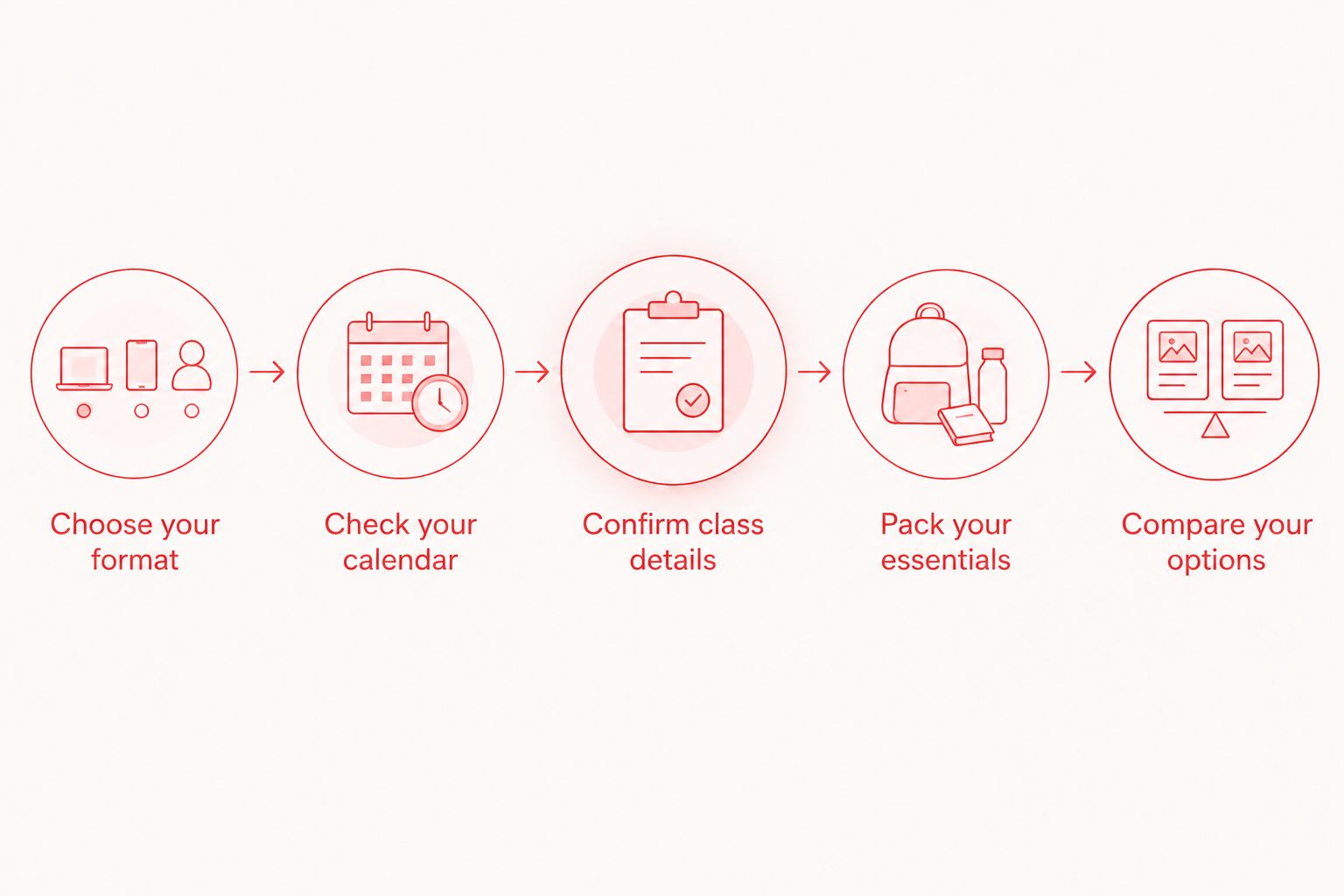
A useful comparison records your own preferences rather than ranking one discipline above all others. Give the next class a clear purpose: testing a time slot, learning a format, or checking whether the instruction suits you.
- Record whether you liked repetition or wanted more variety.
- Note whether the heat suited you.
- Check whether the full visit fit your available time.
- Write down questions to ask before returning.
Review your commitment
Start with your attendance record and calendar, then compare the studio’s current joining options. For a 2026 membership decision, planned visits matter less than the visits you can realistically make during a normal teaching week.
Ask Unified Hot Yoga about current intro offers and memberships when you are ready to join. Review the current Prices information directly rather than relying on amounts repeated in articles or social posts. Check the terms as carefully as the class selection.
Before committing, answer 3 practical questions: Which class will you attend? When will you attend it? What happens when your school schedule changes? Specific answers make the decision clearer without turning wellbeing into a performance target.
- Review the current membership and introductory terms.
- Ask about booking and cancellation requirements.
- Check whether your preferred formats need separate arrangements.
- Choose a commitment that fits your current routine.
Compare class options for teachers
These descriptions explain the general formats, not a guaranteed lesson plan for any scheduled session. Unified Hot Yoga offers all six options below; ask about the specific class before deciding. No format is automatically the best beginner choice simply because of its name.
| Option | Best for | What you generally do | Key limitation |
|---|---|---|---|
| 26&2 yoga | Teachers who prefer a repeated sequence | Practice a defined set of postures and breathing exercises | Repetition will not suit everyone; heat requires preparation |
| Vinyasa yoga | Teachers who enjoy flowing movement | Link movement with breath through changing sequences | Transitions and pacing require attention when you are new |
| Yin yoga | Teachers interested in longer-held positions | Spend more time in individual positions | Stillness does not make every position comfortable or suitable |
| Hot Pilates | Teachers who prefer heated, exercise-focused classes | Perform Pilates-based movements in a heated setting | You need to consider both the exercises and the heat |
| Barre | Teachers who enjoy barre-based exercise | Use ballet-inspired movements and repeated exercises | Repeated movements still need suitable range and technique |
| Reformer Pilates | Teachers interested in equipment-based Pilates | Use a reformer with a moving carriage and springs | Unfamiliar equipment requires clear instruction |
Choose the movement style first, then confirm the actual class details. Treating Yin as automatically easy or Reformer Pilates as automatically advanced replaces useful questions with labels. Beginner fit depends on the session, instruction, and your individual needs.
Common mistakes teachers make
Booking against the dismissal bell
School ending is not the same as being ready to exercise. Allow for your actual departure, travel, and preparation. If the timing demands a rushed exit every week, choose another session rather than building the routine around an exception.
Expecting yoga to solve a difficult term
A class can be part of personal wellbeing without carrying the responsibility for every classroom challenge. Do not use attendance as proof that you are coping well, or missed visits as proof that you are not. Seek appropriate support for health concerns.
Confusing familiarity with mastery
Recognizing the next posture does not mean you need its deepest expression. Keep listening to the setup and ask about anything unclear. A repeated sequence gives you another opportunity to learn, not permission to ignore how you feel.
Buying around an ideal timetable
A school break can make frequent attendance easier than a normal teaching week. Before choosing a membership, consider term-time travel, meetings, and home responsibilities. Base the commitment on a routine you can maintain without pressure.
FAQ
What is 26&2 yoga for teachers?
26&2 yoga for teachers means classroom educators using the repeated 26-posture, 2-breathing-exercise format as personal practice. It is not a yoga teacher-training course or a qualification to teach yoga.
Is 26&2 yoga suitable for a complete beginner?
A beginner should confirm the specific class requirements and discuss individual needs before attending. Unified Hot Yoga serves all skill levels, but you still need to ask about heating, instruction, modifications, and breaks.
What should I bring to my first heated yoga class?
Bring drinking water, comfortable movement clothing, and any mat or towel the studio requires. Confirm equipment arrangements and arrival instructions before leaving for class.
Is Yin better than 26&2 after a teaching day?
Choose Yin if longer-held positions appeal to you, or 26&2 if you prefer learning a repeated sequence. Neither format is automatically easier or more appropriate for your individual needs; confirm the specific session details.
How often should a teacher start attending?
Start with a class commitment that fits your actual teaching schedule. Trying 1 class per week is a practical scheduling experiment, not a universal exercise prescription.
Do I need to complete every posture in my first class?
No, your first class is not a test of completing every posture. Ask the instructor how to modify, rest, and stop when necessary, and speak up if you feel unwell.
Should I choose a membership before trying a class?
Choose a membership after checking the class format, timetable, and current terms against your needs. Ask the studio about current joining options rather than relying on an article for changing details.
One last thing
For your 2026 routine, write your next realistic attendance date before making a larger commitment. If you cannot find a workable slot, change the plan—not your opinion of yourself. A welcoming community supports your practice; it does not require perfect attendance.