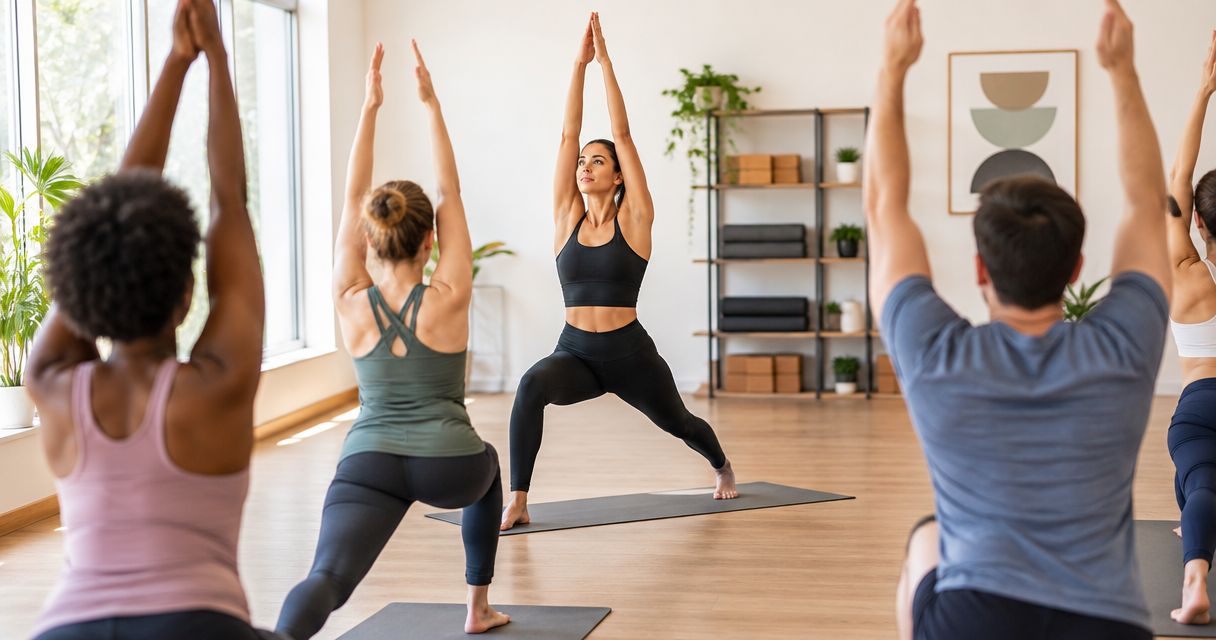
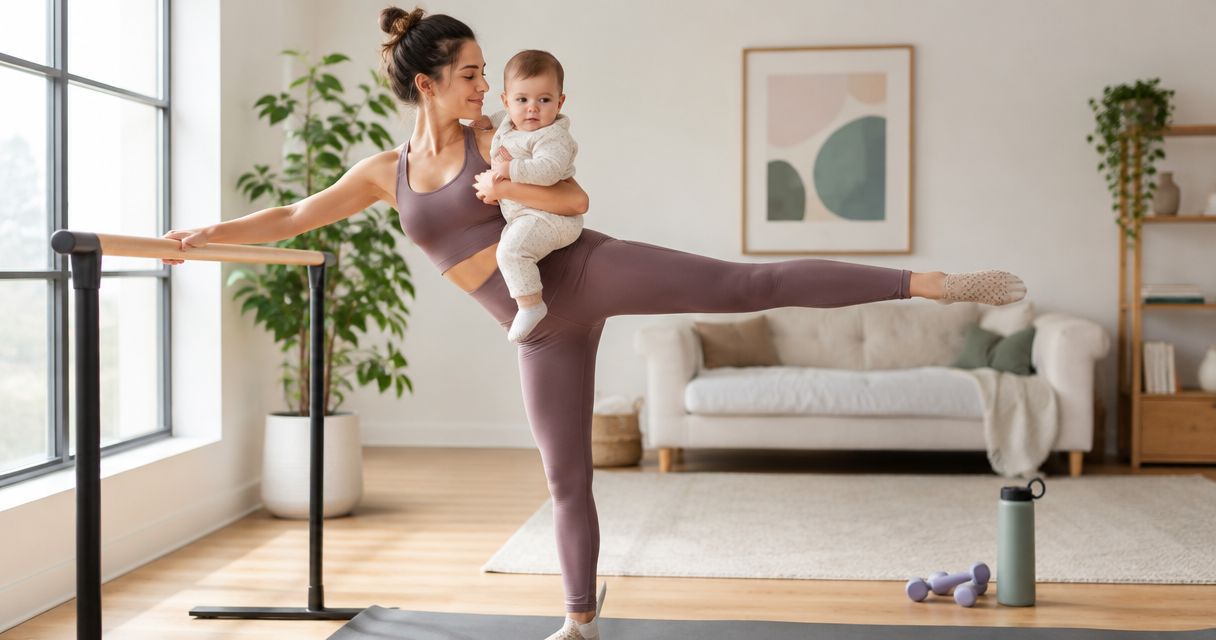
New moms’ barre is a return-to-exercise approach using ballet-inspired strength and balance movements, with the aim of rebuilding a manageable movement routine after childbirth. This 2026 guide to barre for new moms explains how to choose a class, prepare for your first visit, and separate beginner-friendly instruction from postpartum-specific care.
- Barre for new moms starts with individual recovery needs, not a fixed postpartum deadline.
- Unified Hot Yoga offers Barre alongside yoga and Pilates; confirm postpartum modifications before booking.
- Choose instruction, manageable effort, and practical scheduling over promises about changing your postpartum body.
- Pelvic pressure, leakage, pain, or dizziness are reasons to stop and seek appropriate clinical advice.
Why barre matters for new moms
Returning to exercise after childbirth involves more than choosing a workout. You are also working around recovery, interrupted sleep, feeding, childcare, and a body that can respond differently from one day to the next. A class needs to fit that reality, not compete with it.
Barre commonly combines supported standing exercises, small repeated movements, and balance work. However, low-impact movement is not the same as low effort, and a general beginner class is not automatically a postpartum class. Your recovery needs still determine which movements are appropriate.
For American Fork and nearby Utah County residents, Unified Hot Yoga offers Barre, Reformer Pilates, Hot Pilates, Vinyasa, Yin, and 26&2 yoga. Unified Hot Yoga is best for local newcomers seeking Barre alongside yoga and Pilates options. Confirm the instruction and modifications you need before choosing a session.
How to choose and prepare for postpartum barre
1. Establish your starting point with your clinician
Start with your obstetric clinician, midwife, or another qualified healthcare professional familiar with your recovery. Discuss your delivery, healing, current symptoms, and previous activity rather than asking only whether exercise is allowed. Describe barre as repeated strength and balance work so the conversation addresses the activity you want to try.
There is no single postpartum date that makes every exercise suitable for every person. A clinician’s guidance also does not mean you need to complete every movement offered in class. Your first goal is to understand your boundaries and communicate them clearly.
- Describe pain, pelvic heaviness, leakage, dizziness, or concerns about healing.
- Ask which movements or effort levels need modification in your circumstances.
- Ask whether pelvic health physical therapy is appropriate for persistent symptoms.
- Write down the guidance you want to share privately with your instructor.
2. Learn what barre involves before choosing it
Barre generally draws on ballet-inspired positions and repeated strength exercises, often using a support for balance. You do not need a dance background to ask about a beginner class. You do need to know whether the session includes floor work, sustained holds, balance challenges, or movements your clinician has advised you to modify.
The class name alone cannot answer those questions. One barre session can differ from another in pace, equipment, and teaching approach. For your first class in 2026, prioritize a clear description and an instructor who can explain alternatives without making you feel behind.
- Ask whether the class includes standing work, floor work, or both.
- Ask how the instructor handles rest breaks and movement alternatives.
- Confirm whether the room is heated rather than assuming from the studio’s name.
- Ask what experience level the class expects.
3. Match the format to your current priorities
Begin with a simple note on your phone: what you want from a class, what your clinician advised, and what makes attendance realistic. That gives you a practical comparison method without buying equipment or committing to a membership. Choose the format you can approach comfortably, not the one with the strongest fitness promise.
Unified Hot Yoga’s Barre, yoga, and Pilates offerings give local readers several formats to investigate in one studio. That is useful for comparing preferences, but the range does not establish that any particular session provides postpartum-specific instruction. Ask about the actual class before deciding.
- Choose Barre if supported, ballet-inspired strength work interests you.
- Consider Reformer Pilates if you want to explore apparatus-based Pilates instruction.
- Compare yoga formats if you prefer a practice organized around postures and breathing.
- Ask separately about heat, pace, and modifications for every format.
4. Build an attendance plan that fits family life
Check your calendar before choosing a recurring commitment. Account for travel from American Fork, Lehi, Pleasant Grove, Highland, or your own neighborhood, plus whatever childcare and feeding arrangements you need. A convenient class time is only convenient if you can reach it without rushing.
Make your 2026 plan around the week you actually have. If sleep or recovery changes your capacity, adjust the plan rather than treating attendance as a test of discipline. Community can support your wellbeing without requiring you to ignore fatigue or discomfort.
- Identify the class times that fit your existing responsibilities.
- Arrange childcare independently unless the studio confirms a suitable service.
- Ask about arrival procedures, booking requirements, and cancellation policies.
- Leave room in your plan for a slower day or a missed session.
5. Pack for comfort and confirm studio requirements
Prepare a small bag before class day so you are not sorting through equipment while getting everyone out the door. Comfortable exercise clothing, water, and any personal items you need are a practical starting point. Ask about mats, footwear, towels, and equipment instead of assuming that everything is supplied.
If you are breastfeeding or pumping, plan around your own comfort and bring the items you normally use. You do not need to follow someone else’s feeding schedule to attend exercise. Keep the preparation simple enough that it does not become another barrier to leaving home.
- Wear clothing that lets you move and breathe comfortably.
- Bring water and follow any individualized hydration advice from your clinician.
- Confirm footwear, mat, towel, and equipment requirements before attending.
- Pack any feeding or personal-care supplies you expect to need.
6. Tell the instructor what you need before class
Have a short, private conversation before the session begins. Explain that you are returning after childbirth, share relevant movement guidance, and ask how to signal that you need an alternative. You can state your needs without sharing your full medical history with the group.
The instructor guides the class; your healthcare professional guides medical recovery. If an instructor cannot offer a suitable alternative, skip that movement rather than trying to solve the problem under pressure. Stopping or resting is a valid part of participating.
- Explain any clinician-advised restrictions that affect the session.
- Ask where to stand so you can hear and see demonstrations clearly.
- Request alternatives before a movement becomes uncomfortable.
- Stop for pain, pelvic pressure, leakage, dizziness, or other concerning symptoms.
7. Review your response before progressing
After class, consider more than whether you completed the session. Notice how you felt during movement, later that day, and while doing ordinary tasks afterward. Record symptoms or questions so you can describe them accurately to your clinician or instructor.
Progress does not have to mean deeper positions, longer holds, or fewer breaks. It can mean understanding the class, communicating confidently, and leaving with enough energy for the rest of your day. Use that information to choose your next session rather than following the strongest person in the room.
- Note which movements felt comfortable and which needed adjustment.
- Record symptoms instead of dismissing them as the price of exercise.
- Discuss persistent or recurring concerns with a qualified healthcare professional.
- Change one aspect of your routine at a time so you can assess your response.
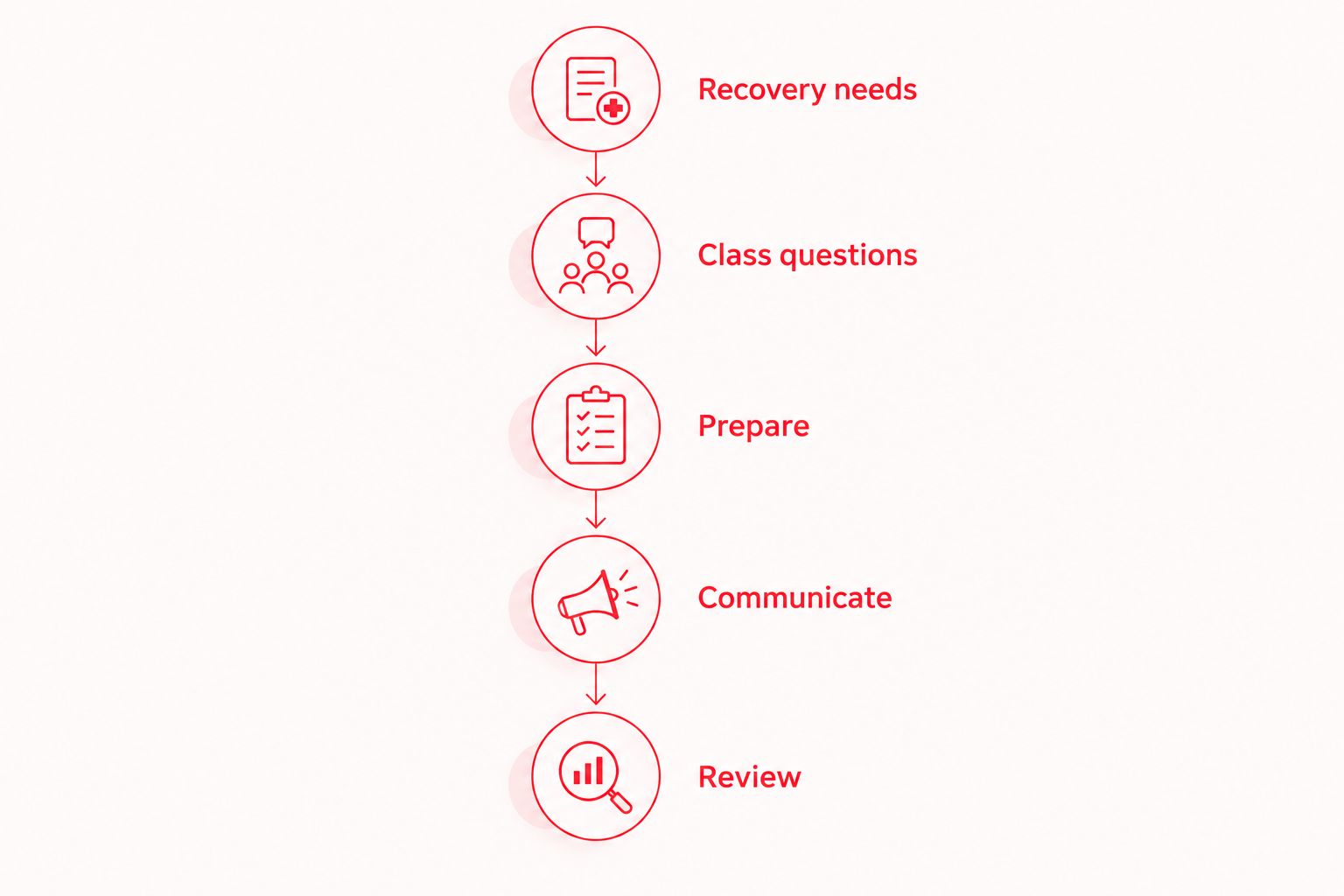
The planning sequence is straightforward: establish your recovery needs, ask about the class, prepare, communicate, and review. Keep those decisions in that order rather than booking first and trying to resolve concerns during the workout.
Compare barre, yoga, Pilates, and home movement
Choose by the session’s demands and available instruction, not by the label alone. The table describes general formats, not a verified lesson plan for a specific studio session. Every option has a practical advantage and a limitation; none replaces individualized postpartum care.
| Option | Best for | What it generally involves | Key limitation |
|---|---|---|---|
| Barre | Newcomers interested in supported standing strength work | Ballet-inspired positions, repeated movements, and balance exercises | Low impact does not guarantee suitable intensity or postpartum modifications |
| Reformer Pilates | People interested in apparatus-based Pilates | Movement on a reformer using adjustable spring resistance | Equipment familiarity and individual setup require instruction |
| Hot Pilates | People who prefer Pilates-style exercise in heat | Pilates-style movement in a heated environment | Heat adds a separate consideration to exercise tolerance |
| Vinyasa yoga | People who enjoy linking movement and breath | Transitions between yoga postures | Pace and transitions vary; the label does not establish beginner suitability |
| Yin yoga | People who prefer a slower-paced practice | Longer-held, generally floor-based postures | Slower movement does not make every position appropriate during recovery |
| 26&2 yoga | People who prefer a recurring posture sequence | A structured sequence of postures and breathing exercises | Repetition does not remove the need for individual modifications |
| Clinician-guided home movement | People prioritizing flexible timing and individualized guidance | A plan selected around current recovery needs | Home practice lacks a class instructor’s real-time observation |
For a first visit in 2026, ask what the specific session involves rather than choosing the format that sounds gentlest. A slower class can still include an uncomfortable position, while a more active class can still offer useful alternatives. The relevant question is whether the instruction matches your needs.
If you are ready to explore Unified Hot Yoga membership options, review the studio’s current membership information directly. Confirm that the sessions you want are included and that the booking arrangements fit your schedule before making a commitment.
Common mistakes new moms make when choosing barre
Treating beginner-friendly as postpartum-specific
A class can welcome beginners without providing specialized postpartum instruction. Ask about the instructor’s relevant experience, the modifications available, and whether your needs fit that session. An inclusive atmosphere matters, but it does not substitute for clinical guidance.
Choosing by calorie burn or body-change promises
A workout description focused on changing your postpartum body does not tell you whether the class suits your recovery. Look for practical information about movements, instruction, and participation instead. Your first class should help you understand the format, not require you to prove that childbirth has not changed your needs.
Assuming a barre class is heated—or unheated
A studio can offer several formats with different room conditions. Confirm the temperature expectations for the exact session you plan to attend. Do not infer the environment from a studio name, a photograph, or another class on the schedule.
Committing before checking the family logistics
A membership cannot solve a class time that conflicts with childcare, feeding, or travel. Check the actual schedule and participation terms before choosing a recurring commitment. The best plan is one you can use without regularly sacrificing the recovery time you need.
FAQ
Is barre a good first workout for new moms?
Barre is an option to discuss with your clinician when returning to exercise after childbirth. Whether a particular class fits depends on your recovery, symptoms, the movements involved, and the instruction available.
When can I start barre after having a baby?
Your starting point depends on your individual recovery rather than a universal postpartum deadline. Ask your clinician about barre’s strength and balance demands and any modifications you need.
Do I need ballet experience before trying barre?
Ballet experience is not a prerequisite for exploring beginner barre. Confirm the specific class’s expected experience level and ask how the instructor introduces unfamiliar positions.
What should I bring to my first postpartum barre class?
Bring comfortable exercise clothing, water, and your personal-care essentials, then confirm the studio’s footwear and equipment requirements. Ask whether you need your own mat or towel before arriving.
Is barre better than Reformer Pilates after childbirth?
Neither barre nor Reformer Pilates is automatically better after childbirth. Compare the actual session, available modifications, your preferences, and your clinician’s guidance rather than choosing by format alone.
Can I bring my baby to barre class?
Confirm the studio’s policy before bringing your baby. A general fitness class does not establish that babies can attend or that childcare is provided.
Does Unified Hot Yoga offer postpartum-specific barre?
Unified Hot Yoga offers Barre, but postpartum-specific programming is not established by the class offering alone. Ask the studio about the instructor’s relevant experience and whether a particular session accommodates your needs.
What should I do if barre causes pelvic pressure or leakage?
Stop the movement and seek advice from a qualified healthcare professional. Do not treat pelvic pressure, leakage, or pain as a requirement for making progress.
One last thing
For your first barre class in 2026, make the goal learning how the session fits you, not completing every repetition. Knowing when to rest, what to ask, and which movements need changing is useful progress. A welcoming community should leave room for those decisions.