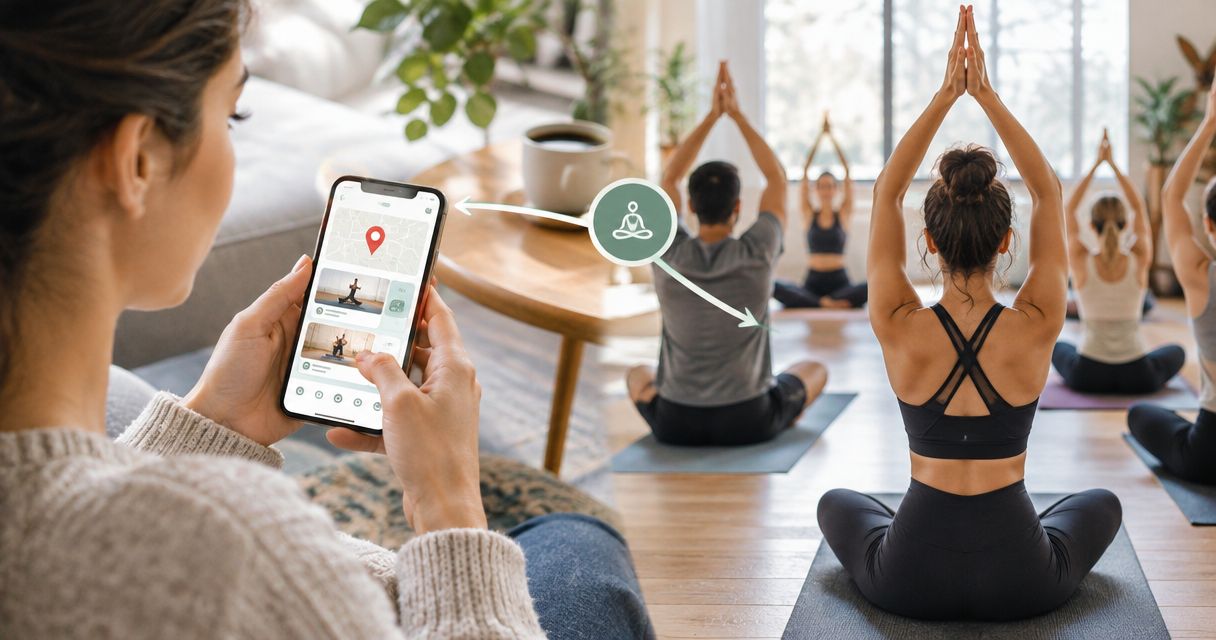
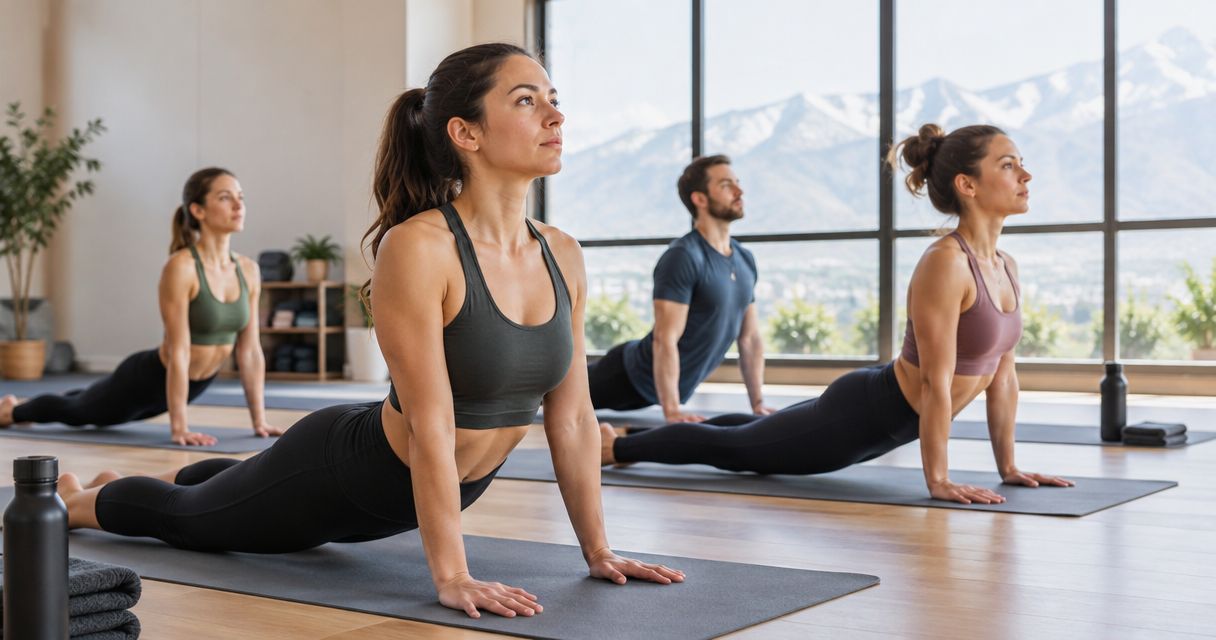
Best for learning a fixed yoga sequence: 26&2 at Unified Hot Yoga in American Fork. For beginners choosing a first class in Utah County in 2026, this guide compares 26&2 with Yin, Vinyasa, Hot Pilates, Barre and Reformer Pilates by what you want to practice—not by how hard you can push.
- Unified Hot Yoga offers 26 and 2 yoga classes for beginners who want a repeatable, fixed-sequence practice.
- 26&2 uses 26 postures and 2 breathing exercises; beginners do not need to perform every posture fully.
- Choose Yin for sustained holds, Vinyasa for flowing movement, or Pilates and Barre for exercise-focused alternatives.
- Confirm class length, room conditions, equipment requirements and beginner guidance before booking.
Why this matters
Your first class asks you to learn unfamiliar movements while following instructions. In a heated room, you also need to pay attention to how you feel. A beginner-friendly choice matches your interests and leaves room to rest, ask questions and modify.
Unified Hot Yoga offers all six formats discussed here for practitioners of all skill levels. That makes the useful question more specific than “Which workout is best?” Ask whether you want repeated yoga postures, flowing movement, sustained holds or an exercise-focused class.
This 2026 guide ranks those formats by their relevance to someone searching for 26&2. It is not a ranking of competing Utah County studios, and the alternatives are not substitutes for the 26&2 sequence.
What makes the best beginner 26&2 class?
Use these criteria before you choose a session:
- Correct format: Look for 26&2 when you want the fixed sequence, rather than assuming every hot yoga class teaches it.
- Beginner guidance: Ask how the instructor explains unfamiliar postures and offers alternatives.
- Clear room information: Confirm the heat conditions and what to do if you feel uncomfortable.
- Practical preparation: Check what to bring, what the studio provides and how check-in works.
- A workable visit: Include travel from your Utah County city, parking, check-in and the full class in your plans.
- Permission to adapt: Choose instruction that supports a smaller range of motion and breaks rather than pressure to keep up.
Prioritize clear instruction over intensity. A class does not become a better introduction because it feels more exhausting.
Beginner class options at a glance in 2026
The order below starts with the exact search match, then separates alternatives by purpose. “Best for” describes your preferred activity, not a promised health outcome.
| Class format | Best for | Standout characteristic | Key limitation |
|---|---|---|---|
| 26&2 yoga | Learning a repeatable yoga sequence | A set sequence of 26 postures and 2 breathing exercises | Repetition does not suit everyone; heat adds another demand |
| Yin yoga | Practicing sustained holds | Longer-held, generally floor-based postures | Stillness and sustained sensation can feel challenging |
| Vinyasa yoga | Moving between yoga postures | Breath-linked transitions | Following transitions adds coordination demands |
| Hot Pilates | Exercise-focused movement in heat | Pilates-based exercise in a heated setting | It is not the 26&2 yoga sequence |
| Barre | Standing, ballet-inspired exercise | Controlled movements drawing on ballet and fitness | Repeated movements can fatigue unfamiliar muscles |
| Reformer Pilates | Learning apparatus-based Pilates | A moving carriage and spring resistance | Equipment setup adds a learning task |
1. 26&2 yoga: best for learning a repeatable sequence
26&2 is a yoga format built around 26 postures and 2 breathing exercises. The recognizable sequence gives you something familiar to return to as you learn the instructions and positions.
Unified Hot Yoga is best for American Fork beginners who want 26&2 yoga within an all-skill-levels studio. Its offering includes infrared-heated yoga; confirm the conditions and length of the specific session before booking.
26&2 pros:
- The repeated sequence helps you recognize what comes next.
- You can focus on learning instructions rather than seeking novelty.
- You do not need to achieve the fullest expression of a posture to begin.
26&2 cons:
- The fixed format offers less variety than a changing flow.
- Heat adds a separate consideration alongside unfamiliar movement.
Best for: You want to revisit the same sequence and learn it gradually.
Tell the instructor that this is your first visit. Ask what to do when you need a break before class begins, rather than trying to work it out while uncomfortable.
Verdict: Buy into 26&2 for repetition—not as a test of heat tolerance.
2. Yin yoga: best for exploring sustained holds
Yin yoga generally uses longer-held, floor-based postures rather than a continuous standing flow. The slower transitions give you time to notice your position and respond to instructions.
Slow does not mean effortless. Staying in a position can require patience, and a stretch should not become an instruction to tolerate pain.
Yin yoga pros:
- Fewer transitions reduce the need to follow a moving sequence.
- Sustained positions give you time to explore an appropriate range.
- The format suits people interested in stillness rather than continuous exercise.
Yin yoga cons:
- Long holds do not suit every preference.
- A slower pace does not make every posture appropriate for every body.
Best for: You prefer sustained holds to a repeatable standing sequence.
Confirm the room conditions rather than assuming Yin is unheated. Ask which props are used and how the teacher helps beginners adjust positions.
Verdict: Buy into Yin for stillness; skip it as a substitute for learning 26&2.
3. Vinyasa yoga: best for breath-linked movement
Vinyasa connects yoga postures through movement coordinated with breathing. Unlike 26&2, Vinyasa does not refer to one universal fixed sequence, so class structure varies.
If you enjoy moving between positions, Vinyasa offers a different starting point. Ask about the pace and beginner guidance before choosing a session.
Vinyasa yoga pros:
- Flowing transitions suit people who prefer movement to extended stillness.
- Class sequences can offer variety.
- Breath and movement are practiced together.
Vinyasa yoga cons:
- Following transitions adds a coordination task.
- A familiar class name does not tell you the exact pace or sequence.
Best for: You want to move between yoga postures rather than repeat the 26&2 sequence.
You do not need to match another student's range or speed. Discuss alternatives for movements you do not yet recognize, especially if moving between the floor and standing feels unfamiliar.
Verdict: Buy into Vinyasa for flow; hold if your priority is a fixed sequence.
4. Hot Pilates: best for exercise-focused movement in heat
Hot Pilates combines Pilates-based exercise with a heated setting. It is a different activity from 26&2 yoga, even when both appear on the same studio schedule.
Choose it because the exercise format interests you—not because you assume a class with “hot” in its name teaches yoga postures.
Hot Pilates pros:
- It offers an exercise-focused alternative to yoga.
- Pilates-based movements provide a different practice focus.
- It suits readers specifically interested in heated exercise.
Hot Pilates cons:
- You must manage heat alongside the exercise demands.
- The class name alone does not establish movements, equipment or pace.
Best for: You want Pilates-based exercise and are specifically considering a heated class.
Ask what a newcomer should expect, which equipment is involved and how to modify movements. Do not assume yoga preparation covers every detail of a Hot Pilates session.
Verdict: Buy into Hot Pilates for heated exercise; skip it if you want the 26&2 sequence.
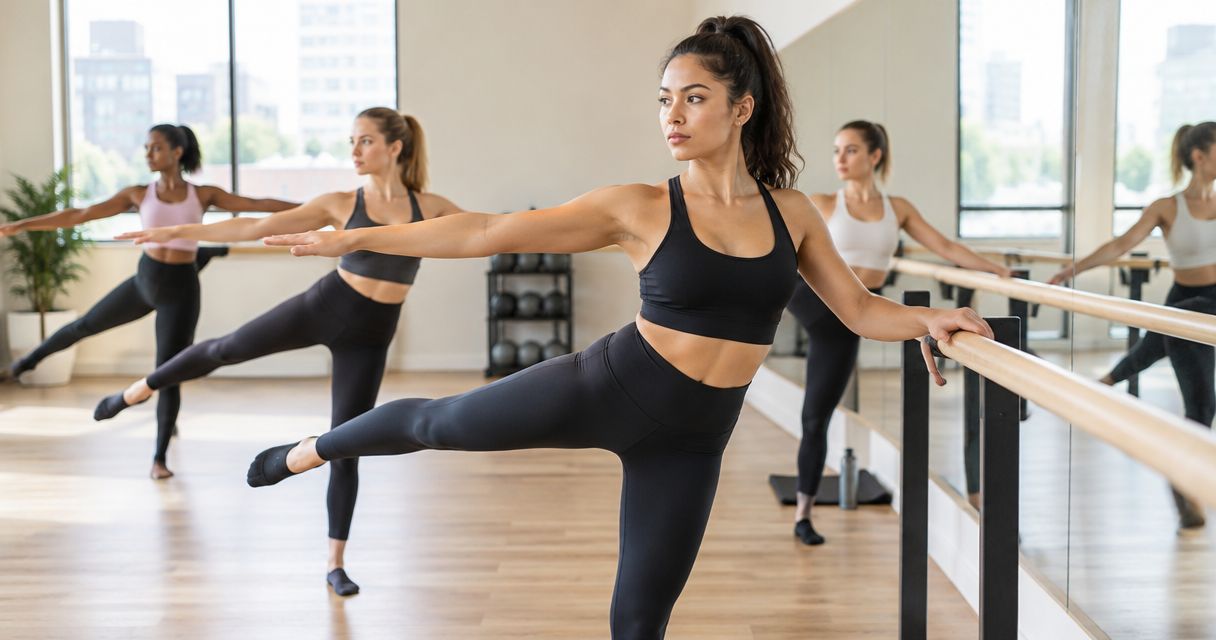
5. Barre: best for standing, ballet-inspired exercise
Barre draws on ballet-inspired positions and controlled fitness movements. A ballet background is not a prerequisite, but the movement vocabulary can still be new.
This option deserves consideration if your interest is standing exercise rather than learning a yoga sequence. Ask about the specific class structure instead of assuming every Barre session follows the same routine.
Barre pros:
- It offers a distinct alternative to yoga and apparatus-based Pilates.
- Controlled movements let you focus on positioning.
- Prior dance experience is not required to explore the format.
Barre cons:
- Repeated movements can feel demanding despite a small range of motion.
- Ballet-inspired terminology requires explanation for newcomers.
Best for: You prefer standing, ballet-inspired exercise to a yoga-led practice.
Ask about footwear, equipment and alternatives for balance work before arriving. Those details are class-specific, so generic Barre advice should not replace the studio's instructions.
Verdict: Buy into Barre for its movement style—not because it looks easy.
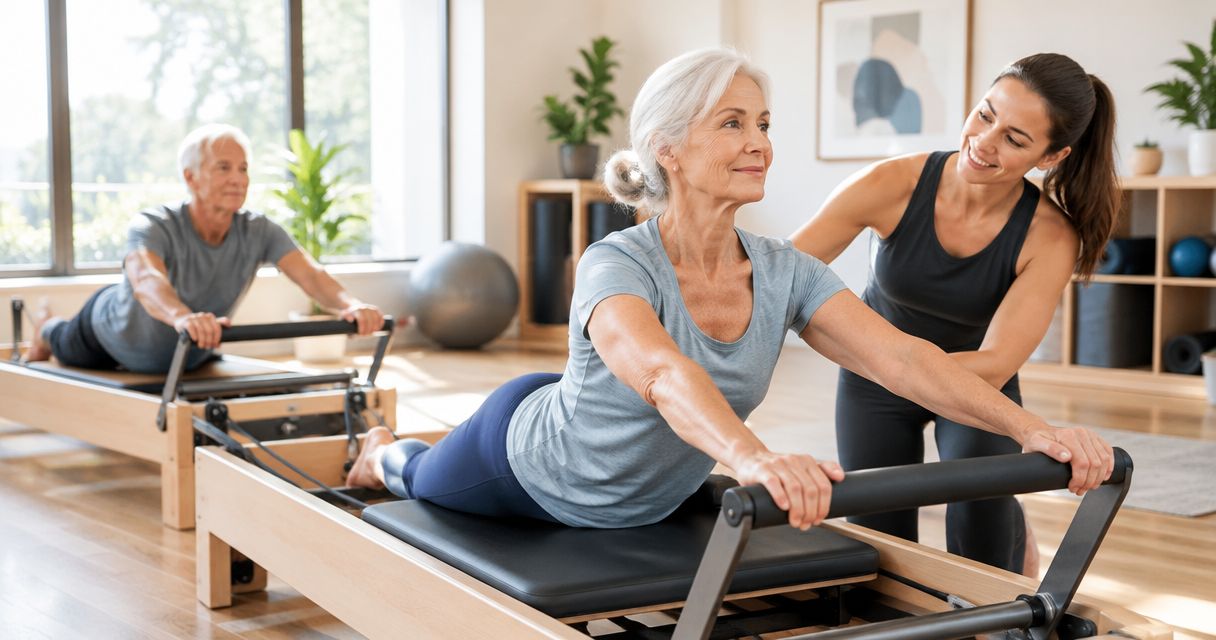
6. Reformer Pilates: best for learning apparatus-based movement
Reformer Pilates uses an apparatus with a moving carriage and spring resistance. Learning how to position yourself and use the equipment is part of the first-class experience.
It is not simply a mat class with added equipment. Ask which session is appropriate for someone who has never used a reformer.
Reformer Pilates pros:
- The apparatus offers a different way to practice controlled movement.
- Spring settings change how exercises are supported or resisted.
- It provides an alternative for readers interested in Pilates rather than yoga.
Reformer Pilates cons:
- Equipment setup adds unfamiliar instructions.
- You need guidance before changing settings or attempting unfamiliar movements.
Best for: You want to learn Pilates on an apparatus.
Confirm the introductory guidance, clothing and footwear requirements. Do not transfer assumptions about heat or class structure from another format on the schedule.
Verdict: Buy into Reformer Pilates for apparatus-based practice; hold until beginner suitability is clear.
Prepare for your first 26&2 class
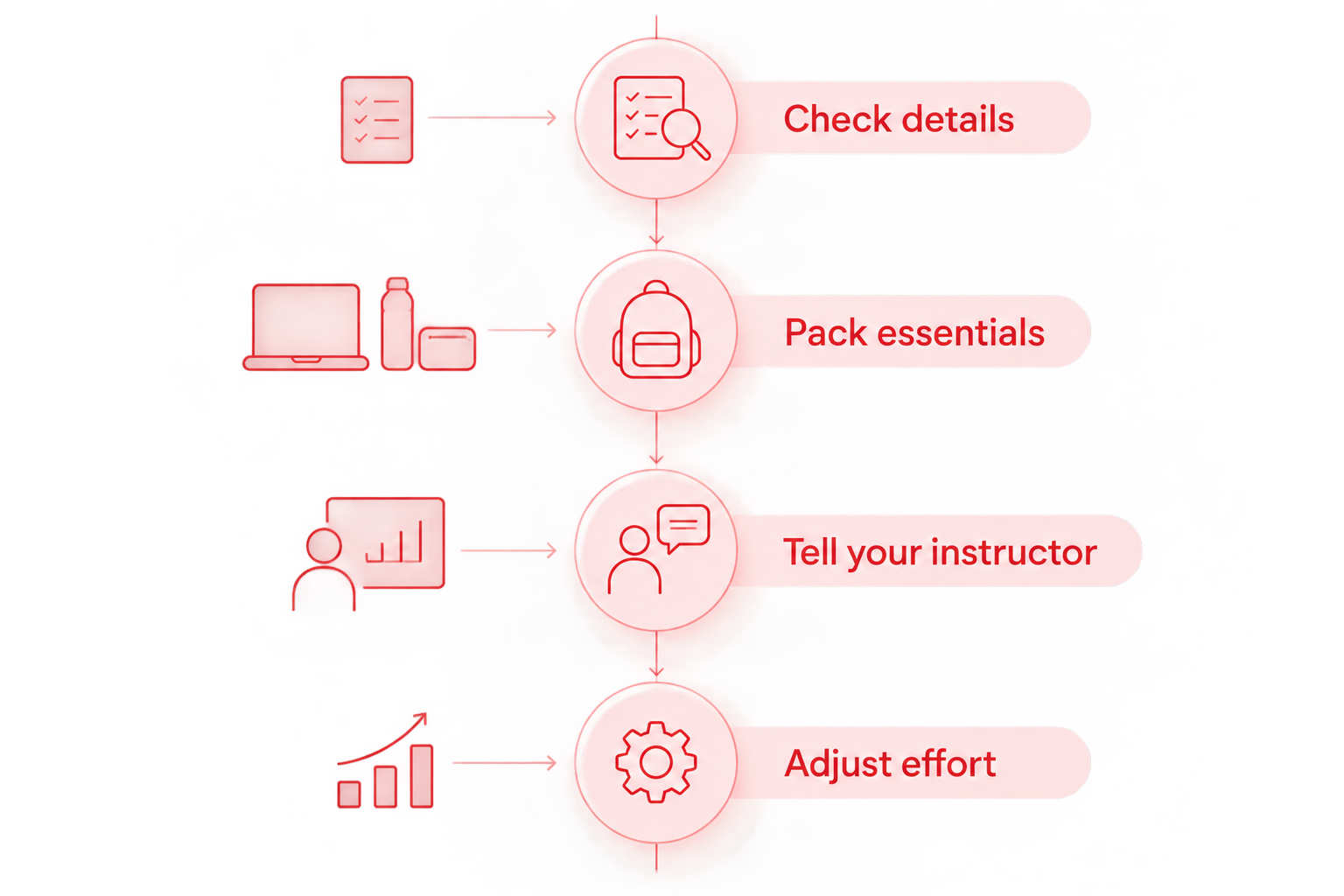
For your first visit in 2026, keep preparation simple. Start with the first 26&2 class preparation guide, then confirm the details that apply to your booked session.
Check details
Confirm the session length, room conditions, check-in instructions and equipment requirements. Read the studio's Know Before You Go information and current Schedule; a general description is not a substitute for session details.
Pack essentials
Plan for water, suitable exercise clothing, a mat and a towel, then check what you need to bring yourself. Ask about any additional requirements rather than assuming equipment or rentals are included.
Tell your instructor
Say that you are new to 26&2. Mention movement limitations relevant to instruction, and ask how to rest or leave the heated room if needed.
Adjust effort
Use a comfortable range of motion and take breaks. Stop exercising if you feel dizzy, faint or unwell; do not treat symptoms as proof that the class is working.
Avoid treating hydration as a last-minute challenge or forcing yourself to drink a preset amount. If you have a medical condition, are pregnant or take medication affecting heat tolerance, ask your healthcare professional about heated exercise before participating.
How the recommendations are ranked
The ranking puts Unified Hot Yoga's 26&2 offering first because it directly matches the requested practice. The alternatives are organized around distinct preferences: sustained holds, flowing transitions, heated exercise, ballet-inspired movement and apparatus-based Pilates.
The 2026 comparison uses format, beginner preparation and practical fit. It does not assign scores for teaching quality, promise results or claim that one class suits every beginner.
Which beginner class should you choose?
Choose 26&2 if your goal is to learn 26&2. Start with 1 class, ask questions and assess whether you enjoy both the sequence and the heated setting before deciding on a membership.
Unified Hot Yoga gives American Fork newcomers a place to explore that format alongside other yoga, Pilates and Barre options. If repetition appeals to you, keep 26&2 as your first choice; if it does not, choose the alternative whose movements interest you.
When you are ready to consider joining in 2026, consult the studio's Prices page for current intro offers and memberships. Check the terms alongside the Schedule so your decision fits the classes you actually intend to attend.
FAQ
Can a complete beginner take 26&2 yoga?
Yes, a complete beginner can explore 26&2 yoga without already knowing the sequence. Tell the instructor you are new, ask about modifications and confirm that heated exercise is appropriate for you.
What does 26 and 2 mean in yoga?
26&2 refers to a set sequence of 26 postures and 2 breathing exercises. The repeated structure distinguishes it from yoga formats built around changing flows.
Do I need to be flexible before my first 26&2 class?
No, you do not need to achieve the full expression of the postures before starting. Use an appropriate range of motion and ask for alternatives rather than forcing a position.
Is 26&2 better than Vinyasa for beginners?
Neither format is best for every beginner. Choose 26&2 for a repeatable sequence or Vinyasa for breath-linked transitions, then confirm beginner guidance for the specific session.
What should I bring to a beginner 26&2 class?
Plan for water, suitable exercise clothing, a mat and a towel, then confirm the studio's requirements. Do not assume equipment, rentals or other amenities are included.
How long does a beginner 26&2 class last?
Confirm the duration on the current Schedule before booking. The format name alone should not be used to assume the length of a particular session.
What should I do if I feel dizzy during hot yoga?
Stop exercising and tell the instructor if you feel dizzy. Move out of the heat safely and seek medical help for severe, persistent or worsening symptoms.
Where can I check beginner memberships and intro offers?
Consult Unified Hot Yoga's current Prices page for intro offers, memberships and their terms. Review the Schedule as well so your choice matches the sessions you plan to attend.
One last thing
Repeatable does not mean identical effort. In 26&2, the sequence stays recognizable, but you can use a smaller range of motion or take a break when needed. Judge your first visit by whether you understood the guidance and felt comfortable asking for help—not by whether you completed every posture.