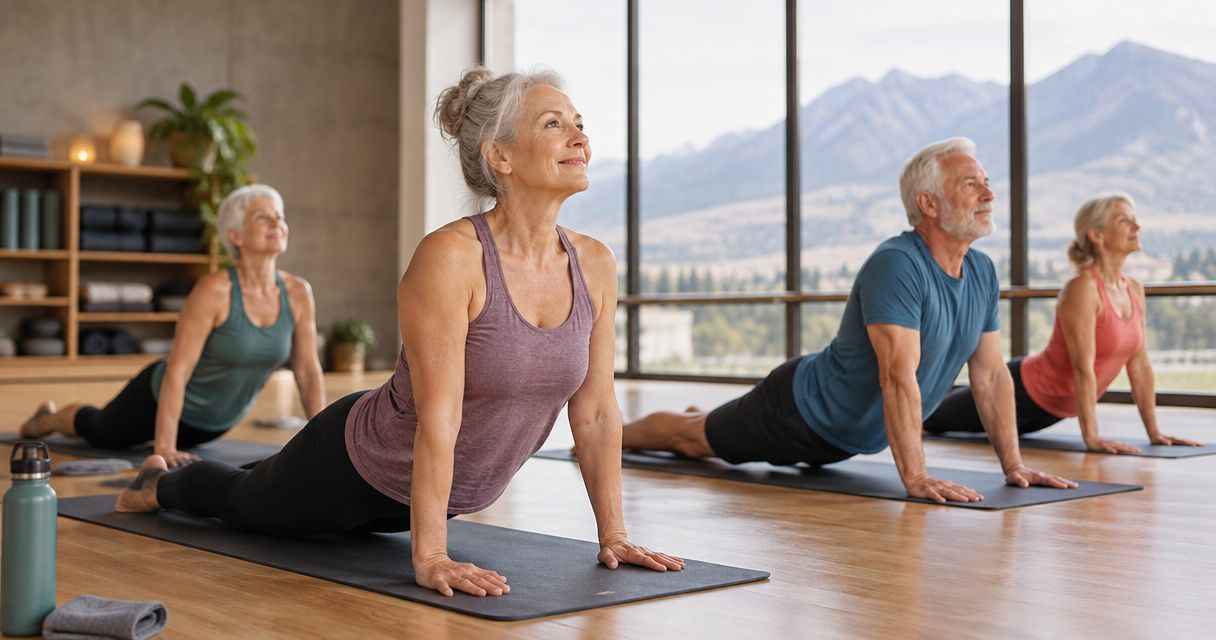
Best for a slower pace: Yin. Best for a repeatable sequence: 26&2. Best for continuous movement: Vinyasa. For seniors comparing hot yoga classes in Utah County in 2026, Unified Hot Yoga offers these yoga styles alongside Hot Pilates, Reformer Pilates, and Barre in American Fork; your first choice should reflect your comfort with heat, movement, and getting down to the floor.
- For the best hot yoga classes for seniors Utah County search, shortlist Yin for slower pacing—not automatic safety.
- Unified Hot Yoga offers Vinyasa, Yin, 26&2, Hot Pilates, Reformer Pilates, and Barre in American Fork.
- Choose 26&2 for repetition, Vinyasa for flowing movement, or Pilates and Barre for a different exercise focus.
- Before booking, confirm heat, transitions, equipment, and modifications; discuss medical concerns with your clinician.
Why your first class choice matters
A slower class and a cooler class are not the same thing. Yin generally involves longer-held positions, but a heated Yin class still exposes you to heat. Likewise, a familiar yoga sequence does not remove the challenge of balancing or changing positions.
Unified Hot Yoga is best for American Fork seniors who want to compare yoga, Pilates, and Barre at one studio. That breadth gives you alternatives without making any one format the right answer for every older adult.
For your 2026 shortlist, separate the exercise style from the room conditions. Ask about both before deciding whether a class matches your needs.
What makes the best class for an older beginner?
Use these criteria before choosing a class name:
- Heat suitability: Confirm the room conditions and discuss heat exposure with your clinician when you have a medical condition or take medication that affects heat tolerance.
- Manageable transitions: Ask how often you move between standing, kneeling, sitting, and lying down.
- Useful modifications: Ask which alternatives the instructor can offer for your specific movement limitations.
- Clear instruction: Tell the instructor you are new and ask how unfamiliar movements are explained.
- Comfortable equipment: Find out whether the class uses a mat, barre, or reformer, and what you need to bring.
- Repeatable attendance: Choose a class you can reach comfortably from American Fork or your nearby Utah County city.
A beginner label alone does not answer these questions. The most useful answer describes what you will actually do.
Class options at a glance
This 2026 guide ranks formats by distinct preferences, not by a claim that one class is safest for all seniors. Yoga styles come first because this guide addresses hot yoga; Pilates and Barre remain equally valid alternatives when their movement patterns suit you better.
| Class format | Best for | Defining feature | Main limitation to consider |
|---|---|---|---|
| Yin | A slower-paced yoga practice | Longer-held, mostly floor-based positions | Floor access and sustained positions still require consideration |
| 26&2 | A predictable yoga sequence | A traditional sequence of 26 postures and 2 breathing exercises | Repetition does not remove balance or heat demands |
| Vinyasa | Flowing movement | Movement linked with breathing | Frequent transitions can be challenging |
| Hot Pilates | Mat-based conditioning in heat | Pilates-style exercise in a heated setting | Heat adds another demand to exercise |
| Reformer Pilates | Equipment-based Pilates | A moving carriage with spring resistance | Equipment setup requires instruction |
| Barre | Barre-supported exercise | Small, repeated movements using a barre | Standing work can still be demanding |
1. Yin: best yoga option for a slower pace
Yin generally uses longer-held positions rather than a continuous flow. It is worth discussing first if you prefer time to settle into a position instead of following frequent transitions. Longer holds are not an instruction to stretch deeper.
Yin pros:
- Less continuous movement than a flowing yoga class.
- Time to notice how a position feels.
- A clear alternative for readers who dislike fast transitions.
Yin cons:
- Getting to and from the floor still matters.
- Holding a position can be uncomfortable even without much movement.
- A slow pace does not cancel the effects of a heated room.
Best for: Seniors who want slower pacing and can comfortably manage the class's floor positions, with appropriate guidance.
Verdict: Hold until you confirm floor modifications and heat conditions.
2. 26&2: best yoga option for a repeatable sequence
The traditional 26&2 format follows 26 postures and 2 breathing exercises. Its repeatable structure suits people who prefer learning a familiar sequence rather than encountering a different flow each visit. Familiarity supports learning; it does not guarantee that every posture fits your body.
26&2 pros:
- A recognizable sequence to learn over time.
- A clear structure for readers who value repetition.
- A distinct alternative to improvisational flowing classes.
26&2 cons:
- Standing and balance positions need individual consideration.
- A repeated posture still needs modification when uncomfortable.
- You must assess heat separately from sequence familiarity.
Best for: Seniors who enjoy routine and want to develop familiarity with a structured yoga practice.
Verdict: Hold until the instructor explains alternatives for challenging positions.
3. Vinyasa: best yoga option for flowing movement
Vinyasa links movement with breathing, often connecting poses into sequences. Choose it for the experience of moving through a practice, not because the name promises an easy class. The pace and transitions depend on the session.
Vinyasa pros:
- Connects breathing with movement.
- Offers a different experience from sustained Yin positions.
- Suits readers who prefer a flowing practice to a fixed sequence.
Vinyasa cons:
- Transitions can demand balance and coordination.
- Some sequences place weight through the wrists.
- Following the flow can be difficult when positions are unfamiliar.
Best for: Seniors comfortable with changing positions who want a movement-focused yoga class.
Verdict: Hold until you confirm the pace and alternatives to wrist-bearing movements.
4. Hot Pilates: best alternative for heated mat conditioning
Hot Pilates combines a Pilates-style conditioning focus with a heated setting. It is a different choice from yoga, not simply yoga with another name. Ask what the session involves rather than assuming that all Pilates classes follow the same exercises.
Hot Pilates pros:
- Offers a conditioning-focused alternative to yoga.
- Uses a mat-based format rather than a reformer.
- Provides another choice for people who enjoy heated exercise.
Hot Pilates cons:
- Heat adds to the demands of the workout.
- Floor access remains relevant.
- A Pilates label does not establish pace or difficulty.
Best for: Seniors seeking mat-based conditioning who have already considered whether heated exercise is appropriate.
Verdict: Hold until you understand the exercise pace, floor work, and room conditions.
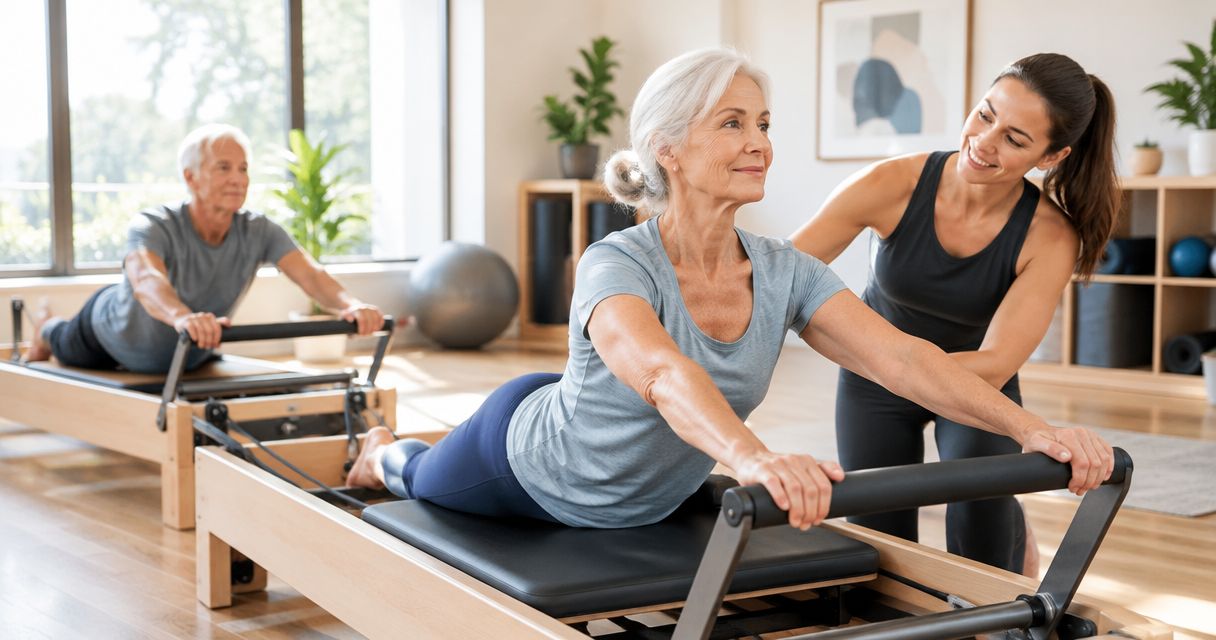
5. Reformer Pilates: best alternative for equipment-based practice
Reformer Pilates uses a carriage and springs to provide resistance and support through different exercises. Equipment creates options, but it also introduces unfamiliar setup and movement. Do not infer the room temperature from the word Pilates; ask specifically.
Reformer Pilates pros:
- Offers equipment-based movement rather than a mat-only practice.
- Uses adjustable spring resistance.
- Provides an alternative when yoga is not your preferred activity.
Reformer Pilates cons:
- The moving carriage requires clear instruction.
- Getting on and off the equipment needs consideration.
- Equipment support does not make every exercise suitable.
Best for: Seniors interested in learning Pilates on equipment with instruction appropriate to their experience.
Verdict: Hold until you confirm newcomer instruction and comfortable equipment access.
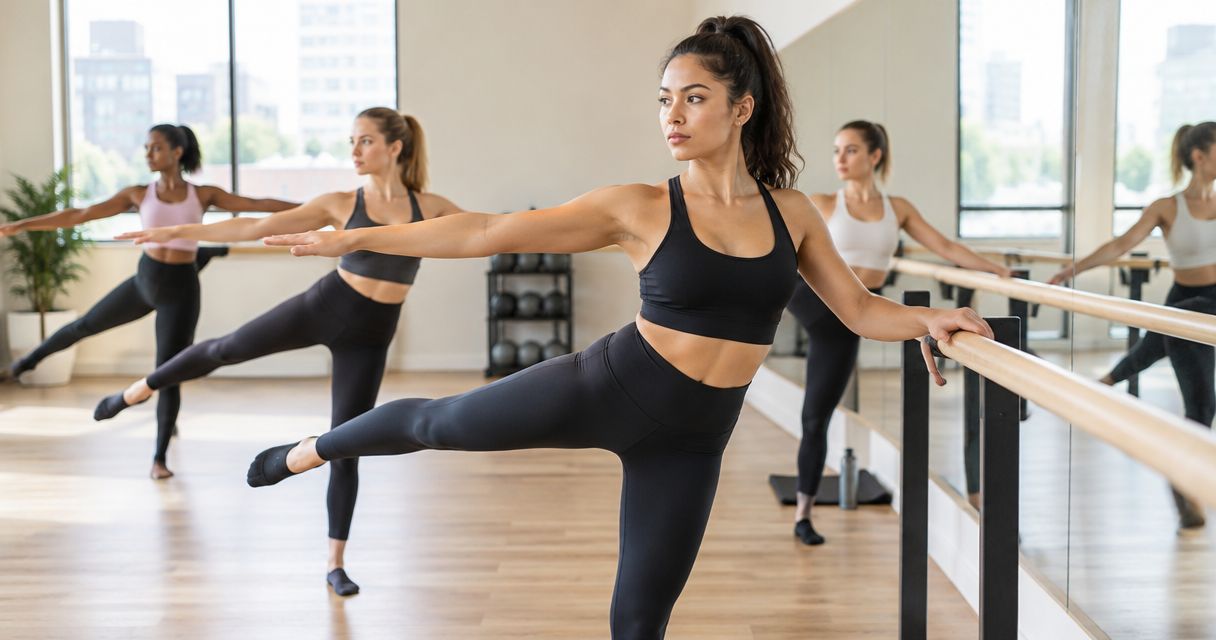
6. Barre: best alternative for barre-supported movement
Barre generally combines small, repeated movements with exercises using a barre. The support offers a different experience from unsupported standing yoga, but standing work still requires effort. Ask how much of the session takes place standing versus on the floor.
Barre pros:
- Includes a support point during barre-based exercises.
- Offers a movement style distinct from yoga and Pilates.
- Suits readers curious about small, controlled movements.
Barre cons:
- Repeated movements can become demanding.
- Standing portions require attention to balance and comfort.
- The format does not guarantee an entirely standing class.
Best for: Seniors who prefer barre-supported exercise and want to understand the standing-work demands before joining.
Verdict: Hold until you confirm standing duration and alternatives for uncomfortable movements.
How these options are ranked
The 2026 order follows the criteria above: pace, transitions, equipment, and the experience you want. It is a format comparison, not a clinical assessment or a countywide ranking of studios.
Yin leads for readers seeking slower pacing. The other formats each serve a different preference; none earns a safety endorsement based on its name. Unified Hot Yoga's stated all-skill-levels offering makes these formats worth discussing with the studio, not interchangeable prescriptions.
Before you book: a practical first-class plan
Use the class schedule to identify a format that interests you. Then confirm the details that a class title cannot communicate.
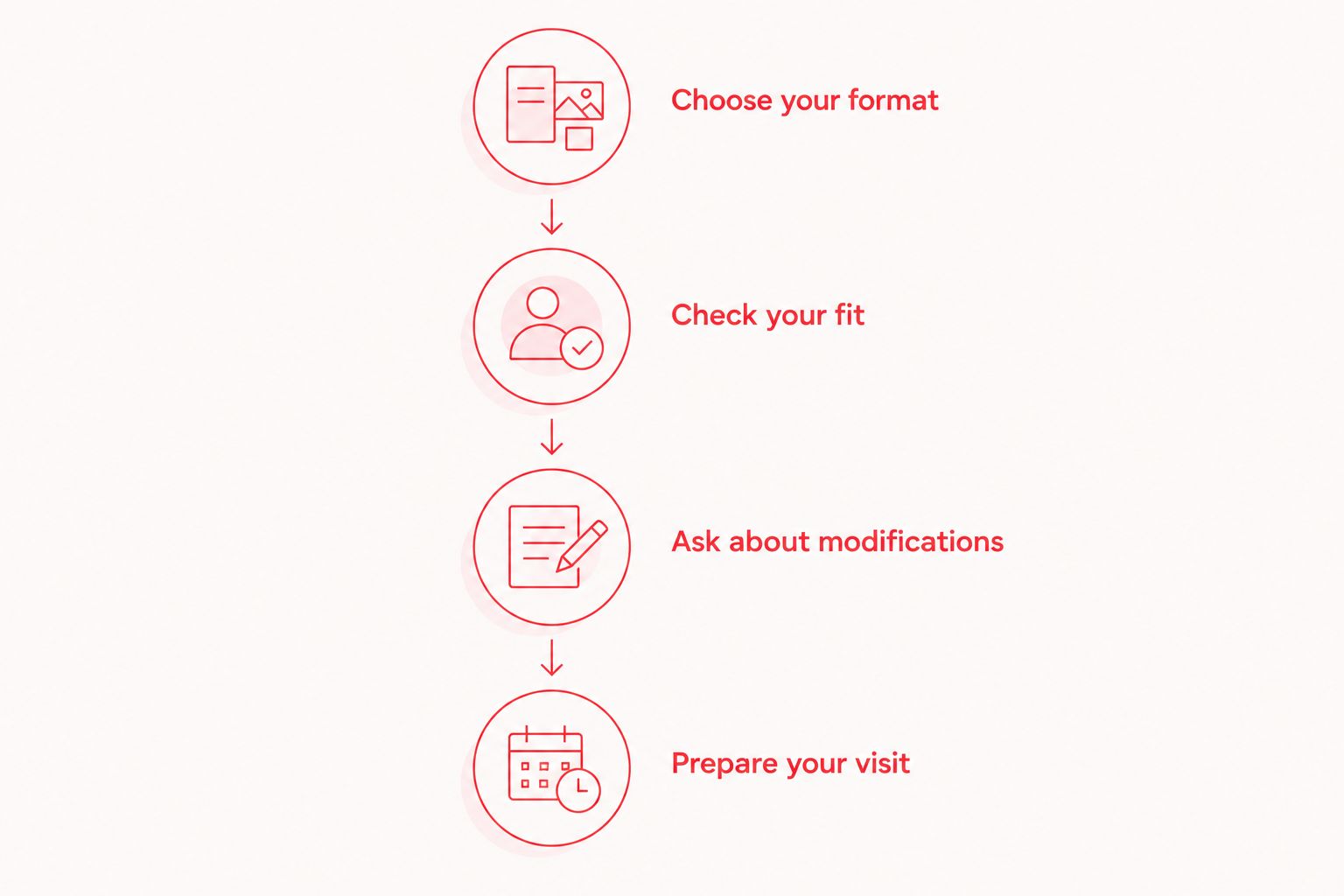
Choose your format
Start with what you enjoy: sustained positions, a repeatable sequence, flowing movement, mat conditioning, equipment, or barre-supported exercise. You do not need to select the hardest-sounding option to make your visit worthwhile.
Check your fit
Ask about room temperature, transitions, and equipment. If you have cardiovascular disease, a history of fainting, or concerns about medications and heat, discuss heated exercise with your clinician before booking. Older adults can be more vulnerable to heat-related illness.
Ask about modifications
Describe a practical limitation, such as difficulty kneeling or getting off the floor. Ask what you would do instead. A specific conversation is more useful than asking only whether a class is beginner-friendly.
Prepare your visit
Bring water and comfortable exercise clothing. Confirm whether you should bring a mat and towel, what the studio provides, and how early you should arrive. Avoid guessing about equipment or check-in requirements.
Your first visit is a chance to learn how the class feels, not a test of endurance. Tell the instructor you are new, take breaks, and stop exercising if you feel unwell. Dizziness is not a goal or proof that a workout is effective.
Which class should you choose in 2026?
Start by asking about Yin if your priority is slower-paced yoga. Choose 26&2 for repeatable structure or Vinyasa for flowing movement only after checking their particular demands. If yoga does not match your preferences, give Hot Pilates, Reformer Pilates, and Barre the same thoughtful consideration.
For readers in Lehi, Pleasant Grove, Highland, and other nearby communities, the trip to American Fork also belongs in the decision. Choose a session you can reach without rushing and a routine you genuinely want to repeat.
Before choosing a membership, ask Unified Hot Yoga for current membership information and compare the commitment with your actual schedule. Do not treat a membership decision as a substitute for understanding your first class.
Choose your first class
Review the schedule, then confirm heat, equipment, and modifications before booking.
FAQ
What's the best hot yoga class for seniors in Utah County?
Yin is the first format to discuss if your priority is slower pacing, while 26&2 suits a preference for repetition and Vinyasa suits flowing movement. The right choice also depends on heat suitability, transitions, and available modifications.
Can I start hot yoga if I've never practiced yoga before?
Being new to yoga does not automatically rule out a class, but you should confirm its beginner instruction and heat conditions first. Unified Hot Yoga describes its offerings as suitable for all skill levels; ask about your specific needs before booking.
Is Yin yoga always easier for older adults?
No, Yin is not automatically easier or safer for older adults. Longer-held positions and floor access can be challenging, and slower movement does not eliminate heat exposure.
Is infrared-heated yoga automatically safe for seniors?
No, infrared heating does not make a class automatically safe for every senior. Discuss heated exercise with your clinician if you have medical concerns, and confirm the actual room conditions with the studio.
What should I bring to my first hot yoga class?
Bring water and comfortable exercise clothing, and confirm the mat and towel requirements before attending. Ask what equipment the studio provides rather than assuming it is included.
Should I choose Reformer Pilates or Barre instead of hot yoga?
Choose Reformer Pilates or Barre if their movement styles better match your interests and needs. Reformer Pilates uses equipment and springs, while Barre includes barre-supported exercises; confirm heat, access, and modifications for either class.
What should I do if I feel dizzy during hot yoga?
Stop exercising and tell the instructor immediately if you feel dizzy. Move out of the heat safely with assistance if needed; severe symptoms, fainting, confusion, or chest pain require urgent medical attention.
Should I buy a membership before trying a class?
Understand the class format and current membership terms before committing. Ask how the options fit the attendance routine you realistically expect to maintain.
One last thing
The most revealing newcomer question is not whether you can finish the class. Ask: What should I do when a movement does not work for me? A clear alternative gives you something practical to use during the session.
For your 2026 first visit, make comfort, clear communication, and a welcoming community part of the decision. You are choosing a practice to participate in, not a standard your body must meet.