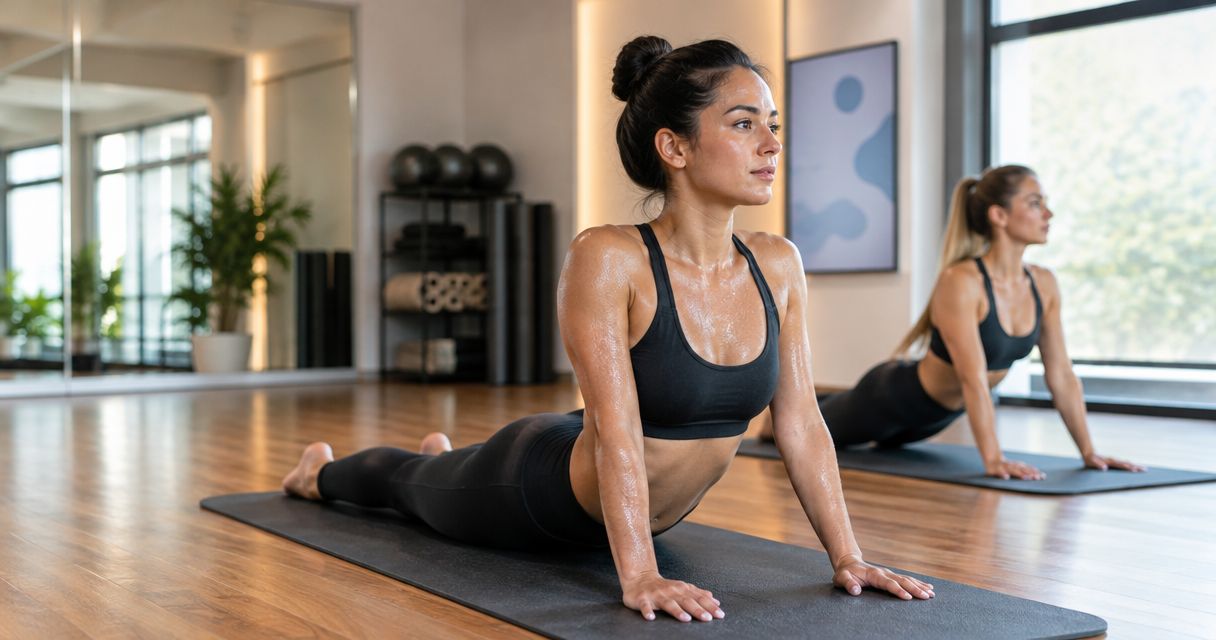

You should get clearance from the clinician managing your high blood pressure before doing hot yoga; controlled blood pressure alone does not establish that a heated class is safe for you. Heat, dehydration, exertion, and blood pressure medicines can affect how you tolerate the session. For your 2026 class plan, choose the environment your clinician recommends rather than treating a beginner label as medical clearance.
- Can you do hot yoga with high blood pressure? Ask your clinician before attending a heated class.
- Controlled hypertension does not automatically make heated yoga safe; medication effects and heat tolerance still matter.
- Unified Hot Yoga offers yoga and Pilates classes in American Fork; instructors do not replace medical clearance.
- Stop for dizziness, chest discomfort, unusual breathlessness, or weakness; severe symptoms require urgent medical help.
Can you do hot yoga with high blood pressure?
Only consider hot yoga after your treating clinician has assessed whether heat and exercise are appropriate for you. Bring recent blood pressure readings and a medication list, and explain that the activity takes place in a heated room. Clearance for ordinary exercise is not necessarily clearance for heated exercise.
Unified Hot Yoga offers yoga and Pilates classes in American Fork for practitioners of all skill levels. That describes the studio's audience, not medical suitability for hypertension.
Use this decision sequence before booking:
- Discuss your blood pressure control. Ask whether your recent readings, symptoms, and medical history support exercising in heat.
- Review your medicines. Ask whether any prescription affects sweating, hydration, heart rate, or your response to standing.
- Describe the actual class. Give your clinician the heat conditions and activity demands, rather than simply saying yoga.
- Get clear limits. Ask when to skip class, what symptoms mean stop, and whether a nonheated activity is the better starting point.
The American Heart Association's public guidance on physical activity supports exercise as part of blood pressure management. It does not establish that every exercise environment is appropriate for every person with hypertension.
Why this matters
A class can feel manageable to your muscles while still placing demands on your circulation. In heat, your body increases blood flow toward the skin to release warmth; sweating also causes fluid loss. Those changes matter when you already manage blood pressure or take medicines that affect fluid balance.
A lower reading after exercise is not proof that the workout was safe. Blood pressure can fall after activity, and an uncomfortable drop can cause lightheadedness or fainting. Do not use a post-class reading to justify pushing through symptoms during class.
For a 2026 beginner plan, separate your goals: becoming more active is one decision; adding a heated environment is another. You do not need to accomplish both in your first session.
Which class environment should you discuss with your clinician?
Start with the room conditions and physical demands, not the class name. A slower class in heat still involves heat exposure, while a nonheated class can still involve strenuous effort or prolonged muscle contractions.
| Option | Best for | Practical advantage | Limitation |
|---|---|---|---|
| Heated yoga after medical clearance | People specifically cleared for exercise in heat | Lets you explore a heated practice within an agreed plan | Adds heat exposure and fluid-loss considerations |
| Nonheated yoga after medical clearance | People advised to avoid heated rooms | Removes the heated-room component | Poses and effort still need to match your medical guidance |
| Another clinician-approved activity | People whose restrictions do not fit a yoga class | Lets the activity follow your health needs | Requires its own intensity and symptom guidance |
These are discussion options, not a ranking of treatments. Choose the activity that fits your restrictions, not the one that promises the most sweat. Sweating measures neither blood pressure control nor the quality of a workout.
Unified Hot Yoga fits American Fork readers seeking yoga and Pilates instruction, not medical assessment. Confirm the conditions of an individual class before deciding whether it matches your clinician's advice.
Do Vinyasa, Yin, or 26&2 labels settle the question?
No. Vinyasa generally links movement and breathing, Yin generally uses longer-held positions, and 26&2 identifies a structured yoga sequence. None of those names provides your personal exertion limit or establishes whether a particular room is suitable for you.
Ask about heat, pace, transitions, and available modifications. Do not assume that a class described as gentle, beginner-friendly, or accessible carries a medical endorsement for high blood pressure.
Are Hot Pilates, Barre, or Reformer Pilates automatic alternatives?
No. Hot Pilates still involves a heated environment, while Barre and Reformer Pilates have their own exercise demands. A different label does not remove the need to check intensity, breathing, and your individual restrictions.
Ask your clinician what features to avoid, then ask the studio which class matches those instructions. This keeps the decision grounded in your needs rather than an assumption that one discipline is always safer.
Why hot yoga tolerance varies
Two people with the same diagnosis do not necessarily have the same exercise plan. These factors explain why individual advice matters:
- Blood pressure control: Your usual readings and recent changes help your clinician judge whether your treatment plan needs attention before heated exercise.
- Medication effects: Diuretics and some other medicines can affect fluid balance or your response to heat. The CDC's Heat and Medications guidance describes these interactions; do not alter prescriptions yourself.
- Room conditions: Temperature, humidity, and ventilation influence how readily your body releases heat. Ask about the actual session rather than relying on the word infrared.
- Physical demands: Pace, sustained effort, and transitions between floor and standing positions affect how you experience a class.
- Other health conditions: Heart disease, kidney disease, and other conditions can change exercise advice and fluid recommendations.
- Your condition that day: Illness, vomiting, diarrhea, or existing dehydration are reasons to pause and seek advice rather than add heat exposure.
Infrared heating does not remove the need for cardiovascular precautions. The relevant question is how your body responds to the heated environment, not whether the heating method sounds gentler.
How should you prepare for a first class in 2026?
Use a simple preparation plan after you receive medical clearance. For supplies and general newcomer questions, review what to bring to your first hot yoga class, then confirm the studio's current requirements directly.
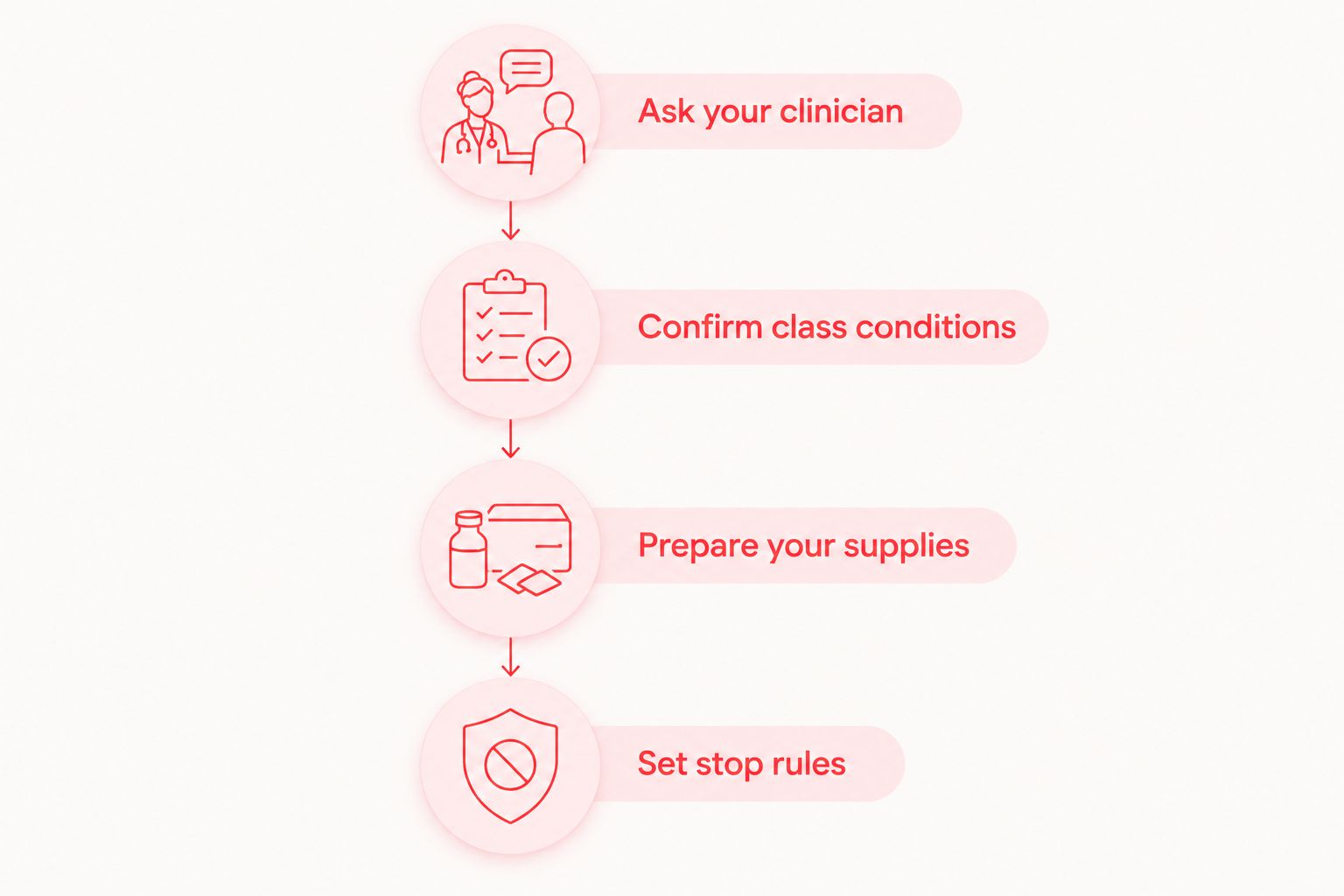
Ask your clinician
Describe the heated setting and ask for practical instructions you can follow. Useful questions include whether to check blood pressure before activity, which readings mean skip class, and whether your medication requires extra heat precautions.
If you have a fluid restriction, follow your clinician's directions. General advice to drink more water does not override a treatment plan for a heart or kidney condition.
Confirm class conditions
Ask the studio about the room's heat, the session's pace, and how to pause or leave if you feel unwell. Explain any exercise restrictions that affect participation without asking the instructor to interpret your medical history.
A helpful question is whether the instructor can accommodate the limits your clinician already set. That is different from asking the instructor to decide whether high blood pressure makes the class safe.
Prepare your supplies
Bring water unless your clinician has given different fluid instructions, along with comfortable clothing and any mat or towel the studio requires. Keep your medication schedule unchanged unless your prescriber tells you otherwise.
Avoid treating a large amount of water immediately before class as protection against heat illness. Hydration is only one part of preparation; it does not cancel the effects of heat or exertion.
Set stop rules
Decide before class that dizziness, chest discomfort, unusual breathlessness, weakness, or feeling faint means stopping. Tell the instructor you are unwell and move to a cooler area with assistance when needed.
Leaving early is an appropriate safety decision, not a failed class. Your first session should help you learn your limits, not test how long you can ignore them.
What should you do if you feel unwell during class?
Stop exercising immediately. Tell the instructor what is happening, and do not stand or walk unassisted if you feel faint. Move out of the heat with help when it is safe to do so.
Chest pain, severe shortness of breath, fainting, confusion, or stroke symptoms require urgent assessment. Call 911 for a suspected medical emergency; do not wait for a blood pressure reading before getting help. Do not drive yourself when you have emergency symptoms.
For your 2026 safety plan, know how to leave the room and how to ask for assistance before the session begins. A predetermined plan is easier to follow than trying to make decisions while dizzy or distressed.
What if your blood pressure is very high before class?
Skip the class. The American Heart Association's guidance on severe hypertension advises repeating a reading after at least 1 minute when blood pressure is higher than 180 mm Hg systolic and/or higher than 120 mm Hg diastolic.
If the reading remains that high without emergency symptoms, contact your healthcare professional promptly. If it accompanies chest pain, shortness of breath, weakness, numbness, vision changes, or difficulty speaking, call 911 immediately rather than delaying for another measurement.
Those thresholds describe an urgent medical situation, not the only reason to avoid exercise. Your clinician can set a lower, individualized limit for skipping a heated class.
How should you take a home reading?
The American Heart Association recommends sitting quietly for at least 5 minutes before measuring blood pressure, with your back supported, feet flat, and arm supported at heart level. Use a properly fitting upper-arm cuff and follow the device instructions.
Record readings as your clinician directs. A measurement taken while rushing out the door, talking, or recovering from exercise does not provide the same resting context.
FAQ
Can I do hot yoga if my blood pressure is controlled?
Controlled blood pressure does not automatically make hot yoga safe for you. Ask your treating clinician about heated exercise, medication effects, and any individual limits before attending.
Is nonheated yoga better if I have high blood pressure?
Nonheated yoga removes the heated-room component, but the practice still needs to match your medical restrictions. Ask your clinician about suitable effort, poses, and breathing rather than assuming every nonheated class is appropriate.
Can I take my blood pressure medicine before hot yoga?
Keep taking prescribed medicine as directed unless your prescriber changes the plan. Ask specifically about heat exposure; do not skip a dose or change its timing to attend class.
Does sweating mean my blood pressure is going down?
Sweating does not tell you whether your blood pressure is controlled. It is part of cooling your body, and fluid loss can contribute to dehydration.
Is infrared hot yoga safer for high blood pressure?
Infrared heating does not establish medical safety for someone with high blood pressure. Your clinician still needs to consider heat exposure, exertion, medication, and your health history.
What blood pressure reading means I should skip hot yoga?
Follow the exercise limits your clinician gives you. A reading higher than 180 mm Hg systolic and/or higher than 120 mm Hg diastolic requires attention under American Heart Association guidance, not participation in class; emergency symptoms require calling 911.
Should I hold my breath during difficult poses?
Avoid breath-holding and straining during exercise because they can raise blood pressure. Breathe continuously, reduce the effort, and follow the modifications your clinician and instructor have discussed.
One last thing
A beginner-friendly class and a medically appropriate class are different things. Being welcome in the room does not mean you need to complete every movement, tolerate every degree of heat, or stay until the end.
For your 2026 return-to-movement plan, let your clinician set the health boundaries and let your instructor help you work within them. Once that plan is clear, ask Unified Hot Yoga about a matching yoga or Pilates class and current membership information before committing.