Best for a quieter practice: Yin. Best for movement-focused attention: Vinyasa. Best for a repeatable sequence: 26&2. For your 2026 search for the best hot yoga classes for stress relief in Utah County, start with the kind of practice you enjoy—not the hottest room. Unified Hot Yoga offers these yoga styles alongside Hot Pilates, Barre, and Reformer Pilates in American Fork.
- For the best hot yoga classes for stress relief Utah County search, choose Yin when you prefer stillness.
- Unified Hot Yoga offers Yin, Vinyasa, and 26&2; choose by preferred pace, not promised health outcomes.
- Vinyasa suits movement-focused attention; 26&2 suits people who prefer a repeatable sequence.
- Hot Pilates, Barre, and Reformer Pilates are alternatives when exercise is your preferred way to take a break.
Why this matters
Stress relief is a reason to practice, not a guaranteed class outcome. A quieter format gives you less movement to follow; an active format gives you a physical task to concentrate on. Your preference matters more than a universal ranking.
Unified Hot Yoga is best for American Fork newcomers who want to choose among several yoga and Pilates formats at one studio. For your first visit in 2026, check the class schedule, then ask about the listed session’s pace, heat, and beginner options. A class name alone does not answer all three questions.
What makes the best hot yoga class for stress relief?
Use these criteria before choosing a format:
- Preferred pace: Decide whether stillness, flowing movement, or a familiar sequence sounds most appealing.
- Heat comfort: Ask about the actual session. Do not treat greater heat as evidence of greater benefit.
- Instruction: Tell the instructor you are new and ask how to modify or pause.
- Practical fit: Include travel from your Utah County neighborhood, check-in, and getting home—not just class time.
- Repeatability: Choose something you want to attend again rather than something you feel obliged to endure.
There is no budget winner here. Compare current membership terms only after identifying a format and schedule you can realistically use.
Classes at a glance
The order below ranks formats by the experience you want, not by measured stress reduction. The first three are yoga styles; the remaining three are exercise alternatives, not substitutes with identical instruction.
| Rank and format | Best for | Defining feature | Key limitation |
|---|---|---|---|
| 1. Yin | A quieter, stillness-focused practice | Longer-held, generally floor-based poses | Stillness and sustained sensation do not suit everyone |
| 2. Vinyasa | Focusing through movement | Transitions linked with breathing | Following transitions adds coordination demands |
| 3. 26&2 | A familiar, repeatable structure | A defined posture and breathing sequence | Less variety for people who want changing sequences |
| 4. Hot Pilates | An exercise-focused break | Pilates-based movement in heat | Not a quiet yoga practice |
| 5. Barre | Attention through controlled repetition | Barre-based strength and movement work | Repeated muscular effort is not passive relaxation |
| 6. Reformer Pilates | Concentrating on equipment-guided movement | A moving carriage and spring resistance | Equipment introduces a learning step |
1. Yin: best hot yoga choice for a quieter practice
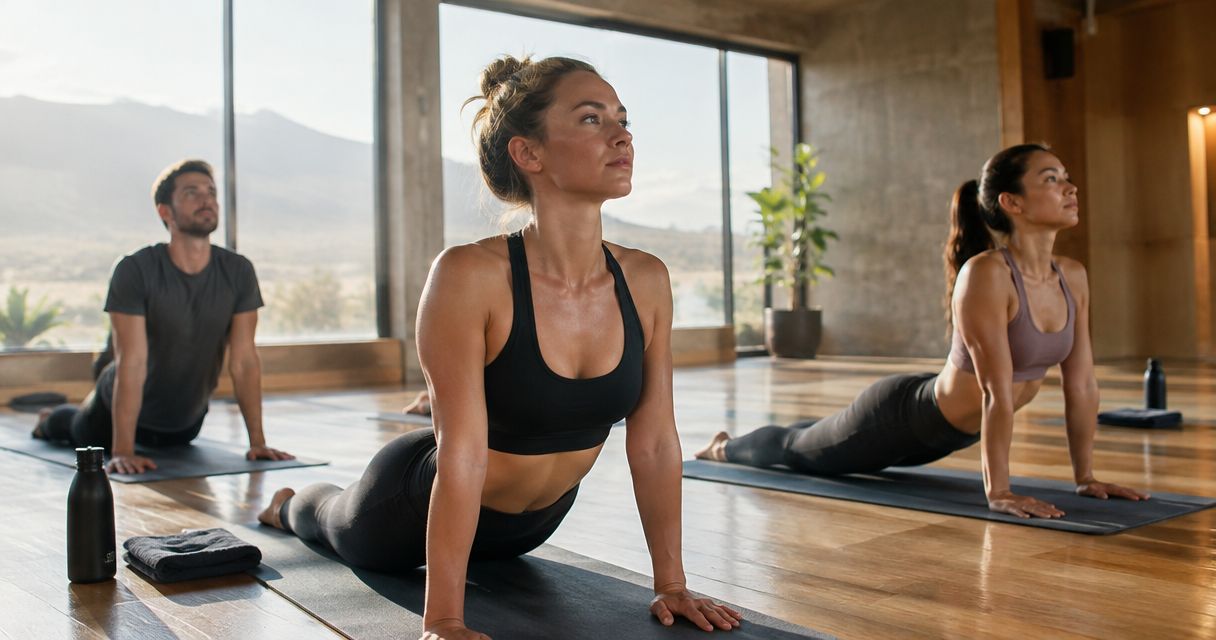
Yin generally uses sustained poses with fewer transitions than a flowing yoga class. Choose it when you want room to settle into a position rather than continuously follow a sequence. Confirm the particular session’s heat and setup before booking.
Yin pros:
- Fewer transitions to learn during your first visit.
- Time to notice breathing and physical sensation.
- A distinct alternative to movement-heavy exercise.
Yin cons:
- Remaining still can feel mentally demanding.
- A longer hold is not an instruction to tolerate pain.
Best for: You want a less movement-driven practice after a busy day.
Ask how to make each position comfortable and how to leave a pose. Do not judge the class by how deeply you stretch; choosing a manageable position is part of participating. If sustained stillness makes the experience less enjoyable, try a movement-based format instead.
Verdict: Buy—choose Yin first when quiet practice is your priority.
2. Vinyasa: best hot yoga choice for movement-focused attention
Vinyasa links movement with breathing, with transitions forming an important part of the practice. It suits you when following a physical sequence feels more appealing than holding still. The class label does not establish how fast a particular instructor teaches.
Vinyasa pros:
- Movement gives you an immediate task to follow.
- Transitions create a different experience from sustained holds.
- Sequences offer opportunities to practice coordination.
Vinyasa cons:
- Unfamiliar transitions require attention and learning.
- A fast-moving session is not everyone’s preferred introduction.
Best for: You want to focus on movement rather than spend much of class in stillness.
Before your first Vinyasa class, ask how beginners can simplify transitions and take breaks. You do not need to keep moving merely because others are moving. Following an appropriate variation is a better starting point than trying to match every shape.
Verdict: Buy—choose Vinyasa when movement helps you engage.
3. 26&2: best hot yoga choice for a repeatable sequence
The 26&2 format refers to 26 postures and 2 breathing exercises in a defined sequence. That structure distinguishes it from a changing Vinyasa flow. Confirm the studio session’s duration and heat rather than assuming every class using the name is identical.
26&2 pros:
- A defined sequence gives the practice a recognizable structure.
- Repetition lets you become familiar with what comes next.
- Individual postures provide a different focus from continuous flow.
26&2 cons:
- A fixed sequence offers less variety.
- Familiarity with the order does not remove the demands of heat or posture work.
Best for: You prefer knowing the structure rather than learning a different sequence each visit.
Treat your first class as an introduction, not a test of how many postures you can complete. Ask about modifications before starting. You can appreciate a consistent format without expecting identical comfort or performance every time.
Verdict: Buy—choose 26&2 when predictability is the main attraction.
4. Hot Pilates: best alternative for an exercise-focused break
Hot Pilates combines Pilates-based exercise with a heated environment. Choose it because you want active exercise, not because you expect the experience of a quiet yoga session. Ask about the specific class’s movements and beginner variations.
Hot Pilates pros:
- Gives you an exercise task to concentrate on.
- Offers a non-yoga option within the studio’s class range.
- Lets you explore whether active training suits your routine.
Hot Pilates cons:
- Exercise and heat both require attention to your comfort.
- It is not the closest match for a stillness-focused goal.
Best for: You want your break from daily demands to involve an active workout.
Separate your exercise preference from your heat preference. Enjoying Pilates does not automatically mean you enjoy practicing it in a heated room. Tell the instructor when you need a simpler variation or a pause.
Verdict: Hold—choose Hot Pilates when exercise, rather than quiet, is your priority.
5. Barre: best alternative for controlled repetition
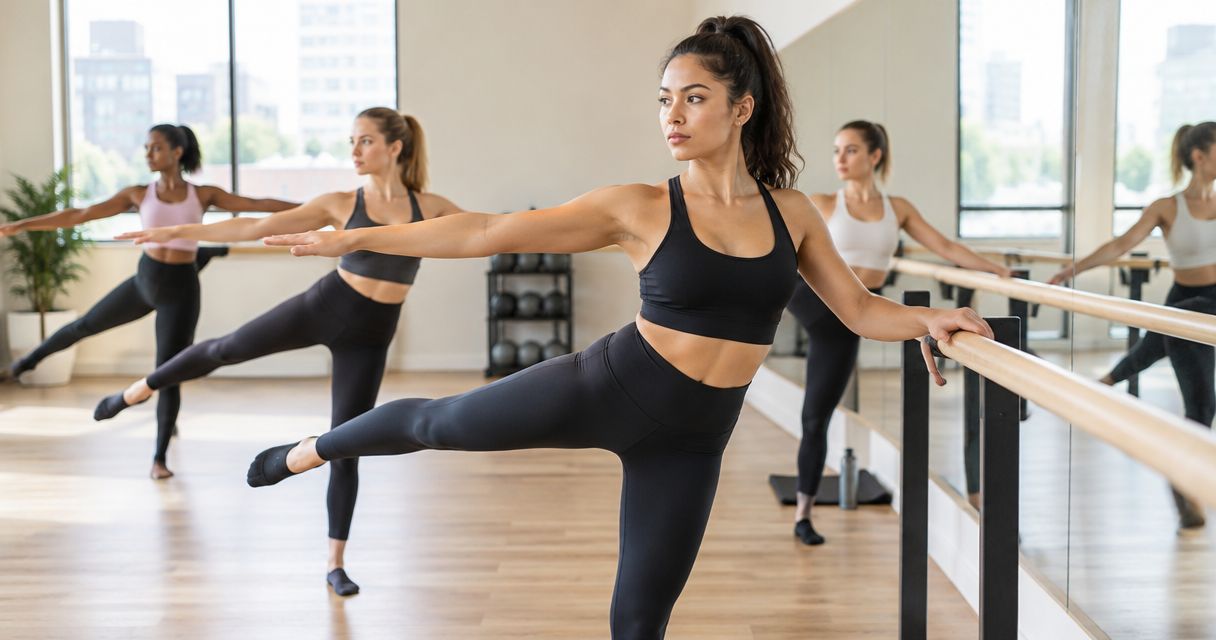
Barre commonly combines controlled, repeated movements with strength work using a ballet-style barre. It offers a different focus from yoga poses or a flowing sequence. Ask about the session’s setup instead of assuming that every Barre class uses identical equipment or temperature.
Barre pros:
- Repeated movements provide a specific task to follow.
- Offers a distinct alternative to yoga and Pilates formats.
- Encourages attention to position and control.
Barre cons:
- Repeated muscular effort can feel demanding.
- It does not reproduce the experience of a quiet yoga practice.
Best for: You prefer controlled repetition to flowing transitions or sustained yoga holds.
For a first class, prioritize understanding the movement over matching another participant’s range. Tell the instructor you are new. Ask how to adjust positions that feel uncomfortable rather than assuming smaller movements are automatically easy.
Verdict: Hold—choose Barre when controlled exercise is the experience you want.
6. Reformer Pilates: best alternative for equipment-guided focus
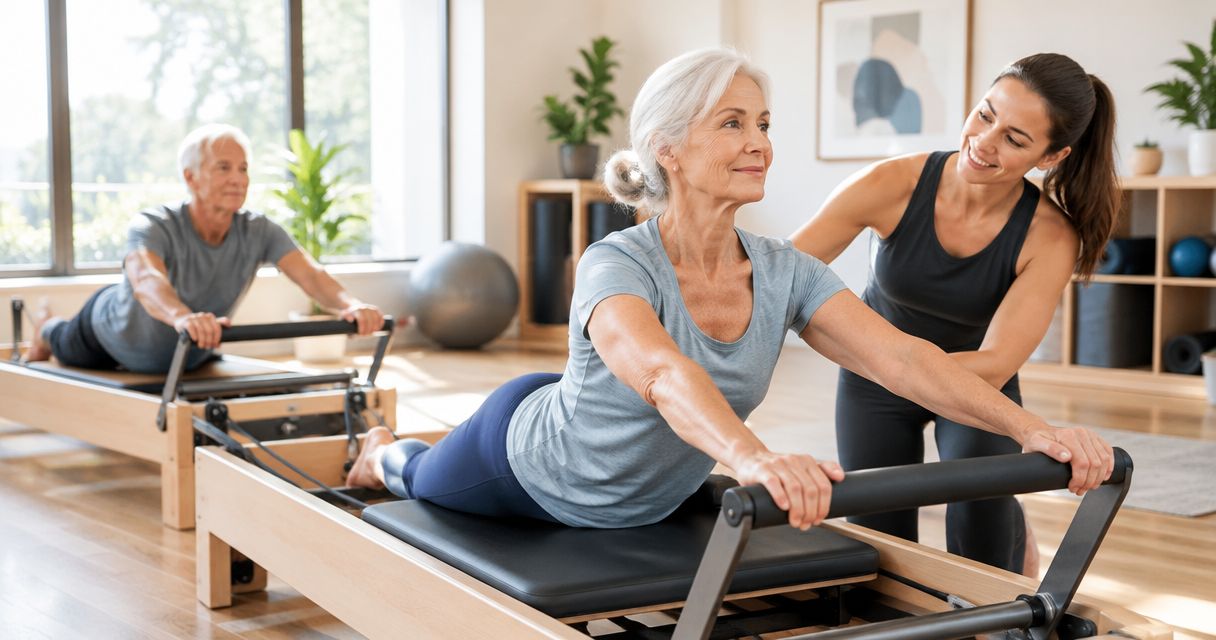
Reformer Pilates uses a moving carriage and springs to provide resistance and assistance. Learning how your body interacts with the equipment becomes part of the session. Do not infer the room temperature from the studio’s name.
Reformer Pilates pros:
- Equipment provides a concrete focus for movement.
- Spring settings are part of how exercises are configured.
- Offers a different experience from mat-based classes.
Reformer Pilates cons:
- Equipment requires an introduction.
- Learning the setup adds unfamiliar tasks to a first visit.
Best for: You enjoy learning a physical skill and want an equipment-based class.
Ask how first-time participants learn the carriage, springs, and safe transitions. Follow the instructor’s setup rather than adjusting unfamiliar parts independently. Choose this format for its movement experience, not on the assumption that equipment guarantees a better result.
Verdict: Hold—choose Reformer Pilates when equipment-based learning appeals to you.
How to prepare for your first class
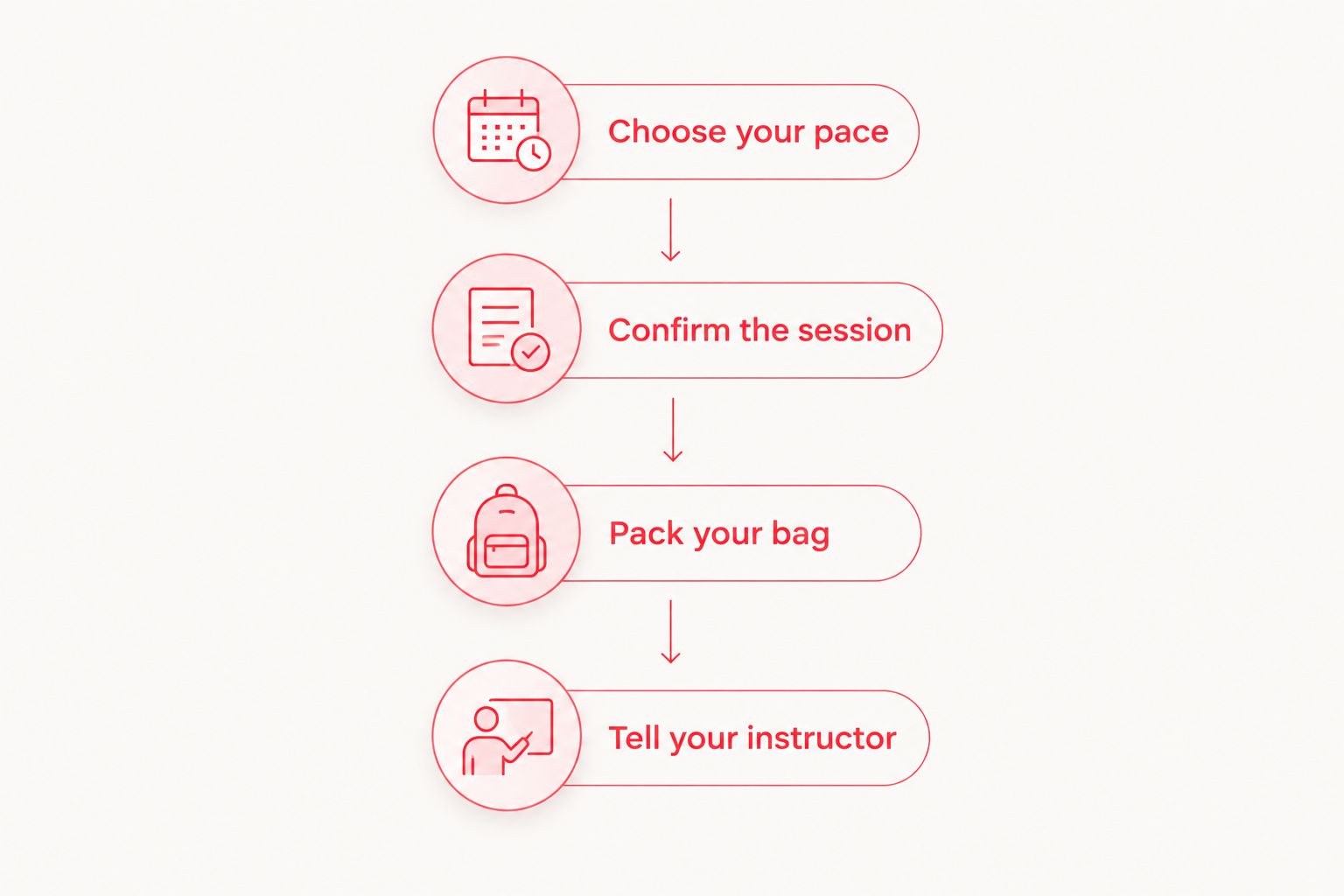
A manageable first visit starts before you enter the room. Use this sequence to reduce avoidable uncertainty without turning preparation into another demanding task.
Choose your pace
Pick the format that sounds inviting today. You do not need to select a permanent favorite or decide on a membership before experiencing a class.
Confirm the session
For a 2026 booking, verify the class name, start time, duration, heat, and any first-visit instructions. Ask what equipment is provided and what you must bring; do not assume mats or towels are included.
Pack your bag
Plan for water, comfortable movement clothing, and a towel. Confirm whether you need your own mat. Bring a change of clothes if that makes the trip home more comfortable.
Tell your instructor
Introduce yourself as a newcomer and mention relevant movement limitations. Ask how to pause, modify, or leave the heated room if needed. Arrive with enough time for the studio’s check-in process.
Drink water normally through the day rather than trying to compensate immediately before class. Avoid arriving uncomfortably full. Ask a healthcare professional about heated exercise if you are pregnant, have a relevant medical condition, or take medication that affects your response to heat.
Stop exercising if you feel dizzy, faint, nauseated, or otherwise unwell. Tell the instructor and move to a cooler place. Symptoms are not proof that the practice is working, and finishing the sequence is not more important than your wellbeing.
How we ranked these class formats
This 2026 guide ranks formats by pace, sequence structure, learning demands, and fit with a quieter or more active experience. It is not a measured comparison of clinical stress outcomes or a countywide ranking of studios.
Unified Hot Yoga offers all six formats discussed here. The recommendations distinguish their general characteristics without assigning unverified temperatures, class lengths, instructor credentials, or results to individual sessions.
Which class should you choose?
Start with Yin if your main goal is a quieter practice. Choose Vinyasa if you would rather keep moving, or 26&2 if a defined sequence makes a first visit feel more approachable.
Keep Hot Pilates, Barre, and Reformer Pilates in consideration when exercise is what you actually want. They are not lesser options; they answer a different preference. For a sustainable 2026 routine, include the journey from Lehi, Pleasant Grove, Highland, Orem, or your own neighborhood in the decision.
Before committing to a membership, compare current terms with the sessions you expect to attend. Choose from your real calendar, not an ideal week.
FAQ
What’s the best hot yoga class for stress relief in Utah County?
Yin is the first format to consider if you want a quieter, stillness-focused practice. Vinyasa suits movement-focused attention, while 26&2 suits a preference for a defined sequence. None guarantees stress relief.
Is Yin better than Vinyasa for a beginner?
Yin is a better starting choice when you prefer fewer transitions; Vinyasa is a better match when you want to keep moving. Neither class name alone establishes the difficulty of a particular session.
Can I join Unified Hot Yoga if I have never practiced?
Unified Hot Yoga offers classes for practitioners of all skill levels. Tell the studio you are new and ask which scheduled session best matches your preferred pace and comfort with heat.
What should I bring to my first hot yoga class?
Plan for water, comfortable movement clothing, and a towel, then confirm whether you need your own mat. Ask the studio what equipment is provided before your visit.
Is a hotter yoga class better for stress relief?
Greater heat is not a reason to assume greater stress relief. Choose a session whose heat and pace you can manage, and do not push through feeling unwell.
Should I choose Hot Pilates or yoga when I feel stressed?
Choose Hot Pilates when you want an exercise-focused session, and choose yoga according to whether you prefer stillness, flow, or a repeatable sequence. Your preferred activity is more useful for this decision than a promised outcome.
How much does a membership cost?
Check the studio’s current membership information before joining. Compare the terms with the classes and attendance pattern you expect to use rather than relying on an older quoted amount.
One last thing
A quieter-looking class is not automatically the easier experience. Holding still in Yin and learning transitions in Vinyasa present different challenges. After your first visit, ask yourself whether you felt comfortable pausing, understood the instructions, and wanted to return. Those observations give you a practical next move.