Best first choice for a slower-paced yoga class: Yin. Best for flowing movement: Vinyasa. Best for a consistent sequence: 26&2. For beginners comparing Yin yoga classes in Utah County in 2026, Unified Hot Yoga is an American Fork option offering Yin alongside other yoga and Pilates formats for all skill levels.
- For yin yoga classes for beginners Utah County, start with Unified Hot Yoga in American Fork and confirm class-specific guidance.
- Choose Yin for sustained postures, Vinyasa for flowing movement, or 26&2 for a consistent sequence.
- Ask about room heat, posture alternatives, and equipment before booking your first class.
- Choose a class time you can repeat before deciding on a studio membership.
Why this matters
Your first yoga class introduces more than poses. You are also learning the room, the instructor's cues, and how to adjust a position without feeling that you have fallen behind.
Unified Hot Yoga is best for American Fork beginners who want to explore Yin yoga alongside other yoga and Pilates formats. Start with the practice you actually want, not whichever class sounds most demanding.
This guide ranks class formats by their fit for different beginner preferences. It does not rank Utah County studios against one another or treat a slow class as automatically easy. For your 2026 class search, the useful question is simple: does the session match how you want to move and learn?
What makes the best beginner Yin yoga class?
Use these criteria before choosing a session. A class name is a starting point; the instructor's guidance and the conditions in the room matter too.
- Clear instruction: You should understand how to enter, adjust, and leave a posture without copying someone else's depth.
- Permission to modify: Look for guidance that welcomes a smaller range of motion, a different position, or a break.
- Suitable pacing: Yin emphasizes sustained positions rather than a continuous flow. Choose that experience deliberately.
- Heat clarity: Ask about the specific session's room conditions. A slower pace does not remove the need to consider heat.
- Practical repeatability: Choose a location and time that fit your normal week, including travel and changing afterward.
- Equipment guidance: Confirm what to bring and what the studio provides instead of assuming mats or props are included.
Check the class schedule for your intended date, then ask any questions the listing does not answer. Do not assume every class type runs at your preferred time.
Beginner yoga choices at a glance
These are different practice styles, not interchangeable versions of the same workout. The order favors the reader specifically seeking a first Yin class.
| Class format | Best for | What distinguishes it | Key limitation |
|---|---|---|---|
| Yin | Beginners seeking a slower, sustained-posture practice | Longer stays in predominantly floor-based positions | Stillness and sustained sensation require adjustment too |
| Vinyasa | Beginners who prefer movement between poses | Movement linked with breathing | Transitions add coordination demands |
| 26&2 | Beginners who prefer a consistent sequence | A set sequence of 26 postures and two breathing exercises | Repetition does not make every posture accessible immediately |
The table describes established features of each style, not a promise about an individual instructor's lesson. Confirm the session's emphasis and room conditions before booking.
1. Yin: best yoga format for a slower first class
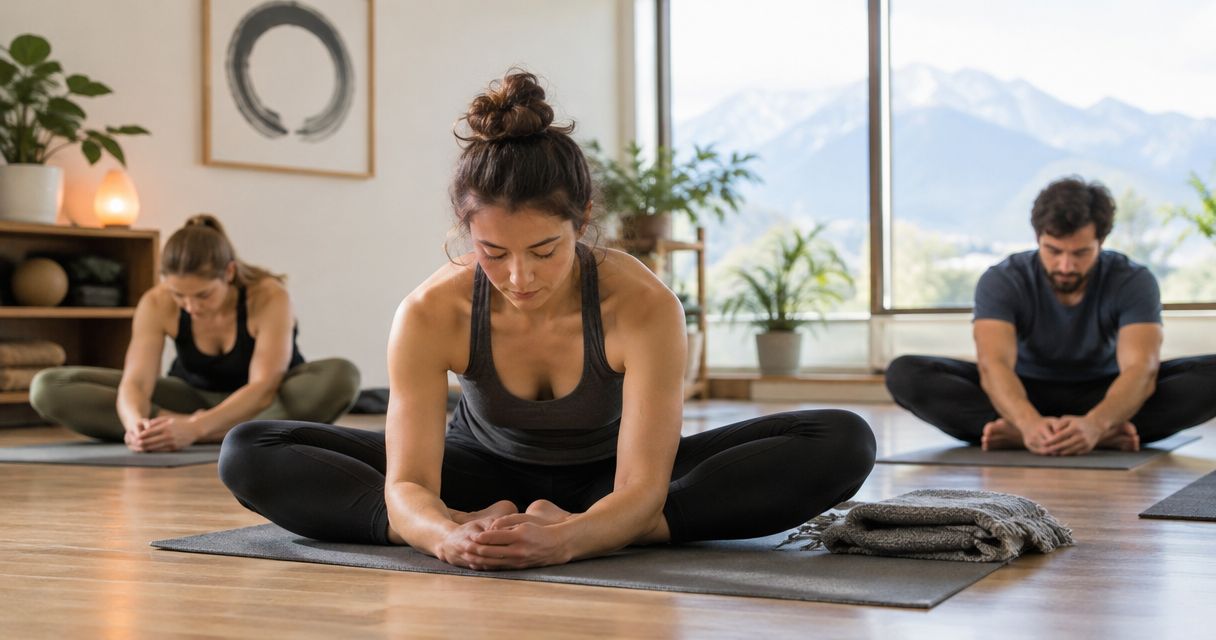
Yin yoga generally uses sustained, predominantly floor-based postures rather than a continuous standing flow. You spend time finding a manageable position and adjusting your effort while staying there.
That makes Yin a useful starting point if you dislike the idea of keeping up with frequent transitions. It does not mean you should stay motionless through discomfort. A shorter hold or a different position is a valid choice.
For your first Yin yoga class at Unified Hot Yoga, tell the instructor that you are new and ask how to signal when you need an alternative. Confirm the session's heat rather than assuming that Yin means an unheated room.
Yin pros:
- Fewer rapid transitions to follow than a flowing practice.
- Time to notice whether a position needs adjusting.
- A distinct alternative to movement-focused classes.
Yin cons:
- Sustained positions are not automatically comfortable.
- Quiet periods can feel unfamiliar if you prefer constant activity.
- A posture still needs modifying when it does not suit your body.
Best for: Beginners who specifically want a slower practice and are comfortable learning through sustained positions.
Verdict: Choose Yin first if a slower pace is your main priority.
2. Vinyasa: best yoga format for beginners who prefer movement
Vinyasa links movement with breathing and commonly connects poses into a flow. Instead of spending most of the session in sustained floor positions, you learn how one shape leads into another.
Choose Vinyasa if moving helps you stay engaged. Ask how the instructor supports newcomers, especially during transitions between standing positions and the floor.
You do not need to match another student's speed or range. However, learning a position while also learning the transition into it creates a different task from practicing Yin.
Vinyasa pros:
- Offers a movement-focused alternative to Yin.
- Introduces connections between breathing and movement.
- Suits readers who want to explore changing sequences.
Vinyasa cons:
- Transitions require attention as well as individual poses.
- A flowing class is not the same experience as sustained stretching.
- The class name alone does not establish its pace or difficulty.
Best for: Beginners who want movement between poses rather than extended stillness.
Verdict: Choose Vinyasa when flow—not longer holds—is what you want.
3. 26&2: best yoga format for beginners who prefer repetition
26&2 follows a defined sequence of 26 postures and two breathing exercises. Its repeated structure gives you a consistent framework to become familiar with over successive visits.
Choose this style if knowing the sequence appeals to you more than a changing flow. Expect to learn gradually; a fixed structure does not mean that every position will suit you without adjustment.
Ask about the specific class's room conditions, duration, and beginner guidance. Do not infer those details from the format's name alone.
26&2 pros:
- Provides a recognizable sequence to learn.
- Suits readers who prefer consistency over changing choreography.
- Offers a different structure from both Yin and Vinyasa.
26&2 cons:
- A repeated sequence offers less variation by design.
- Familiarity with the order does not replace posture instruction.
- The format is not a substitute for Yin if sustained floor-based practice is your goal.
Best for: Beginners who value a consistent framework and want to revisit the same sequence.
Verdict: Choose 26&2 for repetition, not because you expect it to be easier.
How these class formats are ranked
Yin ranks first because this guide answers a Yin-specific beginner search. Vinyasa and 26&2 follow as alternatives for readers whose actual preference is flowing movement or a consistent sequence.
The 2026 ranking uses practice structure, learning demands, heat questions, and practical attendance—not unverified reviews or promised results. The right class is the one that matches your preference and gives you appropriate instruction.
How to prepare for your first Yin class
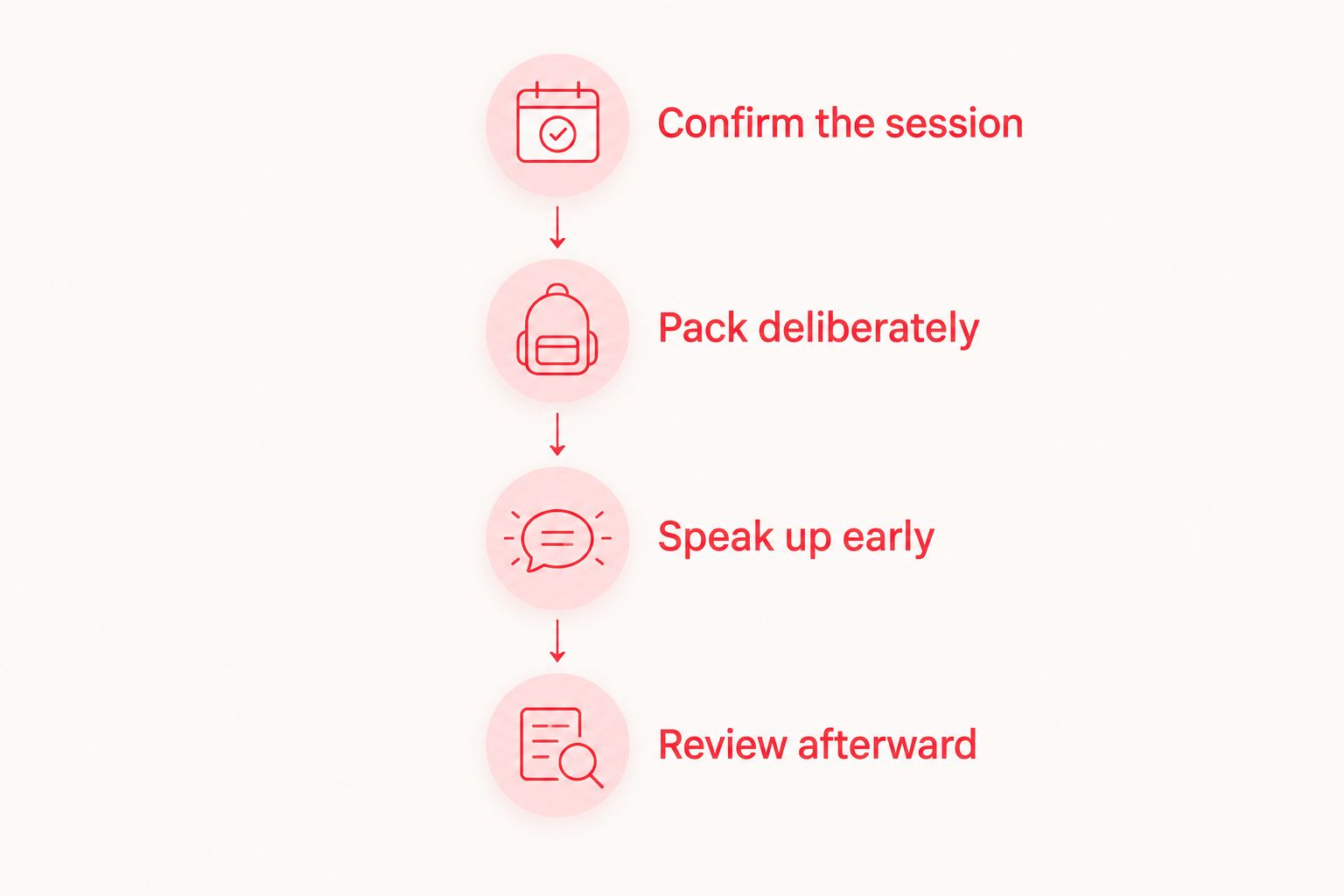
Confirm the session
Check the date, location, class name, and start time before making plans around the class. Ask whether the listed session is suitable for someone with no yoga experience.
Give yourself a 15-minute arrival buffer as a planning choice, then follow the studio's actual check-in instructions. This buffer is not a stated studio policy; it simply keeps travel delays from becoming your first-class experience.
Pack deliberately
Bring water and comfortable clothing that lets you change positions. Ask whether you need your own mat, towel, or other equipment, and whether the studio provides props.
Do not buy a collection of accessories before you know what the class uses. Start with the studio's instructions and your instructor's recommendations.
Speak up early
Tell the instructor this is your first Yin class before the practice begins. Mention any movement restrictions relevant to instruction, and ask how to take a break or request an alternative.
If you have a medical condition, an injury, or concerns about heat, seek individualized advice from a qualified healthcare professional. A class description cannot provide medical clearance.
Review afterward
Set aside 5 minutes after class to note what you learned: whether the pace suited you, whether instructions were clear, and whether you felt comfortable asking for help. Record the experience rather than grading your flexibility.
For a first-class plan in 2026, this sequence is more useful than trying to prepare by forcing unfamiliar stretches at home.
What to do during a beginner Yin class
Begin with a range of motion you can manage rather than the deepest position you can reach. Follow the instructor's setup, and ask about support or an alternative when the position does not work for you.
More sensation is not a better score. Do not push through sharp pain, numbness, or tingling to complete a hold; come out of the position and tell the instructor. Stop exercising if you feel unwell.
Stillness also takes practice. If you become restless, focus on understanding the instruction and finding a manageable position rather than judging yourself for not feeling relaxed.
Before another session, write down 1 question you want answered. A specific question—such as how to support a particular position—gives your instructor something practical to address.
Choosing a class or a studio membership
For beginners in American Fork, Lehi, Pleasant Grove, Highland, or elsewhere in Utah County, travel belongs in the decision. Consider the complete visit, not just the class start time.
Before choosing a membership in 2026, establish whether you want Yin as your main practice or as one part of a broader routine. Unified Hot Yoga also offers Hot Pilates, Barre, and Reformer Pilates, alongside Vinyasa and 26&2; those formats deserve their own beginner preparation rather than being treated as substitutes for Yin.
Use the studio's Prices page to review current intro offers and memberships when you are ready to join. Compare the terms with the classes you realistically intend to attend, and ask which class types each option covers.
Choose your first class
Check the schedule, then confirm the session's heat, equipment, and beginner guidance.
Which beginner yoga class should you choose?
Choose Yin if you came looking for a slower practice with sustained positions. Choose Vinyasa if you want flowing movement, or 26&2 if a consistent sequence appeals to you more.
For a first Yin yoga class at Unified Hot Yoga, confirm the session details and introduce yourself to the instructor. You do not need to demonstrate flexibility before you deserve guidance or a place in the room.
FAQ
What's the best Yin yoga class for a beginner in Utah County?
Choose a Yin class with clear instruction, posture alternatives, and room conditions that suit you. Unified Hot Yoga offers Yin in American Fork and welcomes all skill levels; confirm the specific session's beginner guidance before booking.
Can I do Yin yoga if I'm not flexible?
Yes, flexibility is not an entry requirement for Yin yoga. Start with a manageable range of motion and ask the instructor about support or alternatives rather than copying another student's position.
Is Yin yoga easier than Vinyasa for beginners?
Yin has fewer rapid transitions, but that does not make every position easier. Choose Yin for sustained postures and Vinyasa for flowing movement, then ask about the individual class's pace and instruction.
Are Yin yoga classes heated?
The name Yin does not establish a class's room temperature. Confirm the conditions of the specific session before booking, especially if heat affects your class choice.
What should I bring to my first Yin yoga class?
Bring water and comfortable clothing, and confirm the studio's mat, towel, and prop requirements. Ask what is provided before buying or packing extra equipment.
How long should I stay in a Yin yoga pose as a beginner?
Follow the instructor's guidance and leave a position when it is not manageable for you. Do not force yourself to complete a hold through sharp pain, numbness, or tingling; tell the instructor and request an alternative.
Should I buy a membership before my first Yin class?
Establish that the class style, schedule, and travel fit your routine before choosing a membership. Review the studio's Prices page for current options and confirm which class types the membership covers.
One last thing
A slower class still asks you to make decisions. Learning when to adjust, ask a question, or leave a position is part of participating—not evidence that you are doing Yin incorrectly.
For your first class in 2026, make the goal practical: understand the instructions and leave knowing whether you want to return. That is a more useful beginning than reaching the deepest stretch in the room.