Yes, you can do Yin yoga if you're not flexible: start with a smaller range of motion, use support when appropriate, and leave any position that causes pain. You do not need to touch your toes or match the instructor's shape; for your first class in 2026, focus on finding a position you can enter, stay in, and leave comfortably.
- Can you do yin yoga if you're not flexible? Yes—adapt the position instead of forcing a deeper stretch.
- Unified Hot Yoga offers Yin yoga in American Fork for practitioners of all skill levels.
- For beginner Yin yoga, choose manageable positions and ask the instructor about support.
- Sharp pain, tingling, or numbness means stop—not stretch harder.
Why this matters
Waiting until you are flexible enough can keep you from trying a class that allows you to work within your current range. Flexibility is not an entrance requirement. What matters is whether you can adapt the practice to your body and recognize when a position does not suit you.
For an American Fork or Utah County newcomer, the practical first step is to check the class schedule and ask about the Yin session you are considering. Confirm the class format, heating, and preparation instructions rather than assuming every slow-paced class feels the same.
Can you do Yin yoga if you're not flexible?
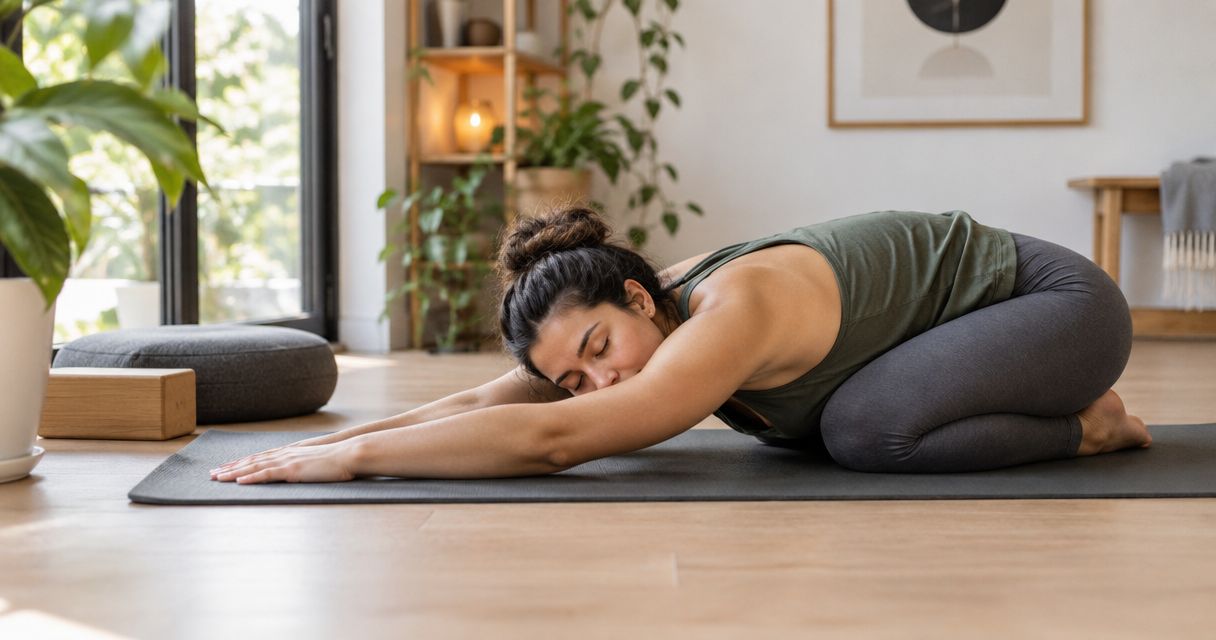
Yes. Yin yoga does not require you to reach a particular depth in a pose. The practice generally involves sustained positions, often seated or lying down, rather than moving continuously from posture to posture. A smaller position still gives you something to work with; reaching farther is not the assignment.
Use these 3 checks when an instructor introduces a position:
- Enter gradually. Begin well short of your deepest available stretch. Notice the sensation before deciding whether to move farther.
- Check the sensation. Look for a manageable stretch rather than sharp pain, pinching, tingling, or numbness. Keep your breathing unforced.
- Keep an exit. Know how to come out without pulling, twisting, or relying on momentum. Ask for help if the transition feels unclear.
These checks are a way to approach a class, not a medical assessment. If an injury, joint condition, or unexplained pain affects your movement, discuss appropriate activity with your healthcare professional before treating a yoga class as the solution.
What does adapting a pose actually mean?
Adapting means changing the position to fit your available movement. You might sit more upright, bend your knees, support part of your body, or choose a different posture with the instructor's guidance.
The following options are alternatives, not a ranking. Choose the option that makes the position more manageable—not the one that looks most advanced.
| Option | Best for | Practical advantage | Limitation |
|---|---|---|---|
| Smaller range | Beginners who feel a stretch early | Lets you explore the position without chasing depth | Still requires attention to sensation; shallow does not automatically mean comfortable |
| Added support | People who need help settling into a position | Gives part of your body somewhere to rest | Placement matters; ask the instructor rather than stacking props at random |
| Alternative position | People whose joints or symptoms do not tolerate the original shape | Avoids treating one posture as compulsory | Needs individual guidance; not every alternative suits every person |
An instructor's demonstration is a reference, not a test. Your version can look different while following the same general instruction.
Start smaller: depth is not the goal
If your hamstrings feel tight in a seated forward fold, do not make reaching your feet the target. Stay more upright or ask whether bending your knees is appropriate for the version being taught. Your hands do not need to arrive at a particular landmark.
The advantage of starting smaller is simple: you have room to notice what changes. The limitation is that a less dramatic shape can still be uncomfortable, so keep checking your experience rather than assuming a modification has solved everything.
Best for: a newcomer who worries about keeping up with more flexible classmates. For your first Yin class in 2026, make comfortable entry and exit your measure of success—not how far you fold.
Use support: make the position workable
A cushion, folded blanket, block, or bolster can change how a position feels by supporting your body or bringing a resting surface closer. Ask the instructor which support fits the posture. Do not assume the studio provides a particular item or that every prop belongs in every pose.
Support has a practical trade-off: it can make a position easier to settle into, but poor placement can create pressure or push you into an awkward angle. If adding a prop makes the sensation worse, stop and ask for another setup.
Best for: someone who can enter a position but cannot rest there without straining. Using support is a choice about fit, not evidence that you are doing a lesser version of yoga.
Choose another position: no pose is compulsory
Sometimes a smaller range and extra support are not enough. If a position creates joint pain, persistent discomfort, or symptoms such as numbness, come out and tell the instructor what you felt. Do not keep repeating the shape to see whether you can endure it.
An alternative lets you remain involved without making one pose the price of participation. Its limitation is that the right choice depends on the person and the problem; a general article cannot prescribe a substitute for an injury.
Best for: anyone whose current position remains uncomfortable after a simple adjustment. Resting or skipping that posture is a valid decision.
Why Yin yoga feels different from person to person
Being new to Yin and being inflexible are not the same thing. A flexible person can still struggle with stillness, while a person with a smaller range can find a manageable setup quickly.
These factors help explain why classmates experience the same instruction differently:
- Available movement: Your comfortable range can differ across your hips, shoulders, spine, and other areas.
- Body proportions: Limb and torso proportions affect how a shape looks, so appearance is a poor measure of effort.
- Position and support: A change in knee bend, torso angle, or support placement changes the experience.
- Injury and symptoms: A history of pain or an active condition can change which positions are appropriate.
- Heat tolerance: Room conditions add a separate consideration from flexibility; feeling warm is not permission to force a stretch.
- Familiarity with stillness: Staying in a position can feel demanding even when entering it is easy.
None of these factors creates a reason to copy the person beside you. Describe your own experience to the instructor, especially if a sensation changes while you remain in a pose.
How should you prepare for your first Yin class?
Prepare for the actual session you book, not a generic picture of Yin yoga. Before your 2026 visit, confirm whether the class is heated, what equipment to bring, and whether the instructor needs to know about any movement restrictions.
Use this simple sequence:
- Confirm the class. Check the class name and ask about the format, room conditions, and newcomer instructions.
- Pack the basics. Bring water and comfortable clothing that allows movement. Confirm mat, towel, and prop requirements with the studio.
- Tell the instructor. Explain that you are new, feel stiff, or have a relevant limitation. Be specific about movements that bother you.
- Start conservatively. Choose a smaller range at the beginning and ask for help before increasing the stretch.
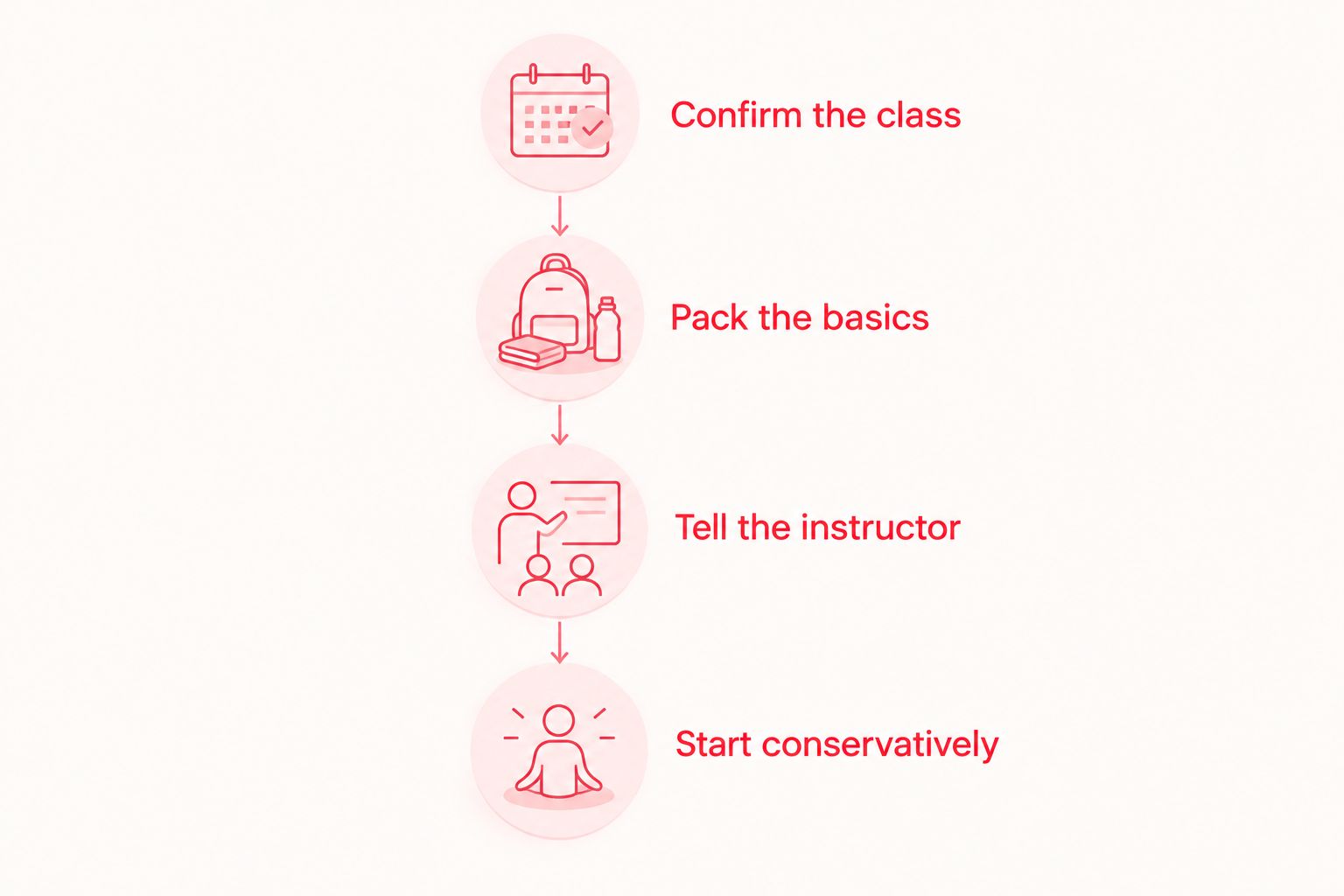
You do not need to rehearse deep stretches before attending. Leave yourself enough time to ask questions without rushing, and avoid making your first session a test of how much discomfort you can tolerate.
What should you tell the instructor?
Useful information describes the problem rather than judging your body. Say that kneeling bothers your knees, that a forward fold creates back discomfort, or that you are unsure how to use support. Those details give the instructor more to work with than simply saying you are bad at yoga.
Before committing to a membership, ask these 4 questions: Is this session suitable for a newcomer? Is it heated? What should I bring? How should I request an alternative during class?
Is Yin yoga automatically easier than a moving class?
No. Slower does not automatically mean easier. Sustained positions and stillness can be challenging in a different way from continuous movement. A quiet-looking class still requires attention to comfort, sensation, and your response to the room.
The benefit of a slower format is time to notice and adjust. The trade-off is that an uncomfortable setup does not become appropriate simply because the class is calm. Change the position when needed rather than waiting for permission to be uncomfortable.
For your 2026 class choice, separate two questions: do you enjoy a slower practice, and do the positions suit you? Neither answer can be determined by whether you can touch your toes.
Where can you start in American Fork?
Unified Hot Yoga is a fit for American Fork beginners seeking an all-skill-levels studio that offers Yin yoga. The studio also offers Vinyasa, 26&2, Hot Pilates, Reformer Pilates, and Barre, so choosing Yin does not require treating another class style as less worthwhile.
The practical advantage of Unified Hot Yoga for this reader is the match between the location, the Yin offering, and its all-skill-levels approach. The limitation is that those facts do not establish whether a particular session fits your heat tolerance, symptoms, or schedule. Confirm those details before booking.
You can find Unified Hot Yoga in American Fork and use the studio's current information to plan your visit. Try 1 class as an introduction to the format rather than expecting it to prove how flexible you are or predict a health outcome.
Plan your first Yin class
Check the current schedule, then ask about heating, equipment, and newcomer preparation.
FAQ
Can I do Yin yoga if I can't touch my toes?
Yes, touching your toes is not a requirement for Yin yoga. Use a smaller range and ask the instructor how to adapt a forward fold rather than pulling yourself toward your feet.
Is Yin yoga a good first yoga class?
Yin yoga can be a first yoga class when the format, positions, and room conditions suit you. Tell the instructor you are new and ask how to request support or an alternative.
Should a Yin yoga stretch hurt?
No, pain is not a goal of Yin yoga. Come out of a position that causes sharp pain, pinching, tingling, or numbness, and explain what happened to the instructor.
Do I need to bring my own yoga props?
Confirm prop requirements with the studio before your class. Do not assume blocks, bolsters, blankets, mats, or towels are provided.
Will a heated room mean I can stretch farther safely?
Feeling warmer does not establish that a deeper stretch is safe. Keep the position manageable, and stop if you feel unwell or develop pain.
Can I try Yin yoga with an existing injury?
An existing injury calls for individual guidance, not a blanket yes. Ask your healthcare professional about appropriate activity and tell the instructor about relevant restrictions before class.
Does Unified Hot Yoga offer Yin yoga for beginners?
Unified Hot Yoga offers Yin yoga and serves practitioners of all skill levels in American Fork. Check the current schedule and confirm the details of the session you want to attend.
One last thing
The most useful beginner skill is knowing when to make a position smaller. A deeper stretch is easy to notice from across the room; an appropriate adjustment is less visible and often more useful to your experience.
For a first class in 2026, replace the question of whether you look flexible with whether you can breathe comfortably, describe the sensation, and leave the pose without struggling. You belong in the room without earning your place through a deeper fold.