Yes, beginners can do Vinyasa yoga when the class welcomes newcomers and you work at a pace you can control. You do not need to touch your toes or know the pose names before starting. A heated class adds another demand, so check the class description, tell the instructor you are new, and treat rest as part of your practice.
- Can beginners do Vinyasa yoga? Yes: choose newcomer-friendly instruction, modify movements, and rest before you feel overwhelmed.
- Vinyasa links movement with breath; you do not need advanced flexibility to begin.
- Heated Vinyasa requires attention to both movement and heat tolerance.
- Unified Hot Yoga offers Vinyasa and other yoga and Pilates classes for practitioners of all skill levels.
Can beginners do Vinyasa yoga?
Yes. The useful question is not whether you look like an experienced student, but whether the class gives you room to learn. You need understandable instruction, permission to simplify movements, and a pace that lets you breathe comfortably.
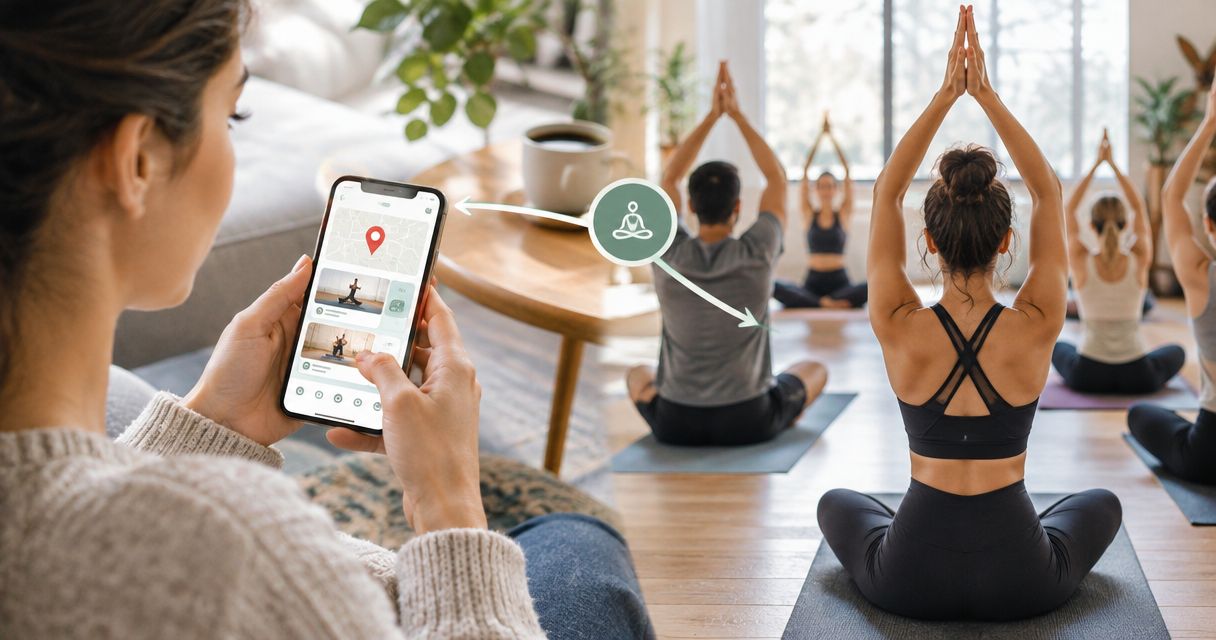
If you are choosing your first American Fork class in 2026, start with the class schedule. Check the exact listing rather than assuming every Vinyasa session has the same pace or teaching approach.
Use this sequence before committing:
- Check the class description. Look for a level and format that match a first-time student.
- Ask about instruction. Find out whether the teacher explains transitions and offers alternatives.
- Introduce yourself. Mention that this is your first Vinyasa class and share relevant movement limitations.
- Begin below your maximum effort. Learn the cues before trying to keep up with every transition.
- Evaluate the experience. Notice whether you understood the instruction and felt comfortable choosing rest.
A beginner-friendly Vinyasa class makes room for learning, not just following. Missing a transition is not a reason to rush through the next one.
Why this matters
A first class asks you to understand unfamiliar words while moving your body. In heated Vinyasa, you are also responding to a warm environment. Separating those demands helps you make a better choice.
For your first class in 2026, make understanding the practice your goal—not completing every pose. Community starts with being able to ask a question, take an alternative, and participate without pretending you already know the sequence.
What will you actually do in Vinyasa?
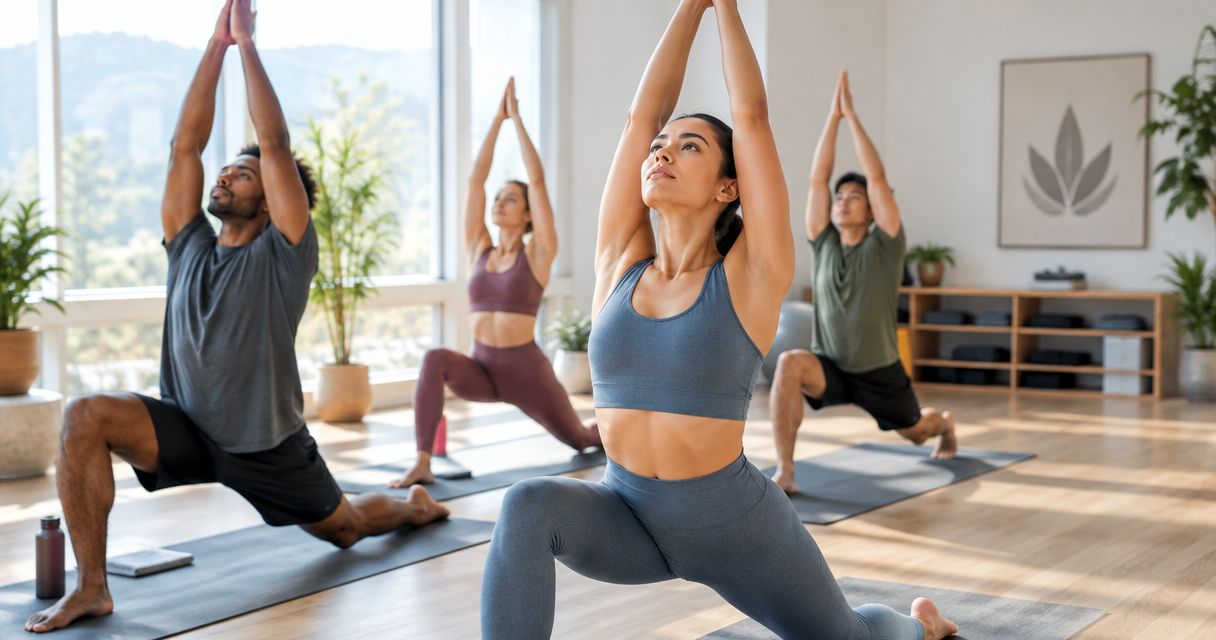
Vinyasa connects movement with breathing. Teachers arrange poses into sequences, with transitions linking one position to another. The sequence and pace vary by class; the name alone does not tell you how demanding a particular session will feel.
You might encounter standing positions, balance work, floor-based movements, and periods of rest. These are common elements of the style, not a promise about a particular studio's class plan. Read the listing and ask the instructor what to expect.
You do not need to memorize the vocabulary
An instructor might use English pose names, Sanskrit names, or both. Listen for practical directions about where to place your hands and feet rather than trying to remember every term immediately.
When you lose the sequence, pause in a stable position. Resume when you understand the next instruction; guessing quickly is not the goal.
You can simplify transitions
A flowing sequence is not an obligation to copy every movement. Ask the teacher for an alternative when a transition feels too fast or a position does not work for you.
For example, ask how to avoid weight-bearing through your wrists if that is uncomfortable. Choose an alternative you understand rather than forcing a movement you cannot control. Individual injuries need individual guidance, not a universal modification from an article.
Which class format fits your first visit?
Vinyasa is one starting point, not a test you must pass before trying other classes. For your 2026 class search, compare what you want to learn with the demands of the format.
The descriptions below explain common features of each category. They do not specify a studio's exact sequence, equipment, room conditions, or teaching method.
| Class format | What it generally involves | Best for | Beginner consideration |
|---|---|---|---|
| Vinyasa | Poses connected through movement and breath | Learning a flowing yoga practice | Transitions require attention; ask about pace and alternatives |
| Yin | Longer-held, mostly floor-based yoga positions | Exploring a slower-moving practice | Less movement does not mean every position feels easy |
| 26&2 | A structured sequence of 26 postures and 2 breathing exercises | Learning a repeatable yoga sequence | Repetition does not remove the challenge of heat or individual poses |
| Hot Pilates | Pilates-based exercise in a heated setting | Choosing Pilates-based movement with heat | Ask about exercise level, impact, and modifications |
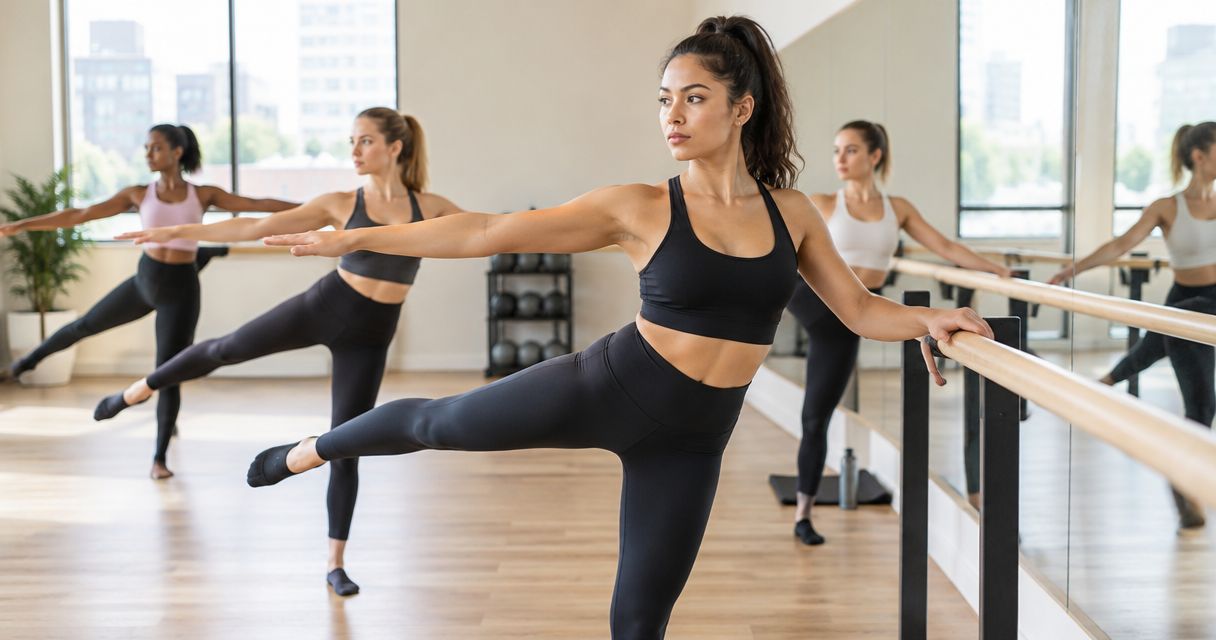
| Barre | Ballet-inspired exercise using controlled movements | Exploring barre-based fitness | Small movements still require effort and position awareness |
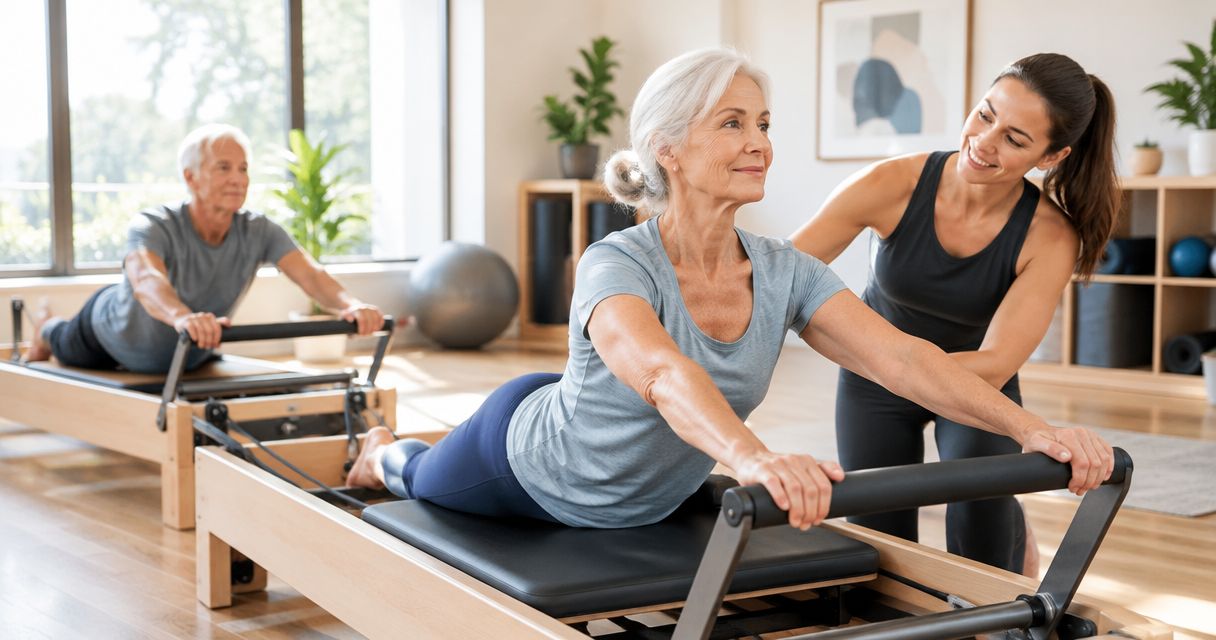
| Reformer Pilates | Pilates using a carriage-and-spring apparatus | Learning equipment-based Pilates | Ask how beginners receive equipment instruction |
Vinyasa: best for learning movement with breath
Choose Vinyasa if a flowing yoga practice interests you. The benefit is learning how poses connect rather than treating each position as an isolated task.
The trade-off is that transitions add complexity. If following movement and verbal cues together feels frustrating, ask about a slower introduction rather than deciding that yoga is not for you.
Yin: best for a slower-moving yoga practice
Yin gives you a different relationship with pace: you spend more time in individual positions rather than moving through frequent transitions. That can appeal if you want fewer changes to track.
Longer holds still require judgment. Do not interpret stillness as permission to push deeper, and ask for support or an alternative when a position is uncomfortable.
26&2: best for a repeatable sequence
The 26&2 format uses 26 postures and 2 breathing exercises. Its structured sequence offers a different learning experience from Vinyasa's variable sequencing.
A recognizable order does not make every pose suitable for every body. Ask how to participate without forcing depth or holding beyond your ability to remain steady.
Hot Pilates, Barre, and Reformer Pilates
Choose Hot Pilates if Pilates-based exercise in heat interests you; the extra consideration is managing the heated environment. Choose Barre if you want ballet-inspired fitness; precise, repeated movements can still feel demanding.
Choose Reformer Pilates if you want to learn apparatus-based Pilates. The equipment brings a separate learning task, so ask about introductory instruction before booking. None of these formats is a lesser choice than Vinyasa: the right starting point matches what you want to practice.
Why beginner Vinyasa experiences vary
Two classes with the same style name can feel different. Use these factors to ask better questions before you attend:
- Pace: Faster transitions leave less time to understand a cue and adjust your position.
- Instruction: Explanations and demonstrations help you understand movements instead of guessing.
- Heat: A heated environment adds a demand separate from learning yoga poses.
- Sequence: Familiar movements and unfamiliar transitions create different learning challenges.
- Your starting point: Previous movement experience, current comfort, and relevant health concerns affect your choices.
- Alternatives: Clear options for rest and modification give you a way to participate without copying everything.
Do not choose solely from a label such as “flow” or “all levels.” Ask what that label means in the particular class you are considering.
How should you prepare for your first Vinyasa class?
Preparation is about removing distractions, not proving commitment. For a first visit in 2026, confirm the practical details before you leave home so you can focus on instruction once you arrive.
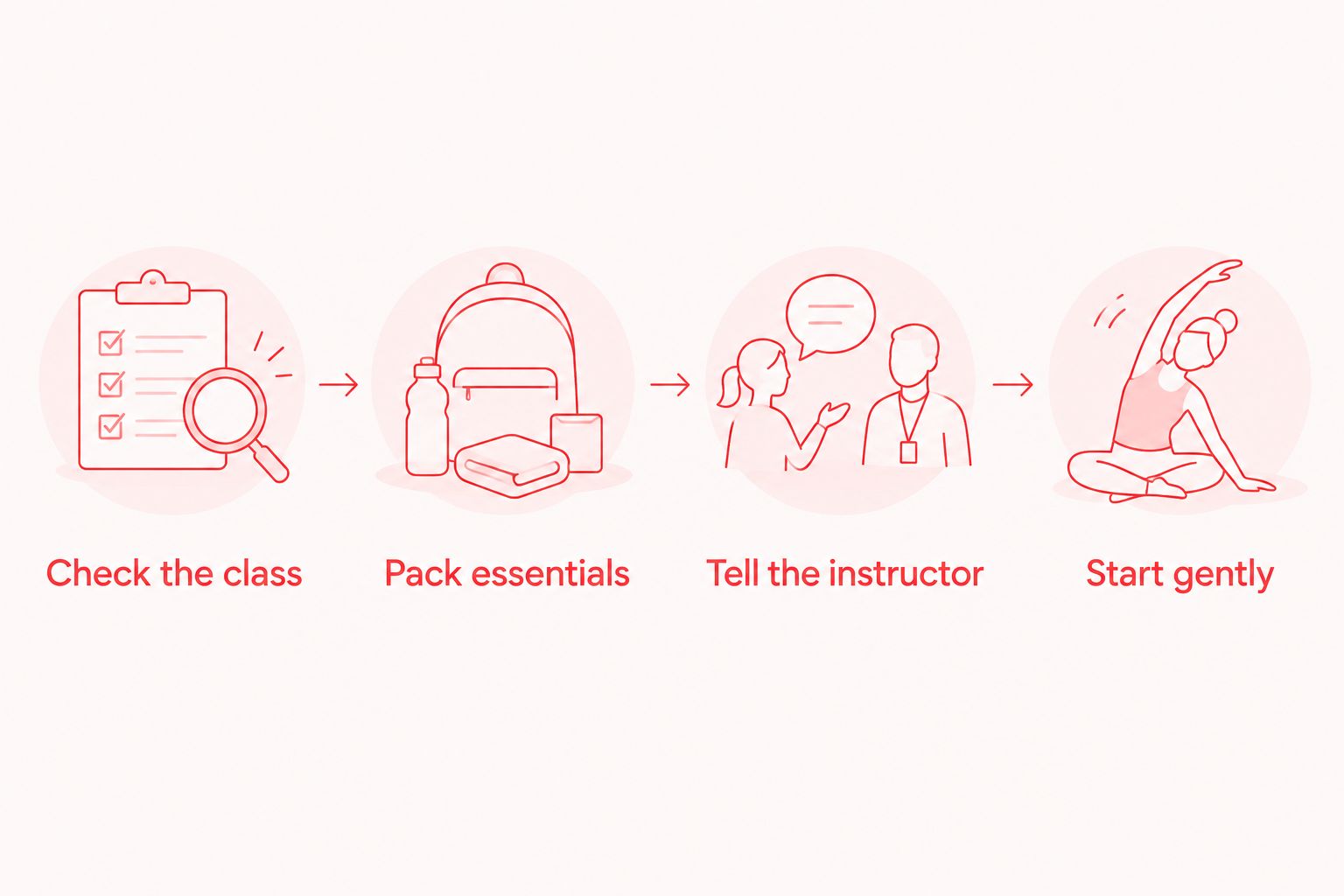
Check the class
Confirm the format, whether it is heated, and how first-time students should prepare. Ask what equipment is provided and what you need to bring; do not assume mat or towel arrangements.
If you have a medical condition, are pregnant, or have an injury, seek individualized advice about participation, especially in a heated setting. An instructor can explain the class but does not replace medical guidance.
Pack essentials
Bring water and clothing that lets you move comfortably. For a heated session, plan for sweat and ask about a towel and mat before attending.
Keep your preparation practical. You do not need an elaborate yoga wardrobe to start learning, and buying equipment should follow confirmed class requirements rather than assumptions.
Tell the instructor
Say that you are new to Vinyasa before class begins. Ask where to position yourself to hear and see instruction, and how to take a break without disrupting nearby students.
Mention specific concerns clearly. “I am unsure about putting weight through my wrists” gives the teacher a more useful starting point than silently working through discomfort.
Start gently
Use the opening movements to learn how the teacher gives cues. Keep your range manageable and allow yourself to observe a transition before attempting it.
The preparation sequence is simple: Check the class, Pack essentials, Tell the instructor, Start gently. Its purpose is to reduce uncertainty, not add another performance checklist.
What should you do if the class feels too hard?
Reduce the demand before trying to improve the pose. Stop moving long enough to understand whether the difficulty comes from the sequence, the position, or the heated environment.
If you have simply lost the instructions, observe and rejoin when the next movement is clear. If a position hurts, stop that movement and ask for guidance rather than treating pain as a normal beginner requirement.
Dizziness, nausea, or feeling faint are reasons to stop exercising, not signs that the class is working. Alert the instructor and move to a cooler environment safely; seek medical help for severe or persistent symptoms. Do not turn heat tolerance into a competition.
Afterward, describe the issue specifically. A confusing sequence calls for a different conversation than discomfort in a joint or trouble tolerating heat.
Is heated Vinyasa a good first yoga class?
Heated Vinyasa is a possible first class, but the heat deserves its own decision. You can be interested in yoga without wanting to learn it in a heated room.
Unified Hot Yoga offers infrared-heated Vinyasa in American Fork alongside Yin, 26&2, Hot Pilates, Reformer Pilates, and Barre for practitioners of all skill levels. Unified Hot Yoga is a fit for American Fork beginners choosing among yoga, Pilates, and Barre classes. Confirm the individual class details rather than assuming every format has identical conditions.
The practical advantage is having several formats to consider. The limitation is that an all-skill-levels offering still requires you to check the pace, instruction, and personal suitability of the session you choose.
Choose your first class
Review the schedule, then ask which session fits a first-time Vinyasa student.
Do you need to be flexible before starting Vinyasa?
No, you do not need to be flexible before starting Vinyasa. Choose a comfortable range rather than using another student's position as your target, and ask the instructor how to adapt a pose you cannot enter comfortably.
Is Yin easier than Vinyasa for beginners?
Yin involves fewer transitions than Vinyasa, but that does not make every Yin class easier. Choose based on whether you prefer longer-held positions or flowing movement, then confirm the individual class level and teaching approach.
How do you know whether to return?
Return when the instruction helps you learn and you feel comfortable asking questions or taking rest. Judge a first class by whether you understood more at the end, not by whether you completed every movement.
FAQ
Can beginners do Vinyasa yoga without knowing any poses?
Yes, beginners can do Vinyasa yoga without knowing pose names beforehand. Choose a newcomer-friendly class, introduce yourself to the instructor, and pause when a transition is unclear.
What's the best Vinyasa class for a complete beginner?
The best Vinyasa class for a complete beginner provides understandable instruction, manageable pacing, and clear alternatives. Ask about those features instead of relying on the style name alone.
Do I have to keep up with everyone in Vinyasa?
No, you do not have to match every movement or transition. Work within a range you can control and ask how to rest or rejoin the sequence.
What should I bring to my first heated Vinyasa class?
Bring water and comfortable movement clothing, and confirm the studio's mat and towel requirements before attending. Ask what is provided rather than assuming equipment arrangements.
Can beginners take Vinyasa at Unified Hot Yoga?
Unified Hot Yoga offers Vinyasa and other classes for practitioners of all skill levels. Check the specific schedule listing and ask which session suits someone taking Vinyasa for the first time.
Should I push through dizziness during hot yoga?
No, stop exercising if you feel dizzy or faint, alert the instructor, and move to a cooler environment safely. Seek medical help for severe or persistent symptoms.
One last thing
Before your first Vinyasa class in 2026, decide what you will do when you lose the sequence: stop, observe, and rejoin when the instruction is clear. That small decision removes the pressure to improvise under stress.
Your first class does not need to look fluent. Knowing when to pause is part of learning the practice.