Yes, Yin yoga can help improve flexibility through sustained, supported stretches practiced consistently within a comfortable range. It suits people who prefer a slower approach to stretching, but longer holds do not justify pushing deeper or staying through pain. Lasting flexibility also depends on regular practice, individual joint structure, and the strength to control your movement.
- Is Yin yoga good for flexibility? Yes—comfortable, sustained stretching can improve range of motion with consistent practice.
- Unified Hot Yoga offers Yin classes for people in American Fork seeking a slower yoga practice.
- Choose support over depth; sharp pain, tingling, or joint pressure are reasons to leave a pose.
- For your 2026 routine, pair flexibility work with strength rather than treating stretching as a complete exercise program.
Is Yin yoga good for flexibility?
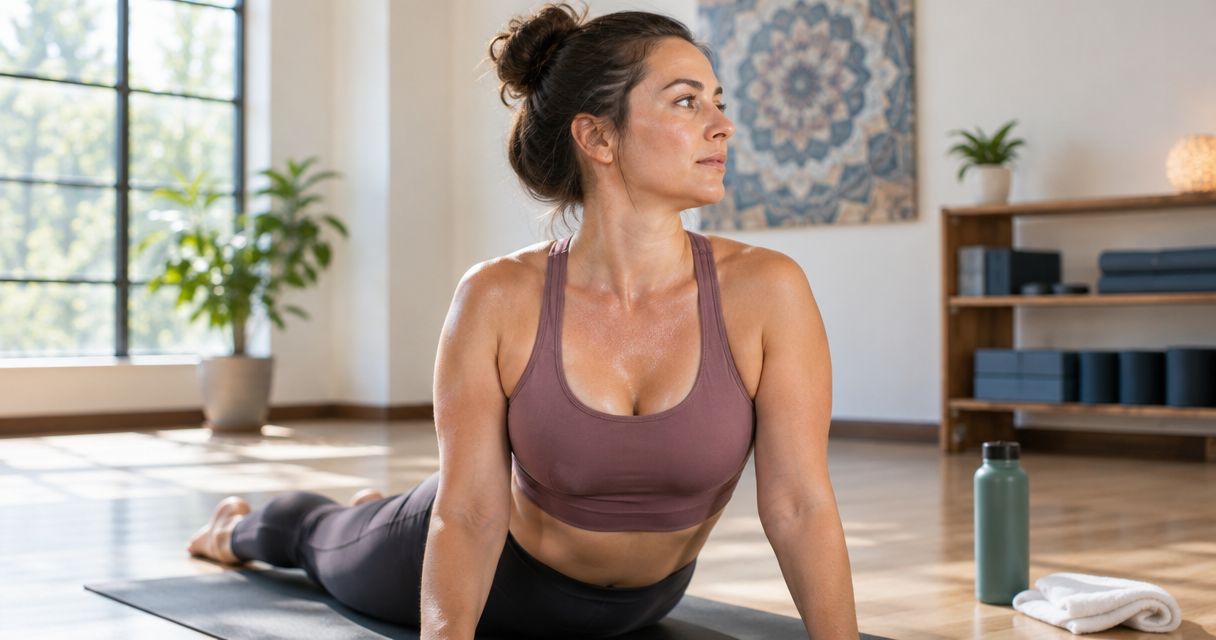
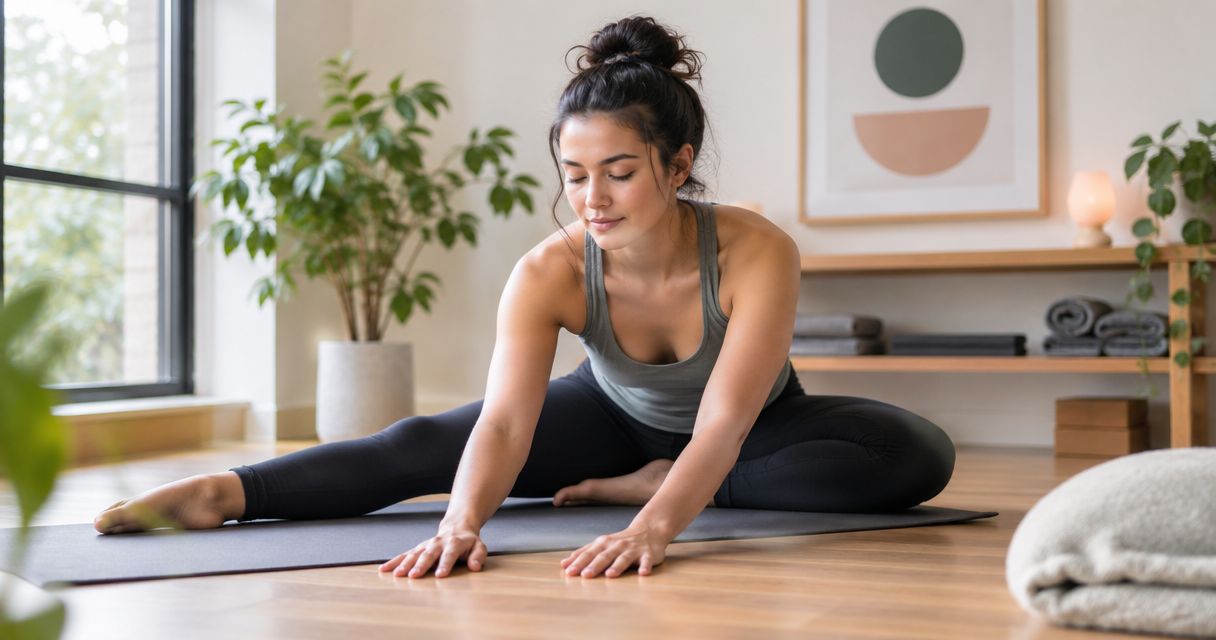
Yin yoga is a useful choice for flexibility when you practice without forcing your range of motion. Its mostly floor-based positions give you time to settle into a stretch instead of moving quickly between poses. That slower format also makes it easier to notice whether you are feeling a manageable stretch or uncomfortable pressure.
For local readers, Unified Hot Yoga offers Yin alongside Vinyasa, 26&2 yoga, Hot Pilates, Barre, and Reformer Pilates in American Fork. Choose according to what you want to practice, not according to which class sounds most demanding.
Stretching research supports regular static stretching for improving range of motion. That supports the basic stretching component of Yin, but it does not prove that Yin is better than every other stretching method or that a particular pose will resolve your stiffness.
The practical takeaway is simple: use Yin to practice comfortable range, not to chase the deepest possible position.
Why this matters
Being flexible is not the same as being able to touch your toes. Flexibility describes the available range around a joint; mobility also involves controlling movement through that range. You need neither extreme flexibility nor a particular body shape to begin a yoga practice.
A deeper forward fold is not automatically a better forward fold. Bending your knees or using support can make a position more appropriate for your body, even when it looks less dramatic.
This distinction matters if you are choosing a first class because you feel stiff. Your starting range is information, not a qualification you must earn before attending. A welcoming class gives you room to learn the movements and communicate discomfort without comparing yourself with the person beside you.
How does Yin compare with other class types?
The following comparison describes the general formats, not a promise about a particular instructor's sequence, class temperature, or equipment setup. Each offers a different way to practice; flexibility is only one reason to choose a class.
| Class type | Best for | What the format emphasizes | Limitation to consider |
|---|---|---|---|
| Yin yoga | Slower, sustained stretching | Mostly floor-based positions held with relatively little movement | Longer holds require attention to sensation; stillness does not mean effortless |
| Vinyasa yoga | Movement linked with breathing | Transitions between yoga poses | A flowing pace leaves less time to settle into each position |
| 26&2 yoga | A structured yoga sequence | A set sequence of postures and breathing exercises | A fixed sequence is less varied than a changing flow |
| Hot Pilates | Active conditioning in a heated setting | Pilates-based exercise rather than prolonged passive stretching | Heat adds a separate demand beyond the movements themselves |
| Barre | Repeated, controlled muscular work | Ballet-inspired positions and conditioning movements | Repetition can feel demanding even when movements are small |
| Reformer Pilates | Controlled movement against resistance | Exercises using a spring-based carriage apparatus | Learning the equipment is part of the first-class experience |
Choose Yin when sustained stretching is your priority. Choose another format when you want its movement style, structure, or equipment experience. You do not need to rank these classes from easiest to hardest to make a useful choice.
What actually changes when you stretch?
Improved flexibility does not necessarily mean that a muscle has permanently lengthened after a class. Stretch tolerance—how much stretching sensation you can comfortably accept—contributes to changes in measured range of motion. Repeated stretching can also produce adaptations over time.
That distinction explains why a pose sometimes feels different between sessions. Familiarity, positioning, and how you respond to sensation can affect the range you use. A single unusually deep stretch is not a reliable measure of lasting progress.
Yin is often described using claims about fascia or connective tissue. Those descriptions do not justify forcing a joint or treating discomfort as proof that something is changing. You cannot determine a tissue's response simply from how intense a stretch feels.
Judge the practice by comfortable function, not by claims about releasing or reshaping tissue. If getting into a position requires you to brace, hold your breath, or tolerate pain, make the position smaller or leave it.
How do you practice Yin without forcing flexibility?
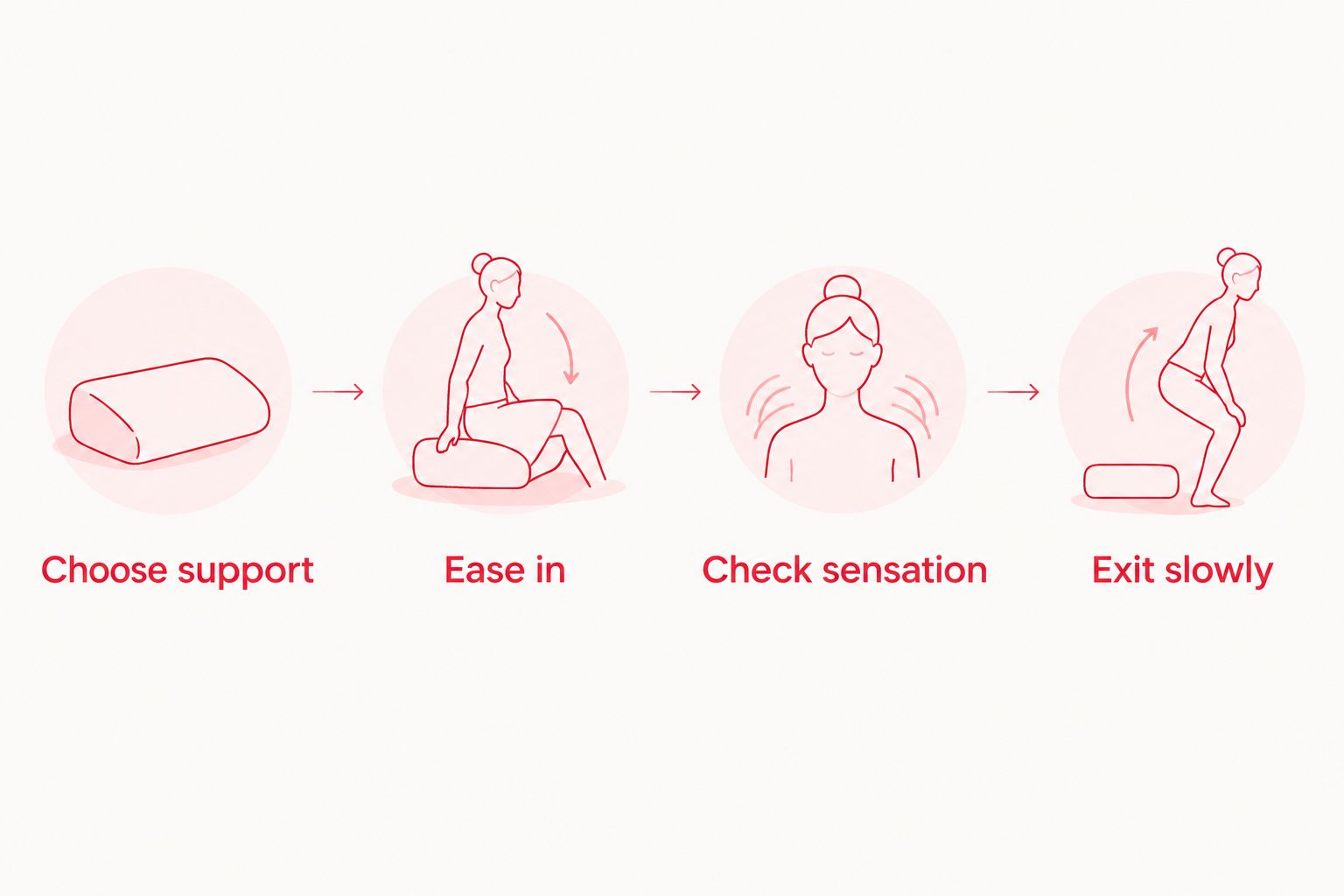
Use this sequence when learning a position. An instructor can help you select a variation, but you remain responsible for communicating what you feel rather than waiting for someone else to notice discomfort.
- Choose support. Ask whether a prop or a different position would help you settle comfortably. Support should make a pose more manageable, not push you farther into it.
- Ease in. Begin short of your maximum range. You do not need to find your deepest stretch at the start of a hold, and you do not need to deepen it as time passes.
- Check sensation. A manageable stretching sensation differs from sharp pain, tingling, numbness, or pressure concentrated in a joint. Leave the position if those warning signs appear.
- Exit slowly. Return with control rather than pulling abruptly out of the stretch. Pause before deciding how the position felt or moving into the next one.
A longer hold is an opportunity to observe, not an instruction to endure. Let the instructor know if you need help finding a comfortable alternative; you do not have to finish a hold to participate fully.
Why flexibility results vary
Your progress will not follow someone else's timetable. These factors help explain why the same class produces different experiences without making either person's practice wrong:
- Starting range: A position that feels restrictive to you can feel easy to someone with a different movement history.
- Joint structure: Bone shape and joint anatomy affect available movement. More stretching is not the answer to every limitation.
- Consistency: Repeated practice matters more than an isolated session that takes you unusually deep.
- Intensity: An overly strong stretch can make a position harder to tolerate. Greater sensation is not a reliable measure of effectiveness.
- Strength and control: Available range and the ability to use that range are different qualities. Stretching does not replace strength work.
- Injury or joint instability: A painful or unstable joint needs an individualized approach rather than a general instruction to stretch more.
If you are already very flexible, focus on control rather than increasing depth. People with hypermobility should discuss appropriate exercise with a qualified healthcare professional, especially when pain or instability is present.
A practical flexibility plan for 2026
Build a routine you can repeat without turning each session into a test. Start with a manageable class commitment, notice your response afterward, and adjust with your instructor rather than immediately adding more sessions or longer holds.
For general flexibility training, the American College of Sports Medicine recommends stretching at least 2 days per week, commonly holding static stretches for 10–30 seconds and accumulating about 60 seconds per exercise. These are general exercise guidelines, not a prescribed Yin sequence or a requirement to attend that many studio classes.
Yin uses a different class structure, so do not apply those timings as instructions to interrupt an instructor's sequence. Equally, a class hold is not a minimum you must complete. Your comfort and ability to exit safely take priority.
Track a useful movement rather than a photograph. You might notice whether a familiar position feels less restricted or whether you can use a comfortable range with less effort. Avoid repeatedly testing your maximum stretch just to prove that practice is working.
What should you bring to your first Yin class?
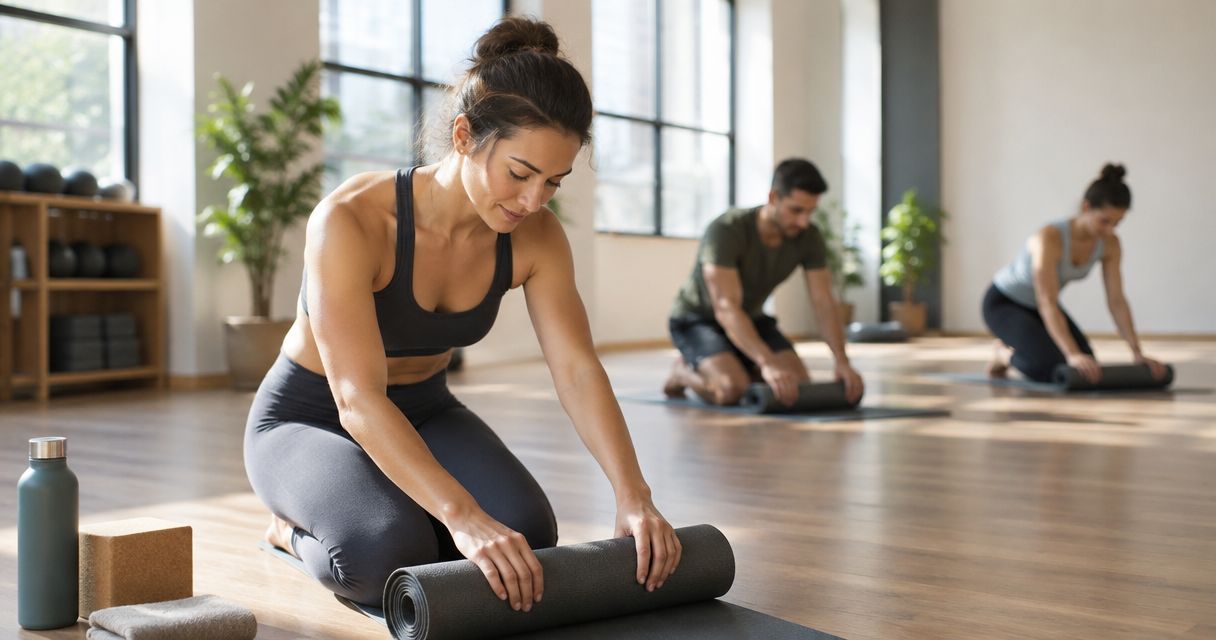
For your first class in 2026, confirm the session details and what the studio supplies before you leave home. Bring water, wear clothing that lets you move comfortably, and check whether you need your own mat or towel. Do not assume that every class uses the same room conditions or equipment.
Tell the instructor that you are new to Yin and mention any injury, pregnancy, dizziness with heat, or other concern affecting participation. An instructor can explain class options; a healthcare professional is the right person to assess a medical concern.
If you are unsure where to begin, read the guide to what to bring to your first hot yoga class. Preparing your belongings is useful, but preparing to ask questions is just as important.
At Unified Hot Yoga, the practical fit is the combination of an American Fork location and the stated range of class types. Unified Hot Yoga is best for American Fork residents who want Yin yoga alongside other yoga and Pilates class options. The limitation is that a class description cannot determine which movements suit an individual injury or medical condition.
How long does Yin yoga take to improve flexibility?
There is no universal deadline for improving flexibility with Yin yoga. A class can change how a stretch feels immediately, but that does not establish a lasting change or predict the results of continued practice.
Look for a repeatable difference in comfortable movement across sessions rather than expecting a particular result by a calendar date. If you develop pain, reduce or stop the provoking movement instead of interpreting pain as a necessary stage of progress.
Is heated Yin better for flexibility than unheated Yin?
Heated Yin is not automatically better for flexibility than unheated Yin. Feeling warmer does not remove your joints' limits or make it appropriate to push farther into a position.
Choose a setting you can tolerate comfortably, and confirm the conditions of the specific class before booking. If you become dizzy or unwell, stop participating and seek assistance rather than trying to finish the sequence.
FAQ
Is Yin yoga good for flexibility if I am a complete beginner?
Yes, Yin yoga can support flexibility for beginners when positions stay within a comfortable range. You do not need to be flexible before starting; ask the instructor for support or an alternative when a position does not fit.
Will Yin yoga make me flexible after one class?
One Yin class does not establish lasting flexibility gains. A stretch can feel different immediately, but consistent practice and comfortable movement across sessions are more useful measures of progress.
Should a Yin yoga stretch hurt?
A Yin yoga stretch should not cause sharp pain, tingling, numbness, or joint pressure. Leave the position if those sensations appear, and seek medical advice for persistent or concerning symptoms.
Is Yin yoga better than Vinyasa for flexibility?
Yin is a better format match when you specifically want sustained, slower stretching; that does not prove it produces greater flexibility gains than Vinyasa. Vinyasa emphasizes movement between poses and offers a different practice experience.
Can I do Yin yoga if I am already very flexible?
Being very flexible is not a reason to pursue deeper Yin positions. Prioritize control and comfortable support, and get individualized advice if you have hypermobility, pain, or unstable joints.
How should I choose a Yin class in 2026?
Choose a 2026 Yin class by confirming the format, room conditions, equipment requirements, and suitability for your needs. Unified Hot Yoga offers Yin in American Fork; ask about the specific session before booking.
Do I need to buy a membership before trying Yin?
Check the studio's current participation options before committing to a membership. Choose based on the class schedule and formats you expect to use, rather than assuming a larger commitment will improve flexibility faster.
One last thing
More range is not always the missing piece. If you can already reach a position but cannot control your movement into or out of it, another deeper stretch is not the obvious next step. Strength and movement practice deserve attention too.
For the rest of 2026, use a simpler question after class: did you practice in a way that felt manageable enough to repeat? That is a more useful foundation than winning a comparison with someone else's forward fold.