Yes—yin yoga can be harder than it looks because staying in a supported pose asks for patience, attention, and a manageable level of stretch rather than constant movement. The challenge is not to endure pain or reach the deepest position; it is to recognize when to settle, adjust, or come out.
- Is yin yoga harder than it looks? Yes: stillness and sustained stretching can challenge beginners and experienced practitioners.
- Yin yoga suits people seeking a slower practice, but slower does not mean effortless or appropriate for every body.
- Sharp pain, tingling, or numbness means stop the pose rather than push deeper.
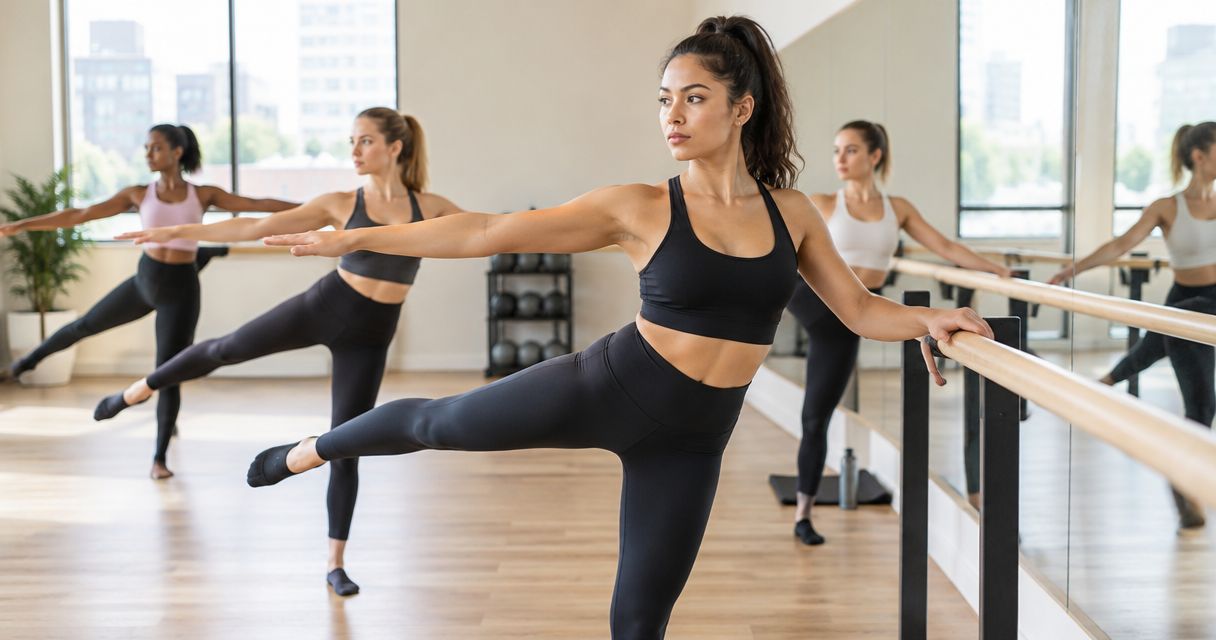
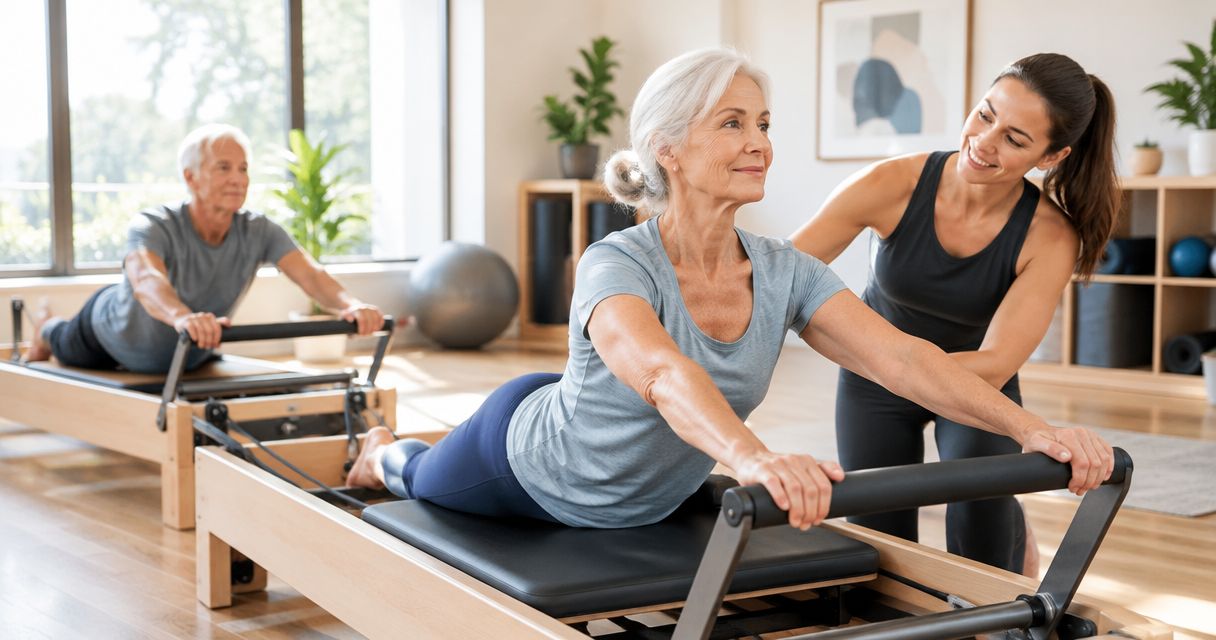
- Unified Hot Yoga offers Yin alongside Vinyasa, 26&2 yoga, Hot Pilates, Barre, and Reformer Pilates in American Fork.
Is yin yoga harder than it looks?
Yin yoga can feel demanding because you spend time with a position instead of moving quickly to the next one. A pose that looks simple from across the room can require repeated adjustments to keep the sensation manageable. Stillness also makes it harder to overlook restlessness or the urge to compare yourself with someone nearby.
At Unified Hot Yoga, Yin is one of the class types offered to practitioners of all skill levels in American Fork. Choose it for the kind of practice you want, not because you assume it is the easiest option on the schedule.
The comparison below describes general yoga formats, not a promise about a particular instructor's sequence or class conditions.
| Yoga format | Best for | Main demand | Advantage | Limitation to consider |
|---|---|---|---|---|
| Yin | Practitioners seeking slower, sustained positions | Managing stretch sensation and attention during stillness | Gives you time to notice and adjust your position | Long holds can feel uncomfortable or mentally restless |
| Vinyasa | Practitioners who prefer movement linked with breath | Following transitions and maintaining control | Movement provides a changing point of focus | The pace can make unfamiliar transitions challenging |
| 26&2 | Practitioners who prefer a recognizable sequence | Working through a set sequence of postures and breathing exercises | Repetition creates familiarity with the format | A fixed sequence does not make every posture suitable for every person |
Yin is not easier than moving yoga; it presents a different challenge. Your first class is about learning that difference, not proving which format you can tolerate.
Why this matters before your first class
If you are choosing a first class in American Fork or nearby Utah County cities in 2026, the word gentle can create the wrong expectation. A slower pace gives you more time in each position, but it does not remove the need to make decisions about your body.
Expecting effortless relaxation can leave you wondering whether you are doing something wrong when your mind wanders or a stretch feels strong. Neither experience is a reason to push harder. Ask for help, reduce the stretch, or rest.
Judge the practice by whether you can participate with control, not by how still you look. That gives you a more useful starting point than comparing flexibility, sweat, or the depth of a fold.
What makes yin yoga feel difficult?
Several features explain why Yin can surprise a newcomer. They also explain why an experienced runner, lifter, or yoga practitioner can find a quiet class challenging.
- Sustained positions: Sensation can change while you remain in a pose. A comfortable starting position is not permission to ignore what happens next.
- Less movement: Without frequent transitions, you have fewer distractions from physical sensations and passing thoughts.
- Individual range of motion: Your anatomy and current mobility influence the position that works for you. Someone else's shape is not your target.
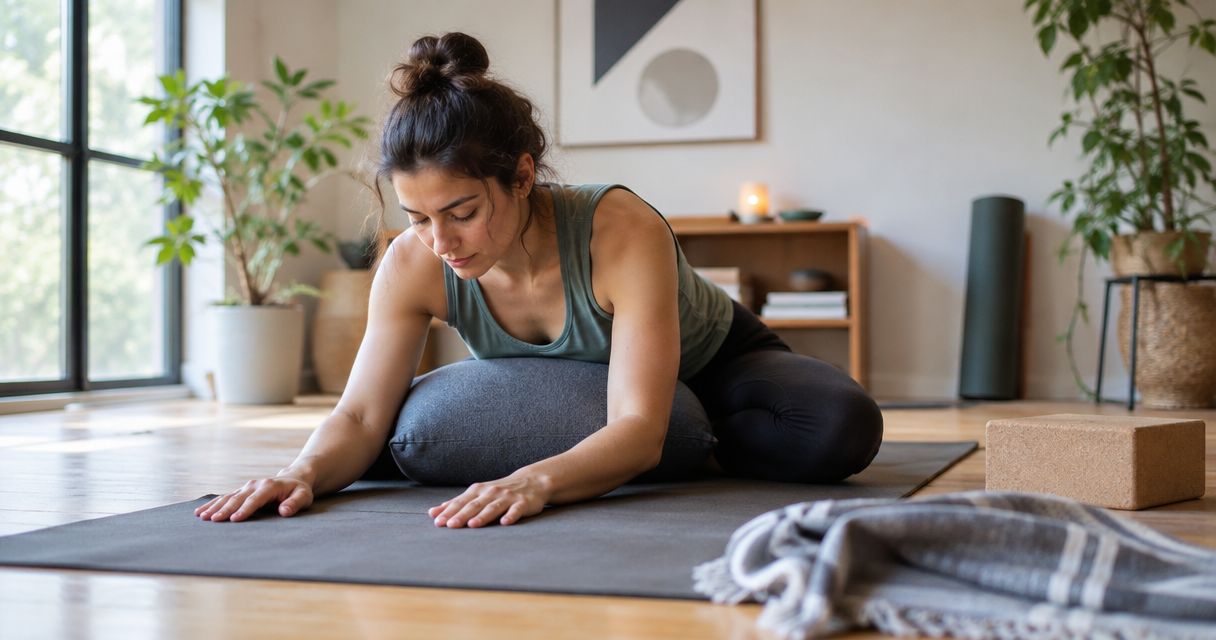
- Unfamiliar support: Learning where to place a prop or how much to bend a knee takes practice. A smaller adjustment can be more useful than a deeper stretch.
- Expectations about effort: If you associate a worthwhile class with constant activity, settling into stillness can feel surprisingly difficult.
None of these factors makes pain a necessary part of Yin. They explain the challenge, not a reason to override warning signs.
Is yin yoga suitable for beginners?
Yin yoga can suit beginners who want a slower format and are willing to adjust positions. You do not need to arrive flexible, touch your toes, or already know the pose names. You do need to communicate when something does not feel right.
A beginner-friendly approach starts with less depth than you think you need. Give yourself room to notice the sensation before deciding whether to change anything. There is no requirement to match the instructor's demonstration exactly.
Tell the instructor that it is your first Yin class and mention relevant injuries or restrictions. Ask how to signal for help and what to do if a position is uncomfortable. Do not assume that a class suitable for varied experience levels replaces individualized medical advice.
Choose Yin because a slower practice interests you, not because you expect a class without effort. If stillness is unfamiliar, learning to adjust without judging yourself is part of the practice.
How should you approach a yin pose?
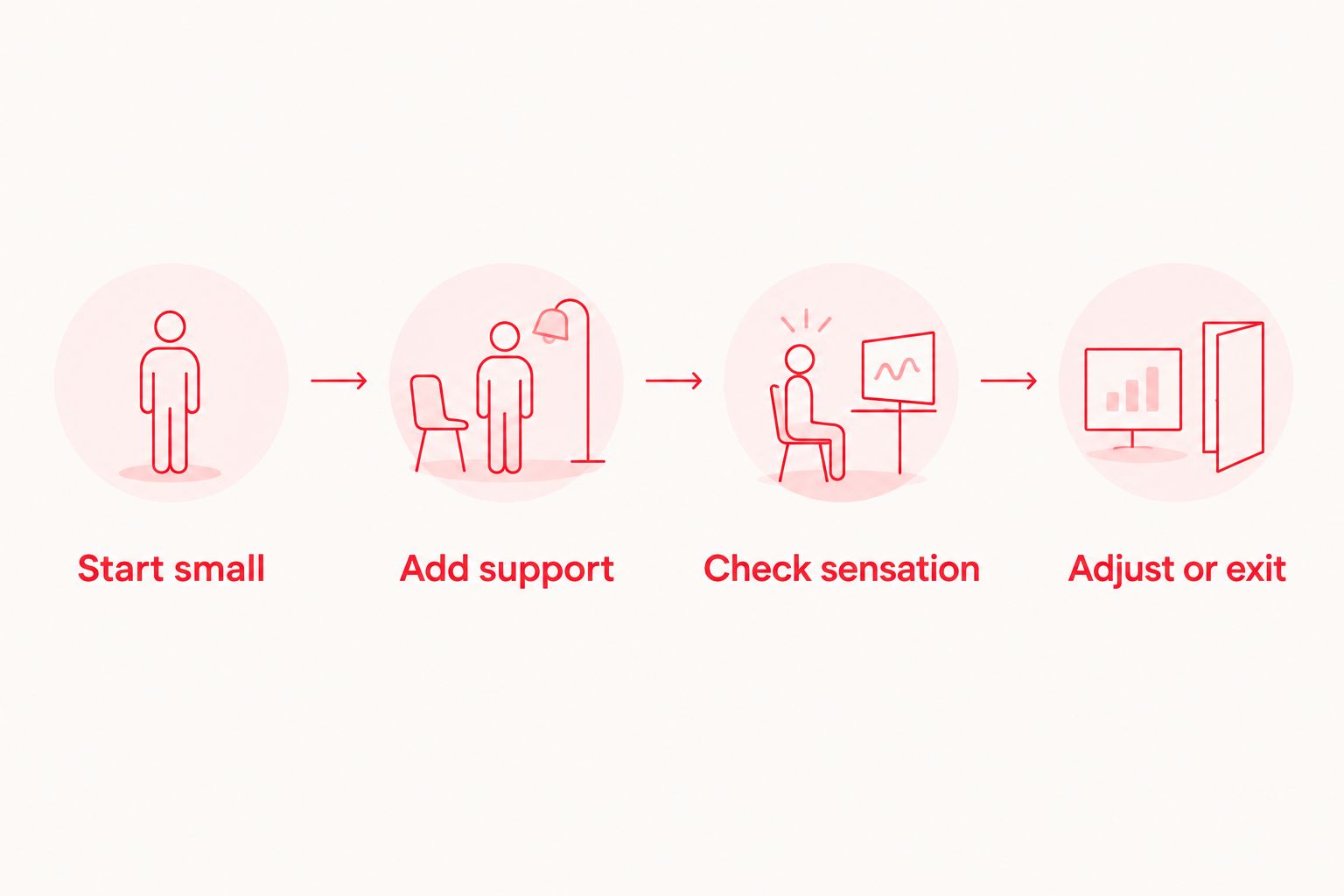
Use this sequence as a decision-making guide, not as instructions for performing a particular posture. Your instructor's guidance and your own symptoms take priority over completing a hold.
- Start small. Enter the position gradually and stop before you reach the strongest stretch you can tolerate. Keep enough room to adjust comfortably.
- Add support. Ask whether a prop, a bent knee, or a different position would make the pose more manageable. Do not force a shape because it looks familiar.
- Check sensation. Notice whether the feeling is broad and manageable or sharp, pinching, electrical, numb, or tingling. Warning sensations call for stopping, not waiting them out.
- Adjust or exit. Reduce the range or leave the pose if you cannot remain comfortable. Ask the instructor for guidance before trying it again.
The goal is not to reach a final shape and stay there regardless of what changes. A useful position leaves you able to respond. That applies whether you are attending your first class in 2026 or returning after a break.
What should you bring and check before class?
Bring clothing that lets you move comfortably, drinking water, and any personal items the studio asks you to provide. Confirm whether you need your own mat or towel and whether props are available. Treat that as a question to check, not an assumption about what is included.
Before your first visit, review the studio's current newcomer information and schedule. Your 2026 preparation checklist should include the exact class name, arrival instructions, equipment requirements, and whether the session is heated.
Do not infer room conditions from the word Yin. Yin describes an approach to practice, not a universal temperature setting. Ask about the specific session before booking, particularly if heat affects your choice.
Arrive ready to explain what you need rather than apologize for being new. A clear question such as whether there is an alternative to kneeling gives the instructor something practical to respond to. You do not need to give the room a history of your fitness experience.
How can you tell stretch from a reason to stop?
A manageable stretch is different from sharp pain, pinching, tingling, numbness, or an electrical sensation. Stop the pose when you notice those warning signs. Do not use an instructor's hold cue as a reason to remain in a position that feels wrong.
You also do not have to wait for pain before adjusting. If you are bracing, holding your breath, or struggling to stay composed, reduce the intensity and reassess. Leaving the pose is an available choice, not a failed attempt.
If symptoms persist after you stop, seek appropriate medical advice. People with an injury, a condition affecting sensation, or specific movement restrictions should ask a qualified healthcare professional about participation rather than treating a group class as rehabilitation.
The practical distinction is simple: concentration can be challenging, but pain is not a test of commitment. You are allowed to respond before discomfort becomes overwhelming.
Is yin yoga harder than Vinyasa?
Yin yoga is harder in a different way from Vinyasa: it emphasizes sustained positions and stillness rather than continuous transitions. If you enjoy movement, Yin's quiet periods can feel more demanding than expected. If transitions feel rushed, Yin's slower format can give you more time to understand a position.
Neither preference establishes which practice is better. Choose according to the experience you want and the adjustments you need, then evaluate the actual class rather than its reputation.
For your first booking, ask about the specific session's pace and expectations. Two class names alone cannot tell you how you will feel in the room.
Do you have to stay for the whole hold?
You do not have to remain in a Yin pose for the entire hold. Reduce the stretch, change position, or come out when needed. Ask the instructor how to rest without creating another uncomfortable position.
A timer measures time, not whether a posture suits your body. Staying longer is not automatically a better result.
Does feeling stiff mean you should avoid Yin?
Feeling stiff does not automatically rule out Yin yoga. It means you should start with a smaller range and ask about support rather than trying to reproduce a deep stretch.
Stiffness and pain are not interchangeable. If your movement is limited by an injury or unexplained symptoms, get advice about those symptoms before treating stretching as the solution.
How should you choose a class or membership?
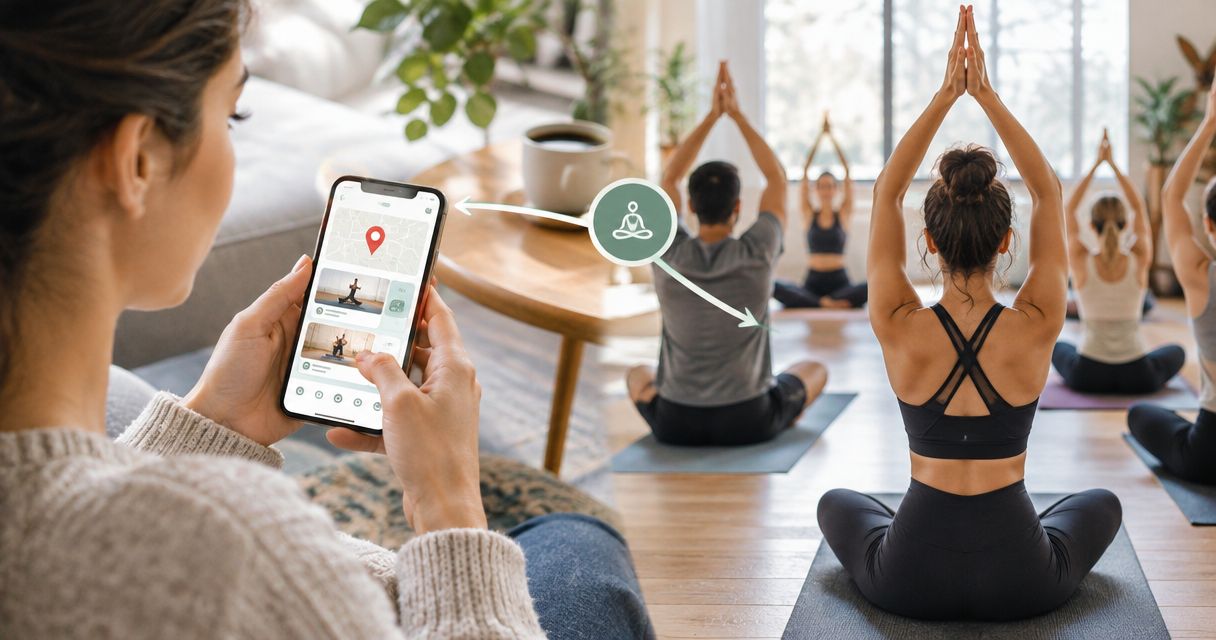
Start with the experience you want to repeat. A first class can help you distinguish between liking a slower format and simply liking the idea of one. Notice whether you felt able to ask questions, make adjustments, and participate without chasing another person's range.
Unified Hot Yoga is best for American Fork newcomers seeking yoga and Pilates class options in one studio. The studio offers Yin, Vinyasa, 26&2 yoga, Hot Pilates, Barre, and Reformer Pilates for practitioners of all skill levels. That range gives you options; it does not mean every format will match your preferences.
Before choosing a membership in 2026, check the current Prices page for intro offers, memberships, and their terms. Compare those terms with the sessions you can realistically attend. Do not assume a membership includes every format or that a class appears at a convenient time without checking.
The strongest reason to join is a practical fit: a class you want to attend, instructions you can follow, and a schedule that works. Community supports wellbeing when you feel comfortable returning, not when you feel pressure to perform.
FAQ
Is yin yoga harder than it looks for a beginner?
Yes, Yin yoga can be harder than it looks because sustained positions and stillness require attention. Beginners can start with a smaller range, ask for support, and leave a pose when needed.
Do I need to be flexible before trying Yin yoga?
No, you do not need to be flexible before trying Yin yoga. Choose a manageable position rather than copying someone else's range, and ask the instructor about adjustments.
Should Yin yoga hurt while I hold a pose?
No, pain is not the goal of a Yin pose. Stop for sharp pain, pinching, tingling, numbness, or electrical sensations, and seek medical advice if symptoms persist.
Is Yin yoga always done in a heated room?
No, Yin yoga is not always practiced in a heated room. Confirm the conditions of the specific session before booking rather than assuming the class name tells you the temperature.
What should I bring to my first Yin yoga class?
Bring comfortable clothing, drinking water, and whatever personal equipment the studio requires. Check whether you need a mat or towel and whether props are provided before your visit.
Can I stop a Yin pose before the instructor says to?
Yes, you can stop a Yin pose before the instructor ends the hold. Adjust or come out when needed, and ask for an alternative instead of pushing through discomfort.
Does Unified Hot Yoga offer classes besides Yin?
Yes, Unified Hot Yoga offers Vinyasa, 26&2 yoga, Hot Pilates, Barre, and Reformer Pilates alongside Yin in American Fork. Check the current schedule and membership terms before choosing a format or joining.
One last thing
The deepest version of a pose is not necessarily the most useful version for you. On your next visit in 2026, try this instead: choose a position that leaves you able to notice what changes and respond without hesitation.
That makes your first Yin class a lesson in attention rather than endurance. The skill is knowing when to stay, when to adjust, and when to stop.