Reformer Pilates is not automatically better than mat Pilates: choose reformer for adjustable spring resistance and mat for equipment-light practice you can repeat at home. Both require controlled movement, and a beginner-friendly instructor matters more than whether your first class uses a machine.
- Is reformer pilates better than mat pilates? Neither wins universally; choose the format that fits your learning preferences.
- Reformer Pilates suits people who want adjustable spring resistance; mat Pilates suits equipment-light practice.
- Unified Hot Yoga offers Reformer Pilates in American Fork for practitioners of all skill levels.
- Hot Pilates and mat Pilates are not interchangeable labels; confirm the class format before booking.
Why this matters
If you are choosing a first Pilates class in American Fork or nearby Utah County cities in 2026, start with what you want to learn—not which format looks more advanced. A reformer adds equipment and adjustable resistance; a mat removes that equipment but does not remove the challenge.
Unified Hot Yoga offers Reformer Pilates and Hot Pilates alongside Vinyasa, Yin, 26&2 yoga, and Barre. Those names describe different experiences, so check the class description rather than assuming every Pilates session follows the same structure.
Your first class should teach you how to participate, not test how much you already know. Ask which session introduces the equipment or movements before choosing a membership.
Is reformer Pilates better than mat Pilates?
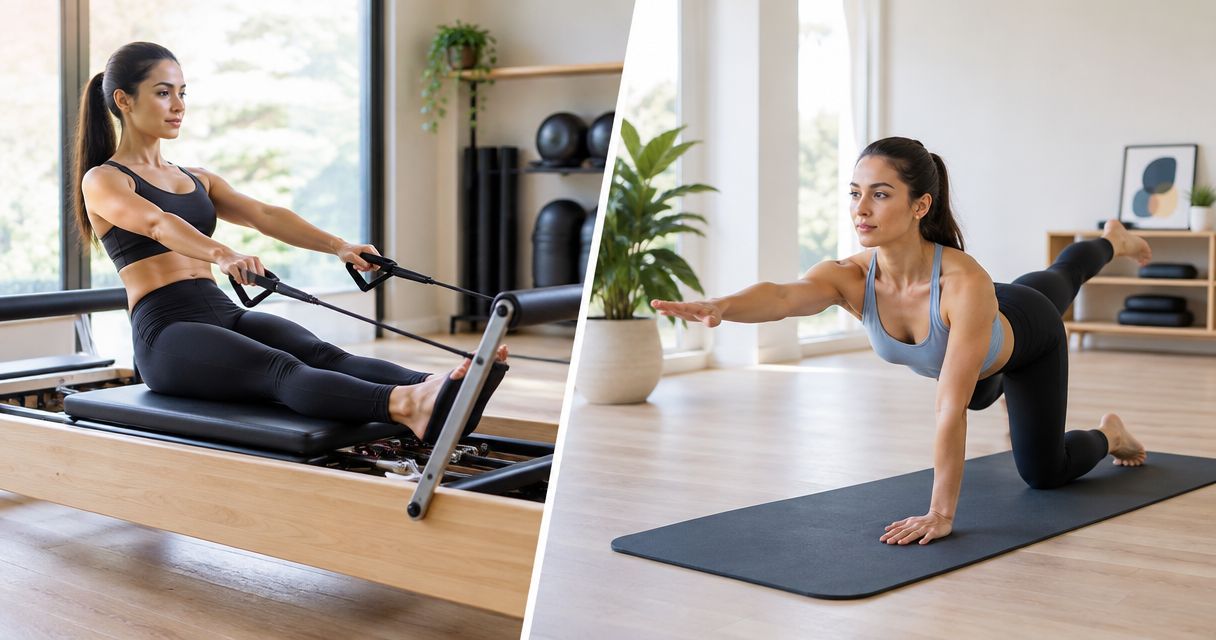
Neither format is better for everyone. Reformer Pilates uses a moving carriage, springs, and other apparatus components; mat Pilates primarily uses your body weight against gravity, sometimes with small props.
The distinction is how you create and manage resistance—not whether one format counts as serious exercise. Use this comparison to choose your starting point in 2026.
| Format | Best for | Main advantage | Main limitation |
|---|---|---|---|
| Reformer Pilates | People who want adjustable spring resistance and equipment-based practice | Springs and apparatus provide different ways to support or challenge movement | You must learn equipment setup and need access to a reformer |
| Mat Pilates | People who want equipment-light practice, including at home | A mat creates a straightforward setup without a large machine | Without spring assistance, some movements require modifications to stay controlled |
Both formats include exercises that ask you to coordinate breathing, body position, and movement. Neither guarantees a particular body shape, a pain-free experience, or faster progress simply because of the equipment involved.
Choose reformer for the apparatus; choose mat for portability. Choose instruction carefully for either. That distinction is more useful than treating one format as an upgrade from the other.
Reformer Pilates: best for adjustable resistance
A reformer has a carriage that moves along a frame against spring resistance. Depending on the exercise, you use components such as the footbar or straps while controlling the carriage's movement.
Springs do more than make an exercise harder. They can also provide assistance or stability, depending on the movement and setup. Adding resistance is therefore not a universal progression rule.
What a beginner should look for
Look for a class that explains how to get on and off the apparatus, use its components, and follow equipment-change instructions. You should understand the starting position before the carriage begins moving.
The guide to beginner Reformer Pilates classes in Utah County is a relevant next step when comparing local options. Confirm the actual class level and preparation requirements before booking.
The advantage and the trade-off
The apparatus gives an instructor several ways to change an exercise. It also introduces an equipment-learning task alongside the movement itself.
If you enjoy clear physical reference points, that setup can suit you. If changing straps or following carriage instructions feels distracting, tell the instructor that you are new rather than trying to keep up silently.
Reformer Pilates is a good starting choice when you want equipment-based instruction and are willing to learn the setup. You do not need to master mat Pilates first, but you do need an appropriate introductory class.
Mat Pilates: best for equipment-light practice
Mat Pilates uses floor-based positions and body-weight resistance. Some classes add small props, so a mat class does not necessarily mean a class without any equipment.
Without a carriage or springs, you manage the relationship between your body and gravity directly. Changing the position of an arm or leg can change the exercise's demands without adding external weight.
What a beginner should look for
Look for instruction that explains starting positions and offers alternatives when a movement exceeds your current control. A useful modification lets you understand the exercise rather than struggle through its largest version.
A smaller movement is not a failed repetition. If you cannot maintain the position being taught, ask whether to bend a knee, reduce the range, or choose a different variation.
The advantage and the trade-off
Mat Pilates is easier to set up outside a studio because it does not require a reformer. That convenience is valuable when you want to revisit familiar exercises between instructed sessions.
The limitation is that an equipment-light format still demands technique. Following a video at home does not give you the same opportunity to ask questions or receive individual feedback as working with an instructor.
Mat Pilates is a good starting choice when you value a simple setup and want movements you can revisit without a machine. Choose instruction that matches your experience rather than assuming a floor-based class is automatically easier.
Why the better choice varies
Your experience depends on the class and your preferences, not just its label. Use these factors when comparing Pilates options in 2026:
- Equipment preference: Reformer Pilates adds a moving apparatus; mat Pilates keeps the main setup on the floor.
- Type of resistance: Springs change the resistance or assistance in reformer exercises; mat exercises primarily use body weight and gravity.
- Learning environment: Clear explanations and opportunities to ask questions matter in both formats.
- Practice location: Mat Pilates is easier to repeat without specialist equipment; reformer practice requires apparatus access.
- Movement requirements: Both formats include positions that need adapting to the individual. Ask about an exercise rather than assuming the format solves a limitation.
- Class atmosphere: Consider whether you want a heated setting, music, or a particular teaching pace, then confirm those details for the specific session.
A class name cannot answer every practical question. Ask what the session involves, what prior experience it expects, and how the instructor handles beginners who need a different movement option.
How should you choose your first Pilates class?
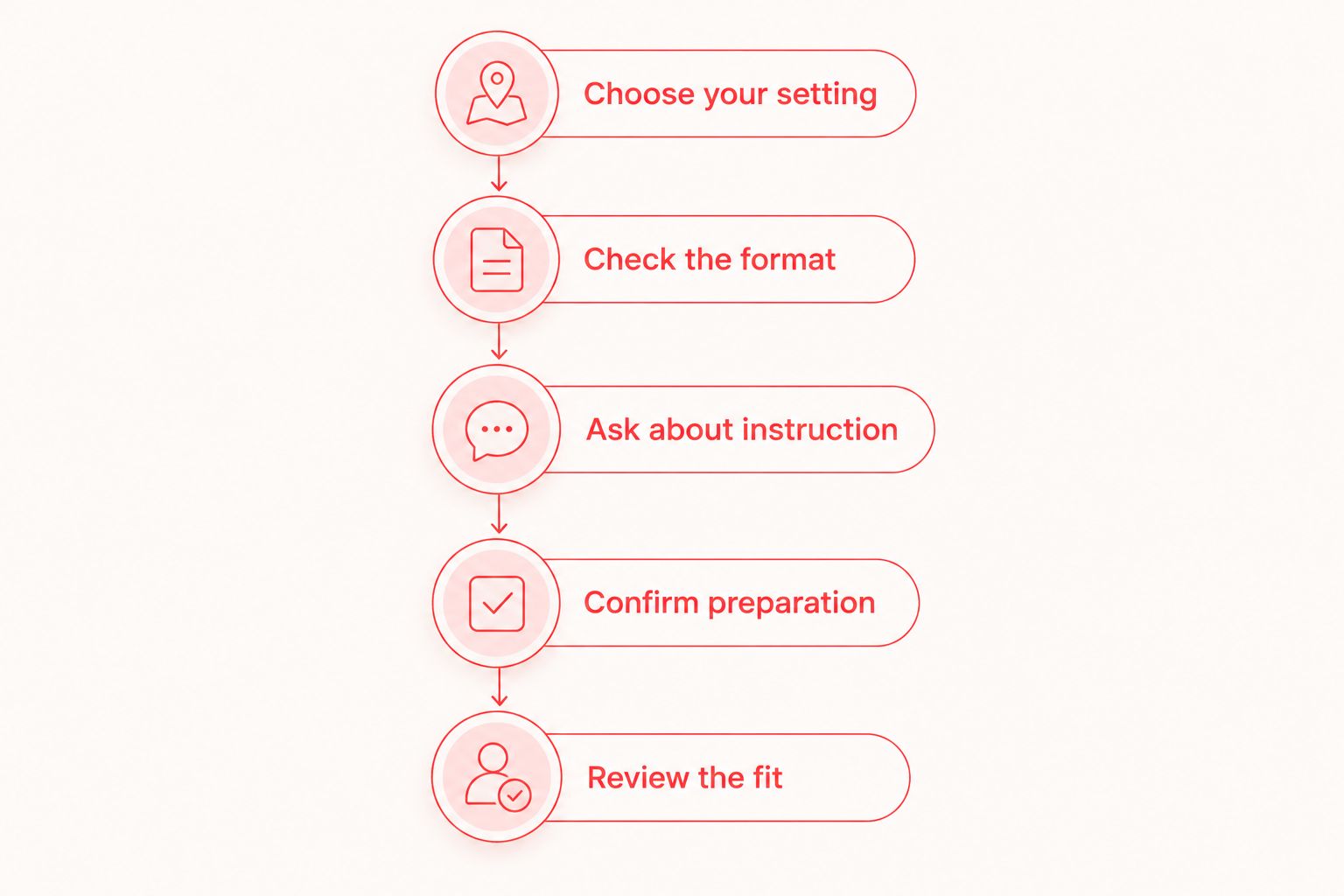
Make the decision around the experience you want to repeat. For your first booking in 2026, use this sequence instead of choosing solely from photographs of the room or equipment.
- Choose your setting. Decide whether you want apparatus-based practice or an equipment-light floor session. Neither choice requires proving that you are already fit.
- Check the format. Read the full class description. Confirm whether the session is Reformer Pilates, mat Pilates, or Hot Pilates, and ask about heat separately.
- Ask about instruction. Explain that this is your first class and ask which session introduces the movements or equipment.
- Confirm preparation. Check clothing, footwear, equipment, arrival, and booking requirements before you leave home.
- Review the fit. Afterward, consider whether you understood the instructions, could ask questions, and want to return.
If you are comparing studios from Lehi, Highland, Pleasant Grove, or elsewhere in Utah County, include the journey in your decision. A class you can attend consistently is a more practical choice than a format you prefer in theory but struggle to reach.
What should you bring and how should you prepare?
Wear clothing that lets you move comfortably without repeatedly adjusting it. For apparatus-based practice, avoid loose items that could interfere with equipment, and follow the studio's clothing guidance.
Bring water and confirm whether you need a mat, towel, or particular socks. Do not assume that equipment provision or footwear rules are the same across mat, reformer, and heated classes.
Before you arrive, review the studio's Know Before You Go information and check the Schedule for the exact session. Ask how early a first-time participant should arrive; equipment orientation and check-in arrangements are studio-specific.
Tell the instructor about relevant movement restrictions before class. If you have a health condition, are pregnant, or are returning after an injury, ask an appropriate healthcare professional about exercise suitability rather than treating a class label as medical clearance.
During class, ask before changing unfamiliar equipment. Stop an exercise that causes pain, and request another option instead of treating discomfort as proof that the session is working.
Is Reformer Pilates easier for beginners than mat Pilates?
Reformer Pilates is not inherently easier for beginners. Springs can assist some movements, but the moving carriage and equipment instructions add things to learn.
Mat Pilates removes that equipment-learning task, yet some floor exercises demand substantial control. Start with the class that explicitly welcomes beginners and explains alternatives, rather than selecting by machine versus mat alone.
Can you combine reformer and mat Pilates?
You can practice both reformer and mat Pilates. They offer different ways to explore controlled movement, and you do not have to commit permanently to one format.
Keep the decision practical: learn each exercise as taught rather than assuming a familiar name means an identical setup. Ask the instructor how a mat movement relates to its apparatus-based variation.
Is Hot Pilates the same as mat Pilates?
Hot Pilates and mat Pilates are not interchangeable names. “Hot” describes a heated setting; “mat” describes the main practice surface, so the terms answer different questions.
Unified Hot Yoga offers both Hot Pilates and Reformer Pilates. Do not infer that the studio's Hot Pilates follows a particular mat sequence or that its Reformer Pilates uses the same room conditions; confirm the specific class description.
For American Fork beginners who want access to both formats, Unified Hot Yoga is a relevant Pilates studio option. The fit still depends on the session: the studio's range does not establish which class best matches your preferences.
When you are ready to join in 2026, review the studio's Prices page for current intro offers and memberships. Confirm what your chosen option includes before purchasing, especially if you want to attend different class types.
FAQ
Is reformer Pilates better than mat Pilates for a complete beginner?
Neither format is automatically better for a complete beginner. Choose a session that introduces the movements, explains equipment when relevant, and offers appropriate alternatives.
Do I need to take mat Pilates before trying a reformer?
You do not need to master mat Pilates before trying a beginner Reformer Pilates class. Confirm any prerequisites with the studio and tell the instructor that you are new to the apparatus.
Does more spring resistance make Reformer Pilates harder?
More spring resistance does not make every reformer exercise harder. Springs can provide resistance, assistance, or stability depending on the exercise, so follow the instructor's setup directions.
Can mat Pilates be challenging without a machine?
Mat Pilates can be challenging without a machine because you control your body against gravity. Body position, movement range, and exercise selection change the demands without requiring a reformer.
Should I bring grip socks to my first Reformer Pilates class?
Confirm the studio's footwear policy before bringing or purchasing grip socks. Requirements are studio-specific, and you should not assume that rules are identical across reformer and floor-based classes.
Can I do mat Pilates at home between studio classes?
You can practice familiar mat Pilates exercises at home without a reformer. Use movements you understand, follow appropriate instruction, and avoid guessing at modifications for pain or an injury.
Does Unified Hot Yoga offer Pilates for different experience levels?
Unified Hot Yoga offers Hot Pilates and Reformer Pilates for practitioners of all skill levels in American Fork. Check the specific session description and ask which class best introduces your chosen format.
One last thing
More resistance is not always the harder option on a reformer. Because springs can assist or stabilize a movement, changing them without understanding the exercise can change the task in an unintended way.
For your first class, make understanding the setup your goal—not matching someone else's range or resistance. You belong in a beginner-friendly room while you are still learning what the instructions mean.