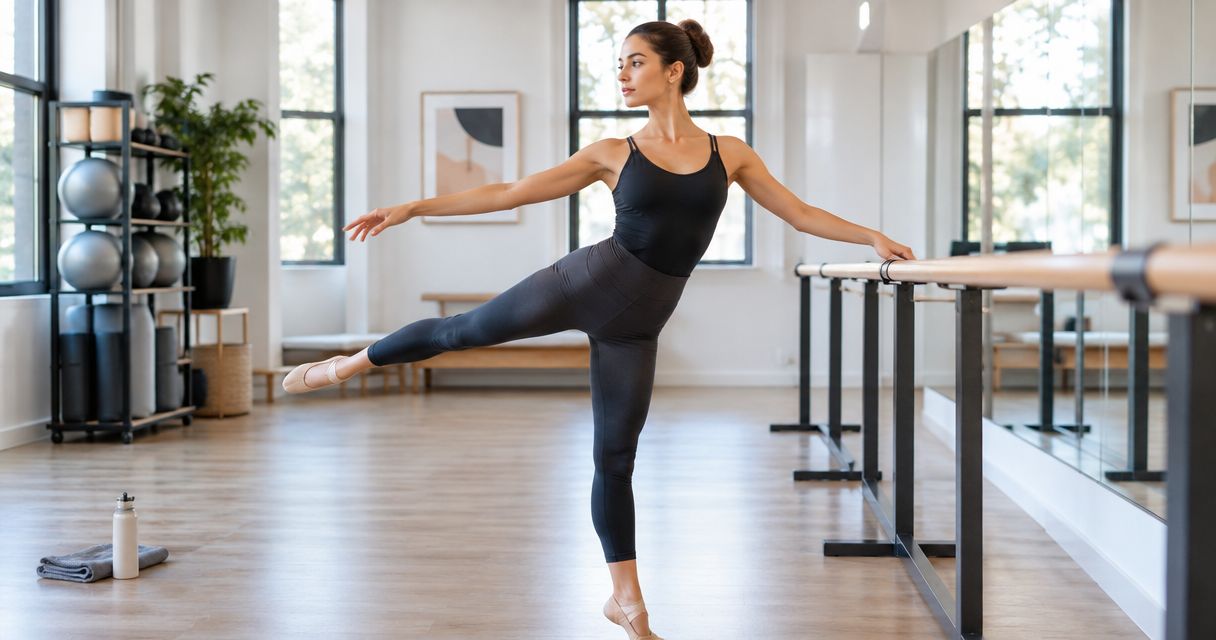
Barre for dancers is ballet-inspired fitness training with the aim of supporting your conditioning alongside dance practice. This 2026 guide helps you choose a first class in American Fork, prepare for the studio, and distinguish fitness barre from ballet technique training.
- Barre for dancers complements dance practice; fitness barre does not replace ballet technique instruction.
- Unified Hot Yoga offers Barre alongside yoga and Pilates for practitioners of all skill levels in American Fork.
- Choose Barre, Reformer Pilates, Hot Pilates, or yoga by class format, not by promises about dance performance.
- Ask about equipment, footwear, heat, and modifications before your first class.
Why barre matters for dancers
Dancers choosing a fitness class face a specific problem: familiar movement vocabulary does not necessarily mean familiar instruction. A fitness class can use a barre without teaching ballet placement, musicality, choreography, or performance skills.
Choose fitness barre for supplementary exercise, and choose dance instruction for dance technique. That distinction matters whether you take recreational classes, return to dance after time away, or fit conditioning around rehearsals.
Unified Hot Yoga offers Barre, Reformer Pilates, Hot Pilates, and infrared-heated Vinyasa, Yin, and 26&2 yoga in American Fork. The studio serves practitioners of all skill levels; that does not mean every format has the same movements, equipment, or preparation requirements.
Your dance background gives you useful context, not a requirement to perform every exercise at its largest range. A welcoming class should leave room for questions and appropriate adjustments, rather than pressure to demonstrate what you already know.
Choose and prepare for your first class
Define what you want from barre
Start with a written goal before choosing a class or membership. You can do this independently: identify what you want from additional exercise and what you already get from dance instruction.
A useful goal describes a practice, not a guaranteed outcome. Wanting a structured conditioning class is actionable; expecting barre to correct an injury or automatically improve a jump is not.
For your 2026 plan, separate fitness goals from technique goals. If your priority is turnout placement, pointe preparation, or choreography, discuss it with your dance teacher rather than assigning that job to a general fitness class.
- Write 1 sentence explaining why you want an additional class.
- Identify whether you want fitness instruction or dance technique instruction.
- Note the movements or positions you need help understanding.
- Tell the instructor about relevant restrictions before class.
- Keep performance expectations separate from the decision to try barre.
Compare the movement formats
Read class descriptions first, then ask questions about anything the description leaves unclear. You do not need to buy equipment or commit to a membership to clarify what a class involves.
Fitness barre commonly combines barre-supported exercises with other conditioning work. Exact sequences vary, so do not assume that every class includes ballet combinations, particular props, or the same balance of standing and floor exercises.
Pilates and yoga offer different formats rather than interchangeable versions of barre. Reformer Pilates uses a reformer apparatus; Vinyasa links movement with breath; Yin uses longer-held poses; 26&2 refers to a structured sequence of yoga postures and breathing exercises. Ask how the specific studio teaches each format.
- Barre: Consider it when ballet-inspired fitness is your main interest.
- Reformer Pilates: Consider it when you want apparatus-based Pilates instruction.
- Hot Pilates: Consider it when you want Pilates-based exercise in a heated setting.
- Vinyasa: Consider it when you want a flowing yoga practice.
- Yin: Consider it when you prefer a slower yoga format with longer holds.
- 26&2: Consider it when a structured yoga sequence appeals to you.
Ask the studio for beginner guidance
Once you understand the broad formats, get help choosing the first session. Unified Hot Yoga offers Barre and the other listed formats for all skill levels, so explain both your dance experience and your experience with the class you want to try.
Unified Hot Yoga is best for American Fork dancers seeking Barre, yoga, and Pilates options at one studio. Its range gives you choices; the limitation is that a class name alone does not establish the pace, equipment, or teaching approach you will encounter.
The guide to barre classes for beginners in Utah County is a useful next read when comparing a first class. Confirm the current class description and schedule directly before making plans.
- Ask whether the particular session welcomes first-time participants.
- Describe your dance background without assuming fitness-class familiarity.
- Ask how the instructor explains unfamiliar movements.
- Confirm whether the Barre session is heated; do not infer this from the studio name.
- Ask which equipment and footwear the session requires.
- Check the current schedule rather than relying on an older listing.
Prepare your bag and arrival plan
Use the studio's current preparation instructions as your packing checklist. Bring drinking water and clothing that lets you move comfortably, then confirm any class-specific requirements rather than buying accessories on assumptions.
Footwear deserves a direct question. Barre, yoga, and reformer sessions do not necessarily use the same footwear rules, and equipment requirements differ between formats. Ask whether you need a mat, towel, socks, or anything else, and whether those items are provided.
For a first visit in 2026, check arrival instructions as well as the start time. Travel from Lehi, Pleasant Grove, Highland, or elsewhere in Utah County belongs in your planning; a nearby studio is useful only when you can attend without rushing.
- Pack drinking water and comfortable movement clothing.
- Confirm footwear requirements for your chosen format.
- Ask whether you need to bring a mat or towel.
- Check which equipment the studio supplies.
- Read the current Know Before You Go information, if available.
- Confirm check-in and first-visit arrival instructions.
Follow the instructor instead of the mirror
Treat your first barre session as an introduction to that instructor's cues. Observe, ask, and work within a range you can control rather than using another participant's movement as your target.
Dance habits do not automatically transfer to fitness exercises. Turnout, pointed feet, and a large range are not universal requirements; follow the position the instructor requests instead of making every exercise look like ballet.
Start conservatively, especially when the format or temperature is unfamiliar. Stop an exercise that causes pain, and ask for guidance rather than trying to push through it. For an injury or medical concern, seek advice from a qualified healthcare professional before using a class as part of your return to exercise.
- Listen for the requested foot position before moving.
- Use a controllable range instead of chasing height or depth.
- Ask how to adjust an unfamiliar exercise.
- Take breaks when you need them.
- Stop painful movements rather than treating pain as progress.
- Avoid copying another dancer's turnout or flexibility.
Review the class before choosing a membership
After your first visit, assess the instruction and practical fit before deciding how often to attend. A class can be enjoyable without belonging immediately before every rehearsal or performance.
Use 2 short notes: one about the teaching and one about how the session fits your dance schedule. This creates a clearer decision than judging the class by soreness or how exhausted you feel afterward.
For your 2026 routine, compare three planning areas: Class choice, Studio guidance, and Dance schedule. Your own notes are the starting point; studio guidance helps resolve questions about session selection and preparation.
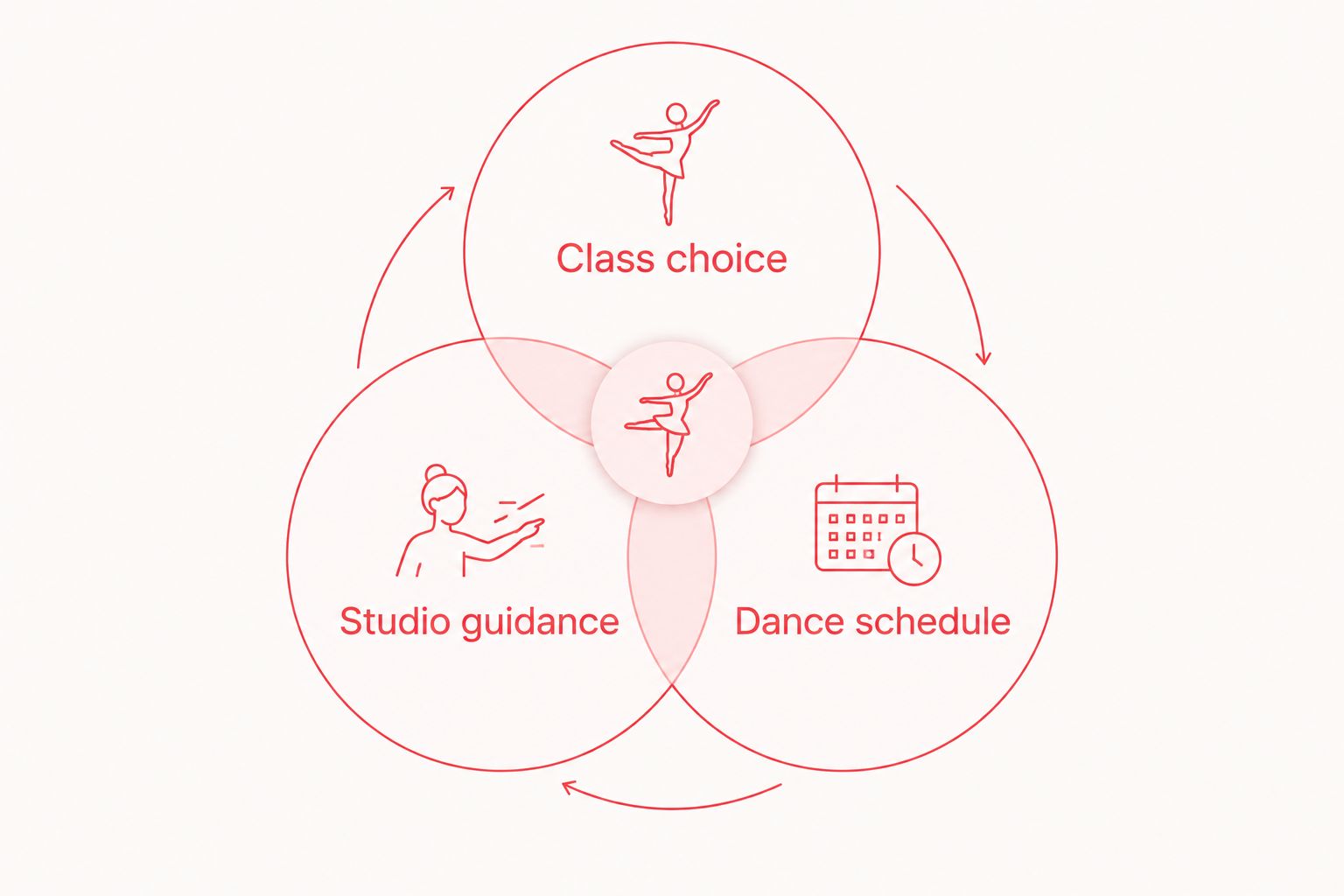
Before joining Unified Hot Yoga, use the studio's Prices page to review current intro offers and memberships. Compare the listed terms with the sessions you actually expect to attend, rather than choosing a membership around an ideal schedule.
- Record whether the instructor's explanations were clear.
- Note whether you could ask questions comfortably.
- Check how the class fits around rehearsals and travel.
- Review the current schedule for sessions you can realistically attend.
- Read membership terms and current offers on the Prices page.
- Reassess your choice if the format does not match your original goal.
Compare options for dancers
The best option is the format that matches your purpose, not the one with the most familiar name. These are category-level distinctions, not promises about a particular class sequence or dance result.
Use this comparison to decide which questions to ask. For studio options, confirm the current description, heat conditions, equipment, and beginner guidance before booking.
| Option | Best for | What it involves | Key limitation |
|---|---|---|---|
| Fitness Barre | Dancers seeking ballet-inspired conditioning | Barre-supported fitness exercises, with the exact class content varying | Does not replace ballet technique instruction |
| Ballet technique class | Dancers working on dance-specific technique | Dance instruction that includes placement, vocabulary, and movement skills | Serves a different purpose from a general fitness class |
| Reformer Pilates | Dancers interested in apparatus-based Pilates | Pilates exercises using a reformer | Equipment setup requires instruction; ballet familiarity is not reformer familiarity |
| Hot Pilates | Dancers choosing Pilates-based exercise in heat | Pilates-based work in a heated setting | Heat adds a preparation consideration separate from the exercises |
| Vinyasa yoga | Dancers interested in flowing yoga | Movement linked with breath | Yoga instruction is not dance technique coaching |
| Yin yoga | Dancers who prefer a slower yoga format | Longer-held yoga poses | Longer holds are not a reason to force greater range |
| 26&2 yoga | Dancers who prefer a structured yoga sequence | A defined sequence of postures and breathing exercises | The sequence does not target individual choreography needs |
| Independent practice | Dancers reviewing familiar exercises | Self-directed practice using exercises already understood | No instructor is present to clarify cues or observe your movement |
If you are a beginner to all these formats, start with the option you genuinely want to learn. There is no need to complete yoga before trying Barre, or Barre before trying Reformer Pilates.
Common mistakes dancers make
Treating fitness barre as ballet training
A barre is a piece of equipment, not proof of a ballet lesson. Ask whether the class teaches dance technique or uses ballet-inspired movements for fitness; choose according to that answer.
Adding turnout to every exercise
A familiar dance position is not automatically the position an instructor requests. Follow the exercise setup and ask for clarification rather than rotating your feet outward by habit.
Choosing by soreness instead of instruction
Soreness does not tell you whether the class met your goal. Judge the session by understandable cues, appropriate adjustments, and its place in your routine.
Treating all studio formats as heated
Unified Hot Yoga explicitly offers infrared-heated yoga, but that description does not establish the conditions of every Barre or Reformer Pilates session. Confirm the chosen class instead of extending one format's details to another.
Committing before checking your rehearsal calendar
A membership needs to fit your actual attendance. Check your 2026 rehearsals, performances, travel, and the current studio schedule before choosing a plan.
FAQ
Is barre for dancers the same as ballet barre?
No. Fitness barre uses ballet-inspired movement for exercise, while ballet barre belongs to dance technique training. Confirm which type of instruction a class provides before booking.
Can I try barre if I have never danced?
Yes, a dance background is not a prerequisite for choosing an all-skill-levels fitness Barre class. Unified Hot Yoga serves practitioners of all skill levels; ask for guidance on the particular session you want to attend.
What should a dancer bring to a first barre class?
Bring drinking water and comfortable movement clothing, and confirm the studio's equipment and footwear requirements. Ask specifically about a mat, towel, and socks rather than assuming every format uses the same items.
Is Barre at Unified Hot Yoga heated?
Confirm the conditions of the specific Barre session directly with the studio. Unified Hot Yoga offers infrared-heated yoga, but that fact does not establish the temperature of its Barre classes.
Is Reformer Pilates better than barre for dancers?
Neither format is automatically better for every dancer. Choose Reformer Pilates for apparatus-based Pilates instruction and Barre for ballet-inspired fitness, then assess how the teaching and schedule fit your needs.
Can barre replace my dance lessons?
No, fitness barre does not replace dance lessons. Continue dance instruction for choreography, musicality, placement, and other dance-specific skills; use fitness classes for a separate exercise purpose.
How do I choose a studio membership in 2026?
Choose a membership that matches the classes you can realistically attend. Review the current schedule, intro offers, memberships, and terms on the studio's Prices page before joining.
One last thing
Your first-class success is understanding the instructions, not looking like the most experienced dancer in the room. Write down 3 questions before you go: what position to use, how to adjust the movement, and what preparation the class requires.
That small preparation gives you a useful role in the class: an attentive newcomer, even if you have danced for years. Choose a setting where asking those questions feels welcome.