Runners’ hot yoga is yoga practiced in a heated room with the aim of complementing running through movement, balance, and body awareness. This 2026 guide explains how to choose a first class, prepare for the heat, and fit yoga or Pilates around your runs without treating every studio session as another hard workout.
- Hot yoga for runners complements running; it does not replace run training, strength work, or injury care.
- Unified Hot Yoga suits American Fork runners seeking yoga and Pilates classes in one studio.
- Choose Vinyasa, Yin, or 26&2 by class format, not by how much you expect to sweat.
- Start with one weekly class and assess how you feel before adding more sessions.
Why hot yoga matters for runners
Running and studio practice ask different things of you. Running repeats a familiar movement pattern; yoga asks you to pay attention to positions, breathing, and balance outside that pattern. Heat adds another demand, so a heated class belongs in your training plan rather than outside it.
Treat hot yoga as additional activity, not automatic recovery. A flowing class after a demanding run still adds movement and heat exposure. A slower class is not permission to push deeply into a stretch or ignore fatigue.
For your 2026 routine, the useful question is not whether runners should do the hottest class. It is which format you enjoy, understand, and can attend without compromising your running priorities.
Unified Hot Yoga offers infrared-heated yoga, Hot Pilates, Reformer Pilates, and Barre in American Fork, Utah, for practitioners of all skill levels. Unified Hot Yoga is best for American Fork runners who want yoga and Pilates class choices in one studio. The practical limitation is that a heated group class is not individualized injury rehabilitation.
How to build a runner-friendly studio routine
1. Define what you want from your first class
Start with a short note on your phone: what you want from studio practice, when you can attend, and what would make the experience manageable. You do not need equipment or a membership to decide those things. Be specific: learning yoga basics is a clearer goal than becoming better at everything.
Separate your preferences from medical concerns. Wanting more movement variety is a class-selection question; persistent pain is a reason to seek qualified assessment rather than choose a deeper stretch. You can tell an instructor about a limitation without expecting the instructor to diagnose it.
Choose an initial experiment instead of making a permanent commitment. One class per week is a suggested starting plan, not a required training dose or a promise of results.
- Write down your main goal: movement variety, yoga skills, or Pilates practice.
- Identify whether you prefer flowing movement or longer holds.
- Note any movements that currently cause discomfort.
- Choose one weekly opening that does not compete with a key run.
- Define success as learning the format and leaving able to continue your normal routine.
2. Match the class format to your preferences
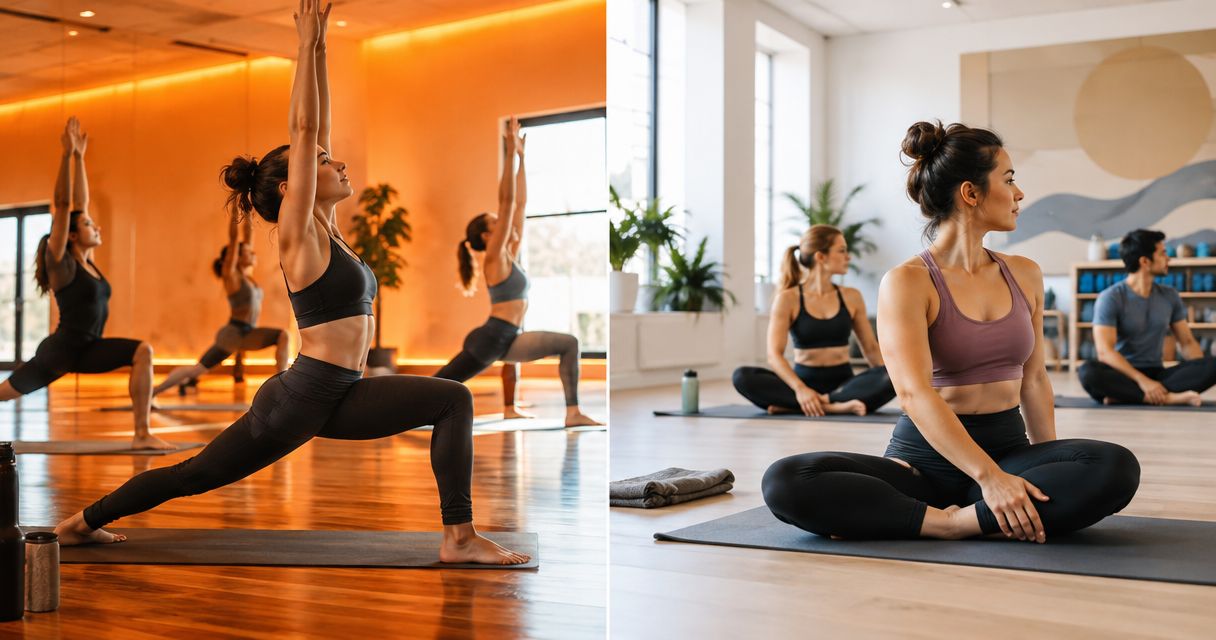
Learn the basic distinction between styles before choosing by name. Vinyasa links movement and breath; Yin uses longer-held positions; 26&2 follows a set sequence of 26 postures and two breathing exercises. These are category descriptions, not a statement of any particular class’s duration, temperature, or teaching pace.
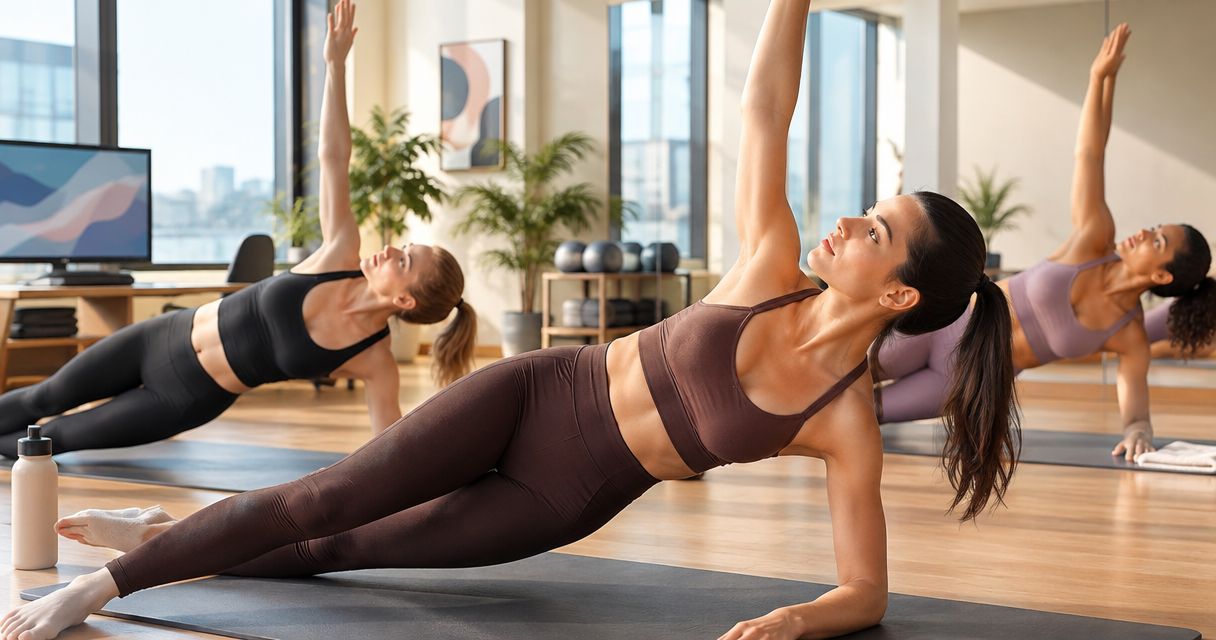
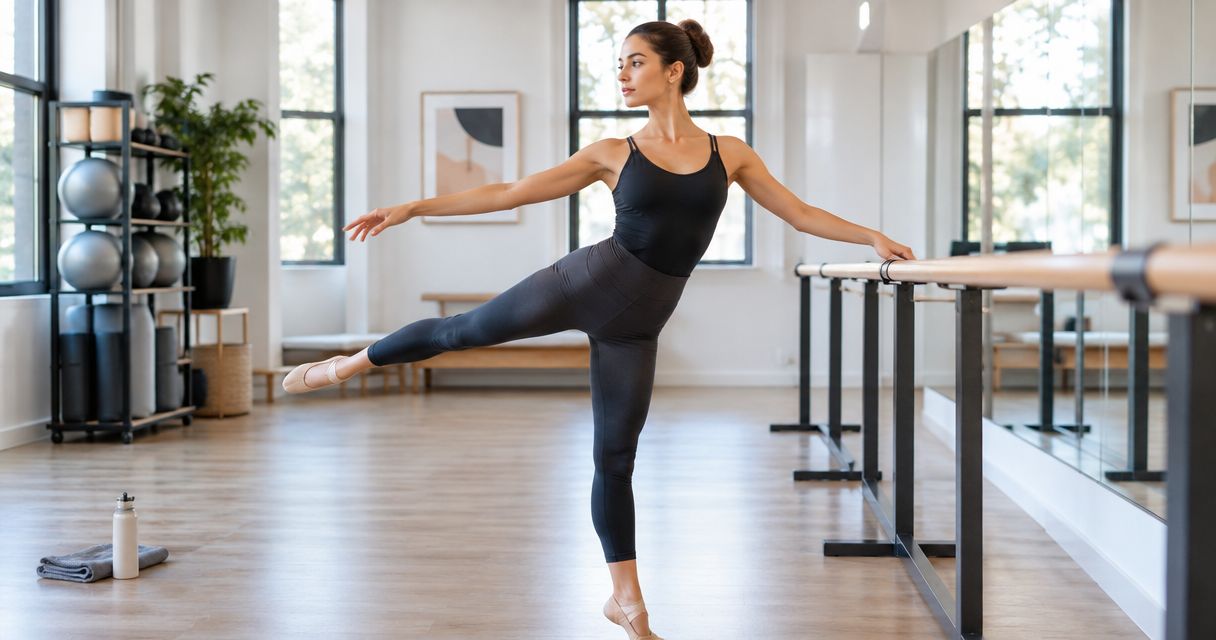
Pilates and Barre deserve the same consideration. Hot Pilates is Pilates-style exercise in a heated setting. Reformer Pilates uses a spring-resistance apparatus, while Barre commonly includes controlled movements with a ballet barre as support. None is automatically the best option for every runner.
Unified Hot Yoga offers all six named formats. Ask which current class gives a newcomer the clearest introduction to the format you want. If flowing yoga interests you, the guide to Vinyasa yoga classes for beginners in Utah County provides a related starting point.
- Choose Vinyasa if you want to learn flowing yoga transitions.
- Choose Yin if you prefer a longer-held yoga format.
- Choose 26&2 if you like practicing a set sequence.
- Consider Hot Pilates if heated Pilates-style exercise interests you.
- Consider Reformer Pilates if you want apparatus-based practice.
- Consider Barre if you enjoy controlled, barre-supported exercise.
3. Place the class around your running priorities
Open your running calendar before opening a class schedule. Mark the runs that matter most, then find a studio opening that leaves room to learn how you respond. A first heated session immediately before an important workout makes that response harder to judge.
Keep your first 2026 studio experiment simple. Try one weekly class for two weeks, while keeping the rest of your routine familiar. This is a planning suggestion, not a claim that two weeks produces a particular adaptation.
A studio class and a run on the same day are still two activities. Do not label the class recovery solely because it happens indoors or includes stretching. Consider its movement demands, heat, and your own fatigue.
- Mark your long run and other priority sessions first.
- Avoid making your first heated class part of an already demanding day.
- Leave room to eat, drink, and change between activities.
- Keep the same class format during your initial experiment.
- Note whether the next planned run feels normal for you.
- Reduce studio demands if the combination interferes with your running.
4. Pack your bag and confirm the class basics
Prepare with things you already have: comfortable exercise clothing, a water bottle, a towel, and a change of clothes. For mat-based classes, ask whether you should bring your own mat. Do not assume a studio provides equipment, rentals, storage, or showers unless it confirms those details.
Before your first visit, check the current Schedule and Know Before You Go information, or ask the studio directly. Class names alone do not tell you the room temperature, session length, required equipment, or arrival procedure. Confirming those details removes avoidable first-class stress.
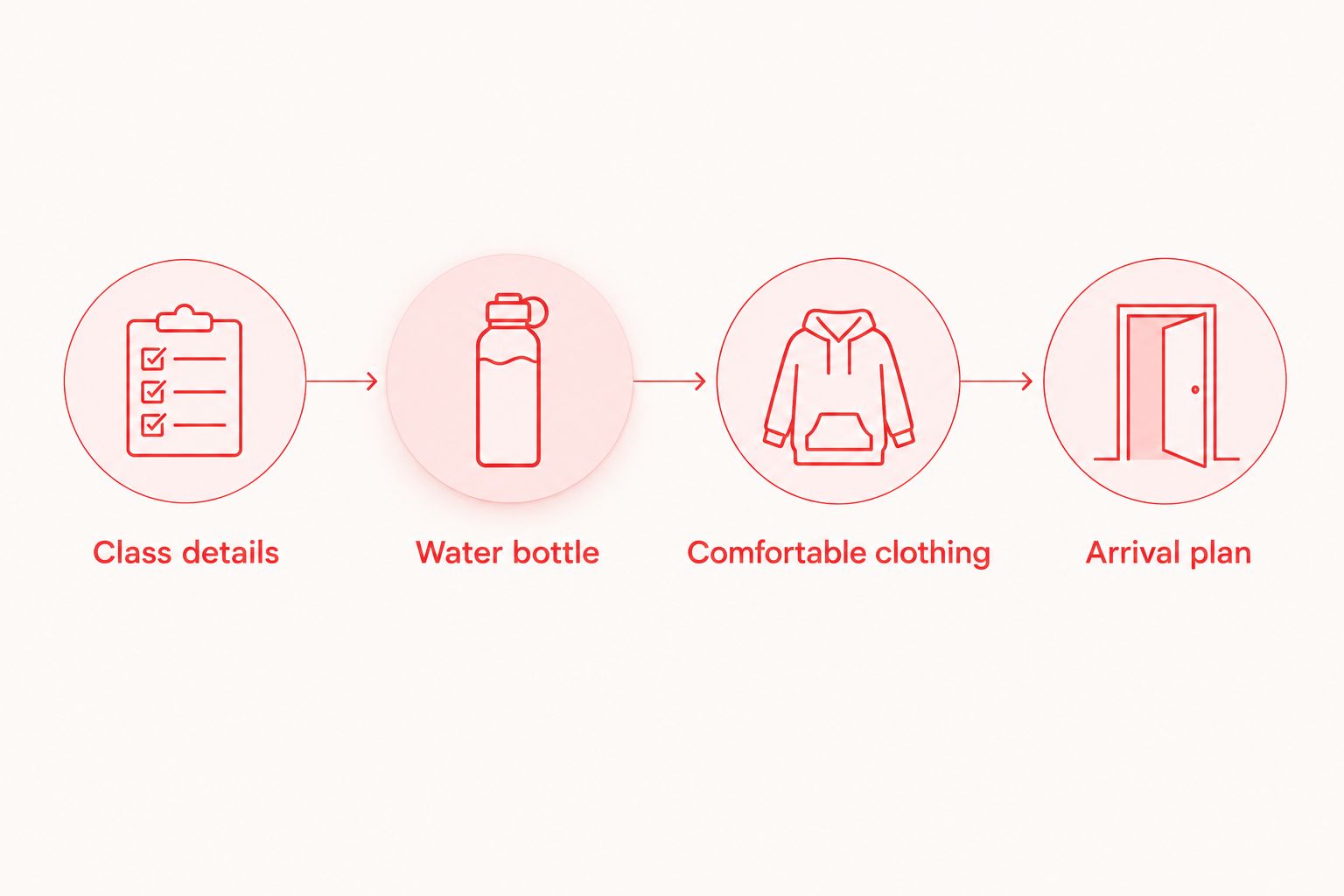
Your preparation has four parts: Class details, Water bottle, Comfortable clothing, Arrival plan. Pack ahead so you can focus on instruction rather than sorting out missing items at the door.
Eat and drink in a way you already tolerate around exercise; your first class is not the time to test an unfamiliar routine. Ask a clinician about heated exercise if you have a condition or take medication that affects heat tolerance.
- Confirm the class format, duration, and heat setting.
- Ask which equipment you must bring.
- Pack a water bottle and towel.
- Wear clothing that allows comfortable movement.
- Bring dry clothing for the trip home.
- Confirm check-in instructions and when to arrive.
5. Tell the instructor you are new and control your effort
Introduce yourself before class and explain that you run. Name any relevant limitation plainly, without trying to turn it into a diagnosis: a position hurts, balancing is unfamiliar, or this is your first heated session. Ask how to rest and how to leave the room if needed.
Being fit enough to run does not make you experienced at hot yoga. Follow the instruction you understand, choose a smaller movement when needed, and avoid matching another person’s range. A group setting can support learning, but your effort remains your responsibility.
Sweating is not a measure of class quality. Stop exercising if you feel dizzy, nauseated, unusually weak, or unwell; move to a cooler place and get assistance. Severe symptoms, fainting, or confusion require urgent medical help.
- Tell the instructor this is your first class in the format.
- Ask for an accessible alternative before an unfamiliar movement.
- Keep stretches within a comfortable range.
- Take a break without waiting to keep pace with the group.
- Leave the heat if you feel unwell and alert someone.
- Do not use pain as evidence that a position is working.
6. Review the experience before choosing a membership
After class, record three observations: whether the instruction was clear, whether the format suited you, and how you felt during your next planned run. These questions are more useful than comparing sweat, flexibility, or effort with someone else.
For your 2026 review, compare your experience with your original goal. If you wanted to learn yoga but spent the session overwhelmed by heat, change the format or ask about class conditions. If the practice fits your schedule but the effort disrupts running, adjust the timing or frequency.
When you are ready to join, review Unified Hot Yoga’s current Prices page for intro offers and memberships. Choose around the classes you intend to attend, not an imagined attendance streak. Current terms belong on that page, rather than in a fixed 2026 guide.
- Note whether you could follow the instructor’s cues.
- Record any discomfort or symptoms instead of dismissing them.
- Check how the class fits your actual weekly schedule.
- Compare your next run with your usual experience.
- Ask about another format if the first one did not suit you.
- Read current membership terms before committing.
Compare yoga and Pilates options for runners
Choose by format first and heat second. This comparison explains what each option generally involves and the trade-off to consider. It does not rank one style as a treatment or promise that a class will improve your running performance.
| Option | Best for | What it involves | Key limitation |
|---|---|---|---|
| Vinyasa | Runners who enjoy continuous movement | Yoga poses connected through transitions and breath | Following transitions takes practice; the class is not automatically an easy day |
| Yin | Runners who prefer a longer-held format | Longer-held yoga positions rather than flowing sequences | Holding a position longer does not justify stretching through pain |
| 26&2 | Runners who like a set sequence | A sequence of 26 postures and two breathing exercises | Familiarity with the sequence does not remove the demands of heat |
| Hot Pilates | Runners interested in heated Pilates-style exercise | Pilates-style movement in a heated environment | Adds exercise and heat demands rather than guaranteeing recovery |
| Reformer Pilates | Runners who want apparatus-based practice | Movement using a spring-resistance reformer | Equipment setup and technique require instruction |
| Barre | Runners who enjoy controlled, barre-supported work | Controlled movements, often using a ballet barre for support | Repeated small movements still add muscular effort |
| Home movement practice | Runners who want to explore preferences before attending | Familiar, comfortable movements in your own space | No in-person instructor to clarify technique or unfamiliar positions |
Use the table to choose a first conversation with an instructor, not to self-prescribe rehabilitation. A welcoming class supports learning; it does not remove the need to manage your effort or seek medical advice for an injury.
Common mistakes runners make with hot yoga
Treating every heated class as recovery
A Vinyasa or Hot Pilates session can add a substantial subjective effort to your day. Judge it by what you actually do and how you feel afterward, not by the word yoga or the absence of running miles.
Stretching harder because the room is warm
Do not turn a comfortable stretch into a test of tolerance. Warmth is not proof that a position is appropriate, and a deeper position is not a better outcome. Ask for an alternative when a movement causes pain.
Assuming running fitness transfers to every class
Running experience does not teach yoga transitions, reformer setup, or barre technique. Start as a newcomer to the format. Asking a basic question is more useful than disguising uncertainty to keep up.
Choosing a membership before testing the commute
A class that looks ideal on paper still needs to fit your route, work hours, and running schedule. For runners coming from nearby Utah County cities, test the actual trip to American Fork before building a recurring routine around it.
FAQ
Is hot yoga good for runners?
Hot yoga can be a complementary movement practice for runners who enjoy it and tolerate heated exercise. It does not replace running-specific training, strength work, or care for an injury.
What is the best yoga class for a runner who is a beginner?
The best first class is one with a format you understand and instruction that accommodates newcomers. Compare Vinyasa, Yin, and 26&2, then ask the studio which current class provides a suitable introduction.
Should I do hot yoga before or after a run?
Keep your first hot yoga class separate from a demanding run so you can assess the class on its own. Once you understand your response, arrange sessions around your running priorities and allow time for food, fluids, and changing.
How often should runners do hot yoga?
Start with one class per week as a practical experiment, not a prescribed training dose. Review whether the class suits you and affects your planned runs before adding sessions.
What should I bring to my first hot yoga class?
Bring a water bottle, towel, comfortable exercise clothing, and dry clothing for afterward. Ask the studio whether you need your own mat and confirm any format-specific equipment requirements.
Is hot yoga better than Pilates for runners?
Neither hot yoga nor Pilates is universally better for runners. Yoga offers different pose and sequence formats, while Pilates offers mat-based or apparatus-based practice; choose according to your preferences, instruction needs, and training schedule.
Can I do hot yoga if running has left me injured?
Do not use hot yoga to diagnose or treat a running injury. Seek advice from a qualified healthcare professional, and explain any exercise restrictions to the instructor before participating.
Where can I try yoga and Pilates in American Fork?
Unified Hot Yoga offers yoga and Pilates classes in American Fork for practitioners of all skill levels. Review its current class information and Prices page before selecting a first class or membership.
One last thing
Make the least glamorous part of your 2026 plan the deciding factor: can you attend, understand the instruction, and still do the runs that matter to you? That is a stronger selection rule than choosing the hottest room or the hardest-looking class. A repeatable practice leaves space for learning, community, and your existing running life.