Hot yoga can support an anxiety-management routine, but research does not establish heat itself as an anxiety treatment or show that heated yoga works better than unheated yoga. Yoga has evidence for reducing anxiety symptoms in some adults; that does not make it a replacement for therapy, medication, or other prescribed care. If heat makes you uncomfortable or triggers panic-like sensations, choose a different setting rather than pushing through.
- Can hot yoga help reduce anxiety? Yoga can support symptom management; added heat has no established advantage.
- Unified Hot Yoga suits American Fork beginners seeking yoga, Pilates, and Barre options—not clinical anxiety treatment.
- Choose your first class around heat tolerance, movement preferences, and clear instructor guidance.
- For 2026, keep yoga alongside prescribed anxiety care rather than replacing it.
Why this matters
When you feel anxious, advice to simply relax is not useful. You need a manageable activity, a setting you can tolerate, and permission to stop when something feels wrong. A yoga class can provide structured movement and attention to breathing, but the room temperature is a separate consideration.
Before booking, review what to bring to your first hot yoga class. Removing practical uncertainties—clothing, equipment, arrival, and water—gives you fewer things to solve at the studio door. Your first visit is an introduction, not a test of endurance.
Can hot yoga help reduce anxiety?
Yoga can help some people manage anxiety symptoms, but the evidence does not justify promising that a hot yoga class will relieve an anxiety disorder. Research on yoga in general also cannot establish a special benefit from infrared heat. Keep those claims separate when choosing a class.
A randomized clinical trial published in JAMA Psychiatry, titled Efficacy of Yoga vs Cognitive Behavioral Therapy vs Stress Education for the Treatment of Generalized Anxiety Disorder, studied 226 adults over 12 weeks. Its 3 treatment groups received Kundalini yoga, cognitive behavioral therapy, or stress education. Yoga performed better than stress education, but it did not meet the study's criterion for being as effective as cognitive behavioral therapy.
That distinction matters. The trial studied a specific yoga program for adults with generalized anxiety disorder—not a typical heated Vinyasa, Yin, Pilates, or Barre class. Its findings support considering yoga as a complementary practice, not transferring the results to every class with yoga in its name.
For your 2026 decision, use this evidence boundary:
| Question | What the evidence supports | What it does not establish |
|---|---|---|
| Can yoga help anxiety symptoms? | Some structured yoga programs have shown benefits | Every participant or class will produce the same result |
| Is hot yoga better than unheated yoga? | Heat tolerance matters when choosing a setting | Added heat provides greater anxiety relief |
| Can yoga replace anxiety treatment? | Yoga can sit alongside clinical care | Yoga is equivalent to cognitive behavioral therapy |
| Does sweating show anxiety is improving? | Sweating is a physical response to heat and exertion | Sweat measures mental-health improvement |
Choose yoga for a practice you can repeat comfortably, not for a promise that more heat produces more healing.
Which class should you try first?
Start with the experience you want, then ask about the actual class. A quiet format is not automatically easier for an anxious person: stillness can feel restful, while someone else prefers movement. Likewise, a familiar sequence can reduce uncertainty without being physically gentle.
The descriptions below explain common class formats, not guaranteed details of an individual studio session. Confirm pace, heat, equipment, and beginner guidance before booking.
| Class | What the format generally involves | Best for | Trade-off to consider |
|---|---|---|---|
| Vinyasa | Movement linked with breathing, often through changing sequences | People who prefer an active focus | Transitions can require more attention when everything is new |
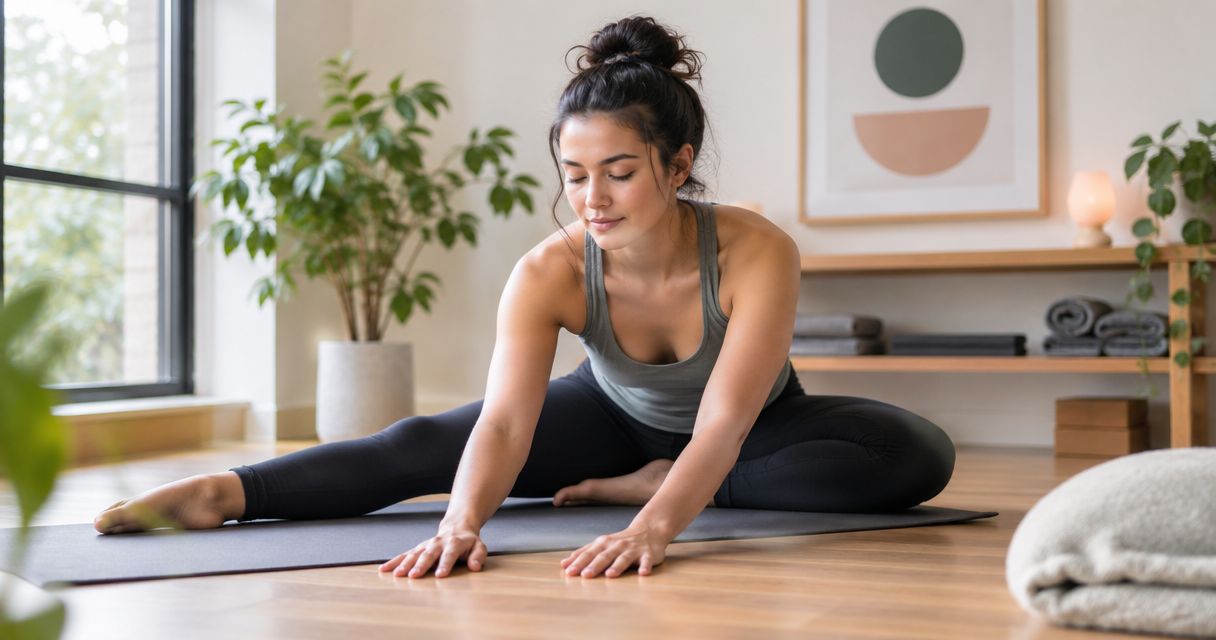
| Yin | Longer-held, mostly floor-based positions | People who prefer less frequent movement | Stillness and sustained sensations are not comfortable for everyone |
| 26&2 yoga | A set sequence of postures and breathing exercises | People who appreciate a predictable structure | Predictable does not mean low effort or low heat |
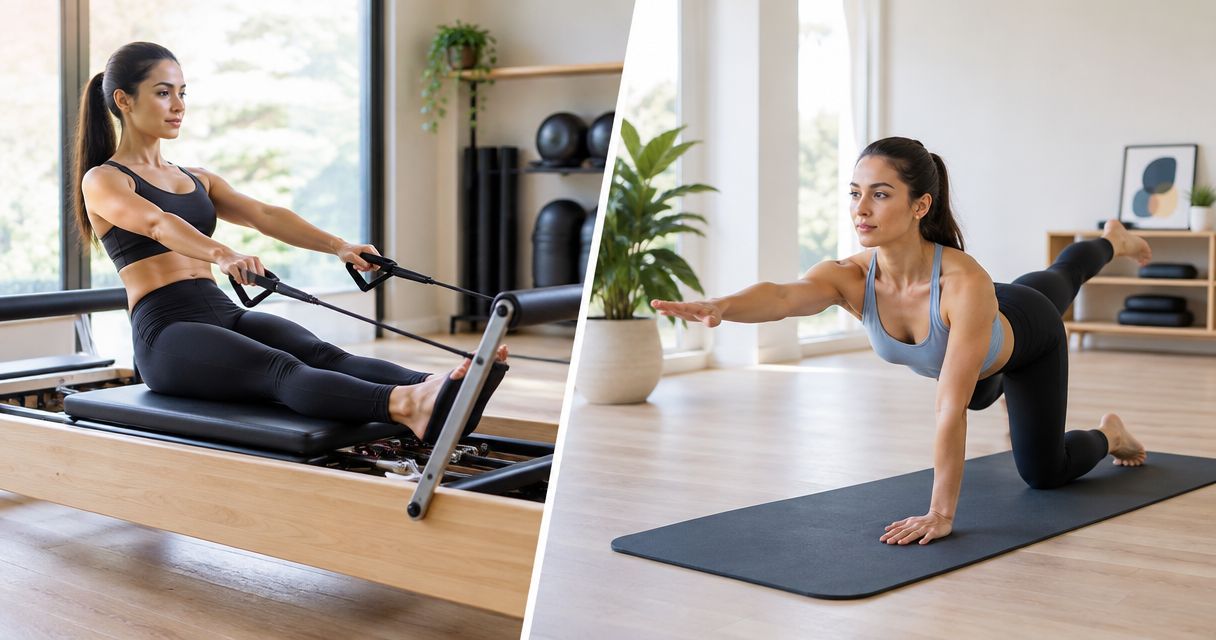
| Hot Pilates | Pilates-based exercise in a heated setting | People who want exercise rather than a yoga format | Exertion and heat both affect the experience |
| Reformer Pilates | Exercises using a reformer with spring resistance | People interested in equipment-based instruction | The equipment introduces unfamiliar movements and adjustments |
| Barre | Ballet-inspired exercise, often incorporating a barre | People who prefer standing, coordinated exercise | Repeated movements still require effort and modifications |
No class type wins universally for anxiety. Your preference, comfort, and ability to follow the instruction matter more than choosing the class that sounds most demanding.
You do not need to feel calm before attending. You do need a plan that lets you pause, ask questions, and leave without treating those choices as failure.
Why your response to hot yoga varies
Several practical factors shape whether a class feels supportive or overwhelming. None provides a guaranteed anxiety outcome.
- Heat tolerance: A warm room adds physical demand. If heat already makes you uncomfortable, do not assume repeated exposure is the right starting point.
- Class pace: Frequent transitions require you to process instructions while moving. A slower pace reduces transitions, but longer holds bring their own demands.
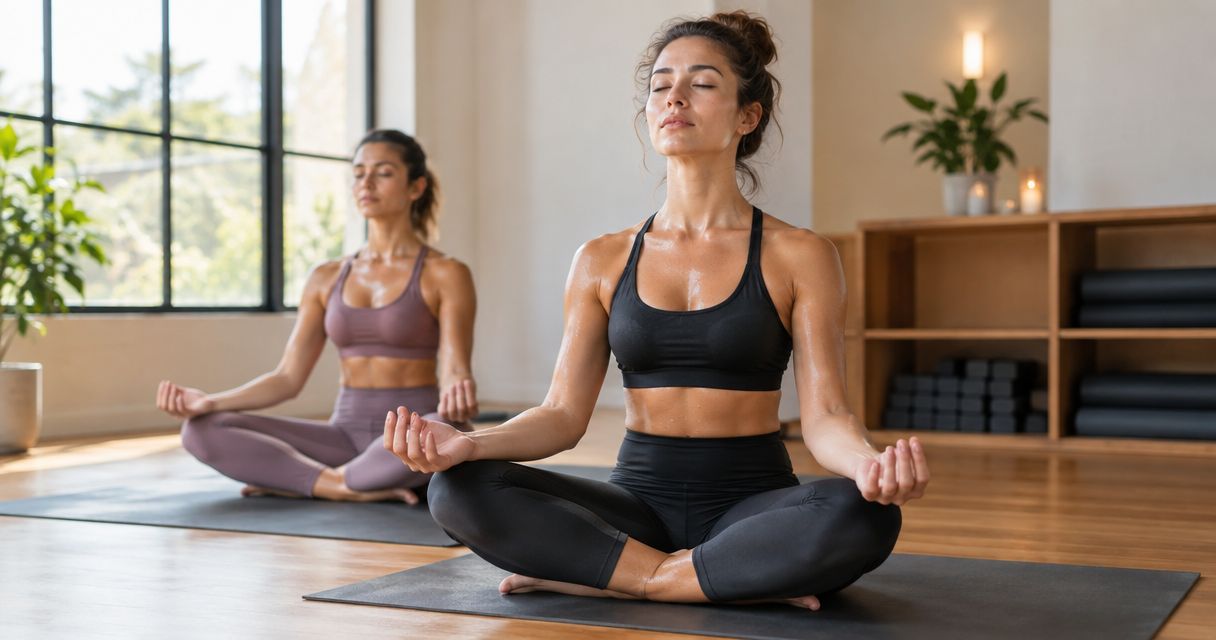
- Response to body sensations: Warmth, sweating, and a faster heartbeat can resemble sensations you associate with anxiety. Recognize that overlap without dismissing new symptoms.
- Familiarity: Knowing the room, equipment, and class structure removes practical unknowns. Ask questions before the session rather than trying to work everything out during it.
- Current wellbeing: Poor sleep, illness, dehydration, or existing medical concerns change what feels manageable. Adjust the plan instead of forcing the original booking.
- Instructor communication: Clear explanations and permission to modify help you make informed choices. Ask what beginners should do when they need a break.
Treat your response as information, not a verdict on your ability to practice. A class that feels wrong today does not prove that all yoga or group exercise is wrong for you.
Your 2026 first-class checklist
Preparation should make attendance simpler, not become another demanding routine. Follow these steps before deciding whether a particular class fits.
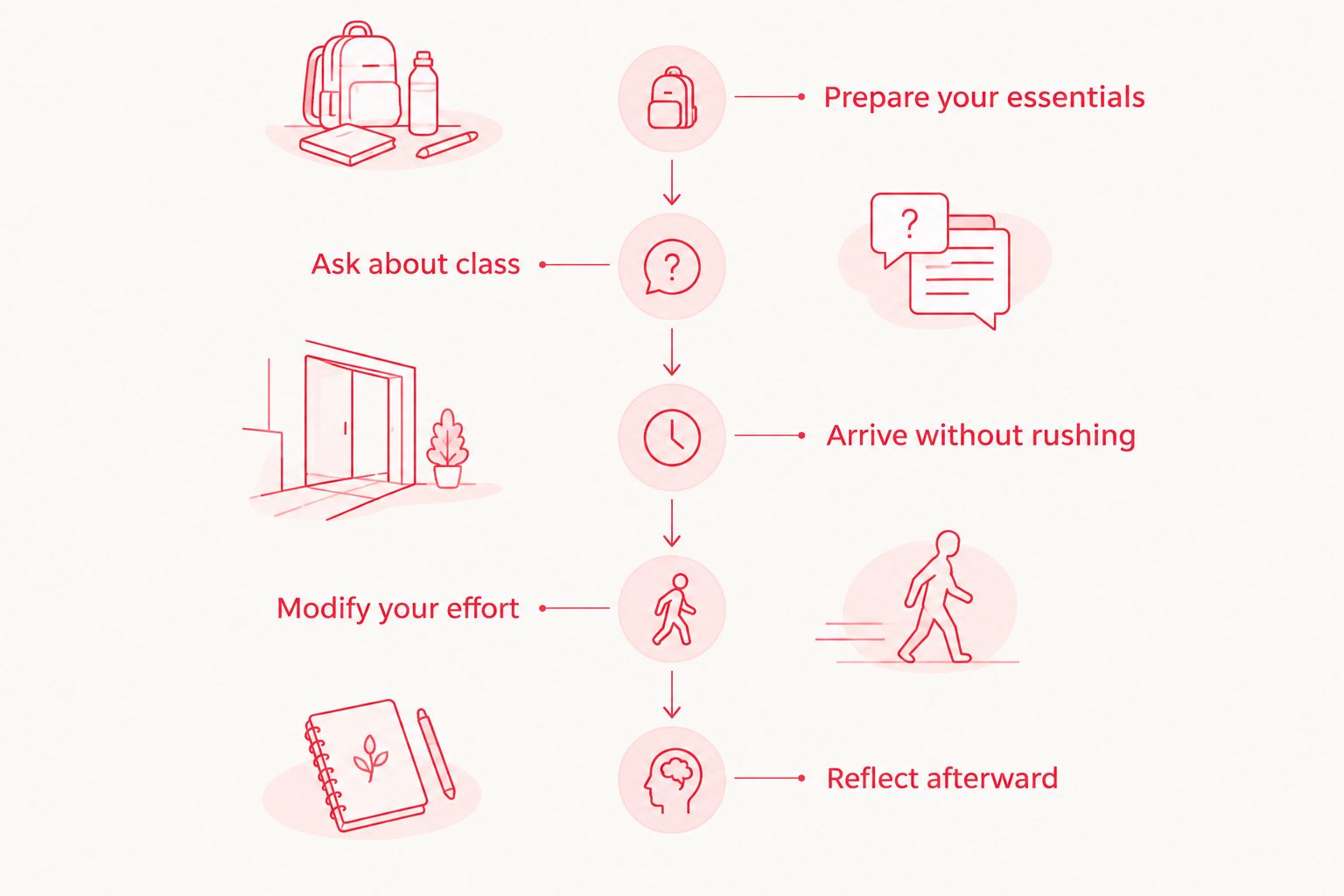
Prepare your essentials
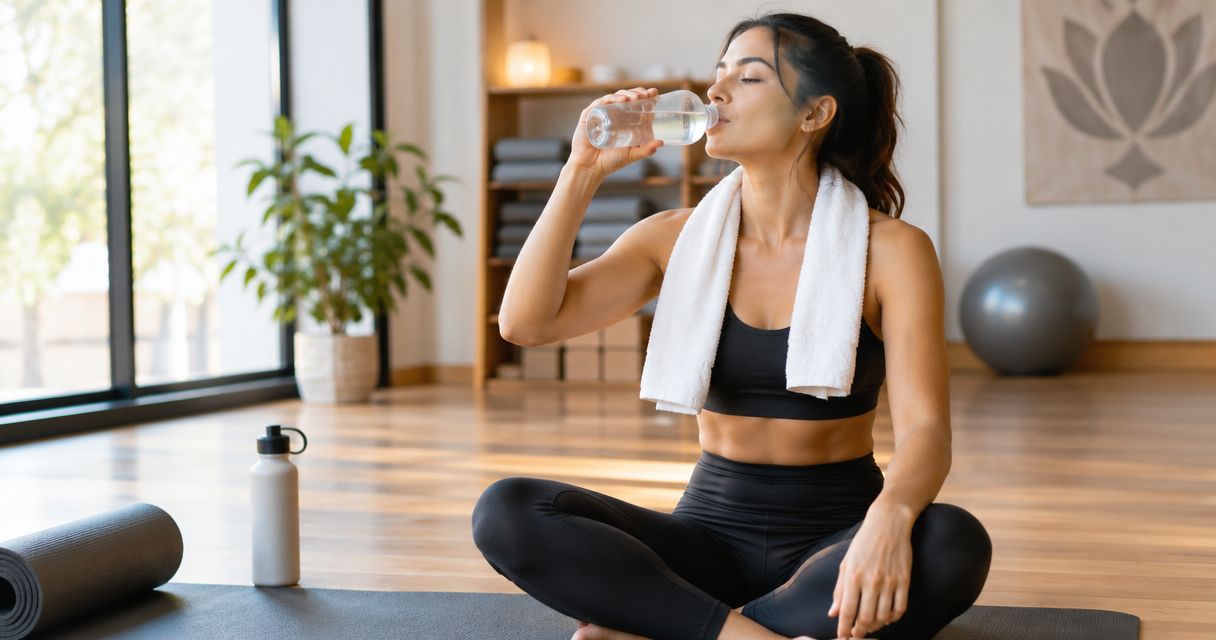
Bring water and clothing that lets you move comfortably. For a heated class, a towel is practical; ask whether you need your own mat and whether equipment is supplied. Do not assume rentals, storage, or other amenities are included.
Drink normally through the day rather than trying to compensate immediately before class. Avoid arriving straight after a heavy meal, and allow yourself time to settle. There is no need to create an elaborate food or supplement plan for a first visit.
Ask about the class
Tell the instructor you are new and want a manageable introduction. Ask about the room's heat, the pace, how breaks work, and whether leaving the room requires any particular consideration. You can mention anxiety without sharing your medical history with the group.
A useful question is: What should I do if I become overwhelmed? Get a practical answer before the session begins.
Arrive without rushing
Leave enough time for the studio's check-in process and a brief conversation. Ask staff where to put your belongings and where to set up. Choose a position that lets you follow demonstrations and access the exit without stepping over other people.
Modify your effort
Follow the instructor's guidance, but do not treat every movement as mandatory. Reduce your effort or stop if you need to. Avoid forcing deep breathing or holding your breath to match an instruction when it makes you uncomfortable.
The goal is to learn how the class feels. Completing every repetition or posture tells you less than noticing whether you can participate without distress.
Reflect afterward
Once you have cooled down, consider the whole experience: Was the instruction clear? Did the heat feel manageable? Could you pause comfortably? Did the class leave you willing to return, or mainly relieved that it ended?
Those observations help you choose the next session. They are not a diagnosis or proof that a class has treated anxiety.
What if heat makes your anxiety feel worse?
Stop exercising if heat makes you feel unwell; do not assume you need to push through anxiety. Heat-related illness and panic can share symptoms, including dizziness, a racing heart, and nausea. You cannot reliably distinguish them by willpower or by how familiar the sensation seems.
Tell the instructor, move to a cooler place, and get help as needed. Confusion, collapse, severe breathing difficulty, or chest pain require urgent medical attention. Do not use breathing exercises as a substitute for responding to a possible medical emergency.
If you have a medical condition, take medicines that affect heat tolerance, or have previously fainted during exercise, discuss heated exercise with a clinician before attending. Pregnancy also requires separate guidance; a general beginner recommendation is not enough.
Choosing an unheated activity is a valid decision. Ask about the setting of any alternative class rather than assuming that Pilates, Barre, or a slower yoga format takes place without heat.
Is hot yoga better than regular yoga for anxiety?
Hot yoga has no established anxiety advantage over unheated yoga. The added heat changes the physical experience; it does not establish a stronger mental-health effect.
Choose the environment in which you can move, breathe comfortably, and follow instructions. If you enjoy warmth, that preference can inform your choice. If you dislike it, you do not need heated exercise to make a wellbeing routine legitimate.
How often should you practice yoga for anxiety?
There is no established hot yoga frequency that treats anxiety. Research schedules belong to the programs studied and should not become a prescription for a different class.
Start by assessing whether a session is comfortable and compatible with your existing care. If tracking helps, write a short note about heat tolerance, enjoyment, and how you felt afterward. Do not increase attendance simply because symptoms have not changed immediately.
Choosing a studio in American Fork
Unified Hot Yoga offers hot yoga and Pilates classes in American Fork, including infrared-heated Vinyasa, Yin, 26&2 yoga, Hot Pilates, Reformer Pilates, and Barre. The studio welcomes practitioners of all skill levels. Its range gives you formats to ask about, but the choice of a class remains separate from choosing treatment for anxiety.
Unified Hot Yoga is a fit for American Fork beginners seeking yoga and Pilates classes, not a substitute for anxiety treatment. Ask which upcoming session matches your movement preferences, experience, and comfort with heat. Do not assume every format shares the same temperature or pace.
Before choosing a membership in 2026, confirm the current schedule, introductory offers, and membership terms directly with the studio. First establish that the experience suits you; a commitment should follow that decision, not make it for you.
FAQ
Can hot yoga help reduce anxiety if I have never done yoga?
Yoga can support anxiety management for some adults, but a first hot yoga class is not a treatment test. Ask for beginner guidance and choose a setting you can tolerate comfortably.
Is hot yoga better than unheated yoga for anxiety?
Hot yoga has no established advantage over unheated yoga for anxiety. Choose heat because you tolerate and enjoy it, not because sweating promises a stronger result.
What is the best yoga class for an anxious beginner?
The best starting class matches your comfort with heat, pace, stillness, and instruction. Ask about the actual session rather than relying on its name alone.
Can hot yoga trigger a panic attack?
Heat and exertion can produce sensations that feel alarming to someone sensitive to panic symptoms. Stop if you feel unwell, tell the instructor, and do not assume new symptoms are only anxiety.
Should I stop my anxiety medication if yoga helps?
Do not stop or change prescribed anxiety medication because a yoga class feels helpful. Discuss treatment changes with the clinician who manages your care.
Can I attend Unified Hot Yoga as a beginner?
Unified Hot Yoga offers yoga and Pilates classes for practitioners of all skill levels. Ask which session matches your experience, preferred movement style, and heat tolerance before booking.
How long does hot yoga take to reduce anxiety?
There is no established timeline for anxiety relief from hot yoga. A study of a particular yoga program cannot predict when an individual heated class will change your symptoms.
One last thing
Feeling calm immediately afterward is not the only useful outcome of a first visit. Learning that you prefer movement to stillness, need a cooler setting, or want clearer instruction gives you a better next choice.
For your 2026 wellbeing routine, make comfort and repeatability the standard. You do not need to tolerate more heat to deserve the benefits of movement and community. Keep clinical support in place when anxiety interferes with daily life.