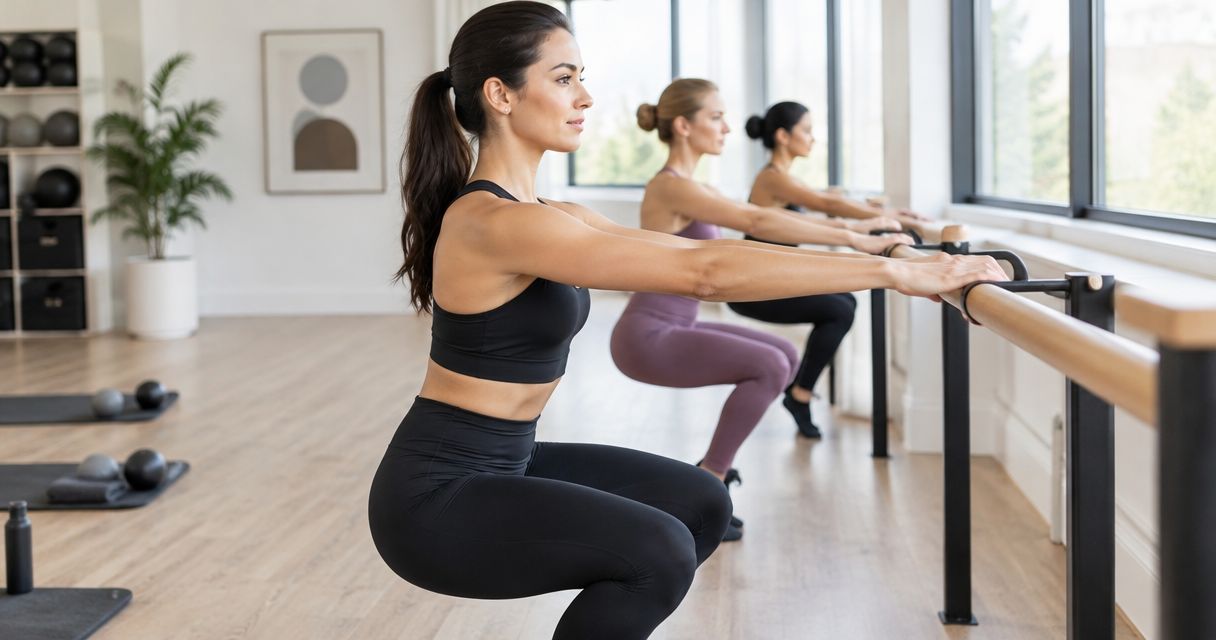
You can sometimes do hot yoga with a knee injury, but the injury, your symptoms, and your clinician’s activity restrictions determine whether it is appropriate—not your flexibility or experience. If your knee is newly injured, swollen, unstable, locking, or painful during ordinary walking, get medical guidance before joining a heated class. This 2026 guide explains what to ask, when to stop, and how to approach a return without treating yoga as rehabilitation.
- Can you do hot yoga with a knee injury? Your symptoms and clinician’s restrictions determine the answer.
- Unified Hot Yoga offers several class styles; none replaces individualized knee rehabilitation.
- Vinyasa, Yin, and 26&2 involve different demands. A slower class is not automatically safer.
- Stop for knee pain, instability, or locking. Seek urgent care for severe symptoms.
Why this matters
A knee injury changes the question from which class sounds appealing to which movements your knee can currently tolerate. Heat, enthusiasm, and a familiar sequence do not answer that question. Your first goal is to understand your restrictions, then decide whether a group class can accommodate them.
Unified Hot Yoga offers hot yoga and Pilates classes in American Fork for practitioners of all skill levels. Unified Hot Yoga is a fit for American Fork newcomers seeking several class styles—not a substitute for injury assessment or rehabilitation. Beginner-friendly instruction and medical suitability are separate considerations.
You do not need to prove that you can finish a class. A successful return respects your current limits, including the decision to wait.
Can you do hot yoga with a knee injury?
Hot yoga is appropriate only when its movements and heated setting fit your current medical guidance and symptoms. A previous injury that no longer causes problems is different from a recent twist, ongoing swelling, or recovery after surgery. The diagnosis matters, but so does how your knee behaves during everyday movement.
Use the following comparison to decide your next step. These are decision categories, not a diagnosis or permission to exercise.
| Your situation | Best next step | Benefit of this approach | Important limit |
|---|---|---|---|
| Recent injury with persistent pain or swelling | Arrange a clinical assessment before hot yoga | Establishes what needs protection | A class instructor cannot diagnose the injury |
| Knee gives way, locks, or cannot bear weight | Seek prompt medical assessment rather than attending class | Prioritizes potentially significant symptoms | Do not test the knee through a sequence |
| Recovering from knee surgery | Follow the surgeon’s and physical therapist’s activity restrictions | Keeps exercise consistent with your recovery plan | General yoga advice cannot replace your protocol |
| Previous injury, no current symptoms, and no activity restrictions | Discuss a gradual return and monitor your response | Lets you approach practice deliberately | A symptom-free day does not guarantee every pose suits you |
| Clinician has approved modified exercise | Confirm that the class can accommodate the specific restrictions | Connects medical advice to actual class demands | Approval for exercise is not approval for every movement |
For your 2026 return plan, ask about both the knee and the heated environment. Clearance for walking, stationary cycling, or prescribed rehabilitation exercises does not automatically cover hot yoga.
When should you seek urgent care instead of attending class?
Get urgent medical help for a visibly deformed knee, inability to bear weight after an injury, or a hot, red, swollen joint accompanied by fever. A knee that becomes locked or repeatedly gives way also needs prompt assessment. Do not use a class to find out whether these symptoms improve with movement.
After surgery, follow your care team’s instructions about warning signs. New calf swelling or pain needs prompt medical advice; chest pain or shortness of breath requires emergency care.
Which class style should you discuss with your clinician?
Class names describe an approach to movement, not a knee-safety rating. Vinyasa, Yin, 26&2, Hot Pilates, Barre, and Reformer Pilates all deserve the same screening: what positions, loads, transitions, and environmental conditions will you encounter?
The comparisons below describe general characteristics of these formats, not a verified sequence for a particular studio session. Ask about the actual class before booking.
| Class style | What it generally involves | Best for discussing with your clinician when… | Useful feature | Knee-related limitation |
|---|---|---|---|---|
| Vinyasa | Yoga postures connected through movement and breath | You want to return to a flowing practice | Transitions are part of the practice | Repeated transitions, lunges, and balance work require screening |
| Yin | Longer-held, mostly floor-based yoga positions | You prefer less frequent transitions | More time in a position allows deliberate setup | Deep knee bending or sustained pressure can still be unsuitable |
| 26&2 | A set sequence of postures and breathing exercises | You prefer a recognizable sequence | A consistent format helps you ask specific questions | Predictability does not make every posture appropriate |
| Hot Pilates | Pilates-based exercise in a heated setting | You want to discuss strength-focused group exercise | Offers a different movement format from yoga | Repetition, kneeling, and heat still require consideration |
| Barre | Barre-based exercise with repeated controlled movements | You prefer supported standing exercise | A barre provides a point of support | Repeated knee bending and standing work can remain demanding |
| Reformer Pilates | Pilates exercise using a moving carriage and spring resistance | You want to ask about equipment-based exercise | Resistance and body position are part of the setup | Equipment use does not make a group class injury rehabilitation |
Do not choose Yin solely because it sounds gentle, or Reformer Pilates solely because equipment offers support. Each format has advantages and limitations. The right question is whether the actual session fits your restrictions.
Unified Hot Yoga offers these class styles, but that does not establish which session suits your injured knee. Ask about the specific movements, teaching format, and room conditions before deciding.
Why knee tolerance varies during hot yoga
Your 2026 class choice should reflect your current condition rather than what you managed before the injury. Several factors change what is appropriate:
- The injury and treatment plan. A ligament injury, meniscus problem, fracture, and postoperative knee do not share the same restrictions.
- Current symptoms. Swelling, pain, locking, and instability matter even when you recognize the poses.
- Depth of knee bending. A position that feels manageable near standing can become uncomfortable as the knee bends further.
- Rotation and loading. Turning over a planted foot, balancing, or moving into a lunge places different demands on the knee.
- Transitions and repetition. Getting down to the floor and back up is part of the workload, not just the movement between poses.
- Heat and fatigue. A heated room adds a separate physical demand. Feeling warmer does not confirm that injured tissue is ready for greater movement.
There is no universal safe room temperature or pose depth for every injured knee. For background on the environment, read how hot a hot yoga studio gets, then ask the studio about the session you are considering.
How should you prepare for a return to class?
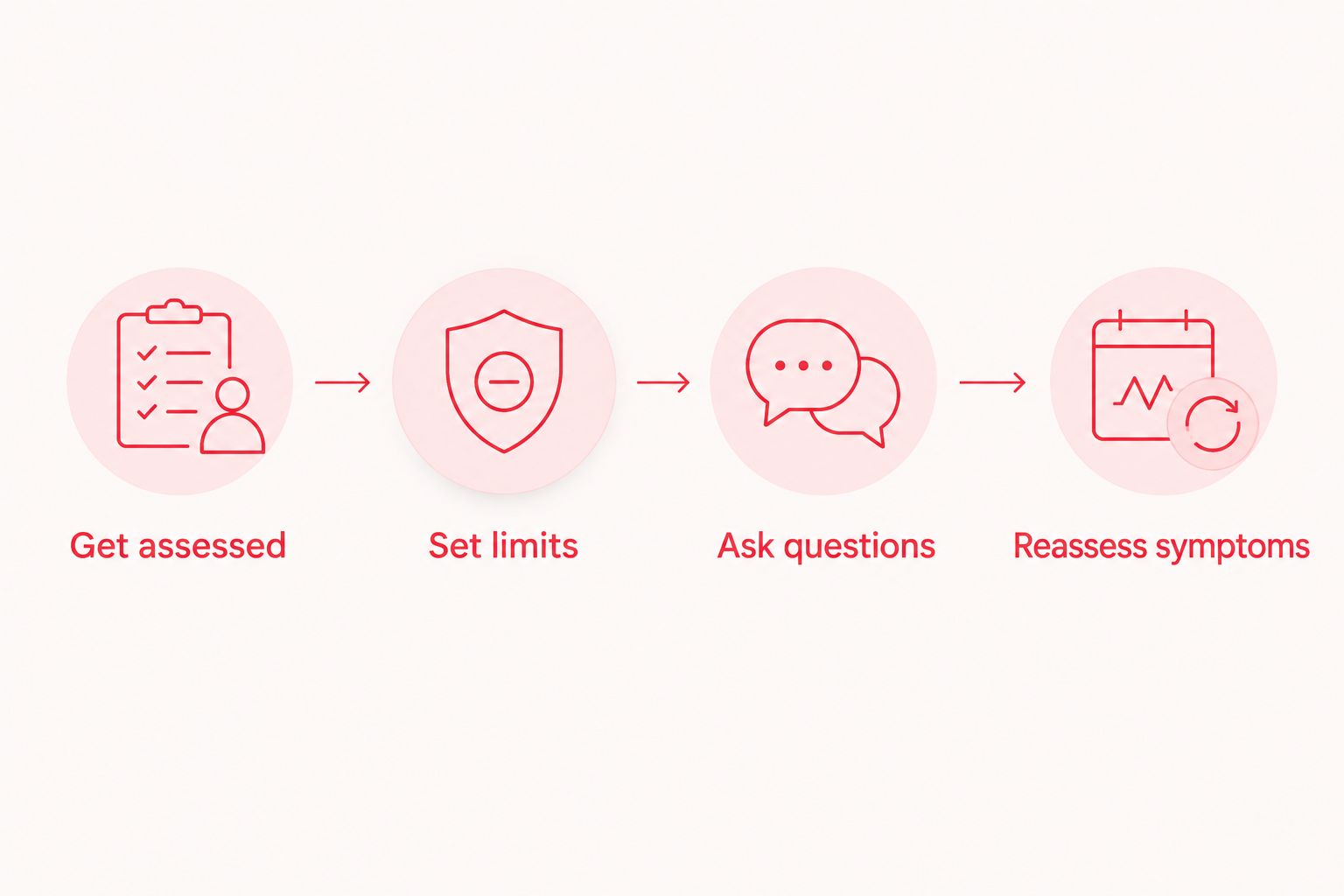
Build your return around clear decisions rather than a promise to take it easy. That phrase leaves too much undefined when an instructor introduces a movement you have not discussed with your clinician.
Get assessed
If the injury is recent, symptoms persist, or your recovery includes medical restrictions, speak with the clinician managing your knee before returning. Describe the class accurately: heated room, group instruction, standing balance, floor work, and repeated transitions where applicable.
Ask whether kneeling, deep bending, twisting, single-leg loading, or moving repeatedly between standing and the floor needs to be limited. Ask separately whether the heated setting is appropriate. Do not assume a general exercise recommendation answers every part of that conversation.
Set limits
Turn the medical advice into boundaries you can explain. You should know which movements to avoid, what symptoms mean stop, and how to judge your knee’s response afterward. If the instructions are unclear, clarify them before class rather than improvising under pressure.
For a 2026 return after surgery, use your current rehabilitation instructions—not advice remembered from an earlier stage of recovery. Do not treat a calendar milestone as automatic clearance for a heated group session.
Ask questions
Tell the instructor about your restrictions before the session begins. Explain the movements you have been told to avoid without expecting the instructor to diagnose the injury or rewrite your rehabilitation plan.
Ask whether you can skip movements, rest, and leave the room when needed. Confirm equipment requirements, whether props are available, and how floor transitions are handled. If the class cannot accommodate your limits, choose a different activity approved by your clinician.
Reassess symptoms
Pay attention during class and afterward. Stop a movement that causes knee pain, catching, or a sense of giving way; do not repeat it to see whether the knee loosens up. New or increased swelling, limping, or reduced movement afterward is a reason to pause and contact your clinician.
Record what you did and what changed. Naming the movement and symptom is more useful than reporting that the class felt hard.
What should you bring, and how should you prepare?
Bring water, comfortable clothing that allows movement, and any support your clinician has specifically prescribed. Confirm whether you need your own mat and towel and whether the studio supplies any props you expect to use. Do not assume that a brace or thicker mat makes an otherwise restricted movement appropriate.
Avoid arriving already dehydrated. If you have a prescribed fluid restriction or another condition affecting heat tolerance, ask your healthcare professional about preparation instead of following a generic hydration target. Water does not make an unsuitable class safe for an injured knee.
Keep your restrictions accessible so you can explain them clearly. You do not owe other participants a detailed medical history, but the instructor needs enough information to understand what you will skip. Community support should make it easier to respect your boundaries, not harder to step out.
For your first session back, leave room in your plans to stop early or decide not to participate after discussing the class. Attending does not create an obligation to finish.
Is Yin yoga better than Vinyasa for a knee injury?
Neither Yin nor Vinyasa is universally better for an injured knee. Yin usually involves longer holds, while Vinyasa involves flowing transitions; either can include positions that conflict with your restrictions.
If sustained knee bending is a problem, a long hold is not automatically preferable. If repeated loading or floor transitions are restricted, a flowing class needs careful discussion. Choose by movement demands, not by a gentle-sounding label.
Does infrared heat help a knee injury heal?
Infrared heating in a yoga studio is not a substitute for treatment or evidence that your knee has healed. Feeling warm or less stiff does not establish that a damaged structure can tolerate deeper bending, twisting, or loading.
Treat the room’s heat as part of the exercise environment. Your rehabilitation plan—not the heating method—determines how you progress.
Can you wear a knee brace and continue hot yoga?
A knee brace does not provide automatic clearance for hot yoga. Use a brace according to the clinician’s instructions, including any restrictions that still apply while wearing it.
Ask whether the brace is appropriate for the planned activity. Do not tighten it, change its settings, or use it to push through pain in order to complete a sequence.
FAQ
Can you do hot yoga with a knee injury if it only hurts a little?
Mild pain alone does not establish that hot yoga is appropriate for an injured knee. If pain persists, follows a recent injury, or changes how you walk, get medical guidance before a heated class.
Should I stretch my injured knee until the pain goes away?
Do not force an injured knee into a stretch to make pain disappear. Stop the painful movement and follow the exercise limits provided by your clinician or physical therapist.
Is hot yoga safe after knee surgery?
Return to hot yoga after knee surgery only when your surgical or rehabilitation team approves the activity and its demands. Follow procedure-specific restrictions, including limits on bending, loading, and twisting.
Is Pilates automatically safer than yoga for a knee injury?
Pilates is not automatically safer than yoga for an injured knee. Mat exercises, heated classes, and reformer sessions involve different positions and loads, so compare the actual session with your medical restrictions.
What should I tell my yoga instructor about my knee?
Tell your instructor which movements your clinician has restricted and what symptoms require you to stop. Ask whether you can skip movements, rest, and leave when needed; an instructor cannot diagnose the injury.
Should I stop if my knee swells after hot yoga?
Pause hot yoga if your knee develops new or increased swelling afterward, and contact your clinician. Seek urgent care for severe symptoms, inability to bear weight, or a hot, red, swollen knee with fever.
Can beginners with an old knee injury join Unified Hot Yoga?
Unified Hot Yoga offers classes for all skill levels, but an old knee injury still requires an individual decision about current symptoms and restrictions. Discuss the actual class demands with your clinician and instructor before participating.
One last thing
Check the transition, not just the pose. A position can look manageable while getting into it requires kneeling, pivoting, or standing from the floor—movements your knee is not ready to handle.
Before choosing a class in 2026, ask how you will enter and leave the positions you expect to practice. If you cannot do that within your restrictions, sitting out that movement—or waiting to return—is the practical choice. You belong in a wellbeing community without having to match anyone else’s range of motion.