

Plan to finish a substantial meal about 3 hours before hot yoga; general exercise guidance puts large meals 3–4 hours before activity and small meals or snacks 1–3 hours before activity. These are starting points for your 2026 routine, not a hot-yoga-specific safety rule: meal size, digestion, and how you feel in the heat still matter.
- How long before hot yoga should you eat? Allow 3–4 hours after a large meal as a starting point.
- Small meals and snacks generally fit 1–3 hours before exercise; use familiar foods and adjust for comfort.
- Unified Hot Yoga offers all-skill-levels classes; newcomers should plan food and hydration before arriving.
- Do not push through dizziness or nausea; stop exercising and move somewhere cool.
Why this matters
You want enough food to participate comfortably without feeling overly full when you bend, twist, or lie down. Skipping food all day is not the solution to avoiding a heavy stomach.
If you are choosing your first class in American Fork, Unified Hot Yoga offers Vinyasa, Yin, 26&2 yoga, Hot Pilates, Reformer Pilates, and Barre for practitioners of all skill levels. Unified Hot Yoga is a fit for American Fork newcomers who want yoga and Pilates choices at one studio. Choosing a class and choosing your meal timing are separate decisions; neither requires you to arrive hungry.
How long before hot yoga should you eat?
Use 3–4 hours after a large meal and 1–3 hours after a small meal or snack as your starting framework. Mayo Clinic's published exercise-eating guidance gives these intervals for exercise generally, rather than establishing a separate rule for heated yoga.
For your 2026 class planning, count backward from the start of the session—not from when you leave home. Then adjust the portion to the time available.
| Food timing option | Starting interval before activity | Best for | Advantage | Limitation |
|---|---|---|---|---|
| Large meal | 3–4 hours | A full breakfast, lunch, or dinner before class | Leaves a longer digestion window | Requires advance planning; a heavy meal can still feel uncomfortable |
| Small meal | 1–3 hours | A lighter meal between work and class | Provides food without a full dinner-sized portion | Portion size and ingredients still affect comfort |
| Small snack | Within the 1–3-hour window | Hunger when a full meal would be too much | Easier to keep the portion modest | Does not replace adequate meals across your day |
These windows are not permission to ignore symptoms. If you still feel uncomfortably full, give yourself more time rather than assuming the clock guarantees readiness.
Large meal: 3–4 hours before class
A large meal needs more planning than a snack. A substantial lunch followed immediately by a heated class is a different situation from the same lunch eaten well before class.
Best for: You have time for a full meal earlier in the day. The benefit is a clear separation between eating and exercising; the drawback is that an early meal might leave you hungry again before class.
If hunger returns, consider a modest snack instead of another large meal. Avoid turning the waiting period into a rigid fasting target.
Small meal: 1–3 hours before class
A small meal can suit an afternoon or evening class when waiting until afterward would mean missing a normal eating opportunity. Keep the food familiar and the portion comfortably below what you consider a large meal.
Best for: You need something more substantial than a snack but have limited time. The advantage is flexibility; the limitation is that a rich or oversized meal does not become light simply because you call it lunch.
Carbohydrate-containing foods are a practical starting point before exercise. Choose combinations you already tolerate rather than experimenting with unfamiliar foods before your first heated class.
Small snack: about 1 hour before class
About 1 hour before class falls at the shorter end of the general exercise-eating window. If you are hungry, a small, familiar snack is a more practical choice than squeezing in a full meal.
Best for: You ate earlier but need something before leaving for the studio. The benefit is a modest portion; the limitation is that even a small snack can feel uncomfortable for someone with reflux or a sensitive stomach.
A banana or a small serving of plain toast are examples, not required foods. Choose according to your allergies, medical needs, and experience—not a rule that every yoga student must eat the same snack.
Why pre-class eating time varies
The clock is useful, but it does not describe everything you ate or how you digest it. These factors explain why another student's routine is not automatically yours:
- Meal size: A larger portion generally needs a longer interval than a small snack.
- Fat content: High-fat meals slow stomach emptying and can feel heavy before exercise.
- Fiber content: High-fiber foods can cause gastrointestinal discomfort around exercise for some people.
- Personal tolerance: Reflux, food intolerances, and past exercise-related nausea affect what feels comfortable.
- Class demands: More vigorous movement changes how comfortable you feel with food in your stomach.
- Medical needs: Diabetes treatment and other prescribed care can require an individualized food and activity plan.
Do not remove whole food groups because one pre-class meal felt wrong. First consider whether the portion, timing, or unfamiliar ingredients explain the discomfort.
For your 2026 routine, make a small adjustment and observe the result. Changing everything at once makes it harder to identify what helped.
How do you plan food around your first class?
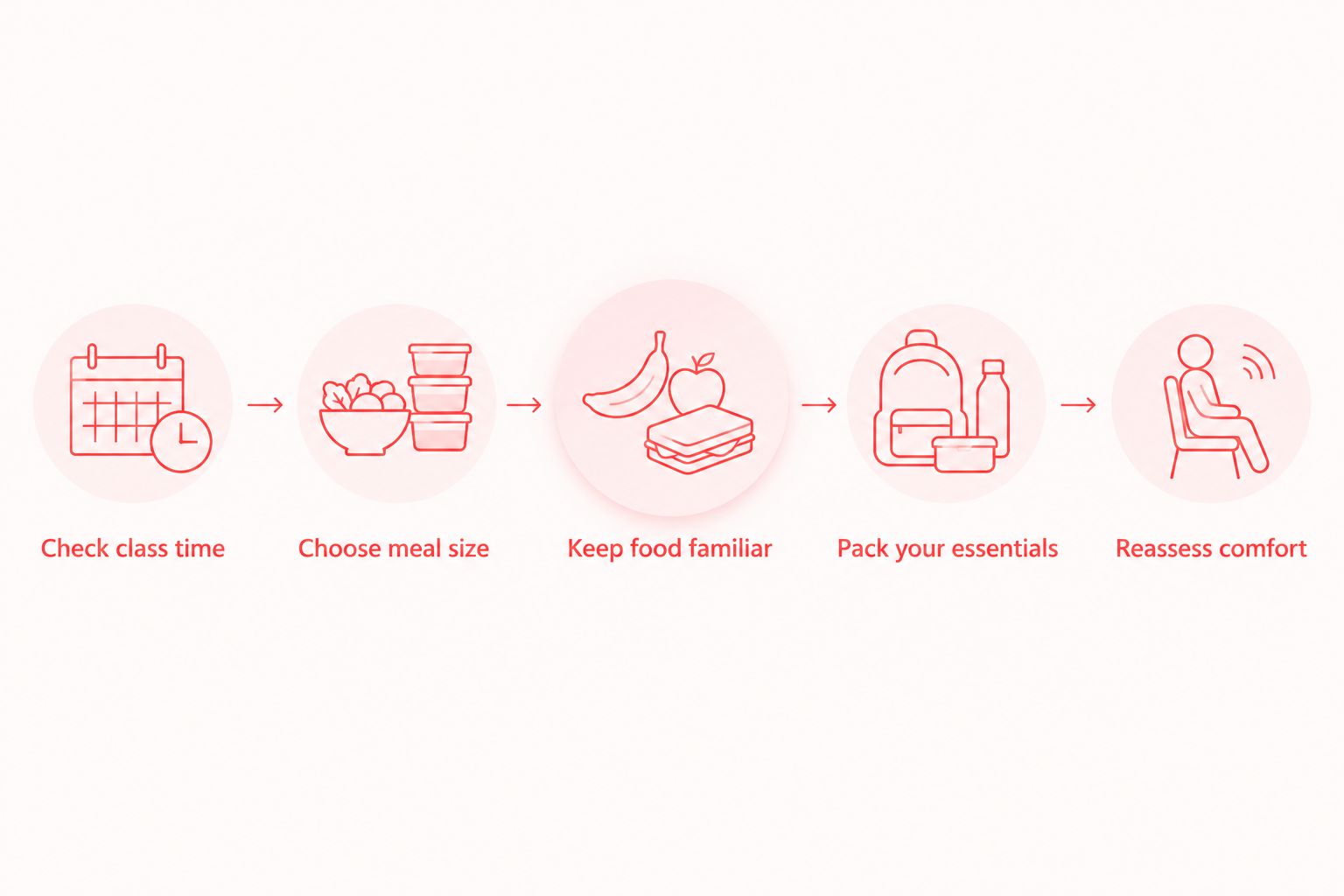
Use a simple sequence rather than building your day around a strict empty-stomach rule. Your aim is to arrive prepared, comfortably fed, and ready to communicate with the instructor.
- Check class time. Work backward from the scheduled start, leaving room for travel and check-in.
- Choose meal size. Match the portion to the available interval instead of forcing a large meal into a short gap.
- Keep food familiar. Use foods you already tolerate before activity; save experiments for another day.
- Pack your essentials. Include drinking water, comfortable exercise clothing, and any personal medical supplies you need.
- Reassess comfort. Before joining class, notice fullness, nausea, unusual weakness, or dizziness rather than dismissing them.
The sequence matters more than finding a supposedly perfect yoga food. Preparing earlier also leaves you free to ask practical questions when you arrive.
If your class is in the morning
A morning class can make a full breakfast difficult to schedule. If eating a large meal would put it too close to practice, consider a smaller familiar option and plan your regular breakfast afterward.
Do not treat fasted practice as a requirement. If you routinely feel shaky, weak, or unwell when exercising before breakfast, discuss that pattern with a healthcare professional instead of trying to push through it.
If your class is after work
An after-work class often falls between lunch and dinner. Eat lunch normally, assess hunger later, and use a modest snack if needed rather than arriving after a long gap without food.
Plan dinner for after class when that fits your schedule. If you need a full dinner first, choosing a later session is more practical than rushing digestion.
If your plans change
If a delayed meal leaves you overly full near class time, adjust the class plan rather than forcing the original schedule. Missing or moving a session is preferable to exercising while you feel unwell.
A sustainable 2026 routine makes room for ordinary workdays, traffic, family meals, and appetite changes. Consistency does not require ignoring your body to keep an appointment.
Should you eat differently for different class types?
Start with the same meal-size framework, then account for movement and your own comfort. A class name alone does not establish a precise digestion interval, and a quieter-looking class is not a guarantee that a full stomach will feel comfortable.
| Class option | General movement format | Best for | Food-planning consideration |
|---|---|---|---|
| Vinyasa | Flowing sequences linking movement and breath | People who enjoy continuous transitions | Check how bending and transitions feel after eating |
| Yin | Longer-held, relatively still postures | People who prefer a slower-paced practice | Stillness does not eliminate fullness or reflux |
| 26&2 yoga | A set sequence of postures and breathing exercises | People who like a structured format | Keep preparation familiar while learning the sequence |
| Hot Pilates | Pilates-based exercise in a heated setting | People interested in heated Pilates practice | Consider both movement and heat when assessing comfort |
| Reformer Pilates | Pilates using a reformer apparatus | People interested in equipment-based practice | Lying positions and abdominal work can affect comfort |
| Barre | Ballet-inspired movements combined with conditioning | People interested in barre-based exercise | Avoid assuming a standing-focused format requires no food planning |
These are general format descriptions, not promises about a particular session's pace, temperature, or instruction. Ask about the specific class before booking if you need modifications or are unsure where to begin.
Unified Hot Yoga offers these class choices for all skill levels. That gives you options, but it does not mean every format will feel equally comfortable on your first visit.
How should you handle water before hot yoga?
Drink regularly through the day rather than trying to catch up immediately before entering the room. Bring water so you can respond to thirst during class, and avoid forcing a large amount at once.
There is no single pre-class volume appropriate for every body, health condition, and session. If your clinician has given you fluid restrictions or specific hydration instructions, follow that advice.
Food timing and hydration are connected parts of preparation, but neither cancels the effects of heat. Stop exercising if you feel dizzy, faint, nauseated, or unusually weak, and move somewhere cool. Seek urgent help for confusion, collapse, or other signs of serious heat illness.
Is it better to do hot yoga on an empty stomach?
An empty stomach is not a requirement for hot yoga. The 3–4-hour large-meal guideline is about spacing food and exercise, not proving that you can complete class without eating.
If you feel comfortably fueled after an earlier meal, you do not need to add a snack automatically. If you are hungry, choose a portion that suits the time available instead of treating hunger as part of the practice.
Can you eat right after hot yoga?
You can eat after hot yoga once you feel comfortable doing so. Resume your normal meal routine and choose food that includes carbohydrate and protein rather than delaying food to extend a fast.
If you feel nauseated, cool down and assess how you feel before eating a large meal. Persistent symptoms need attention, not a special post-yoga food rule.
FAQ
How long before hot yoga should I eat a big meal?
Allow 3–4 hours after a large meal as a starting point, based on general exercise-eating guidance. Wait longer or change your plans if you still feel uncomfortably full.
Can I eat a snack an hour before hot yoga?
A small snack about 1 hour before hot yoga fits the shorter end of general exercise guidance. Choose a familiar food and modest portion, and adjust if you experience reflux or nausea.
What should I eat before my first hot yoga class?
Choose familiar food in a portion that matches the time before class. A banana or plain toast are simple snack examples, but your allergies, medical needs, and tolerance come first.
Do I have to skip breakfast before morning hot yoga?
You do not have to skip breakfast before morning hot yoga. Use a smaller pre-class option if a full breakfast would be too close to practice, then eat your regular meal afterward.
Should I avoid all fiber before hot yoga?
You do not need to avoid all fiber before hot yoga. If high-fiber meals cause discomfort around exercise, adjust the portion or timing rather than removing fiber from your overall diet.
What if I feel dizzy during hot yoga even though I ate?
Stop exercising and move somewhere cool if you feel dizzy during hot yoga. Eating beforehand does not rule out heat illness or another medical problem; seek urgent help for confusion, collapse, or severe symptoms.
Does diabetes change when I should eat before hot yoga?
Diabetes can require an individualized food, medication, and activity plan before hot yoga. Follow your diabetes care team's guidance rather than applying a general meal-timing rule to your treatment.
One last thing
Write down what you ate and when—not just whether the class felt difficult. A brief note about portion, timing, fullness, and comfort gives you something concrete to adjust before your next visit.
For your next Unified Hot Yoga class in 2026, repeat a preparation routine that felt comfortable before changing it. The goal is a welcoming practice you can return to, not a perfect meal schedule.