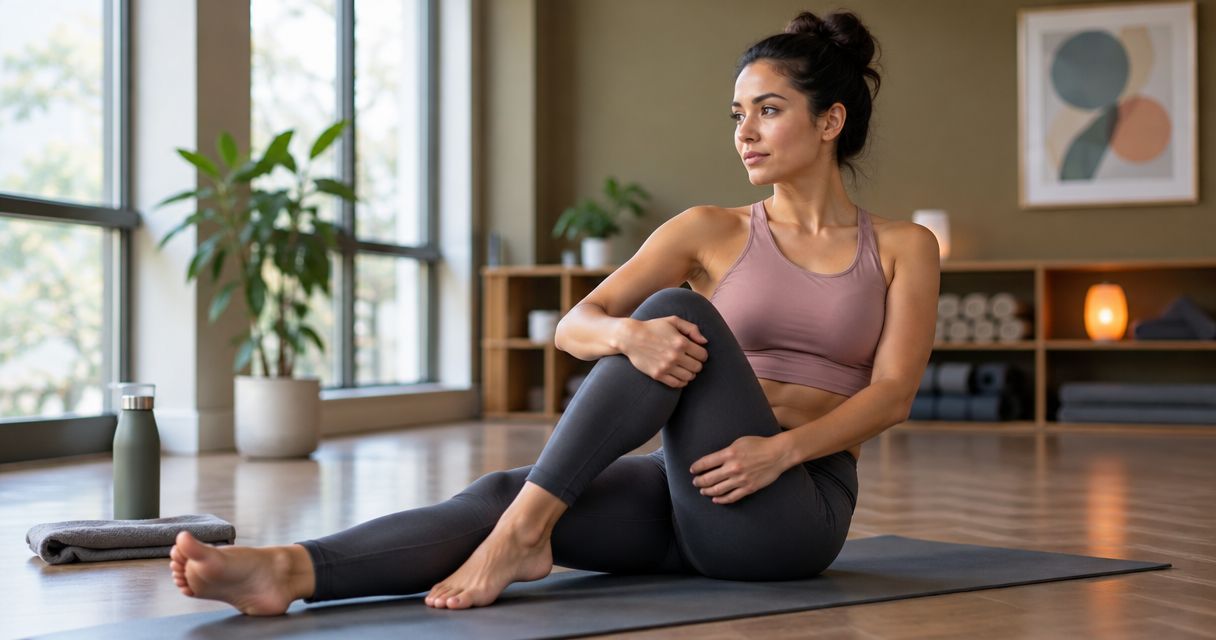
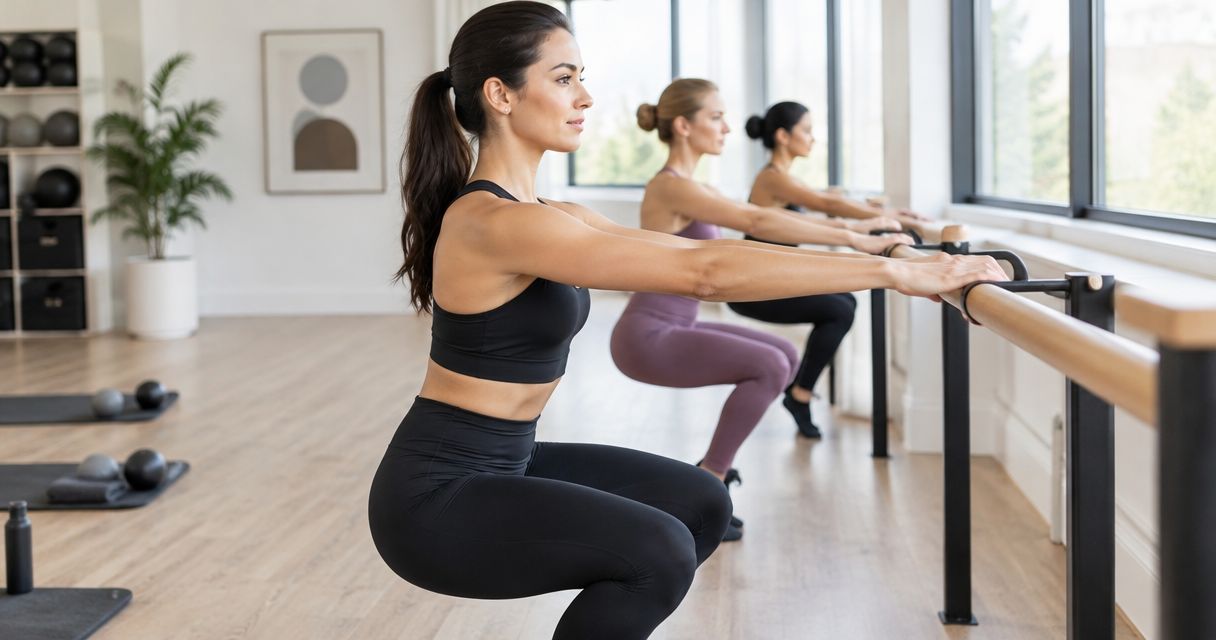
Yes—barre is good for weight loss as part of a routine that supports a sustained calorie deficit, but barre alone does not guarantee weight loss. It adds physical activity and muscle-endurance work; your food intake, overall movement, and consistency determine whether your weight changes. This 2026 guide explains how to choose a first class, prepare comfortably, and build a plan without treating sweat or soreness as proof of fat loss.
- Is barre good for weight loss? Yes, as part of consistent activity and eating habits—not as a guaranteed standalone solution.
- CDC guidance recommends 150 minutes of moderate aerobic activity weekly, plus muscle-strengthening activity on at least 2 days.
- Unified Hot Yoga offers barre alongside yoga and Pilates for American Fork practitioners of all skill levels.
- Choose classes by movement preference and instruction, not promises about calorie burn or rapid weight loss.
Why this matters
A class can feel challenging without producing the weight change you expect. Barre’s small movements and sustained positions create muscular effort, but that feeling does not measure how much energy you use or whether you are losing body fat.
Choose an activity you can repeat, then assess how it fits your whole week. For local newcomers, Unified Hot Yoga offers barre, Hot Pilates, Reformer Pilates, Vinyasa, Yin, and 26&2 yoga in American Fork. Choosing among them starts with the kind of movement you want—not a promise about the scale.
Is barre effective for weight loss?
Barre supports weight loss through physical activity, but lasting weight loss requires a sustained energy deficit. That means your body uses more energy than you take in over time. Exercise contributes to that balance; it does not make food intake irrelevant.
Barre generally combines controlled repetitions, balance work, and sustained muscle contractions. Those features make it useful for practicing muscular endurance and movement control, but they do not establish a predictable amount of weight loss per class.
| What barre contributes | What it does not establish | Practical takeaway |
|---|---|---|
| Movement that uses energy | A fixed calorie burn for every participant | Avoid planning food intake around an assumed class total |
| Repeated muscular effort | Automatic full-body strength progression | Assess whether your weekly routine challenges all major muscle groups |
| A structured class commitment | Consistency outside the studio | Choose a time you can attend regularly |
| Balance and controlled movement practice | Fat loss from a specific body area | Track function as well as body-weight trends |
| A shared exercise setting | Guaranteed motivation or weight change | Choose instruction and an atmosphere that help you return |
For your 2026 plan, use the CDC’s adult physical-activity guidance as a reference: at least 150 minutes of moderate-intensity aerobic activity weekly, or 75 minutes of vigorous-intensity activity, plus muscle-strengthening activity on at least 2 days each week. Those are general health recommendations, not a promise of weight loss.
Do not automatically count every barre class as moderate aerobic exercise or a complete strength session. The actual movements, effort, resistance, and muscles worked determine where it fits.
What does a barre class involve?
Barre commonly includes standing exercises near a support, controlled repetitions, balance challenges, and floor-based work. Equipment and sequencing vary, so ask about the actual class rather than assuming every barre format is identical.
You do not need to arrive knowing ballet terminology. Tell the instructor you are new, ask how to adjust unfamiliar movements, and use a range of motion you can control without pain.
The main advantage is a structured setting for repeated muscular effort. The limitation is that small movements alone do not tell you whether resistance is increasing or whether your cardiovascular needs are covered. A strong muscle burn is feedback about effort, not a weight-loss forecast.
If your main concern is feeling comfortable at the start, the guide to whether beginners can do barre classes addresses that first decision. You can choose a beginner-friendly approach without making weight loss the test of whether you belong.
Which class fits your goals and preferences?
Barre, Hot Pilates, Reformer Pilates, and yoga are different movement experiences, not a reliable calorie-burning ranking. The descriptions below explain general formats; confirm the specific class description, equipment, and heat before booking.
| Class | Best for | General movement emphasis | Main consideration |
|---|---|---|---|
| Barre | People who enjoy controlled repetitions and balance work | Sustained positions, repeated movements, and muscular endurance | Does not automatically cover your aerobic or strength needs |
| Hot Pilates | People who want Pilates-style exercise in a heated setting | Controlled muscular work with the added demand of heat | Heat requires attention to comfort and hydration; sweat is not fat loss |
| Reformer Pilates | People who prefer apparatus-based exercise | Controlled movement using a spring-resistance apparatus | Equipment is unfamiliar at first; introductory instruction matters |
| Vinyasa | People who enjoy movement linked with breathing | Sequences that transition between yoga postures | Pace and physical demand vary by class |
| Yin | People who prefer slower practice | Longer-held postures and less continuous movement | Does not replace aerobic exercise |
| 26&2 yoga | People who prefer a recurring yoga sequence | A set sequence of postures and breathing exercises | Repetition does not remove the need to adjust for your body |
Unified Hot Yoga is best for American Fork newcomers who want to choose among barre, yoga, and Pilates in an all-skill-levels studio. The studio offers those formats; no class choice guarantees weight loss.
For a 2026 membership decision, compare the sessions you can realistically attend rather than choosing by the most demanding-sounding class name. A suitable routine should work with your schedule and your recovery needs.
Why weight-loss results from barre vary
Your results depend on more than the exercise label. These factors explain why two people attending the same format do not necessarily experience the same changes:
- Food intake: Exercise contributes to energy expenditure, but weight loss still depends on the balance between energy used and consumed over time.
- Total movement: Walking, work, household activity, and other exercise contribute alongside your class attendance.
- Effort and progression: Movement range, resistance, exercise selection, and your current fitness affect the challenge you receive.
- Consistency: A routine you repeat contributes more sustained activity than occasional sessions followed by long gaps.
- Individual circumstances: Body size, medications, health conditions, sleep, and other factors influence weight management and exercise tolerance.
- How you measure progress: Hydration and other short-term changes affect scale readings, so a single weigh-in does not isolate fat loss.
Avoid using another participant’s results as your deadline. Build your routine around your own starting point, and seek individualized support when medical conditions or medications affect your weight or exercise choices.
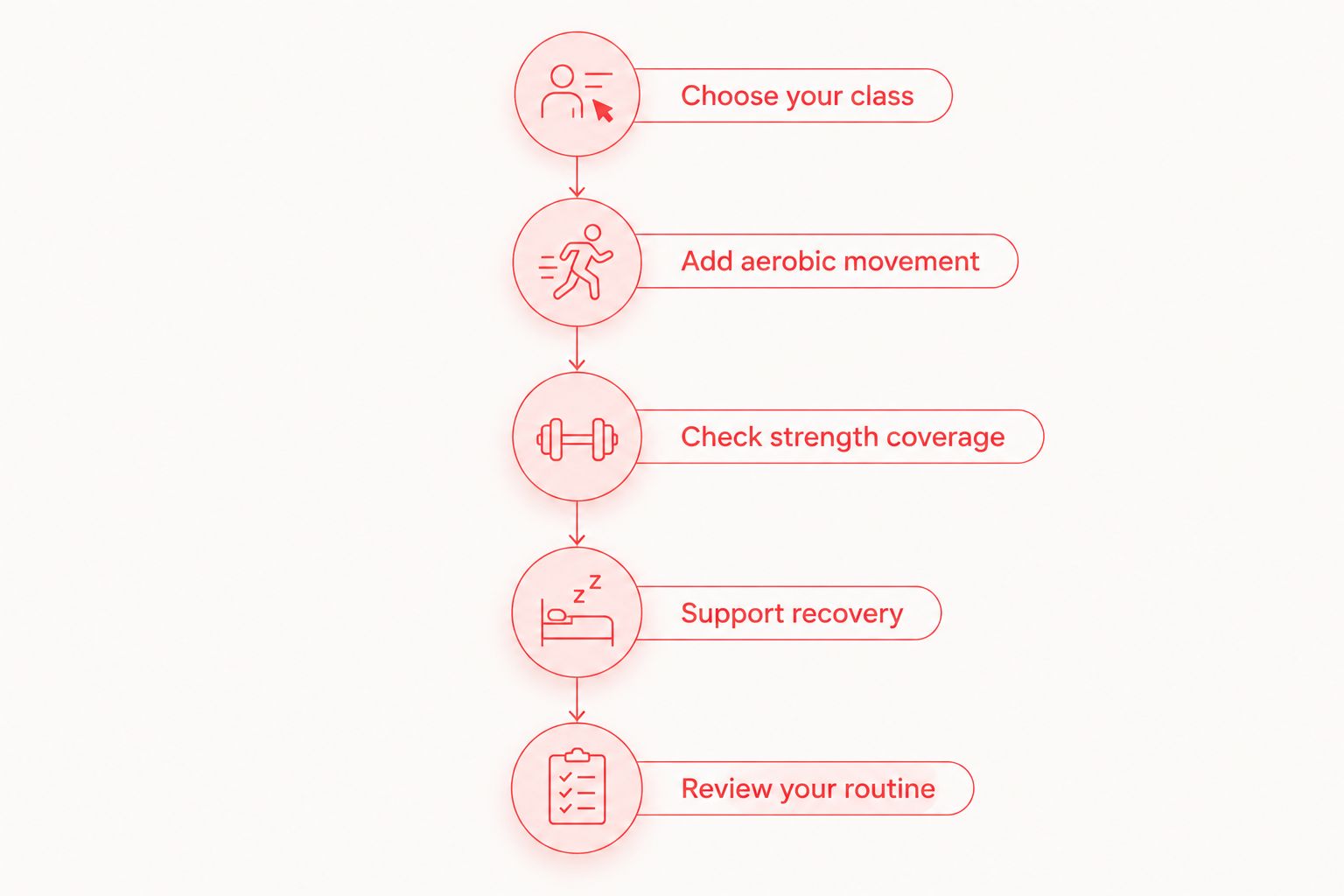
How do you build a practical routine around barre?
Start with a manageable class commitment and leave room for other kinds of movement. You do not have to turn every workout into a test or fill every available day.
- Choose your class. Read the description and ask about beginner participation, heat, equipment, and modifications before booking.
- Add aerobic movement. Walking, cycling, swimming, or another suitable activity can help you work toward the CDC’s weekly aerobic recommendation.
- Check strength coverage. Review whether your routine challenges all major muscle groups. Barre’s name alone does not establish that it meets this need.
- Support recovery. Adjust your exercise when fatigue or soreness interferes with controlled movement. Pain is not a target.
- Review your routine. Look at attendance, movement quality, energy, and longer-term weight trends rather than judging a single session.
In 2026, the useful question is not whether you completed the hardest possible class. Ask whether your routine includes enough appropriate movement and whether you can sustain it without repeatedly pushing through pain or exhaustion.
If weight loss is your main goal, a registered dietitian can help you plan eating habits alongside exercise. Avoid assigning yourself a very restrictive diet simply because you have started taking classes.
What should you bring to your first barre class?
Wear clothing that lets you move comfortably and lets the instructor see your positioning. Bring water, and ask the studio about footwear, grip socks, mats, and any equipment requirements before you leave home; these details vary between studios and formats.
Tell the instructor about relevant injuries, movement restrictions, and your experience level. If you have a medical condition or are returning after an injury, ask your healthcare professional about appropriate exercise before starting.
Avoid experimenting with a large, unfamiliar meal immediately before class. Arrive with enough time to check in, explain that you are new, and learn where to set up without rushing.
Unified Hot Yoga offers barre for practitioners of all skill levels alongside its yoga and Pilates classes. Review the current class descriptions, Know Before You Go information, and schedule before choosing; when you are ready to join, check the studio’s current Prices information for intro offers and memberships.
Can barre help you lose belly fat?
Barre does not selectively remove belly fat. Working your abdominal muscles and losing fat from your abdomen are different processes; exercising a particular area does not let you choose where your body loses fat.
Core exercises still have a place in your routine. Judge them by controlled movement and appropriate muscular challenge, not by claims that they flatten a particular body area.
How many barre classes should you take each week?
There is no universal number of barre classes that guarantees weight loss. Choose a frequency you can recover from and attend consistently, then assess your total aerobic activity and strength work.
The CDC recommends muscle-strengthening activity on at least 2 days each week, but that does not mean any two barre classes automatically satisfy the recommendation. Exercise selection and challenge matter as much as attendance.
Is sweating more a sign that barre is working?
Sweating more is not evidence of greater fat loss. Sweat helps regulate body temperature, and fluid loss can temporarily change your body weight without representing a change in body fat.
If a class is heated, choose it because you are comfortable with that setting—not to chase a lower post-class weigh-in. Stop exercising and seek help if you feel faint, confused, or unwell.
FAQ
Is barre good for weight loss if I am a beginner?
Yes, barre can contribute to a beginner’s weight-loss routine through physical activity, but it does not guarantee weight loss. Start with manageable effort and combine exercise with eating habits that support your goals.
Do I need dance experience before trying barre?
No, dance experience is not a prerequisite for trying barre. Ask about beginner participation and tell the instructor that you need help with unfamiliar movements.
Is barre better than Pilates for losing weight?
Neither barre nor Pilates guarantees more weight loss based on its name alone. Compare the actual class demands and choose the format you can attend consistently.
Can barre replace all my cardio?
Barre does not automatically replace aerobic exercise. CDC adult guidance recommends at least 150 minutes of moderate-intensity aerobic activity weekly, and whether a class contributes depends on its actual intensity.
How long does it take to lose weight with barre?
There is no fixed weight-loss timeline for barre. Changes depend on sustained energy balance, overall activity, individual circumstances, and consistency.
Should I be sore after every barre class?
No, soreness is not required for a useful barre workout. Judge the session by appropriate effort and controlled movement rather than how uncomfortable you feel afterward.
Can I take barre if I have joint pain?
Ask a healthcare professional about persistent joint pain before starting barre. Low-impact movement is not automatically pain-free or appropriate for every condition; discuss modifications with the instructor.
One last thing
Your most useful first-class result is information: whether you liked the movement, understood the instruction, and felt comfortable asking for help. Those observations help you choose a routine you can repeat.
For your 2026 routine, choose consistency over a calorie promise. Barre can be part of weight management without making every class, meal, or scale reading a verdict on your progress.