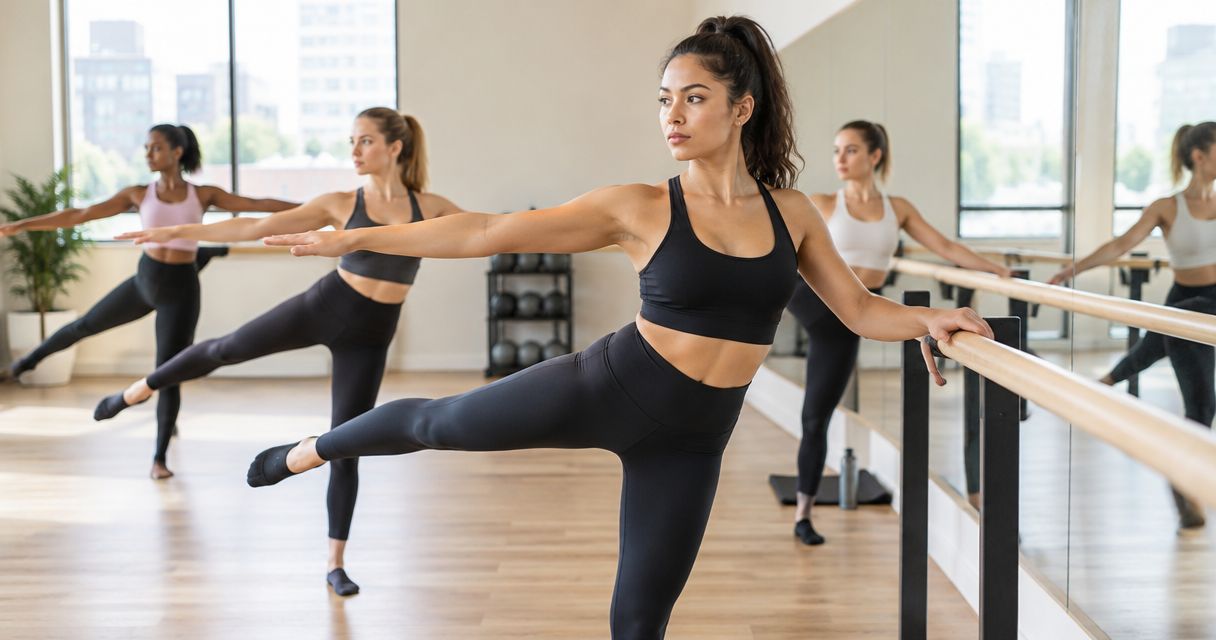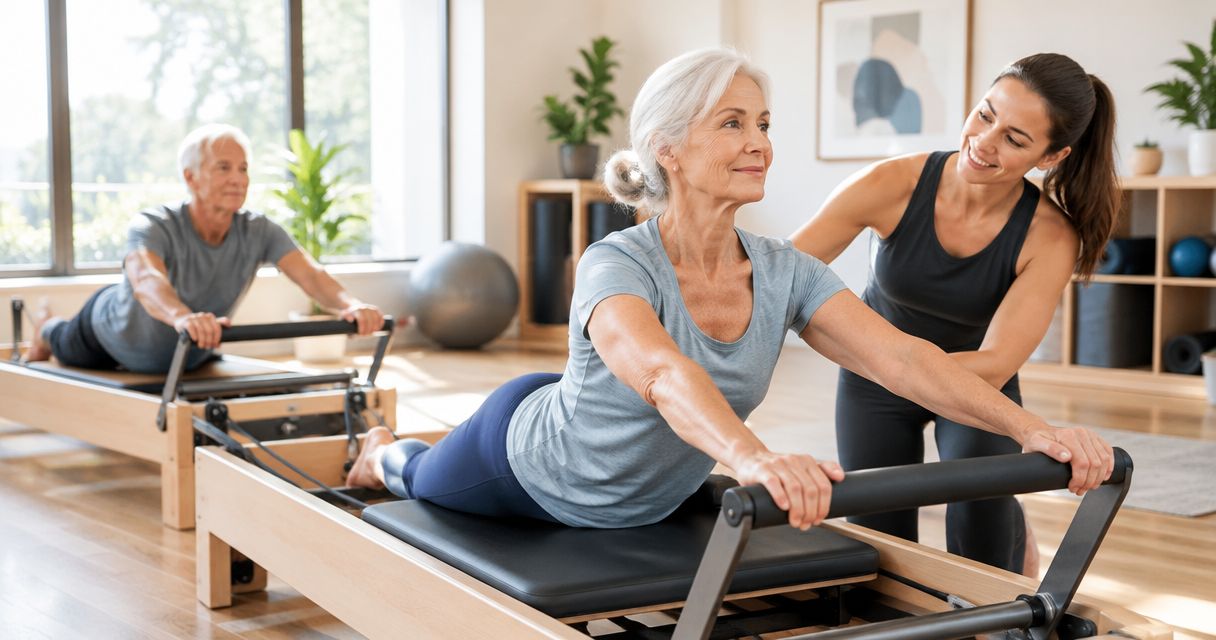
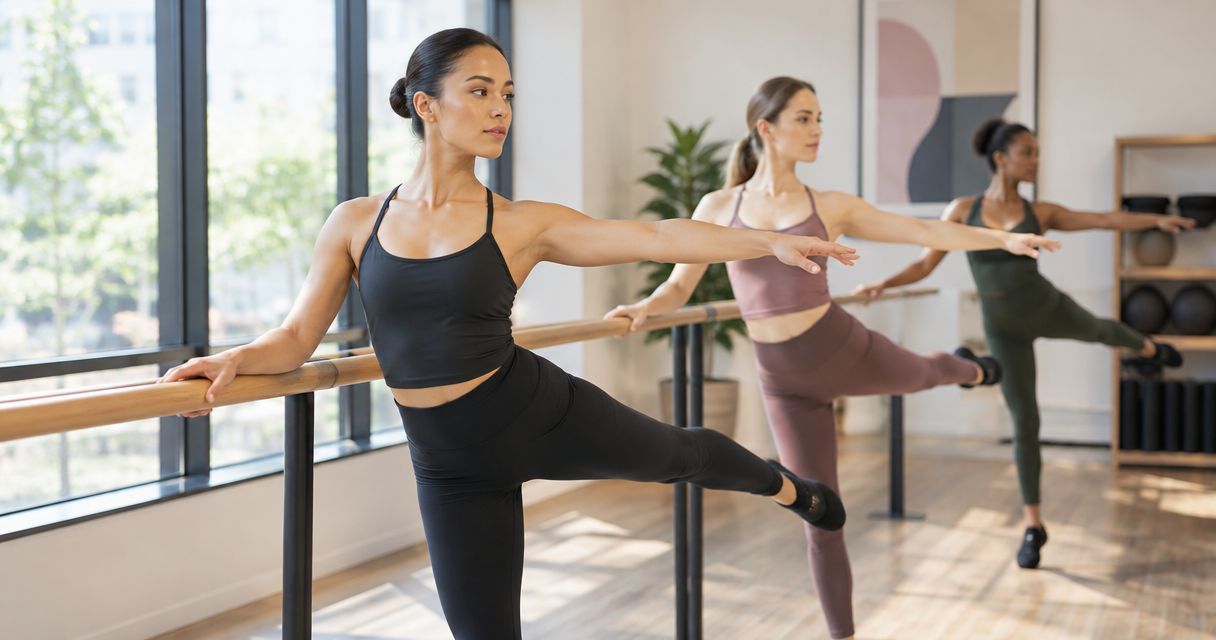
There is no fixed number of weeks in which barre classes produce results: better movement control, greater muscular endurance, and visible body changes are different outcomes. Use repeatable improvements in technique and effort to judge progress, rather than a promised transformation date. Visible changes also depend on your overall activity, nutrition, and starting point—not just attendance.
- How long to see results from barre classes depends on the result: movement control, muscular endurance, or visible change.
- Track the same movement and modification across classes; soreness is not a reliable progress measure.
- Unified Hot Yoga offers Barre in American Fork for practitioners of all skill levels.
- Choose a repeatable schedule before committing to a membership; no class guarantees a body-change deadline.
Why this matters
A first barre class gives you an experience, not a verdict on your fitness. Unfamiliar movements can feel difficult even when you already exercise, and completing a class does not tell you how your body will change.
For your 2026 routine, start with a practical question: what do you want to improve? Holding a position with control is a different goal from building larger muscles or changing body weight. Your measure of success should match your goal.
If you are choosing a class in American Fork or nearby Utah County cities, check the class schedule before planning your routine. A session that fits your actual week is more useful than an ambitious plan you cannot repeat.
How long does it take to see results from barre classes?
Barre has no universal results deadline. A calendar alone cannot tell you whether you are improving, because movement skill, endurance, strength, and appearance require different assessments.
Barre commonly uses ballet-inspired positions, controlled movements, and muscular holds. The exact exercises and equipment vary by class, so compare your performance on familiar movements rather than treating every session as an identical test.
| Result you want | What to watch | What it does not establish |
|---|---|---|
| Better movement control | You follow cues and maintain your chosen position more consistently | A change in muscle size |
| Greater muscular endurance | You sustain a familiar exercise with less loss of form | Your maximum strength |
| Better balance | You need less support during the same task | Improvement in every balance task |
| Greater strength | You handle more resistance through a controlled movement | A guaranteed visible change |
| Visible body changes | Consistent measurements or comparable photographs over time | That barre alone caused the change |
| A sustainable routine | You attend regularly and recover well enough to return | That every session needs to feel harder |
These are ways to assess progress, not milestones with guaranteed arrival dates. Choose the row that matters most to you, then keep your comparisons consistent.
For a 2026 starting point, write down what you can do comfortably now. Without that baseline, remembering whether an exercise feels easier becomes guesswork.
Movement control: judge the movement, not the mirror
A useful beginner goal is learning to respond to instructions without rushing. Notice whether you can keep your intended position, breathe comfortably, and make a correction when the instructor gives a cue.
A smaller movement performed with control is a better comparison than a larger movement performed differently each time. If you change your range, support, and resistance together, you cannot tell which change made the exercise harder.
Ask the instructor what good technique looks like for the exercise you are doing. Avoid forcing your feet, knees, or hips into a position just because someone nearby moves differently.
Recommendation: make consistent technique your first progress measure. You do not need a visible change to recognize that you are learning a skill.
Muscular endurance: compare the same task
Muscular endurance is your ability to sustain or repeat muscular effort. In barre, a practical sign is maintaining your chosen version of an exercise without losing the position you intended to hold.
Compare like with like. Using more support or a smaller range changes the task; that is a valid modification, but it is not the same test as an unsupported or larger movement.
Record the exercise, the version you used, and what limited you. Was it muscle fatigue, balance, uncertainty about the instructions, or discomfort? Those answers point to different next steps.
Endurance also differs from maximum strength. If lifting heavier loads is your main goal, assess whether your overall training includes progressively challenging resistance rather than assuming every demanding class provides the same stimulus.
Visible changes: avoid a promised deadline
Visible changes are not a dependable first measure of barre progress. Lighting, posture, clothing, and the conditions under which you compare photographs can change what you see without establishing a lasting body change.
Barre also cannot determine where your body loses fat. An exercise that challenges your thighs or abdomen does not guarantee fat loss from that area.
If appearance is part of your goal, use comparable conditions and avoid interpreting every daily fluctuation. Keep performance measures alongside appearance measures so the mirror is not your only source of feedback.
For a 2026 membership decision, separate the class experience from a transformation promise. Choose instruction and a routine you can sustain; do not buy a deadline that a class cannot guarantee.
Why barre results vary
Your starting point and the way you train affect what progress means. These factors explain why two people attending the same class should not expect identical outcomes:
- Starting experience. A beginner learning the movements faces a different task from someone already familiar with barre.
- Consistency. Repeated practice gives you opportunities to refine technique; an irregular routine makes comparison harder.
- Exercise challenge. Resistance, range, support, and movement choice affect the demand placed on your muscles.
- Recovery. Sleep, rest, and your other exercise influence how prepared you feel for another session.
- Overall activity and nutrition. Body-composition goals depend on more than the work completed inside one class.
- Your chosen outcome. Learning a position, sustaining effort, gaining strength, and changing appearance are not interchangeable results.
Change one training variable at a time when you are trying to understand your response. If you increase class attendance while also changing every exercise modification, your next session becomes harder to interpret.
How to track progress without chasing soreness
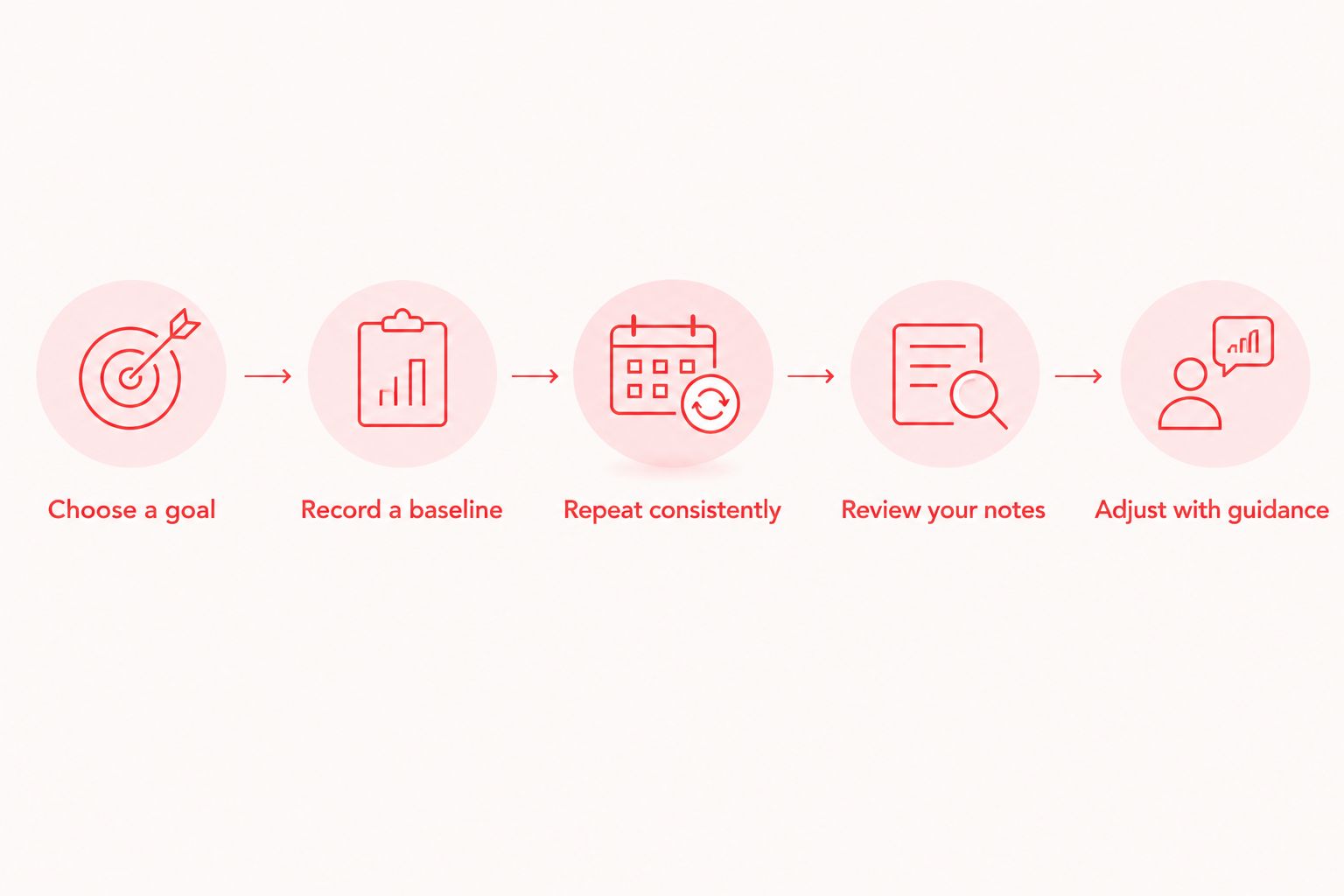
Use this simple process for your 2026 class routine. It keeps attention on what you can observe rather than what a workout is supposed to feel like.
- Choose a goal. Pick one main outcome, such as steadier balance or better control during a familiar exercise.
- Record a baseline. Note the movement, support, and resistance you used. Describe where technique became difficult.
- Repeat consistently. Attend a manageable schedule and compare familiar tasks when they recur.
- Review your notes. Look for clearer control, an appropriate increase in challenge, or better tolerance of the same task.
- Adjust with guidance. Ask the instructor which change makes sense before adding difficulty or more classes.
Keep the notes brief enough that you will actually use them. A sentence about the exercise and your modification is more useful than an elaborate tracker abandoned after the first class.
Soreness does not belong in that process as a target. Unaccustomed exercise can cause delayed-onset muscle soreness, but more soreness does not establish more strength, better technique, or a more effective session.
Likewise, less soreness does not mean the class stopped working. Assess what you did and how you performed it, not whether sitting down feels difficult afterward.
How often should you attend barre?
Choose an attendance pattern you can repeat and recover from, then adjust with guidance. Your other workouts, current activity level, and response to class matter more than copying another person's schedule.
For 2026 planning, the U.S. Department of Health and Human Services' Physical Activity Guidelines for Americans give adults a broader target: 150–300 minutes of moderate-intensity aerobic activity per week, plus muscle-strengthening activity on at least 2 days per week. The alternative aerobic target is 75–150 minutes of vigorous-intensity activity per week.
Those are adult activity guidelines, not a barre results timetable. Do not assume every barre class meets the aerobic target or provides all the strengthening work your goals require.
Look at your whole week before adding sessions. Walking, other exercise, demanding work, and recovery all belong in that assessment; barre does not need to carry every fitness goal by itself.
What should you know before your first class?
Tell the instructor that you are new and ask how to choose an appropriate modification. You do not need to match an experienced participant's range or resistance to take part meaningfully.
Bring water and wear clothing that lets you move comfortably. Confirm footwear, mat, towel, and equipment requirements with the studio rather than assuming every barre class follows the same rules.
Ask whether the particular class is heated. A studio offering hot yoga does not, by itself, establish the temperature or format of its Barre classes.
Arrive with enough time to explain any relevant movement limitations before instruction begins. For an injury, pregnancy, or medical condition that affects exercise, seek individualized advice from a qualified healthcare professional rather than relying on a general results guide.
During class, distinguish muscular effort from pain. Stop an exercise that causes pain, and ask for guidance instead of trying to complete it for the sake of keeping pace.
Is barre a better choice than yoga or Pilates?
Choose the class whose movement style and practical requirements fit you—not the one promising the fastest results. Barre, yoga, and Pilates are different options, and the instructor's actual class description matters more than a broad label.
| Class | Best for exploring | What to check before booking |
|---|---|---|
| Barre | Ballet-inspired positions and controlled muscular work | Support, equipment, and beginner modifications |
| Vinyasa | Yoga that links movement with breathing | Pace, heat, and options for unfamiliar poses |
| Yin | A yoga practice centered on longer-held positions | Props, position choices, and comfort limits |
| 26&2 yoga | A named yoga format rather than a general flow label | The session's sequence, conditions, and preparation |
| Hot Pilates | Pilates-based exercise in a heated setting | Heat, movement demands, and preparation |
| Reformer Pilates | Pilates using a reformer apparatus | Equipment orientation and beginner guidance |
These labels describe starting points, not a ranking of effectiveness. Each option has practical demands, and no class name guarantees a particular physical outcome.
Unified Hot Yoga is a fit for American Fork beginners who want Barre, yoga, and Pilates options in one studio. The studio serves practitioners of all skill levels, but you should still confirm the demands of the specific session you plan to attend.
Unified Hot Yoga offers Barre alongside infrared-heated Vinyasa, Yin, 26&2 yoga, Hot Pilates, and Reformer Pilates. That gives you different formats to consider; it does not establish which one will produce your personal result fastest.
Should you join before you see visible results?
Base a membership decision on whether the class works for your schedule, whether the instruction helps you, and whether you want to return. Waiting for a visible change is not the only way to judge value.
The benefit of committing is a repeatable routine. The limitation is that a membership cannot guarantee attendance, recovery, or a physical outcome; those still need your attention.
When you are ready to join Unified Hot Yoga, check the Prices page for current intro offers and memberships. Read the current terms and compare them with the attendance you can realistically maintain, without assuming an offer remains unchanged.
FAQ
How long to see results from barre classes if I'm a beginner?
There is no fixed beginner timeline for barre results. Track movement control and performance on familiar exercises separately from visible body changes.
Will barre change my body if I do not lose weight?
Body weight alone does not measure movement skill, muscular endurance, or strength. Assess those outcomes directly rather than using the scale as your only progress measure.
Does shaking during barre mean the exercise is working?
Shaking does not prove that an exercise is effective. Check whether you can maintain the intended position, and reduce the challenge or ask for guidance when control breaks down.
Do I need to feel sore after every barre class?
You do not need soreness after every barre class to make progress. Soreness is not a reliable measure of exercise quality or long-term results.
Can barre replace all my other exercise?
Barre does not automatically cover every activity goal. Assess your aerobic activity, muscle-strengthening work, and personal goals across your whole routine.
Can I start barre without a dance background?
A dance background is not a prerequisite for trying barre. Tell the instructor you are new and ask about the class's demands and available modifications.
Is Unified Hot Yoga suitable for someone trying Barre for the first time?
Unified Hot Yoga offers Barre and serves practitioners of all skill levels in American Fork. Confirm the specific class format, equipment requirements, and beginner guidance before booking.
One last thing
Your most useful progress note might be that you recognized when to modify an exercise. Choosing a version you can control is a skill—not a failure to keep up.
Before your next class, choose one movement to observe more carefully. Leave knowing what improved, what remained difficult, and what you want to ask the instructor next time.