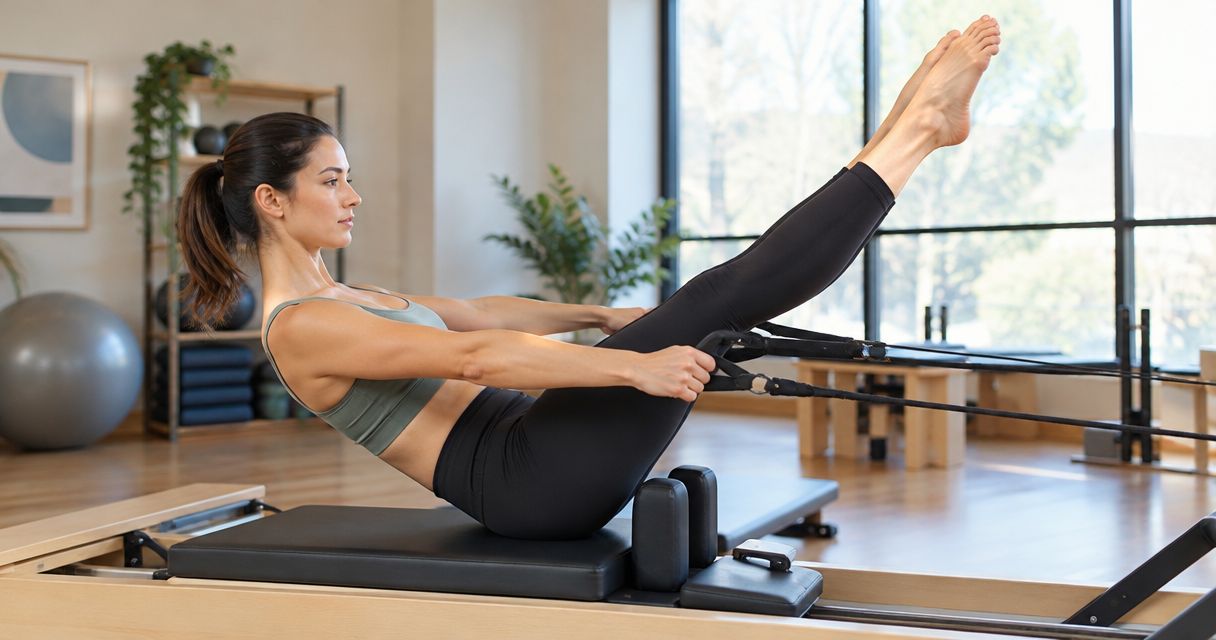

Infrared heat in a yoga studio is not automatically safe or unsafe: the main concern is whether exercise and heat raise your body temperature beyond what you can tolerate. Infrared heating does not remove the risks of dehydration, overheating, or fainting, so choose a manageable class, take breaks, and get medical guidance before heated exercise if you have a relevant health condition.
- Is infrared heat in yoga studio safe? The heater type alone cannot establish safety; exertion and personal health matter.
- Infrared is non-ionizing radiation, but infrared-heated yoga still carries heat-related risks.
- Unified Hot Yoga offers yoga and Pilates in American Fork; choose your first class by movement demands and heat tolerance.
- Stop for dizziness, nausea, headache, or unusual weakness; confusion or collapse requires emergency help.
Is infrared heat in a yoga studio safe?
Infrared heating is not a safety guarantee. Infrared transfers energy as heat; unlike ultraviolet radiation, it is not the radiation responsible for sunburn. That distinction does not make exercising in a heated room harmless.
Your body must release the heat produced by both the room and your muscles. Sweat helps cool you when it evaporates, but a sweaty workout does not prove that your body temperature is under control.
For your 2026 class decision, separate the heating method from the exercise conditions:
| Setting | What it involves | Practical advantage | Limitation | Best for |
|---|---|---|---|---|
| Infrared-heated yoga | Radiant heat combined with yoga practice | An option for people who prefer a heated practice | Overheating and dehydration remain possible | People who enjoy heat and have no medical reason to avoid it |
| Conventionally heated yoga | Warmed room air combined with yoga practice | Another way to practice in a heated environment | The heater type does not establish personal safety | People who prefer heated classes and can manage the conditions |
| Unheated yoga | Yoga without deliberately added room heat | Removes added studio heat from the decision | Exercise still produces body heat | People who want to learn movement without added heat |
Unified Hot Yoga offers infrared-heated yoga and Pilates classes in American Fork. Ask about the specific session rather than assuming every class has the same temperature, pace, or demands.
Why this matters before your first class
A class can feel welcoming while still being physically demanding. An all-skill-levels description means you do not need advanced movement experience; it does not establish medical suitability for heated exercise.
For a first visit in 2026, choose a session you can approach without pressure to keep up. You should feel comfortable asking questions, reducing effort, and leaving the heated room when necessary.
Your goal is to learn how you respond, not to prove that you can tolerate heat. Community supports wellbeing when taking a break feels as acceptable as completing a sequence.
What infrared heat does—and does not—tell you
Infrared is a form of non-ionizing electromagnetic radiation that transfers energy as heat. It is different from ultraviolet light and from ionizing radiation such as X-rays.
That distinction answers the radiation question, not the whole safety question. Your exposure to heat still depends on the environment, your proximity to a heat source, your activity, and your body's ability to cool itself.
Do not treat descriptions such as infrared, gentle warmth, or deep heat as medical clearance. Likewise, sweating is a cooling response, not proof that a class removes toxins or produces a particular health outcome.
When comparing studios in 2026, ask about actual class conditions. A heating label cannot tell you how hard you will work or how you will feel.
Why heat tolerance varies
The same class does not create the same experience for every person. These factors change the demands on your cooling system:
- Room conditions: Temperature, humidity, and air movement affect how readily your body releases heat. Humidity limits evaporative cooling.
- Movement intensity: Faster or more demanding exercise produces more internal heat. A familiar sequence can feel different in a heated room.
- Time exposed: Spending longer in heat increases the opportunity for heat strain. Taking a break outside the room changes that exposure.
- Hydration and recent illness: Fluid loss, fever, vomiting, or diarrhea are reasons to reconsider heated exercise rather than push through.
- Health conditions and medications: Conditions affecting circulation or sweating, and some medicines, change heat tolerance. Ask a clinician or pharmacist about your own situation.
- Heat acclimatization: Familiarity with yoga is not the same as adaptation to heat. Start conservatively rather than matching an experienced participant's effort.
No universal room temperature makes every participant safe. A comfortable reading on a thermostat also does not override symptoms.
How should you prepare for an infrared-heated class?
Use this sequence for your first heated class in 2026. Keep the preparation simple enough that you can repeat it without turning attendance into a complicated routine.
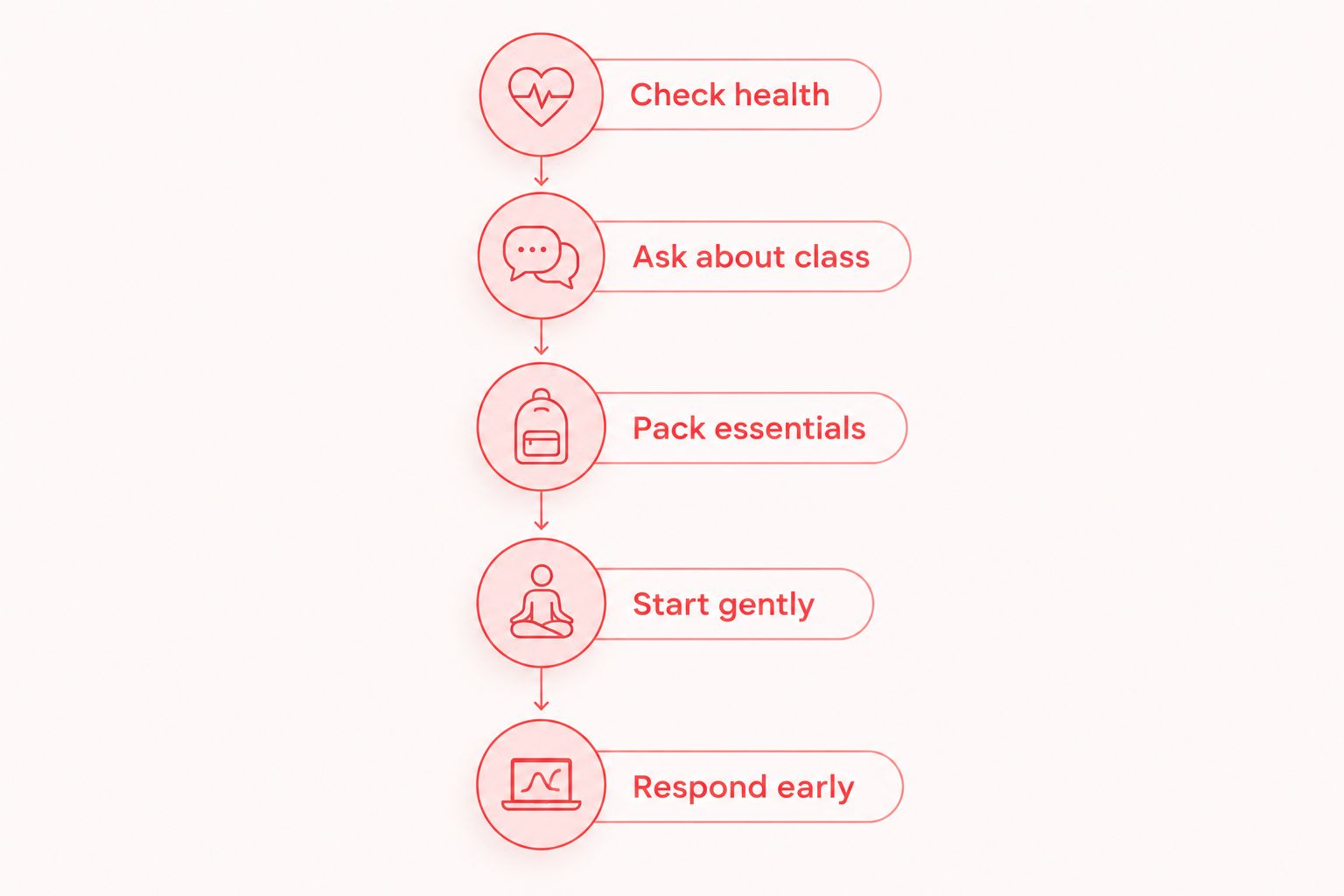
- Check health. Get individual medical advice if you are pregnant, have a relevant medical condition, take medication affecting heat tolerance, or have previously fainted during exercise.
- Ask about class. Confirm the format, expected heat, physical demands, equipment, and how to take a break. Ask which session suits someone new to heated exercise.
- Pack essentials. Bring drinking water, comfortable exercise clothing, and any mat or towel the studio asks you to supply. Confirm equipment requirements instead of assuming rentals are available.
- Start gently. Tell the instructor that you are new to the heat. Reduce effort from the beginning rather than waiting until you feel unwell.
- Respond early. Stop and move somewhere cooler if symptoms develop. Do not wait for the end of a sequence or for permission to leave.
Drink regularly before class rather than trying to compensate with a large amount immediately beforehand. Water needs vary with your body, activity, environment, and medical circumstances; a fixed bottle count is not an individual hydration plan.
For packing details, use the guide to what to bring to your first hot yoga class. Check current studio instructions as well, especially when switching between mat-based classes and equipment-based Pilates.
Which class should you choose as a beginner?
Choose the movement format and the heat conditions separately. A slower class is not automatically appropriate for every medical situation, and a class called Pilates or Barre is not automatically unheated.
Unified Hot Yoga suits American Fork newcomers who want a choice of yoga, Pilates, and Barre classes. The practical limitation is that the class name alone does not tell you its heat level or your individual suitability.
Use these descriptions as general format guidance, not promises about a particular session:
- Vinyasa — best for people interested in flowing movement. Vinyasa generally links movement and breath. Transitions add coordination demands, so ask how a newcomer can simplify the sequence.
- Yin — best for people who prefer a slower practice. Yin generally involves longer-held positions. Less movement does not make every position comfortable or eliminate heat exposure.
- 26&2 — best for people who prefer a structured sequence. This format follows a set yoga sequence. Familiar structure does not remove the need to rest or modify.
- Hot Pilates — best for people seeking Pilates-based exercise in heat. You must consider both muscular effort and the heated environment. Ask about beginner modifications before joining.
- Barre — best for people interested in barre-based strength work. Repeated movements and sustained positions can challenge unfamiliar muscles. Confirm the session's heat conditions and support options.
- Reformer Pilates — best for people interested in equipment-based Pilates. The moving carriage and spring resistance require instruction. Confirm first-visit guidance and heat conditions rather than assuming they match another class.
No format wins for every beginner. Choose the combination you understand and can approach conservatively, then reassess after the session.
What symptoms mean you should stop?
Stop exercising if you develop dizziness, nausea, headache, unusual weakness, or a feeling that you might faint. These symptoms deserve attention even when others in the room appear comfortable.
Move to a cooler area and tell someone what is happening. If you are fully alert and able to swallow, sip water; seek medical care if symptoms worsen, persist, or concern you.
Confusion, collapse, seizures, or altered consciousness during heat exposure are emergency warning signs. Call 911, begin cooling the person, and follow the dispatcher's instructions; do not give drinks to someone who is not fully alert.
The CDC's heat-illness guidance identifies heat stroke as a medical emergency. Keep that distinction clear in your 2026 safety plan: ordinary exertion is not a reason to ignore a change in mental state.
Do not rely on whether someone is sweating to rule out serious heat illness. Pay attention to how they are functioning and responding.
Can you do infrared hot yoga while pregnant?
Pregnancy is a reason to avoid hot yoga rather than treat infrared heating as an exception. The American College of Obstetricians and Gynecologists advises avoiding hot yoga and hot Pilates because of overheating risk.
Ask your maternity clinician about suitable exercise and discuss an unheated class with the studio. A session suitable before pregnancy is not automatically the right choice during pregnancy.
Is infrared hot yoga safe with high blood pressure?
High blood pressure does not have a single yes-or-no answer for heated exercise. Your blood pressure control, symptoms, other conditions, and medications affect the decision.
Ask your prescribing clinician specifically about exercising in heat, not only about yoga. Do not stop medication or change its timing to make a class easier to tolerate.
Is infrared yoga safer than a regular heated class?
Infrared yoga is not automatically safer than a conventionally heated class. The relevant comparison includes temperature, humidity, exertion, exposure time, and your health—not just the heater.
Choose by actual conditions and your response. If added heat is the concern, an unheated option addresses that concern more directly than switching heating technologies.
FAQ
Is infrared heat in a yoga studio safe for beginners?
Infrared heating alone does not establish safety for beginners. Start conservatively, ask about class conditions, and get medical guidance if a health condition, pregnancy, or medication affects your ability to exercise in heat.
Does infrared yoga expose me to ultraviolet radiation?
Infrared and ultraviolet are different forms of radiation. Infrared heating does not create the same exposure as ultraviolet light, but it still adds heat that your body must manage.
Can I leave an infrared yoga class if I feel dizzy?
Yes—stop exercising and move somewhere cooler if you feel dizzy. Tell someone, and seek medical help if symptoms persist, worsen, or include fainting or confusion.
Should I drink extra water before hot yoga?
Arrive hydrated, but do not force a large amount of water immediately before class. Your needs depend on your health, activity, sweat losses, and any medical fluid restrictions.
Is Yin automatically safer than Vinyasa in a heated room?
Yin is not automatically safer than Vinyasa for every person in heat. Its slower movement changes the exercise demands, but room conditions and your health still matter.
Can I do infrared hot yoga while pregnant?
Avoid hot yoga during pregnancy rather than treating infrared heating as an exception. Ask your maternity clinician about appropriate exercise and discuss unheated options with the studio.
What should I ask before booking my first class?
Ask about the class format, heat conditions, equipment, beginner modifications, and how to take a break. Tell the instructor that you are new to heated exercise before the session begins.
One last thing
Choose your stopping rule before you choose your spot in the room. Decide that dizziness, nausea, or unusual weakness means stopping—not finishing one more posture.
For a first class at Unified Hot Yoga, explain your experience and concerns before booking. Once you have chosen a suitable format, review the studio's current Prices information for membership options; make the commitment after deciding what fits your needs.