

Dizziness can happen during hot yoga, but it is not a normal part of practice that you should push through. Stop moving, tell your instructor, and get help reaching a cooler area; fainting, confusion, chest pain, or severe breathing difficulty requires urgent medical attention. Heat, fluid loss, and changes in blood pressure can contribute, but dizziness alone does not identify the cause.
- Is it normal to feel dizzy during hot yoga? It can happen, but stop rather than push through.
- CDC heat-illness guidance identifies dizziness as a warning sign, not evidence of a productive workout.
- Move somewhere cooler with help; do not walk alone if you feel faint.
- Call 911 for confusion, collapse, chest pain, or severe breathing difficulty.
Why this matters
Feeling unsteady in a heated room creates an immediate fall risk. It also deserves attention because lightheadedness can overlap with heat exhaustion and other medical problems. You cannot reliably distinguish those causes by deciding whether the class feels especially hard.
For your first class in 2026, prepare for both movement and the possibility of stopping early. The guide to what to bring to your first hot yoga class can help with preparation, but a packed bag does not replace a response plan.
Your goal is to finish feeling steady, not to complete every posture at any cost. Taking a break or leaving the heated room is a sensible decision, not a failure to keep up.
Is it normal to feel dizzy during hot yoga?
Dizziness is a recognized symptom of heat-related illness. The CDC's heat-illness guidance lists dizziness among the symptoms of heat exhaustion; its guidance on heat syncope also describes lightheadedness or fainting associated with heat exposure and standing.
That does not mean every dizzy spell is heat exhaustion. It means you should stop, cool down, and assess symptoms rather than assume the sensation is harmless.
What should you do immediately?
- Stop moving. Come out of the posture carefully. Sit or lie down somewhere safe rather than trying to balance through the sensation.
- Tell someone. Let your instructor or a nearby person know you feel dizzy. Ask for help instead of quietly leaving alone.
- Cool down. Move to a cooler area with assistance when it is safe. Loosen unnecessary layers and use cool, wet cloths if available.
- Sip water. Take small sips only if you are fully alert, able to swallow, and not vomiting. Do not force fluids into someone who is confused or unconscious.
- Get help. Seek medical attention for persistent, worsening, or concerning symptoms. Use emergency services for the warning signs below.
Do not stand up suddenly to prove you feel better. A safer transition matters more than getting back into the sequence, and someone should stay with you if you remain unsteady.
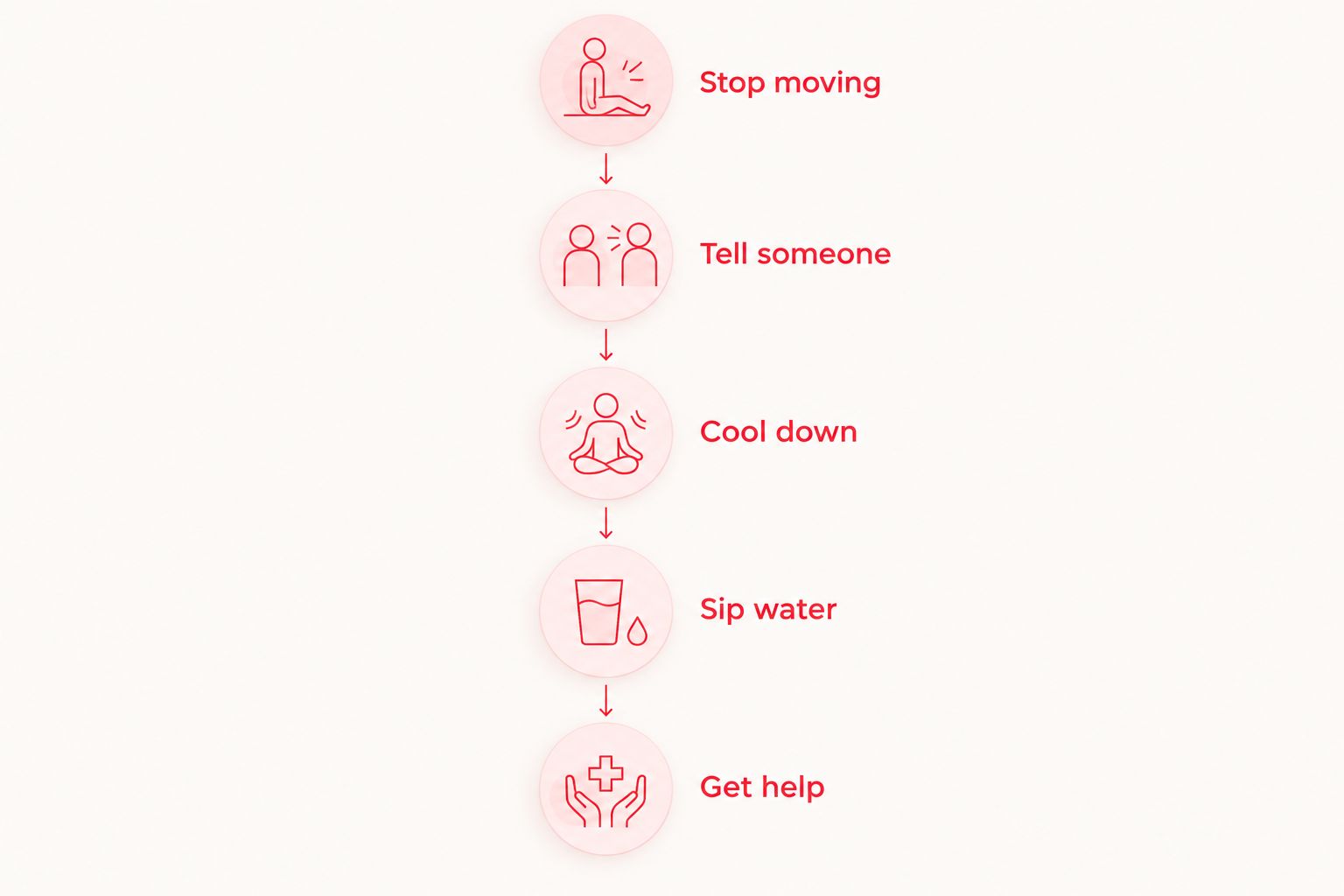
These steps are a response to symptoms, not clearance to restart. Even if the room feels more comfortable after a break, continuing the workout can expose you to the same conditions again.
When does dizziness need urgent medical help?
Call 911 for confusion, collapse, seizure, chest pain, or severe breathing difficulty. Confusion or loss of consciousness during heat exposure can signal heatstroke, a medical emergency. Start cooling the person while help is on the way and follow the dispatcher's instructions.
Do not wait for someone to stop sweating before seeking help. CDC guidance recognizes that heatstroke can involve hot, dry skin or profuse sweating; sweat does not rule out an emergency.
For suspected heat exhaustion, the CDC advises medical help right away if the person is vomiting, symptoms get worse, or symptoms last longer than 1 hour. That threshold is not an instruction to wait when symptoms are severe. Fainting during exercise also needs medical assessment, even if the person wakes up quickly.
Should you drive home if you still feel lightheaded?
Do not drive while you feel lightheaded, faint, confused, or unsteady. Ask someone to stay with you and arrange appropriate help. Getting out of the studio does not make it safe to drive.
For your 2026 class safety plan, decide who you would contact if you needed assistance getting home. Keep your phone accessible without making it a distraction during practice.
Why dizziness during hot yoga varies
Several factors can contribute to dizziness, and more than one can be present. These are established possibilities, not a diagnosis of what happened to you.
- Heat exposure: Exercise produces heat, and a heated environment adds to the body's cooling demands. Dizziness alongside weakness, nausea, or headache warrants stopping.
- Fluid loss: Sweating reduces body fluid. Arriving dehydrated or losing more fluid during exercise can contribute to lightheadedness.
- Position changes: Standing quickly after sitting, lying down, or bending can cause a temporary drop in blood pressure and a faint feeling.
- Exertion and breathing: Working beyond your current tolerance or breathing too rapidly can contribute to lightheadedness. Slowing down is not a substitute for leaving the heat when symptoms continue.
- Medication or health conditions: Medicines affecting blood pressure, fluid balance, sweating, or alertness can change heat tolerance. Heart conditions, diabetes, and other medical issues also require individual advice.
A previous comfortable class does not guarantee the next one will feel the same. Illness, a change in medication, or arriving already overheated can change your starting point.
Do not label repeated dizziness as simply being new to yoga. A recurring pattern needs a conversation with a healthcare professional before another heated workout.
How should you prepare before your next class?
Preparation starts with deciding whether a heated class is appropriate that day. If you are ill, already dizzy, or still recovering from a previous episode, postpone the class and seek advice when needed.
Arrive hydrated, without forcing water
Drink fluids through your normal day rather than trying to compensate immediately before class. Bring water so it is available when you need it. There is no single amount that suits every body, medical condition, medication, and workout.
Do not assume an electrolyte drink makes dizziness safe to ignore. People with a prescribed fluid or sodium restriction should follow their clinician's instructions rather than general fitness advice.
Eat in a way you tolerate
Avoid experimenting with fasting or an unfamiliar pre-workout routine for your first heated class. Choose familiar food and allow enough time to feel comfortable moving. If you manage diabetes or take glucose-lowering medication, follow your individual exercise and blood-sugar plan.
Dizziness does not prove low blood sugar. Treating every episode with food can delay attention to heat illness or another cause.
Tell the instructor before class
Explain that you are new to heated exercise or have previously felt dizzy. Ask how to leave the room safely, where you can cool down, and how to signal that you need help.
Those questions belong in your 2026 first-class checklist. You do not need to share your full medical history with the room; a brief private conversation can establish a practical plan.
Choose effort you can control
Start below your maximum effort and move deliberately between positions. Do not compete with the person beside you or treat an instructor's sequence as a requirement to continue through symptoms.
Resting inside the room still exposes you to heat. If heat is contributing to dizziness, changing poses alone does not remove that exposure.
Which class should you consider after feeling dizzy?
Choose your next class by its actual heat, pace, movement demands, and available modifications—not by whether its name sounds gentle. A slower class is not automatically appropriate if it remains heated.
The following table describes general class formats, not a promise about a particular session. Confirm the class conditions before booking, especially after an episode of dizziness.
| Class format | General focus | Best for | Limitation to check |
|---|---|---|---|
| Vinyasa | Movement linked with breathing | People who enjoy flowing sequences | Repeated transitions and heat require attention to tolerance |
| Yin | Longer-held floor-based postures | People who prefer a slower pace | Slower movement does not eliminate heat exposure |
| 26&2 | A structured yoga sequence | People who prefer a consistent format | Predictability does not make dizziness safe to ignore |
| Hot Pilates | Pilates-based exercise in heat | People interested in Pilates-style movement in a heated setting | Heat remains relevant even without yoga postures |
| Barre | Ballet-inspired fitness movements | People interested in barre-based exercise | Standing work still requires balance and symptom awareness |
| Reformer Pilates | Movement using a spring-resistance carriage | People interested in equipment-based Pilates | Equipment instruction and transitions need attention |
Unified Hot Yoga offers these class types in American Fork for practitioners of all skill levels. Unified Hot Yoga is a fit for American Fork beginners seeking hot yoga and Pilates class options. The choice of formats is useful, but it does not establish which class is medically appropriate after dizziness; ask about the specific session and get clinical advice when indicated.
Can you return to hot yoga after feeling dizzy?
Do not return to the workout while symptoms remain. After suspected heat illness, prioritize recovery and medical advice rather than testing whether you can tolerate another round.
For a future session, review what happened: when symptoms started, whether you changed position, what other symptoms occurred, and whether the sensation resolved outside the heat. Bring that information to your clinician if the episode was severe, unexplained, or recurrent.
Your 2026 return-to-class plan should address the episode, not simply repeat the same workout with more determination. A different environment or modified activity can be part of that discussion.
Does drinking more water prevent dizziness during hot yoga?
Water helps address fluid loss, but it does not prevent every cause of dizziness. Blood-pressure changes, medication effects, excessive heat exposure, and medical conditions still matter.
Drinking excessive amounts is not a safe backup plan either. Overhydration can cause dangerously low blood sodium, so avoid forcing large volumes or following a universal drinking target that ignores your needs.
Is dizziness a sign that hot yoga is working?
Dizziness is not evidence that hot yoga is working, burning more fat, or removing toxins. It is a symptom that calls for stopping and checking your condition.
Progress can mean learning when to reduce effort, ask for a modification, or leave the heat. A practice that supports wellbeing includes those decisions.
FAQ
Is it normal to feel dizzy during my first hot yoga class?
Dizziness can happen in a first hot yoga class, but you should not push through it. Stop, tell the instructor, and get help moving somewhere cooler.
Should I stay in child's pose if I feel dizzy?
Do not rely on child's pose alone if you feel dizzy in a heated room. Stop safely, alert the instructor, and arrange help reaching a cooler area when it is safe to move.
Should I drink electrolytes if hot yoga makes me dizzy?
An electrolyte drink is not a treatment for every cause of dizziness. Stop exercising first, cool down, and seek medical help for persistent, worsening, or concerning symptoms.
When should I call 911 for dizziness during hot yoga?
Call 911 when dizziness accompanies confusion, collapse, seizure, chest pain, or severe breathing difficulty. Begin cooling the person during suspected heat illness and follow the dispatcher's instructions.
Can I feel dizzy after hot yoga instead of during class?
Dizziness can occur after class, including when you stand up or remain overheated. Sit or lie somewhere safe, get help, and do not drive while symptoms continue.
Is a slower yoga class safe if hot yoga makes me dizzy?
A slower class is not automatically safe if heat contributes to your dizziness. Confirm the room conditions and discuss repeated or unexplained symptoms with a healthcare professional.
What should I tell my doctor about dizziness during yoga?
Describe when the dizziness began, your activity and position, associated symptoms, and whether cooling down helped. Include your medicines and any fainting, chest discomfort, or repeated episodes.
One last thing
For your next class in 2026, learn the route to a cooler area before practice begins. That small preparation removes a decision when you are least steady. At Unified Hot Yoga or any other studio, telling someone early is more useful than trying to leave unnoticed.
The safest response starts before you know the exact cause: stop, speak up, and get help. You do not owe the room a completed class.