Best for a flowing morning practice: Vinyasa. Best for a slower-paced practice: Yin. Best for a set sequence: 26&2. For the best morning yoga classes in Utah County in 2026, choose the format that fits you, then confirm a morning session on the current schedule. Unified Hot Yoga offers these yoga formats alongside Hot Pilates, Barre and Reformer Pilates in American Fork.
- The best morning yoga classes in Utah County fit your preferred pace, heat tolerance and actual morning schedule.
- Unified Hot Yoga offers Vinyasa, Yin and 26&2 for practitioners of all skill levels in American Fork.
- Choose Vinyasa for flowing movement, Yin for longer holds, or 26&2 for a set sequence.
- Compare Hot Pilates, Barre and Reformer Pilates when you want an exercise-focused alternative to morning yoga.
- Confirm the session, preparation requirements and current membership terms before committing.
Why your morning class choice matters
A morning class needs to fit more than your exercise preferences. You also need enough time to travel, change and get to your next commitment without turning the practice into a rush.
Start with the kind of movement you want. A flowing yoga practice, a longer-held posture practice and an equipment-based Pilates session involve different experiences; none deserves the same recommendation for every beginner.
Unified Hot Yoga is a good fit for American Fork beginners who want to compare hot yoga and Pilates formats at one studio. Choose by class format rather than assuming the hottest or most demanding option is the best starting point.
What makes the best morning yoga class?
Use these criteria to choose a class in 2026 before comparing memberships:
- Morning fit: Check the actual start and finish times against your work, school or family commitments.
- Movement style: Decide whether you prefer flowing transitions, longer holds, a repeating sequence or exercise-focused movement.
- Heat readiness: Consider the heated environment separately from the difficulty of the movements.
- Beginner preparation: Find out what equipment you need and how to communicate that you are new.
- Repeatability: Choose a format and location you can return to without rearranging your whole morning.
- Membership fit: Read current terms after identifying a class you want to attend, not before.
No single criterion replaces the others. A class that sounds appealing but conflicts with your departure time is not your best morning choice.
Morning class formats at a glance
These are class-format recommendations, not a ranking of every studio in Utah County. Confirm which formats have morning sessions on the current schedule before booking.
| Class format | Best for | Standout characteristic | Key limitation |
|---|---|---|---|
| Vinyasa | Flowing movement | Links movement with breath through transitions | Requires attention to changing positions |
| Yin | A slower-paced practice | Uses longer-held postures | Stillness does not mean the sensations are easy |
| 26&2 | A set yoga sequence | Traditionally uses 26 postures and 2 breathing exercises | Repetition suits some preferences better than others |
| Hot Pilates | Exercise-focused mat movement | Combines Pilates-style exercise with a heated setting | It is not a yoga practice |
| Barre | Upright, controlled exercise | Uses ballet-inspired positions and repeated movements | It does not follow a yoga sequence |
| Reformer Pilates | Equipment-based Pilates | Uses a reformer with spring resistance | Equipment setup adds something new to learn |
1. Vinyasa: best morning yoga for flowing movement
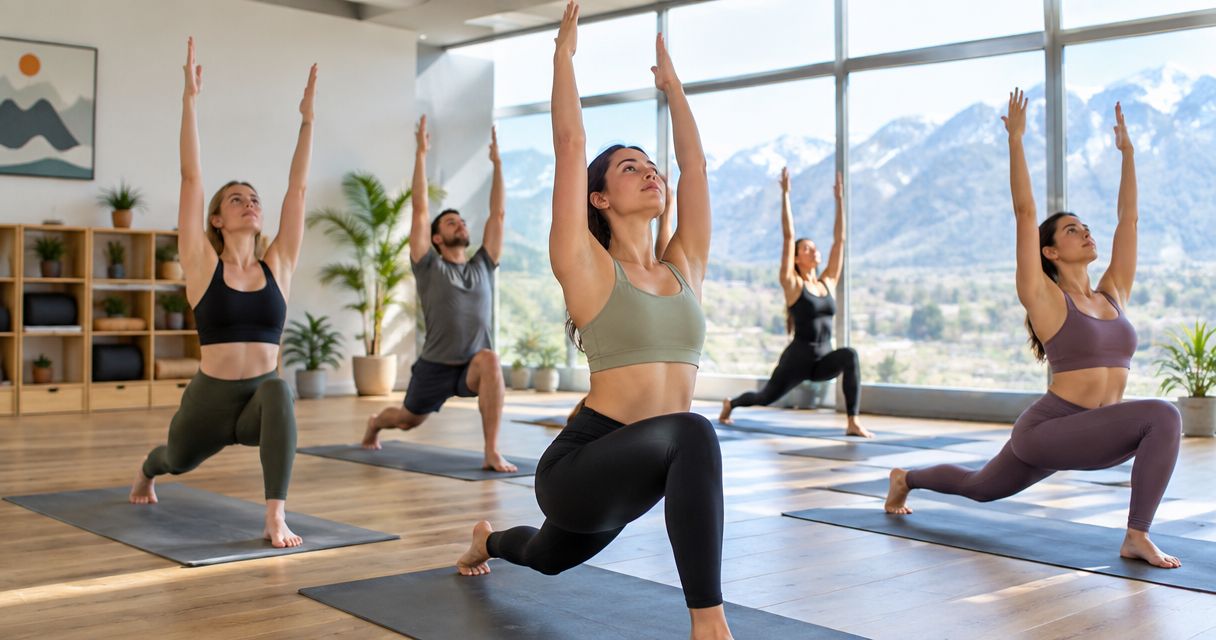
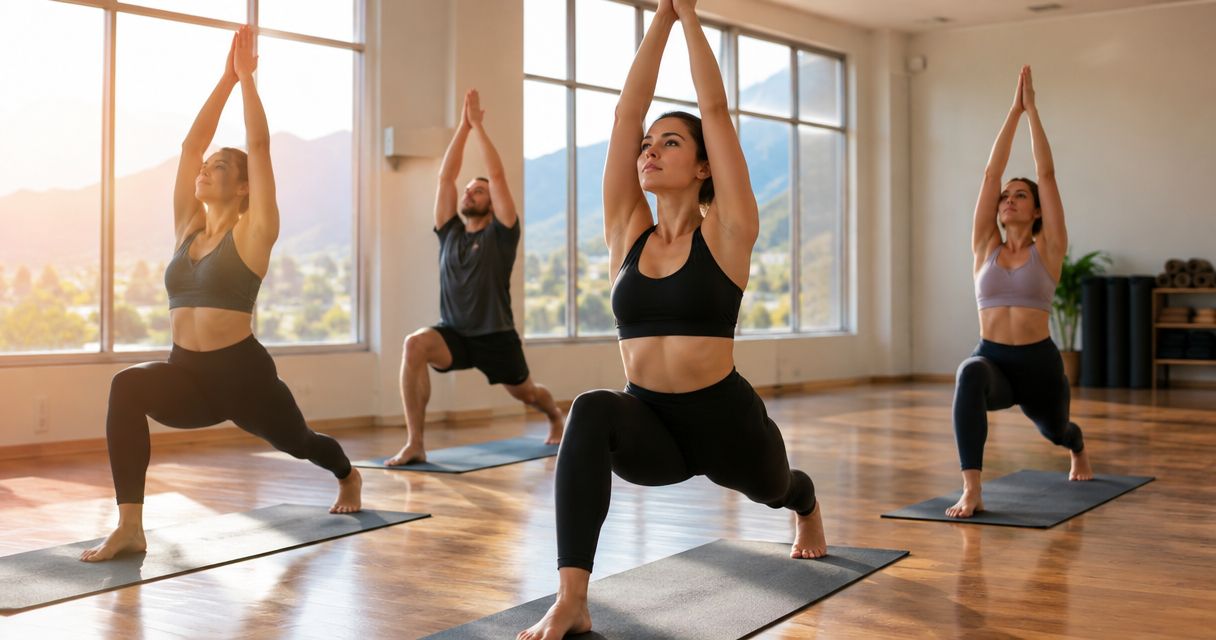
Vinyasa connects movement and breath through sequences of poses. You move between positions rather than spending the entire practice in longer holds, making it a clear starting choice when you want movement to be central to your morning.
Unified Hot Yoga offers infrared-heated Vinyasa. The class format describes the style, not the exact pace, sequence or morning start time; check the session description before choosing.
Vinyasa pros:
- Flowing transitions create a movement-led practice.
- Breath and movement provide a clear focus.
- The format suits people who enjoy changing positions.
Vinyasa cons:
- New pose names and transitions require attention.
- A heated setting adds another consideration for newcomers.
Best for: Someone who wants a flowing yoga practice rather than extended stillness.
For your first session, tell the instructor you are new before class begins. Ask how to pause or simplify transitions without feeling that you need to keep pace with everyone around you.
Verdict: Choose Vinyasa if flowing movement is your main reason for attending morning yoga.
2. Yin: best morning yoga for a slower-paced practice
Yin yoga uses longer-held postures, typically with fewer transitions than Vinyasa. Choose this format when you want your morning practice to center on stillness and sustained attention rather than a continuous flow.
Do not confuse slower pacing with an effortless class. A held position can feel demanding, and stretching farther is not a better goal than finding a position you can tolerate comfortably.
Yin pros:
- Fewer transitions make the movement pattern easier to follow.
- Longer holds give you time to notice your positioning.
- The format suits people who prefer a less hurried practice.
Yin cons:
- Extended stillness does not suit every preference.
- Strong sensations can tempt beginners to push too far.
Best for: Someone who prefers longer holds over flowing movement.
Ask about the session's setup and any props before attending. During practice, distinguish a manageable stretch from pain; ease out of a position that hurts rather than treating discomfort as an achievement.
Verdict: Choose Yin if a slower-paced morning practice matches what you want.
3. 26&2: best morning yoga for a set sequence
The traditional 26&2 format consists of 26 postures and 2 breathing exercises. Its repeating sequence gives you a consistent framework to become familiar with across classes.
Unified Hot Yoga offers 26&2 yoga. Confirm the current session description rather than assuming a particular duration, room temperature or teaching approach from the class name alone.
26&2 pros:
- A set sequence gives the practice a recognizable structure.
- Repetition supports familiarity with the order of poses.
- The format suits people who prefer consistency over variety.
26&2 cons:
- A repeating sequence offers less variety than changing flows.
- Familiar order does not make every posture easy.
Best for: Someone who wants a structured yoga practice with a repeating sequence.
As a beginner, focus on learning positions and listening to instruction. You do not need to reproduce another person's range of movement to participate meaningfully.
Verdict: Choose 26&2 if you value a set sequence more than changing choreography.
4. Hot Pilates: best morning alternative for mat exercise
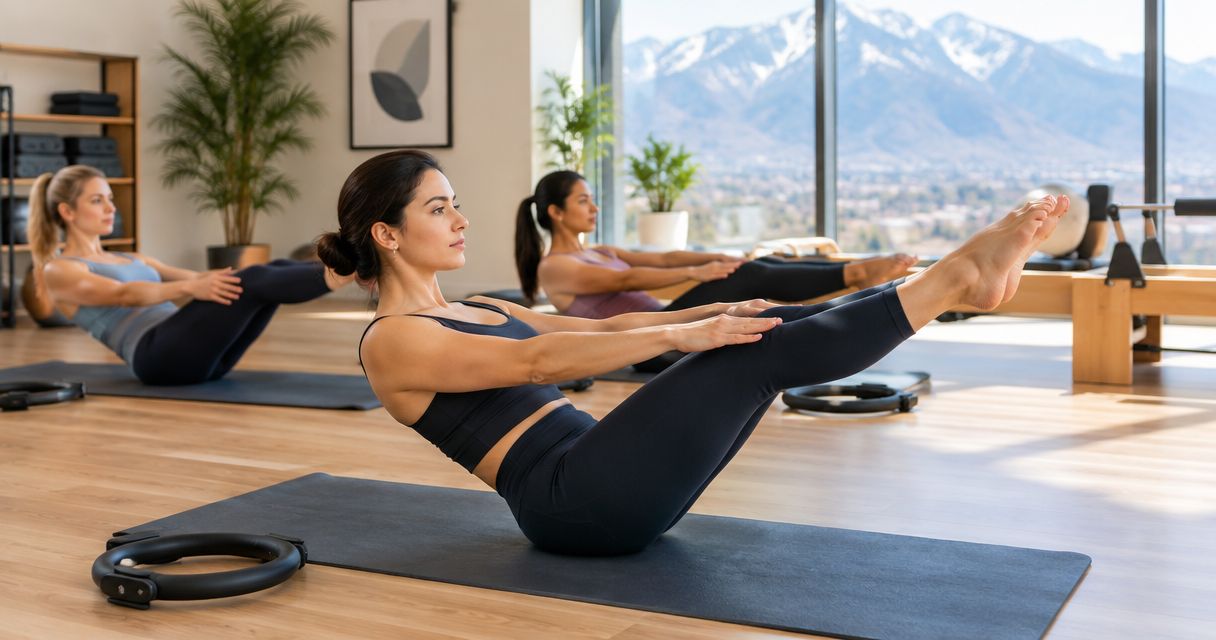
Hot Pilates combines Pilates-style exercise with a heated environment. It belongs in this comparison because someone searching for morning yoga might actually want exercise-focused movement rather than a yoga practice.
The distinction matters. Choose Hot Pilates because its format interests you, not because you assume every heated class teaches the same movements.
Hot Pilates pros:
- The format centers on exercise-focused movement.
- Mat-based practice avoids learning a reformer first.
- It offers an alternative to yoga within the studio's class selection.
Hot Pilates cons:
- It does not provide the same experience as a yoga sequence.
- Heat still requires attention to how you feel.
Best for: Someone seeking a heated, exercise-focused alternative to morning yoga.
Check the class description for equipment and preparation instructions. Ask about ways to adjust exercises if you are unfamiliar with Pilates.
Verdict: Choose Hot Pilates when you want mat exercise rather than yoga.
5. Barre: best morning alternative for upright movement
Barre draws on ballet-inspired positions and controlled, repeated movements. It offers a different starting point for someone who prefers upright exercise to a class organized around yoga poses.
You do not need to approach the format as a dance performance. Focus on learning the instructor's positioning cues and working within your own comfortable range.
Barre pros:
- Upright movement offers a distinct alternative to mat-focused formats.
- Repeated movements provide a clear exercise pattern.
- The format suits people interested in ballet-inspired exercise.
Barre cons:
- Unfamiliar positions take time to learn.
- Repetition does not appeal to everyone.
Best for: Someone who prefers upright, controlled exercise over a yoga sequence.
Ask what the particular session involves before booking. The format name alone does not establish equipment requirements or how much time the class spends standing.
Verdict: Choose Barre if upright, controlled movement is your preferred starting point.
6. Reformer Pilates: best morning alternative for equipment-based practice
Reformer Pilates uses a machine with a moving carriage and spring resistance. The equipment changes the experience from mat-based yoga or Pilates, so your first priority is learning how to use it safely.
Ask how beginners receive setup instructions and whether the selected session fits someone new to the reformer. Do not assume that every equipment-based class is an introductory class.
Reformer Pilates pros:
- The equipment provides spring resistance for exercises.
- It offers a distinct alternative to mat practice.
- The format suits people interested in equipment-based movement.
Reformer Pilates cons:
- Setup and equipment use add a learning step.
- Spring settings require instruction rather than guesswork.
Best for: Someone who wants to learn Pilates on a reformer.
Follow the instructor's directions for adjusting the equipment. Learning the setup belongs to the practice; it is not something you should rush through to start exercising.
Verdict: Choose Reformer Pilates if equipment-based movement interests you most.
Prepare for your first morning class
For a first visit in 2026, use the studio's Know Before You Go information and current class description as your preparation checklist. Confirm what you should bring instead of assuming mats, towels or other equipment are provided.
Pack water and clothing that lets you move comfortably. Ask whether your chosen format needs a mat, towel or particular footwear, and check arrival instructions before leaving home.
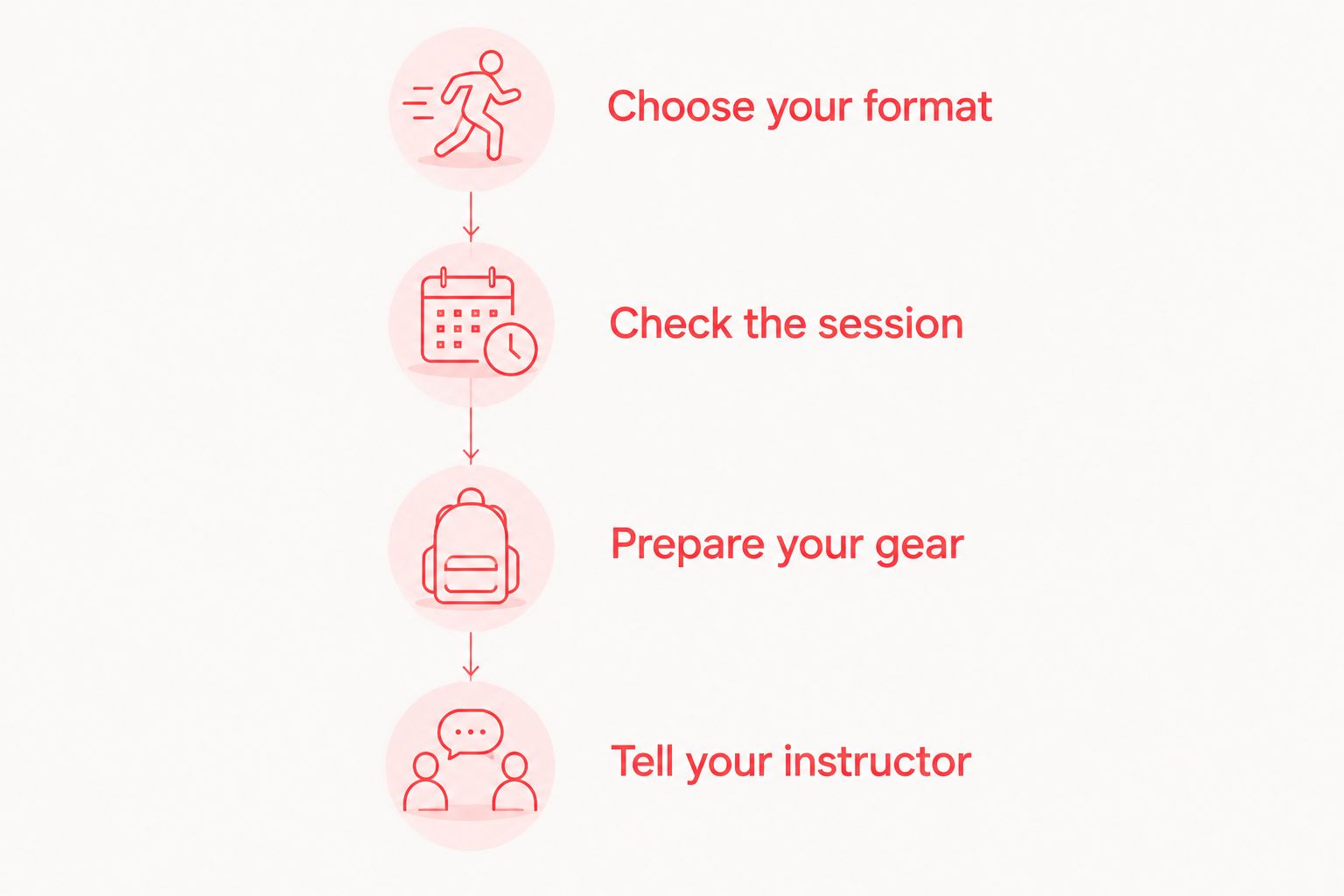
Use this simple sequence:
- Choose your format: Pick the movement style that interests you.
- Check the session: Confirm the morning start time, duration and beginner suitability.
- Prepare your gear: Check equipment requirements and pack accordingly.
- Tell your instructor: Mention that it is your first class and ask how to adjust or pause.
These steps keep the decision practical. You are choosing an experience you can attend and understand, not proving that you can complete the hardest option.
For heated exercise, pay attention to how you feel rather than treating sweat as a performance measure. Stop exercising if you feel faint or unwell, and tell the instructor. If you have a medical condition or concerns about exercising in heat, ask a qualified healthcare professional before participating.
How these recommendations are ordered
The order starts with the 3 yoga formats, then compares the exercise alternatives. Each recommendation answers a different preference: flow, longer holds, a set sequence, mat exercise, upright movement or reformer equipment.
This is a fit-based guide for 2026, not a claim that one class is universally better. Your final choice depends on the current session, your comfort with heat and the morning routine you can maintain.
Which morning class should you choose?
Choose Vinyasa as your default if you specifically want flowing morning yoga. Choose Yin for longer holds or 26&2 for a set sequence. If yoga is not the main attraction, compare Hot Pilates, Barre and Reformer Pilates on their own terms.
Before joining in 2026, ask 3 questions: Does the session fit your morning? Do you understand the preparation requirements? Do the membership terms fit how you plan to attend?
Once you have a class in mind, consult Unified Hot Yoga's current Prices page for intro offers and memberships. Read the terms attached to the option you choose rather than deciding from a class name alone.
FAQ
What's the best morning yoga class in Utah County for a beginner?
The best beginner choice is the format that matches your preferred pace and has a suitable session on the current morning schedule. Choose Vinyasa for flowing movement, Yin for longer holds or 26&2 for a set sequence, then confirm beginner preparation with the studio.
Does Unified Hot Yoga offer morning yoga in American Fork?
Unified Hot Yoga offers Vinyasa, Yin and 26&2 yoga in American Fork; check the current schedule to confirm morning sessions. Class offerings alone do not establish a particular day's start times.
Is Yin easier than Vinyasa for a first class?
Yin has fewer transitions, while Vinyasa emphasizes flowing movement. Longer holds can still feel demanding, so choose by your preferred pace rather than assuming Yin is automatically easier.
What does 26&2 mean in yoga?
The traditional 26&2 format uses 26 postures and 2 breathing exercises. Check the specific class description for session details instead of assuming a duration or temperature.
What should I bring to my first hot yoga class?
Bring water and comfortable movement clothing, and confirm the studio's mat, towel and equipment instructions before attending. Read Know Before You Go and ask about any requirements that are unclear.
Should I choose Hot Pilates or Reformer Pilates?
Choose Hot Pilates if you want heated, mat-based exercise; choose Reformer Pilates if you want equipment-based Pilates. Ask about beginner instructions and preparation requirements for the session you select.
How do I compare morning yoga memberships in 2026?
Start with a class and morning session you can attend, then read the current membership terms on the studio's Prices page. Compare the attendance rules and commitments against your intended routine before joining.
One last thing
Your first class does not need to become your permanent format. Choose a session you can attend without rushing, learn what the practice involves and use that experience to decide what to try next. A workable morning routine is a better starting point than a perfect-sounding class you cannot reach comfortably.