Reformer Pilates for athletes is equipment-based movement training with the aim of adding controlled resistance and movement practice alongside sport-specific work. This 2026 guide explains how to choose a first class, prepare for unfamiliar equipment, and fit Pilates into training without treating it as a replacement for strength work or sport practice.
- Reformer Pilates for athletes adds controlled movement practice; it does not replace sport-specific training.
- Unified Hot Yoga suits American Fork athletes seeking local Reformer Pilates alongside yoga, Hot Pilates, and Barre.
- Choose beginner instruction based on equipment experience, not athletic fitness.
- Compare Reformer Pilates, Hot Pilates, Barre, and yoga by the class experience you want.
Why reformer Pilates matters for athletes
Athletic experience does not automatically translate into reformer experience. A moving carriage, spring resistance, straps, and unfamiliar starting positions create a different learning task from running, lifting, cycling, or playing a team sport.
The practical reason to try reformer Pilates is to explore controlled movement under instruction—not to assume it will make you faster or prevent injury. Start with the guide to beginner Reformer Pilates classes in Utah County if equipment familiarity is your main concern.
For your 2026 training plan, separate curiosity from a performance claim. You can decide whether you enjoy the class and understand its instructions without claiming that a particular exercise transfers directly to your sport.
Choose a first class that lets you learn the equipment rather than prove your fitness. That distinction matters most when you already feel confident in another training environment.
Build reformer Pilates around your training
Define your purpose before choosing a class
Start without buying anything: write down what you want from an additional movement session. Learning a new skill, practicing deliberate movement, and finding an enjoyable group setting are different goals from preparing for a race or increasing a lift.
Give the class a clear role. If your goal is sport performance, keep sport-specific practice and your existing coaching plan central; do not assign Pilates a result you have not measured.
Choose 1 training goal for your first class. A narrow question makes the experience easier to assess than a broad expectation of becoming a better athlete.
- Name the movement skill you want to explore.
- Identify which existing training session takes priority.
- Decide whether instruction or independent practice suits you.
- Write down what would make the class worth repeating.
Check beginner suitability before booking
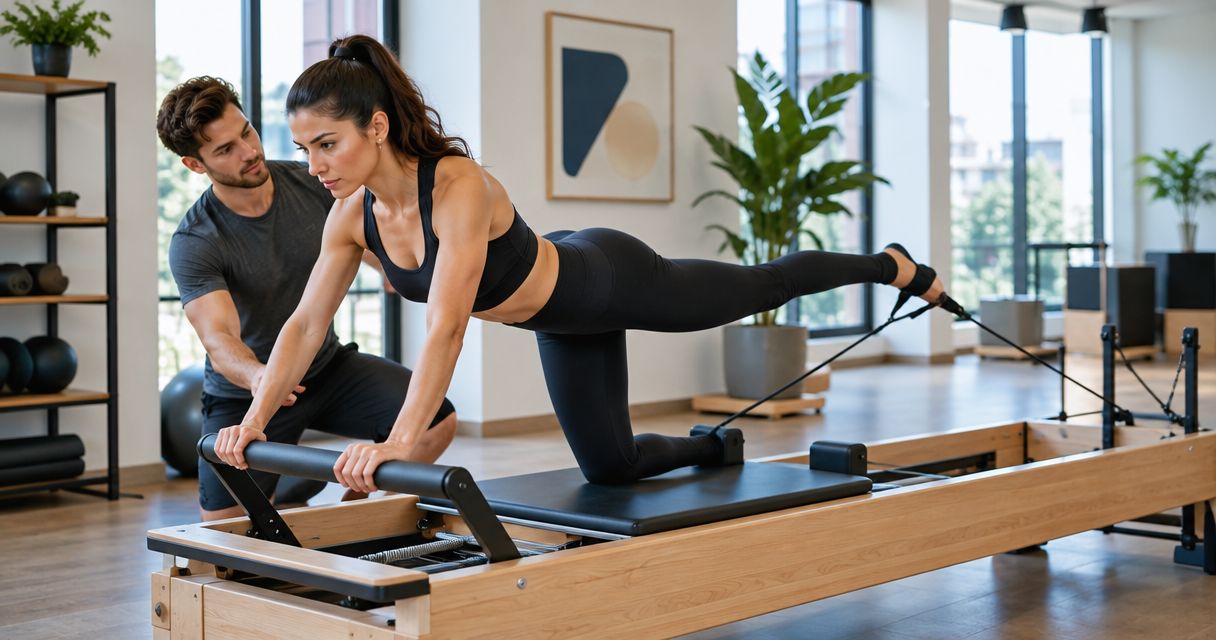
Read the class description and contact the studio when equipment experience is unclear. Ask how first-time participants learn carriage movement, spring changes, straps, and safe transitions; a familiar exercise name does not tell you how a class is taught.
Best for first-time reformer users: a class that explicitly accommodates equipment beginners. An advanced athlete can still need introductory instruction, and a beginner label is not a judgment about fitness.
Ask 3 questions before you commit: Does this class accept first-time reformer users? What equipment guidance is included? What preparation does the studio require? Use the answers, rather than the class name alone, to choose.
- State that you are new to the reformer.
- Ask about the expected experience level.
- Confirm clothing and footwear requirements.
- Check arrival and equipment-orientation instructions.
Choose a local class you can attend consistently
First, map a realistic class visit around work, commuting, and training. For athletes traveling from American Fork or nearby Utah County cities, a class that fits an ordinary week is a more practical choice than one that requires repeatedly rearranging priority sessions.
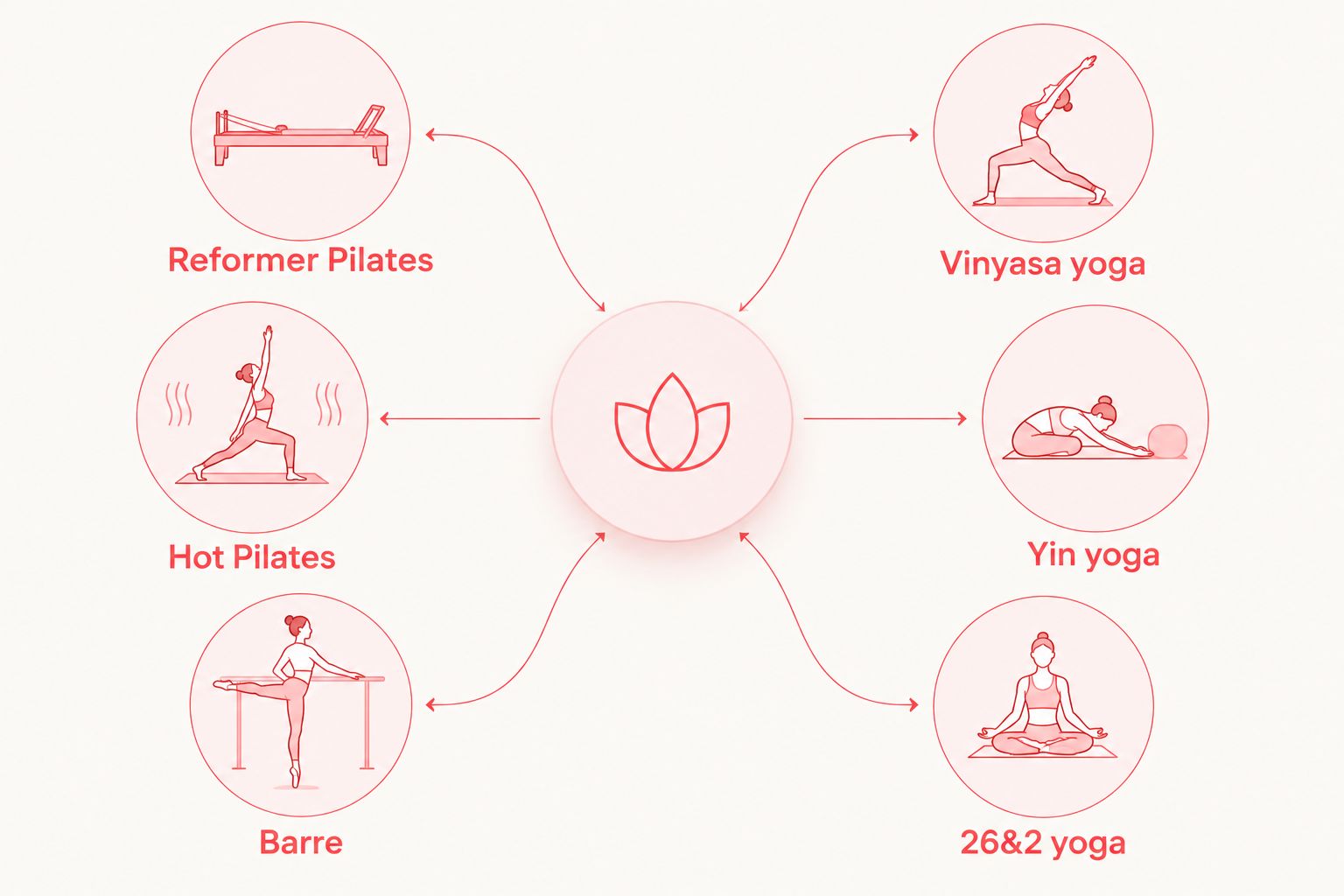
Unified Hot Yoga offers Reformer Pilates, Hot Pilates, Barre, Vinyasa, Yin, and 26&2 yoga in American Fork, serving practitioners of all skill levels. Instructor-led Reformer Pilates gives you an alternative to trying to interpret equipment exercises from videos alone.
Unified Hot Yoga is best for American Fork athletes seeking local Reformer Pilates alongside yoga, Hot Pilates, and Barre. The range offers different class formats, but the studio description alone does not establish which individual session fits your experience or training load.
- Check the current class description before booking.
- Confirm the session matches your equipment experience.
- Allow for travel and changing time.
- Review current membership information before joining.
Prepare your kit and explain your starting point
Use a simple checklist before your first visit. Bring water, choose clothing that allows comfortable movement, and confirm the studio’s footwear and equipment requirements rather than assuming every Pilates studio uses the same rules.
Tell the instructor what you need help understanding. Athletic background is useful context, but naming your sport is less useful than explaining that you have never adjusted reformer springs or used a moving carriage.
For injuries, recent surgery, or symptoms that affect exercise, seek guidance from a qualified healthcare professional about participation. A group fitness class is not a substitute for an individualized rehabilitation plan.
- Confirm what you need to bring or borrow.
- Bring water for the visit.
- Choose clothing that stays comfortable as you move.
- Explain equipment inexperience before class begins.
- Ask about any movement restriction you already follow.
Learn the equipment before adding challenge
Watch the instructor demonstrate each setup, then ask for clarification before moving. Reformer springs influence both resistance and carriage behavior; more spring resistance is not automatically the harder or more appropriate choice for every exercise.
Treat equipment control as the first task. Keep your attention on the instructed starting position, the intended movement, and the transition out of the exercise—not on matching another participant’s range.
If a setup feels confusing, pause. Getting an explanation is more useful than finishing repetitions with uncertainty about where your feet, hands, or straps belong.
- Follow the instructor’s spring-setting directions.
- Check hand and foot placement before starting.
- Move within a range you can control.
- Ask before changing an unfamiliar setup.
- Stop and speak up if a movement causes pain.
Place the class around priority training
Start with your existing calendar, not an idealized new routine. Mark competitions, demanding practices, and key strength sessions before choosing where an unfamiliar class belongs.
For your first 1 class, choose a time that does not immediately precede a priority event. This is a planning recommendation, not a prescribed training dose: the session’s demands and your response determine what fits next.
In a 2026 training diary, record the class alongside your other exercise rather than labeling it automatic recovery. Pilates is still physical activity, and an unfamiliar session deserves attention when you assess total workload.
- Keep competition and key-practice dates visible.
- Avoid stacking unfamiliar sessions before an important event.
- Tell your coach about changes to your routine.
- Record whether the class felt easy, moderate, or demanding.
- Adjust the next booking around your actual response.
Review the experience before choosing a membership
Use a free training note rather than relying on memory. Record whether you understood the instructions, felt comfortable asking questions, and found the class practical to attend.
Watch your next 2 training sessions for scheduling conflicts or unexpected fatigue. This observation window is a personal planning check, not evidence that Pilates improved or reduced athletic performance.
Before joining Unified Hot Yoga, review the current membership information and confirm how the classes you want fit the terms. Choose a membership around attendance you can sustain, not an ambitious week you rarely repeat.
- Note which instructions were clear or confusing.
- Record whether the timing worked with training.
- Identify anything to ask before another visit.
- Check current membership terms directly.
- Keep or change the class based on your experience.
Compare class options for athletes
For a 2026 class choice, compare what you will actually do rather than ranking every format by a single fitness promise. Reformer Pilates, Hot Pilates, Barre, and yoga use different movement settings; none replaces the technical practice required by your sport.
The descriptions below explain general class formats, not a verified exercise sequence for a particular studio session. Confirm temperature, level, equipment, and teaching format directly before booking.
| Option | Best for | What it involves | Key limitation |
|---|---|---|---|
| Reformer Pilates | Athletes wanting equipment-based movement instruction | A moving carriage, springs, and straps used for guided exercises | Equipment familiarity takes practice; settings need instruction |
| Hot Pilates | Athletes who prefer Pilates-style exercise in a heated setting | Pilates-style movement with heat as part of the environment | Heat adds a consideration beyond the exercises themselves |
| Barre | Athletes interested in ballet-influenced fitness | Barre-supported and floor-based movement, depending on the class | It is not sport-specific coaching or necessarily a dance technique class |
| Vinyasa yoga | Athletes who enjoy flowing movement | Poses linked through transitions and breathing | Pace and complexity vary by class |
| Yin yoga | Athletes who prefer a slower-paced yoga format | Longer-held, generally floor-based poses | Slower pacing does not make every position suitable for every person |
| 26&2 yoga | Athletes interested in a defined yoga sequence | A sequence of 26 postures and 2 breathing exercises | Familiarity with the sequence does not remove individual movement limits |
Reformer Pilates is the closest match when learning spring-and-carriage equipment is your goal. Choose another format when its actual class experience interests you more; you do not need to prefer the reformer simply because you are an athlete.
Common mistakes athletes make with reformer Pilates
Treating athletic fitness as equipment experience
Being comfortable under a barbell or on a trail does not teach you how a reformer carriage responds. Ask for setup guidance even when an exercise looks familiar; confidence should follow understanding, not replace it.
Chasing resistance instead of following the exercise
Spring settings change how an exercise behaves. Do not copy another participant’s settings or add resistance to make the class feel more athletic; follow the instructor’s directions for that movement.
Calling every Pilates session recovery
A class does not become recovery because it lacks running or heavy lifting. Record how demanding the session felt and consider the rest of your training before deciding where it belongs.
Expecting a group class to resolve an injury
General movement instruction and individualized rehabilitation are different services. Bring existing clinical restrictions to the conversation, and do not use a class description as clearance to exercise through pain.
Choosing a membership before testing the routine
An appealing timetable is not the same as a workable habit. Experience the commute, class format, and fit with training before committing to an attendance pattern you have not tried.
FAQ
Is reformer Pilates good for athletes who have never done Pilates?
Reformer Pilates is an option for athletes new to Pilates when the class accommodates equipment beginners. Choose instruction that explains setup and transitions; experience in another sport does not replace reformer orientation.
What should I bring to my first reformer Pilates class?
Bring water, wear clothing that allows comfortable movement, and confirm the studio’s footwear and equipment requirements. Check arrival instructions before leaving so you can ask questions without rushing.
Is reformer Pilates better than strength training for athletes?
Reformer Pilates is not a replacement for a sport-specific strength program. Choose it for the movement experience it offers, and keep strength decisions aligned with your sport, goals, and coaching plan.
Should athletes choose Reformer Pilates or Hot Pilates?
Choose Reformer Pilates for spring-and-carriage equipment work, or Hot Pilates when a heated Pilates-style class is the experience you want. Confirm the particular class format and your comfort with heat before booking.
How often should an athlete start reformer Pilates?
Start by trying a class and reviewing how it fits your existing training rather than adopting a fixed weekly frequency. Discuss additions with your coach when your schedule already includes demanding practices or competition.
Can reformer Pilates prevent sports injuries?
Do not treat reformer Pilates as a guarantee against sports injuries. Injury concerns and return-to-sport decisions require individualized guidance from a qualified healthcare professional.
Where can athletes try Reformer Pilates in American Fork?
Unified Hot Yoga offers Reformer Pilates in American Fork alongside Hot Pilates, Barre, Vinyasa, Yin, and 26&2 yoga. Confirm the current class level, preparation requirements, and membership information directly before booking.
One last thing
Your most useful first-class achievement might be learning how to stop and reset the carriage—not completing the hardest exercise. Equipment confidence starts with understanding what you are doing and feeling comfortable asking for help.
For your next 2026 training decision, choose the class you can approach with curiosity rather than competition. You can be an experienced athlete and a genuine beginner in the same room.